
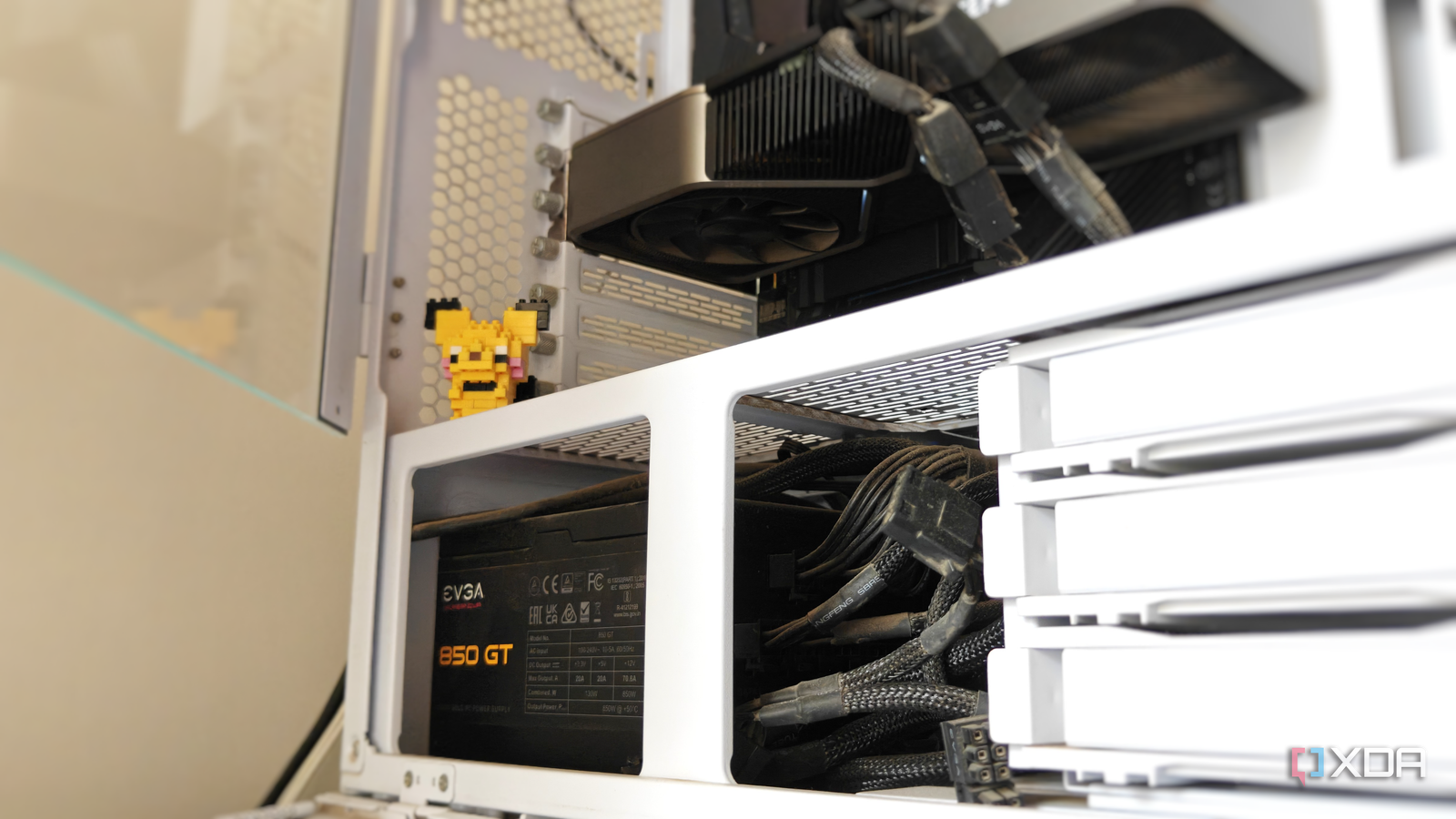
Published Aug 27, 2026, 7:00 AM EDT After a 7-year corporate stint, Tanveer found his love for writing and tech too much to resist. An MBA in Marketing and the owner of a PC building business, he writes on PC hardware, technology, and Windows. When not scouring the web for ideas, he can be found building PCs, watching anime, or playing Smash Karts on his RTX 3080 (sigh). Everyone is excited about buying new PC components and soaking in all that extra performance. Building a new PC or upgrading a component is the easy part; it's the smaller yet trickier details that most of us tend to ignore. Managing the cable mess inside and outside the build, keeping it dust-free, and updating it regularly are the things where PC gamers falter. I call them "sins" instead of mistakes, since we all know we should be avoiding them for the benefit of our builds, but we keep committing them anyway. That's intent right there. If you've been a PC gamer long enough, you'll surely find yourself in one or more of these gaming PC sins. Ignoring shoddy cable management for years It isn't the most delightful job, but it matters I don't like cable management either, but there's a reason it's one of the major steps of every build. Besides keeping your cables safe from accidental damage and improving the aesthetics of your build, it also improves airflow. By minimizing areas where hotspots can arise and reducing the surface area for dust to accumulate, cable management keeps things clean and cool inside your PC. In every build I've assembled, I've never aimed for perfect cable management. Still, leaving all the cables stuffed in the PSU compartment and behind the motherboard is a terrible choice. You should at least tie the major cables at proper points, leaving the tiny stray cables loose if you can't be bothered to manage them. Most gamers only fix their cable management when they make major upgrades to their build, and only if they're in the mood. Meanwhile, their rig continues to look bad and overheat for years. Delaying crucial firmware updates You're leaving performance on the table I was a firm believer of "don't fix what ain't broke" for years before I finally updated my BIOS after 4 years. Updating the motherboard's firmware used to scare me since I had seen, firsthand, the repercussions of a BIOS flash gone bad. My PC was working fine for four years, so I never saw any reason to update the BIOS. However, some power issues forced me to take on the challenge after delaying it for years. If you're in the same boat, I'd advise you to go ahead and update your BIOS/UEFI right away. It's much less painful than it used to be, and features like BIOS flashback and dual BIOS have made a failed flash a non-issue. The benefits of an updated firmware far outweigh any hassle you might feel the process entails. Whether it's performance, stability, efficiency, or security, ignoring BIOS updates is simply not advisable. Then, there's the SSD firmware, which PC users rarely update. It may not improve your transfer speeds, but it can realistically make your SSD more efficient at the things it already does. In some cases, updated firmware has saved SSDs from premature failure. SSD firmware doesn't receive too many updates, so it's not even a hassle. Skipping PC maintenance till it becomes too problematic to ignore Don't let it become a chronic issue PC maintenance isn't limited to driver and firmware updates; you also need to ensure things aren't going downhill inside your case. Given enough time, your PC will accumulate dust to the point where it starts impeding system performance. Your temperatures will rise, fans will need to work harder for the same performance, and the lack of airflow will start throttling performance. Cleaning your tower once every six months should be on your calendar. Your CPU and graphics card can overheat even if your case airflow is fine. If you haven't checked the thermal paste in 3–4 years, that might be the reason behind the elevated temps of your CPU and GPU. Disassembling your graphics card for a proper clean and thermal paste (and pad) replacement is recommended once every four years. You can replace your CPU's thermal paste every three years to ensure optimum cooling. Even your SSD can get slower as it fills up, affecting your overall system responsiveness. Without sufficient free space, your drive will struggle to manage upkeep activities like garbage collection. That's why it's good practice to keep around 10–15% free space on your SSD at all times. Wasting time on performance tweaking and monitoring instead of gaming Your PC doesn't need constant prodding Every PC gamer is guilty of this one to some extent. When you get a new PC, it's natural to install benchmarking programs, overclock your CPU and GPU, and monitor the operating temps and frequencies for weeks. Once you've achieved a stable performance level, however, you should focus on enjoying your gaming PC for, well, gaming. This is the step where many of us fail to do a good job. Browsing Reddit threads to extract every little ounce of performance or tweaking in-game graphics settings for no perceivable change seems productive, but it's just an obsession. You're taking what little time you have to enjoy your PC and wasting it on needless optimization. To be clear, extracting the most out of your PC is recommended, but it shouldn't take over your life. Spending on expensive components instead of truly useful upgrades Don't ignore the setup around your PC Every gamer has their next component upgrade at their fingertips. Upgrading to a new graphics card or CPU is exciting, sure, but most people end up overspending on their PC parts. Buying a budget CPU and mid-range GPU, and investing the money you save in quality-of-life upgrades will prove more rewarding in the long term. For instance, a decent gaming monitor will let you actually enjoy your PC's performance in all its glory. It will not only be fast enough to provide you with a smooth gaming experience, but the panel will make your games and media more immersive. If your monitor is too large for your desk, a monitor arm will save desk space and give you more control over your setup. Similarly, a monitor light bar can make you more productive if your gaming PC doubles as your work system. It reduces eye strain, provides sophisticated illumination, and doesn't cost that much. If you spend all day working at your PC, a mechanical keyboard will improve your typing experience and reduce the strain on your fingers. Finally, an ergonomic chair will protect your back and neck as you spend long hours at your desk. Sitting in the same position for too long isn't good for your health, and even if you take regular breaks, a comfortable chair is key to a long-lasting work life. You can get a great model for around $100–$150, which isn't a lot to invest in your health. Quntis Light Bar This monitor light bar from Quntis connects over USB, has automatic dimming, and features uniform, flicker-free soft lighting. You also won't have to worry about screen glare, and you get to enjoy close-to-natural light. This bar is perfect for smaller monitors, and it's got a pricetag to match. Staples Hyken Chair $155 $300 Save $145 The mesh Hyken chair from Staples features a contoured back, automatic synchro-tilt, and adjustable armrests. Plus, you can adjust seat height as well as lock the back to find the perfect position for you. The best part is that this chair only costs a fraction of what the most expensive options do. Don't let laziness, obsession, or short-sightedness ruin your PC experience Maintaining your PC for years needs periodic checkups on how clean, cool, and up-to-date it is. And instead of wasting time tweaking and monitoring every little setting, try to let go and use your PC for the reason you built it. Finally, invest in the hardware around your PC instead of focusing only on the components inside it. It will benefit your eyes and body, and allow you to enjoy your hobby for longer.
5 embarrassing gaming PC sins you're probably guilty of
Full Article
Original Source
Read the full article at Xda-developers →KhanList aggregates and links to publicly available news content. We do not host full articles from third-party sources. Always verify important information with original sources.