
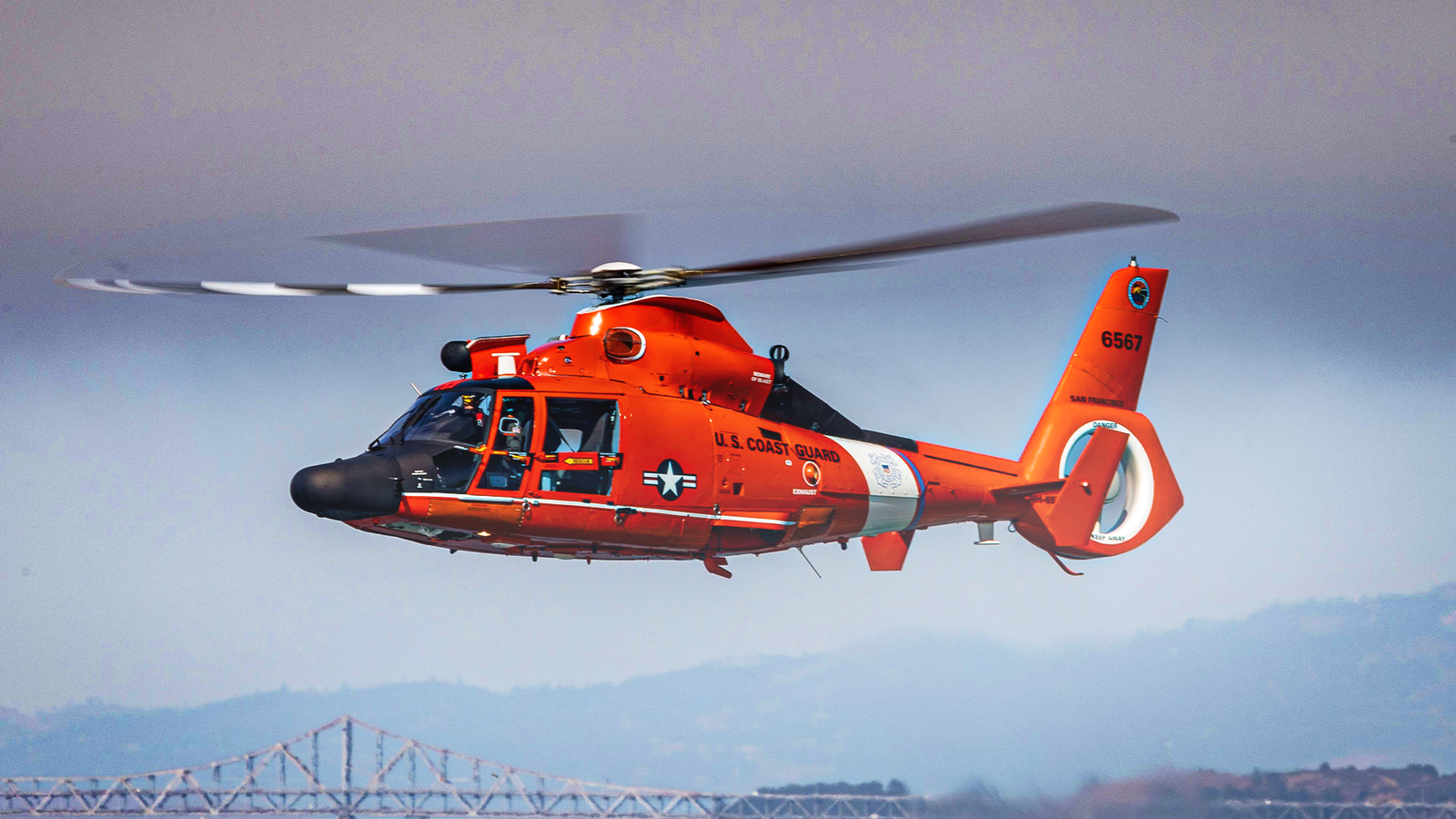
Published Sep 6, 2026, 12:00 AM EDT Luke Diaz is a freelance military writer with experience with active duty experience in the US Navy as well as defense and industrial engineering. He is a former Naval Flight Officer who performed tactical air control on the carrier-based E-2 Hawkeye. US Coast Guard Air Stations provide a crucial safety net for sailors at sea, aviators who find themselves ditching over open water, as well as fishers, enthusiasts, and even the military. There were only a handful of these vital airfields to sustain the Coast Guard's fleet of rescue aircraft. Each base has a different complement of fixed-wing planes like the Lockheed HC-130J Hercules as well as helicopters, including the Sikorsky MH-60 Jayhawk and Eurocopter MH-65 Dolphin. Each station is responsible for providing search and rescue as well as other emergency response services across massive areas of Coastline and territorial waters. Every one of these air stations has a unique flightline to support the demands of the environment from Florida to Alaska, as well as mission priorities which can vary drastically. In the Arctic, CGAS Kodiak is almost exclusively focused on open water search and rescue, while Clearwater has a long list of taskings from rescuing sinking refugee boats to drug smuggling interdiction, and much more. 5 Air Station Cape Cod The only Coast Guard aviation facility from New Jersey to the Canadian border Credit: US Coast Guard CGAS Cape Cod vigilantly provides support for over 2,000 miles (3,219 km) of coastline as the only air station of its kind in New England. Originally operating from Otis Air Base, when the National Guard pulled out its last Boeing F-15 Eagle, the Airfield became a joint facility, and its primary function now is search and rescue sorties. There are about 200 'Coasties' today, flying three Jayhawk helos alongside three HC-144A Ocean Sentry fixed-wing rescue planes. If Cape Cod's aircraft are down for weather or maintenance, the nearest alternative Coast Guard air asset is hundreds of miles away. A single-point-of-failure model works only if the underlying aircraft are reliable enough to sustain it. That is why the majority of the Coast Guard aircraft are military-derived airframes. They also experience some of the highest flight hour usage rates, even compared to similar platforms like the US Army UH-60 Blackhawk, which the Jayhawk is based on. As a primary active command on the base, CGAS Cape Cod supports a highly integrated operational community that maintains 24/7/365 readiness to launch assets within 30 minutes of an emergency call. The base averages around 250 missions per year. Its response reach extends all the way from the US-Canadian border down to northern New Jersey, and reaches as far west inland as Lake Champlain, New York. 4 Air Station Sitka Protecting 12,000 miles of isolated, rugged coastline Credit: US Coast Guard The station at Sitka in Alaska is smaller than the others on this list by roster size and inventory, yet its mission scope is one of the most vital for maritime safety. There are about 130 USCG staff posted at CGAS Sitka who operate three MH-60 helicopters. Yet the small complement is responsible for over 12,000 miles of extremely harsh Arctic coastline. The base responds to an average of 150 search and rescue missions per year, with many taking place inland to rescue stranded hikers and hunters. The extremely isolated location means that it is often not possible to travel to a larger regional city by road. That leaves the Coast Guard as the only option in cases where urgent MEDEVAC is required to transport patients for life-saving medical care at a major hospital. These Aircrews also serve as a vital lifeline by performing medical emergency evacuations from small, off-grid native villages and regional clinics directly to hospitals in Sitka, Juneau, and Ketchikan. They also fly special missions to repair or inspect 75 Marine aids to navigation across the brutal Coastline. These devices are located at remote sites to protect ships from accidentally sailing into hidden reefs or rocky waterways. CGAS Sitka also plays an important role in the protection of the environment and the enforcement of maritime law. Fishing in the waters around Alaska is an extremely lucrative business, and one of the driving factors behind the Coast Guard mission. Jayhawk crews conduct low-altitude patrols over thousands of remote inlets and islands to monitor salmon, halibut, and crab fishing fleets. They verify that vessels are fishing only during legal openers and are not encroaching on closed conservation zones. 3 Air Station Kodiak Mission Four million square miles of search and rescue coverage Credit: US Coast Guard CGAS Kodiak is the largest air station in the Pacific area with about 400 staff and a fleet of 14 aircraft. This command serves a vast area across some of the harshest seas in the world, featuring the entire Gulf of Alaska, the Bering Sea, and the Aleutian Island chain. The area pushes all the way north into the Chukchi and Beaufort Seas of the Arctic Ocean. Aircrews pull commercial fishermen from sinking vessels in the Bering Sea and rescue injured personnel from extreme mountain terrain. The base operates five Super Hercules planes, five Jayhawks, and four Dolphin helos. The Coasties also deploy forward operating detachments to places like Cold Bay and Kotzebue, depending on the season, to slash response times in the high Arctic. Like Sitka, Aircrews monitor the massive US Exclusive Economic Zone to protect multi-billion-dollar domestic fishing fleets from illegal foreign incursions and enforce maritime safety laws. Simultaneously, they can also be called upon to track military-enabled movements in cases when Russian aircraft or ships are spotted. Kodiak also monitors Arctic shipping lanes opening due to receding ice, and coordinates joint defense maneuvers with the Department of Defense. 2 Air Station Clearwater Serving Florida and beyond into the Caribbean and Bahamas Credit: US Coast Guard Coast Guard Air Station Clearwater does not manage the largest area in the network, despite the massive expanse that it does monitor, but it is the busiest by operational tempo. The station records an average of over 300 sorties a year, while maintaining a constant 30-minute alert posture. Clearwater is responsible for some of the busiest waterways in terms of recreational boating and other tourism, but it also supports trafficking and migrant interdiction ops. The beaches and seas around Florida are some of the most popular in the US with both the locals and visitors from out of state, or even internationally. The high density of pleasure boating, scuba diving, surfing, among other activities brings in many emergency calls on its own. There are also several oil drilling platforms across the Gulf of Mexico which rely on the USCG for emergency responses. The USCG also supports rescue operations for the vast military training areas in the Gulf used by the Navy and Air Force. When a military aircraft has a mishap at sea, Coast Guard aircraft or cutters can be called into response just as often, or more so, as a military platform, depending on the conditions. And then there is the station's commitment to supporting immigration and Drug Enforcement agencies. While Clearwater is always ready to respond, there are thousands of immigrants from across the Caribbean who attempt to get illegally into the US by boat, or even light aircraft. Many of the vessels used by these refugees and traffickers do not reach the shores. The USCG finds itself rescuing as many people as it arrests because of this ongoing human crisis. The air station has contributed significantly to Maritime drug seizures over the years, with more than 2025 seeing nearly $4 billion worth of narcotics intercepted, weighing in at over 500,000 lb (226,796 kg). The high demand for the guard at Clearwater has stretched the air station thin, despite having one of the largest complements. There are roughly 500 active-duty personnel on site to keep the ten Jayhawk helicopters ready to fly alongside one to four HC-130 and HC-27J Spartan airplanes. 1 Air Station Barbers Point Covering 12.2 million square miles of open ocean, atolls, and islands Credit: US Coast Guard Located on Oahu, Hawaii, the air station at Barbers Point is responsible for providing search and rescue response across what the Coast Guard refers to as the Oceania District. This span of mostly open ocean covers over 12 million square miles, which means missions can require transit of over 2,000 nautical miles (3,704 km). The small base relies on the HC-130J to provide long-distance emergency response, while the MH-65 Dolphin helicopters handle shorter-range sorties. Known as the 'Guardians of the Pacific,' CGAS Barbers Point is the only Coast Guard aviation unit located in the Fourteenth Coast Guard District, giving it the largest Area of Responsibility in the entire US Coast Guard. Crews are responsible for providing aviation support across the entire Hawaiian Island Chain, the Marianas, Guam, Saipan, the Carolines, and the Marshalls. Flying over 1,200 SAR hours annually, crews save an average of 50 lives and assist over 700 people each year. There are between 200 and 250 staff on the roster at CGAS Barbers Point who keep the four HC-130s and four MH-65s mission-ready. The Station also regularly coordinates with the US Navy as well when the mission calls for it to supplement its Force. Boeing P-8 Poseidon Maritime Patrol aircraft can be dispatched from sites like Kadena Air Force Base in Okinawa, Japan, to help cover the massive area during survivor searches in remote waters.
5 Coast Guard Air Stations With The Biggest Search & Rescue Responsibilities
Full Article
Original Source
Read the full article at Simpleflying →KhanList aggregates and links to publicly available news content. We do not host full articles from third-party sources. Always verify important information with original sources.