
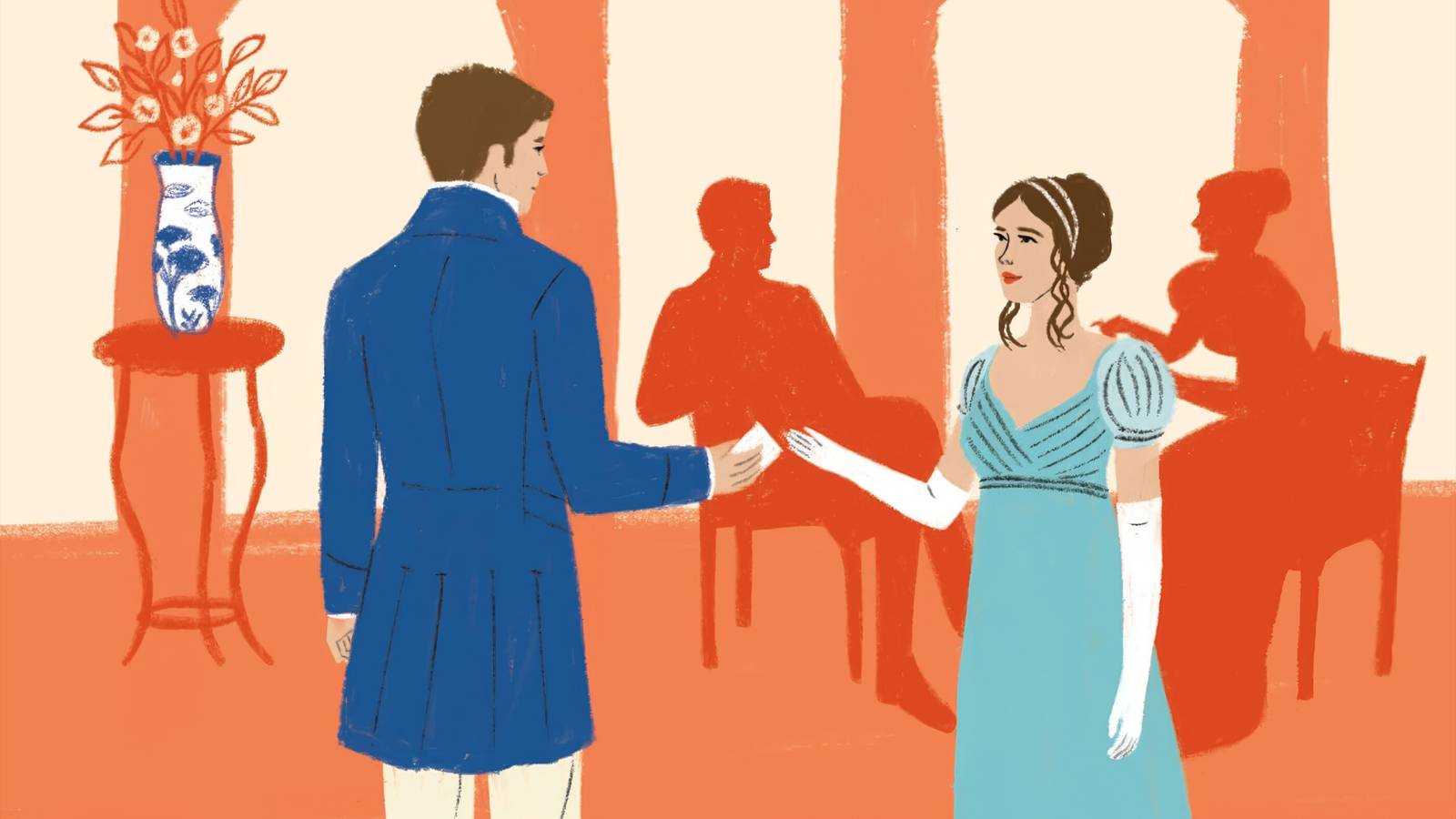
Published Nov 25, 2026, 1:02 PM EST At any given moment, Scott Simone has at least three books jockeying for his attention. He’ll never turn down a campus novel with a literary bent, nor will he hesitate to add yet another mystery to his Leaning Tower of Pisa-inspired to-be-read pile — which is built upon the bedrocks of too many short story collections, how-are-these-real true crime books, and classics waiting to be cracked open again. Topics that have him ripping through pages the fastest include closed-circle murders, unhappy professors, life-questioning philosophical deep dives, so long as they feature sharp sentences, a dark sense of humor, and at least a little malice. He’s spent so much time in book shops over the years he is, to his wife’s chagrin, continuing to build a library that doesn’t quite respect the dimensions of the apartment meant to contain it. There’s a problem with genius: It makes everything seem so easy. When it comes to literary classics, there’s the assumption of inevitability. When a writer scribbles a masterpiece, the book is immediately published, and it grows in popularity until, a century later, it sits on a bookstore shelf with a little sticker declaring it essential reading. But that’s the stuff of fairy tales. Publishers turn down manuscripts. Finished novels spend decades in drawers. Governments suppress voices. Writers die. There's something unsettling about how much dumb luck goes into what we consider great literature. We like to think the best books eventually get their due, as though genius is so obvious that somebody, somewhere, is bound to recognize it. But writing a masterpiece and getting the thing published are two very different accomplishments. Some authors died with finished novels waiting to reach bookshelves. Others left behind manuscripts that had been rejected, suppressed, or simply forgotten, with little reason to think anyone would ever read them. Their work survived because someone refused to give up, got lucky, or simply ignored what the author wanted. And thank God for that. Because some went on to become classics that are now so firmly established in the literary canon that it's hard to imagine bookstores without them. Yet there was a time when the odds of anyone reading them were awfully slim. 5 'The Trial' by Franz Kafka (1925) Image via Knopf Kafkaesque. The word gets thrown around so often, it's become so entrenched in popular vernacular, that those who’ve no idea who Kafka is use it whenever they’re having a miserable experience with bureaucracy. A lost document, an afternoon wasted at the DMV, a government office where nobody can tell you which form to fill out. But Franz Kafka was getting at something more sinister than bureaucrats being a pain to deal with. In The Trial, he imagines a world where a man can be accused of a crime without ever learning what he's done. Josef K. spends the novel trying to defend himself. But he just keeps getting tangled up in rules nobody will explain. It's frightening yet funny. Every official acts as though the whole arrangement makes perfect sense, so much so that K. often looks like the unreasonable one. The system doesn't need to convince K. he's guilty; it just has to keep him busy trying to prove he's not. By the time he realizes how much power he's surrendered, it's too late to do anything about it. The irony is that Kafka had very little say in what happened to The Trial. Before his death in 1924, he told his friend Max Brod to burn his unpublished manuscripts. Brod thought this idea terrible. He took the unfinished novel, arranged the chapters, and published it in 1925. The novel generations of readers have come to know isn't quite the one Kafka left behind. He hadn't even settled on its final arrangement; Brod did that for him. In other words, a writer that was so preoccupied with the helplessness of people whose lives are controlled by others had no say in the fate of his own work. There’s something Kafkaesque about that. 4 'Persuasion' by Jane Austen (1817) Image via Chartwell Books / The Quarto Group Here's something Jane Austen understood better than most: Advice is easy to give, hard to live. Just take Persuasion, in which Anne Elliot gets talked out of marrying the man she loves. He just doesn’t have the money nor the social standing to make a respectable husband. The years tick by — eight, to be exact — and she’s still unmarried at 27, beating herself up for having listened. And Austen loved a good takedown of those who think they know best. Her drawing rooms are full of snobs and bores. The type of self-important fools who'd sooner meddle in someone else's affairs than attend to their own. But Persuasion has a sadness that runs deeper than much of her earlier work. It's about having made the sensible decision and spending years wondering how you could have been so stupid. Austen had finished the novel before her death in July 1817, but she never lived to see it in print. But this posthumously published novel didn’t have the intrigue of others. Persuasion wasn’t pulled from a hidden drawer or rescued from a fire. But it did cause somewhat of a stir in other ways: Her brother Henry published it alongside Northanger Abbey, another novel that had spent years waiting its turn. He included a biographical note that, for the first time, publicly identified his sister as the author of her novels. Prior to this, Austen spent her career publishing anonymously, allowing her to poke and prod English society while not sullying her own name. It wasn't until she was gone that readers finally learned who'd been laughing at them all those years. 3 'The Master and Margarita' by Mikhail Bulgakov (1966–1967) Image via Vintage Classics Give people a little power, and watch how quickly it goes to their heads. Mikhail Bulgakov understood this all too well. He lived through some of the worst years of Stalinist Russia, after all. And he uses that inspiration in The Master and Margarita. He made fools of the bureaucrats, literary snobs, and social climbers who'll gladly sacrifice dignity for mobility. And he wasn’t exactly subtle about it. The devil turns up in Moscow with an entourage that includes an enormous talking cat with a fondness for firearms. There's witchcraft and there’s mayhem amongst other supernatural nonsense. Still it's the ordinary people whose behavior is the most ridiculous, constantly exposing their greed and vanity. The comedy on the surface does little to belie what’s rotting the core: This is a society in which telling the truth can ruin your life. And Bulgakov knew better than most what could happen to someone who spoke out of turn. His plays had been banned, his career was in tatters, and in 1930, he burned an early manuscript of The Master and Margarita himself. Then he started over. He spent much of the next decade working on the novel, revising it almost until his death in 1940. His wife, Yelena, kept the manuscript safe and spent years trying to get it into print. It finally appeared in the Soviet magazine Moskva in 1966 and 1967, more than a quarter-century after Bulgakov died. Even then, the censors couldn't leave the thing alone, cutting a good chunk of the text. One of the novel's most famous lines is "Manuscripts don't burn." Bulgakov had tried to prove otherwise. The Soviet authorities gave it a good shot, too. Neither quite managed it. Image via Grove Press A useful idiot. Few writers have put one to better use than John Kennedy Toole did in A Confederacy of Dunces. Ignatius J. Reilly is a pompous, self-important fool who considers himself intellectually superior to just about everyone. He talks ad nauseum about the decline of Western civilization and bemoans the moral bankruptcy of modern society. The irritating part: he's not always wrong. The trouble is that Ignatius is every bit as vain and selfish — and downright ridiculous — as the people he's railing against. He lives with his mother and he can't hold down a job. That's Toole's great trick. He uses an insufferable dunce to expose the foolishness of everyone else, all while making sure Ignatius gets his fair share of ridicule. And getting A Confederacy of Dunces published was something of a farce itself. Publishers had passed on Toole's manuscript, and when he died in 1969, that seemed to be that. Except his mother, Thelma, spent years knocking on publishers' doors. That got her nowhere, until she turned up at the office of novelist Walker Percy. He wasn't interested in reading some stranger's unpublished novel, but still Thelma persisted. In fact, she wouldn’t leave him alone. So he finally read it and, to his surprise, thought it brilliant. Percy helped get the book into print through Louisiana State University Press in 1980, 11 years after Toole's death. A year later, it won the Pulitzer Prize for Fiction. 1 'The Book of Disquiet' by Fernando Pessoa (1982) Image via Penguin Most writers spend their careers trying to find their voice. Fernando Pessoa had more than he knew what to do with. He invented entire authors, complete with their own biographies, personalities, and literary styles. One of them was Bernardo Soares, a lowly Lisbon bookkeeper who spends more time thinking about life than actually living it. He's the supposed author of The Book of Disquiet, a work that seems to have almost as many identities as the man who wrote it. There's hardly a plot to speak of. It’s all pieced-together reflections on just about everything: loneliness, boredom, dreams, the misery of being trapped inside your own head. And that's what makes the book so fascinating. Pessoa finds more drama in a man's thoughts than most novelists manage with an entire cast of characters. Soares notices everything, questions everything; he thinks himself out of doing much of anything. The trouble was that Pessoa never quite got around to making The Book of Disquiet an actual book. When he died in 1935, he left behind a trunk stuffed with thousands of documents, including hundreds of fragments intended for the work. Some had been published, but most were loose pages, scattered observations, and passages that he'd never settled into any particular order. It took another 47 years before editors managed to piece together the first edition in 1982. And even then, they couldn't agree on what belonged where. Subsequent editions have rearranged passages, added material, and produced sometimes wildly different versions of the same work. There's still no definitive Book of Disquiet, and there may never be one.
5 Classic Books Published After Their Authors' Deaths
Full Article
Original Source
Read the full article at Collider →KhanList aggregates and links to publicly available news content. We do not host full articles from third-party sources. Always verify important information with original sources.