
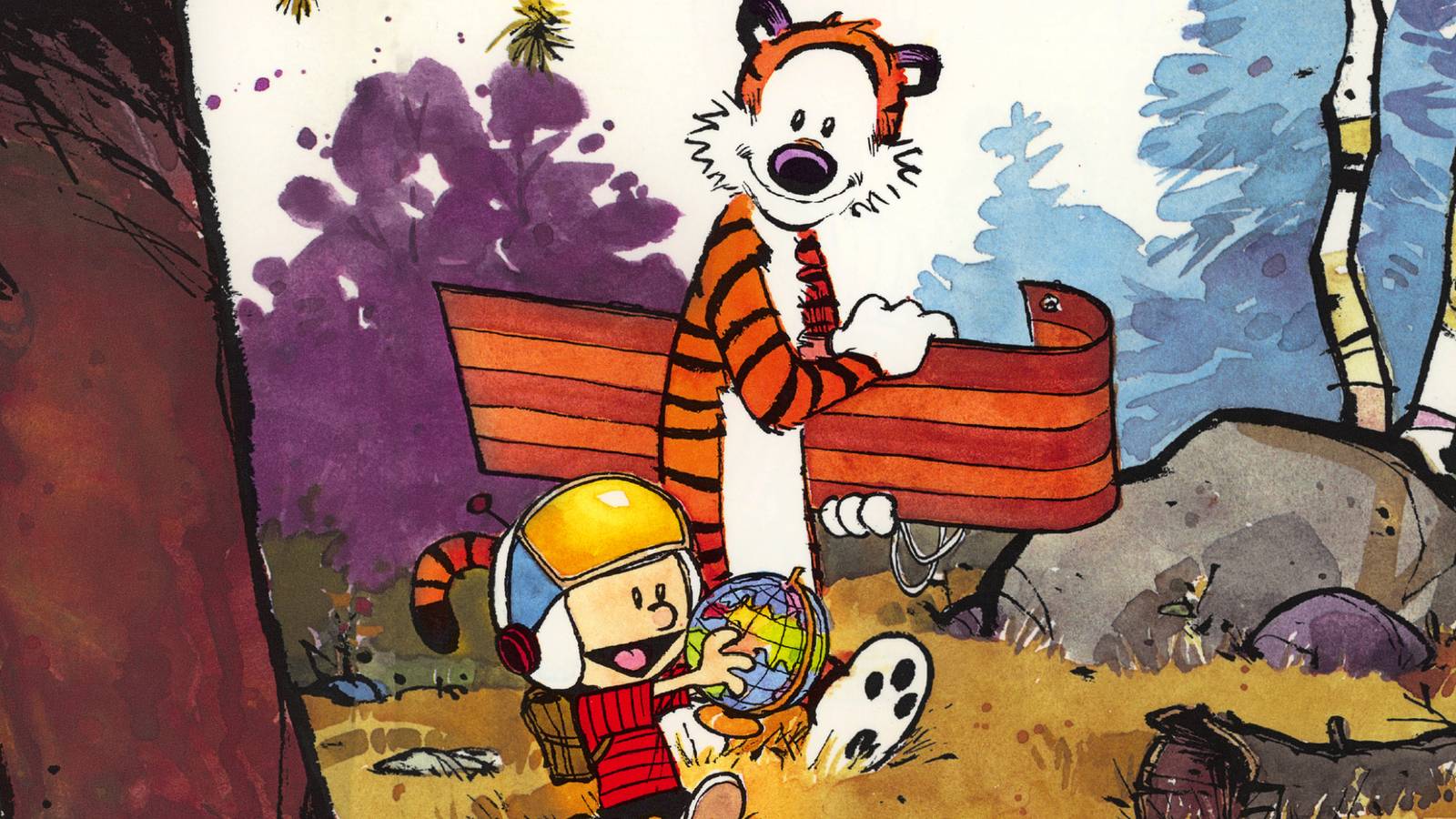
Published Aug 25, 2026, 10:58 PM EDT Nicolas Ayala is a Senior Writer for the Comics team at ScreenRant, with over five years of experience writing about Superhero media, action movies, and TV shows. Even though Calvin and Hobbes have retained their distinct art style across four decades, creator Bill Watterson has occasionally experimented with bold visual shake-ups that take the boy and his tiger friend out of their comfort zone. Calvin and Hobbes has maintained a remarkably cohesive visual identity for decades, with a blend of fluid ink brushwork and lush watercolor washes that can evolve back and forth from suburban realism to sweeping cinematic fantasy landscapes. Calvin himself is instantly recognizable by his ability to stretch into impossibly wide expressions, and Hobbes provides equilibrium with his elongated anatomy and large, inquisitive eyes. Many other legendary newspaper strips have undergone a visible artistic evolution to find their definitive voices. Peanuts debuted with large-headed toddlers and a less unique Snoopy design before finding its heart in Charles M Schulz' less defined linework and more asymmetrical character designs. Garfield underwent an even more dramatic physical mutation, shedding his original large, four-legged feline look with tiny squinted eyes to become a highly expressive, bipedal character with gigantic oval eyes and oversized feet. Even Popeye began life in the late 1920s inside the densely cross-hatched, gritty theatrical layouts of Thimble Theatre before the character's solo popularity forced a transition toward a simplified, bold-line style. Calvin and Hobbes' art style consistency has allowed the titular characters to star in many visually striking adventures that challenge the rules and tropes of the medium, often with the art at the center of the gags. Calvin And Hobbes Try Out Sunglasses Calvin Spends Almost The Whole Comic In POV Combined with different vibrant lights and backgrounds, Hobbes’ constantly evolving expressions drag the reader directly into Calvin's eyes as he cycles through stylish sunglasses. The entire top row is a visual riddle, where a repeating portrait framing of Hobbes morphs through different levels of hesitation, disapproval, disgust, and ultimate approval. After Calvin's towering mom rejects whatever he's doing, the strip finally reveals he was trying out eccentric sunglasses at the store. This abrupt return to reality delivers a perfect punchline where Calvin finally appears in the frame despite being the protagonist all along. The simple sequence of Hobbes' different facial expressions, lit under different colors, make this strip particularly striking in its minimalism. Then, the sudden jolt of kinetic tension when the perspective shifts to the mother's point of view provides contrast, and finally, Calvin and Hobbes appear together in one single panel that returns to their comic strip's traditional framing and color palette and acts as a visual cleanser. It might not be the most ambitious, but Calvin and Hobbes' colorful attempt to buy stylish sunglasses definitely stands out among their hundreds of adventures. Calvin's Imagination Goes Full Fantasy Bill Waterson Shows Off His Fantasy And Sci-Fi Art Skills An initial expanse of pure emptiness sets a dramatic biblical tone, immediately giving way to a massive, hyper-detailed close-up of a brooding eye that signals a shift into full-fledged fantasy or hard sci-fi. Bill Watterson shreds his gentle comic strip style to channel the larger-than-life energy of legendary comic pioneers like Jack Kirby. The subsequent panels explode with chiseled ink brushstrokes, dramatic cross-hatching, and a fiery palette of deep oranges, blacks, and blues that take Calvin’s self-deification completely seriously. Watterson uses Calvin's imagination to showcase his incredible range as an illustrator, but still brings Calvin's fantasy back down to Earth with the sudden reveal of Calvin's parents praising their son's creativity, illustrated in Calvin and Hobbes' classic Sunday strip art style. In the end, Calvin and Hobbes could be depicted as a wrathful deity that precedes Earth's creation, but his traditionally family-friendly appearance is what makes him so iconic. It's not for a lack of skill that Bill Watterson chose to depict Calvin and Hobbes as cute little cartoon characters. The Whole Town Celebrates Calvin, The Boy Genius Calvin's Joy Is Intense But Temporary Calvin’s fleeting academic triumph is built with a classic three-act format, but the massive central splash panel completely overtakes the page, and for good reason. Calvin's inflated sense of accomplishment is cut short once the class moves on without further praise. However, Calvin's brief seconds of euphoria blow a simple good grade out into a municipal holiday complete with marching bands, circus elephants, and confetti-strewn skyscrapers. The artistic mastery of Calvin's urban landscape is patent in Watterson’s ability to conjure a sense of staggering detail with minimalist design choices. A closer look reveals that the towering city buildings are mostly composed of sketchy lines with barely defined windows, while half of the roaring parade crowd is rendered as a shapeless blob of people, all illustrated with a limited color palette. The colossal "Boy Genius" statue provides a sense of massive scale, drawn from an intimidatingly low angle that establishes a breathtaking sense of perspective that makes Calvin's short-lived fantasy look truly unforgettable. Calvin Creates The Most Epic Sci-Fi Movie In His Mind What's Better Than A Fighter Jet-Piloting T-Rex? Prehistoric majesty meets advanced military engineering in a sprawling layout that showcases Bill Watterson's skill at animal anatomy and aircraft design. Once again, Calvin's imagination transports the reader to a highly-realistic setting, this time straight into a lush Mesozoic swamp, rendered with dense jungle foliage, prehistoric Pterodactyls slicing through the sky, and beautifully textured Chasmosaurus models. Watterson uses heavy ink textures and realistic proportions to give the dinosaurs a tangible weight that mirrors a classic pulp adventure novel. Things then get weird when a hyper-detailed Tyrannosaurus Rex roars from inside the cockpit of an F-14 Tomcat fighter jet. This grand action-movie atmosphere pivots on a single tiny frame that instantly grounds the entire multi-million-dollar aerial battle back into Calvin and Hobbes' own little world, where they play with toys. The beautifully rendered high-art fantasy panels receive a completely different meaning with Hobbes' deadpan realization that "this is so stupid." While realistic depictions of dinosaurs are a recurring element in Calvin's childhood fantasies, the sheer absurdity of a goggle-wearing apex predator piloting a supersonic jet makes this play-pretend session especially memorable. Bill Waterson Secretly Uses A Whole Arsenal Of Comic Design Tools Bill Watterson’s 1992 alien abduction Calvin and Hobbes strip is a masterclass in visual storytelling, as it breaks free from traditional comic grid restraints in favor of panels in a wide variety of shapes and sizes, distributed unevenly. The abduction panel plays with perspective to provide a sense of vertigo-induced panic, and the two-panel montage sequence explodes with a hyper-detailed colorful aesthetic, complete with glowing green stasis pods and techno-organic extraterrestrial beings before a plain white background brings Calvin back to reality. Despite this amount of detail, this strip stays true to Bill Watterson's expressive cartoon linework. Additionally, Calvin's robotic impostor acts as a perfect stylistic bridge, as his physical design retains the metallic, angular detail of the spaceship scenes, but copies the original Calvin's proportions accurately. The vibrant chaos finally cools down in a beautiful, wide concluding panel featuring a stark, pitch-black night sky, where a grounded Calvin looks out his bedroom window in quiet disappointment. Without a single line of dialog, this strip is easy to follow, but it's the fact that each simple detail serves a carefully designed function that makes the whole gag so effective. How would you rank these Calvin and Hobbes strips? Writer Bill Watterson Colorist Bill Watterson Publisher Andrews McMeel Publishing
5 Calvin & Hobbes Comics With The Best Art
Full Article
Original Source
Read the full article at Screenrant →KhanList aggregates and links to publicly available news content. We do not host full articles from third-party sources. Always verify important information with original sources.