
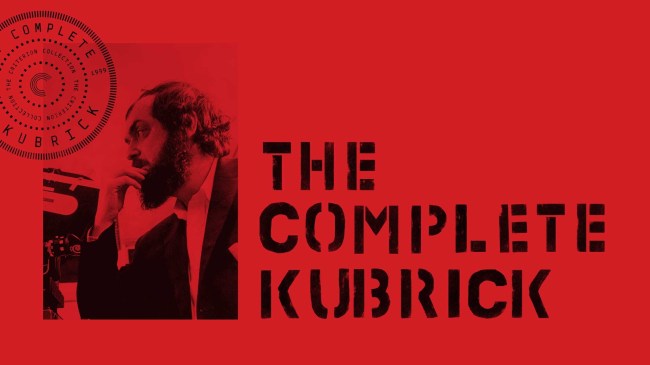
In 2024, archivist Michael Chaiken was approached by the Criterion Collection about what was being described as a “big Kubrick project.” It would start with remastering the director’s last film, “Eyes Wide Shut,” but for months the scope of the ambitious project remained an open question: Was a complete Stanley Kubrick box set even possible? Kubrick was a precise director, and his control over every aspect of his filmmaking process extended to its home video presentation. But home video technology has developed in ways (widescreen TVs, high dynamic range, 4K resolution, Dolby Atmos) that Kubrick could never have imagined before he died in 1999. As a result — from the image to sound to design of the box itself — there was the underlying question driving Chaiken and the team’s work: “What would Stanley do?” “I had to research the history of Stanley Kubrick on home video, and that’s a very specific thing,” said Chaiken. “It’s almost like for a biographer that would be [an important] footnote.” In an interview with IndieWire, Chaiken broke down the challenges and key work behind “The Complete Kubrick,” which hit stores and mailboxes last week. “What Does Complete Even Mean?” Home video fanatics are often completists. And if you are going to invest the time in a $599.95 box set (on sale for 30 percent off at most retailers), the motivation to make it comprehensive and definitive is obvious, but with a career spanning five decades, that isn’t always possible. “You have to kick around the idea, ‘What does ‘complete’ mean? And how would we make that so?,” said Chaiken. The heart of Kubrick’s feature film career has been well preserved. His final five films were made with Warner Bros., and the studio’s archive team has kept the original elements well preserved. Meanwhile, Criterion, back in its laser disc era, in the 1980s and ’90s, had a good working relationship with Kubrick himself (more about that later) and was already familiar with what was available (and already in-house) when it came to having to remaster his key films into the HDR/4K standards of today. “It’s the early stuff that was tricky because he wasn’t working for a studio; he was an independent,” said Chaiken. “[A complete box set] almost didn’t happen; it was really at the 11th hour that it came together.” In the case of “The Seafarers,” a 1953 30-minute documentary Kubrick was commissioned to make for the Seafarers International Union, the issue became untangling the project’s rights. “We thought we knew [who owned the rights], and then somebody said, ‘Hey, by the way, I’m actually the rights holder of that,’” Chaiken chuckled, retelling the story and imagining Kubrick himself groaning at the idea that Criterion had dug it up and restored it. “ I laugh because it’s a work for hire, but at the same time, it’s a very beautiful film, and it’s his first color film, and there’s elements in it that are so Kubrickian.” ‘Day of the Fight’ The final missing piece was the original 12-minute version of the 1951 documentary “Day of the Fight,” which Kubrick shot and edited independently for Look magazine in 1949. “There’s a version that [Kubrick] financed and made himself, and then there’s the version that exists,” said Chaiken. “He sold the film to RKO Pictures, and they re-edited the film; they added footage that he didn’t shoot, and they changed the narration and the soundtrack that Kubrick had commissioned Gerald Fried to make.” Kubrick’s original version had never been presented in 4K, and locating the original elements was the final piece, in Chaiken’s mind, to the set being “complete.” “Why do you need two cuts of Day of the Fight?” Chaiken rhetorically asked before answering the question: “They are different, and to reinforce that completeness, especially with [this being] Stanley’s very first film. His cut is actually [four minutes] shorter than the one that RKO made [and] the very first film edited and produced and directed by him.” “The Shining”: Two Versions, Much Disagreement Chaiken’s need to present both versions of a film also applied to “The Shining,” which, after it was released domestically in May 1980 — where it bombed with critics — Kubrick spent three months re-editing, making it 25 minutes shorter, for the international release in September 1980. What’s fascinating is that both versions have been widely available for decades; they just didn’t cross the ocean. The shorter international version is Kubrick’s final cut, and what he considered his director’s cut, never made its way to the U.S. “[Kubrick] never pulled the U.S. theatrical version, so that version is what has existed here on video. And if you’re doing complete Kubrick, the final edit of ‘The Shining’ has to be on there. It just has to be,” said Chaiken, noting the significant differences. “The international version is a different experience. The tone of it does shift. It does leave open the possibility that none of this is happening, and it’s all happening in Jack’s head. You really don’t understand [Jack’s] relationship with Danny in the same way in the international version.” ‘The Shining’courtesy of Criterion As IndieWire’s Jim Hemphill fully explored, the significant differences between the versions are disorienting for those who grew up loving the longer U.S. version. Chaiken anticipated what “a headscratcher” the international version would be, which is why he commissioned a new commentary track. In the new box set, the U.S. version preserves steadicam operator and founder Garrett Brown’s original Criterion commentary track, but the international version features a newly recorded track by the great Pixar animation director Lee Unkrich, who co-authored a decades-in-the-making, 1,396-page, two-volume “Stanley Kubrick’s The Shining” book, which drew from rare documents, script notes, and storyboards in the Kubrick Archive, and is based on extensive interviews with the surviving cast and crew, to tell the definitive story of the legendary and misunderstood production. “I imagine American audiences, who love the movie, saying, ‘Why would I want to watch a shorter version of ‘The Shining’? But I think having Lee Unkrich there walking you through it and talking about some of these decisions, and talking about the production of the movie, makes it a rewarding experience,” said Chaiken. “If you’re a skeptic, it’s at least worth watching once with Lee’s commentary because it is like a master-class in ‘The Shining.’” Mono Sound Twenty years after Francis Ford Coppola and Walter Murch’s groundbreaking “Apocalypse Now” sound design and roadshow ushered in surround sound, and George Lucas used the box office power of his “Star Wars” franchise to leverage theaters into adapting the new technology he was pioneering at Skywalker, Kubrick was still avoiding even doing stereo mixes of his final films. “He stuck with mono until the end,” said Chaiken. “He was obsessed with presentation, and he truly felt, ‘I would rather have good mono than bad stereo,’ and he didn’t trust that these theaters were set up in such a way that the stereo mix.” For the box set, Criterion does offer 5.1 mixes of Kubrick’s films, but the default audio is Kubrick’s preferred mono mix. Chaiken and Criterion audio supervisor Ryan Hullings felt it important to go back to original mono mixes, which hadn’t been touched for home video in 30 years, to do new masters for the box set. In most cases, locating the original mono mix assets was not a problem, but there were exceptions, most notably “Full Metal Jacket.” ‘Full Metal Jacket’courtesy of Criterion While Warner Archives had preserved all the original assets, identifying which was the final mono mix proved difficult, explained Chaiken, “ ‘Full Metal Jacket’ was a tricky one because they were trying to convince Stanley to do it in stereo. So there was the beginning of a stereo mix.” In going through what Hullings were the final mono mixes, they didn’t conform with the 35mm print he was using as a comparison. As they did throughout the process of making the box set, the Criterion team turned to Kubrick’s surviving collaborators, in this case “Full Metal Jacket” editor Martin Hunter and Nigel Galt, who would go on to edit “Eyes Wide Shut,” but had done Foley and sound work on “Full Metal Jacket.” According to Chaiken, it was Galt who helped them solve the puzzle, telling Hullings, “You’ll know you have the right mono mix of ‘Full Metal Jacket’ because during the end credits, in the original mono theatrical mix, we screwed up.” The final song over credits is The Rolling Stones’ “Paint It Black,” but according to Galt, ‘When it went out originally theatrically, we had it at 25 frames per second, so it’s actually sped up. So if you have the mix that has ‘Paint It Black’ at 25 frames per second, that’s it.’” And yes, on the new Criterion, the “Full Metal Jacket” mono mix preserved “Paint It Black” playing approximately four percent faster than The Rolling Stones recorded it. The Limits: “Film Is Not Video” “Stanley passed away in 1999, and that was the beginning of when the DVD revolution was starting to happen,” said Chaiken. “So, the idea of Blu-ray and then 4K, you’re in a realm that Kubrick could never have imagined.” Chaiken confronted this head-on, starting the project with “Eyes Wide Shut”—which he described as one of Kubrick’s hardest films to bridge the gap between the filmmaker’s original intention and the latest in modern home video technology. In working with “Eyes Wide Shut” cinematographer Larry Smith, Chaiken came to understand how much of a “dreamy quality” is a product of the unique way Smith and Kubrick exposed and developed the celluloid. “It’s never going to be a one-to-one correlation between film and video; you can get close, but video is getting sharper and sharper and sharper,” said Chaiken. “I saw it with ‘Eyes Wide Shut,’ that you could go very hardcore into the 4K, and you could see details in the shadows and things that Kubrick would never have wanted you to see.” Chaiken and Criterion worked closely with the Warner Archives, Smith, and other collaborators, going back and forth with different passes to figure out how best to find a happy medium, which, with most films, meant sometimes dialing down the HDR and leaning into “more filmic, warmer curve” with the color grade. The more Chaiken researched, the more he learned just how obsessive Kubrick was about the presentation of his films, and admitted he would get obsessive wondering if they had gotten the colors of a particular transfer right. He sought out advice from Maria Palazzola, long-time restoration supervisor, colorist, and former transfer expert at The Criterion Collection during 1980s and ‘90s, having overseen “director approved” versions of Kubrick’s Criterion laser discs. “I had assumed that there was an intermediary, or Leon Vitali, Stanley’s longtime assistant, helping Maria,” said Chaiken.”But when I talked to her, she said, ‘No, no, Stanley was calling me directly.’” Chaiken said he flooded Palazzola with questions trying to find out just how obsessive Kubrick was about his home video transfers and what, in particular, he obsessed about. Chaiken had heard the stories that Kubrick had made Palazzola re-transfer films countless times. ‘2001: A Space Odyssey’ Chaiken explained his assumptions were wrong, “She said that was absolutely not the case. That [Kubrick] understood the limitations of the technology at that time, and he wanted them to look as good as they could possibly look on home video.” For example, according Palazzola told Chaiken with “2001: A Space Odyssey,” Kubrick only pressed hard on two key sections. “He wanted to be sure that the Dawn of Man sequence — that was front projected: The backgrounds were projected when they were filming it — and so he wanted to make sure that you couldn’t see any reflection in the eyes of the apes from that front projection,” said Chaiken. “And she said the one reel that he made her re-transfer a few times was the last reel, in the French boudoir, because [Kubrick] didn’t want it to be too bright.” Chaiken said the anecdotes of Kubrick’s collaboration with Palazzola changed his perspective on his own work: “Hearing that he was relatively easy to work with was a bit of a relief because he cared about this stuff immensely, but he understood that film is not video. It’s a completely different medium.” The Box: Kubrick the Archivist Chaiken gives full credit to visual artist Drusilla Adeline (aka Sister Hyde) for the design of the Kubrick box set, and in this video, you can hear them discuss how the fonts, color, layout, and the box itself were built around the theme of “Kubrick at work,” and how, in going through his archive, you get a sense of him leaving his fingerprints (literally and figuratively) on the making of his films. ‘The Complete Kubrick’courtesy of Criterion One of the things that is striking about the box set, loaded with 16 different films, extras, and supporting materials, is how — compared to most box sets — it is laid out in a way that it is very easy to find what you are looking for, but also clear explanations for each film (each separated by a tab and film poster) of what is versions, audio, and extras are available. Chaiken said that in going through Kubrick’s work, it was clear what an organized and clear archivist the filmmaker was himself. “In my mind, I was thinking about the Library of America — what would a Library of America compendium of Stanley Kubrick look like? That was definitely a touchstone,” said Chaiken. “Library of America editions, where they’ll [be] a single compendium of a great American author and you have the major works, but then you also have these interesting tangential pieces, and they’re laid out so beautifully, they’re just so uniform. They have the little tab that marks a page.” “The Complete Kubrick” is now available.
5 Big Challenges in Creating Criterion’s ‘The Complete Kubrick’: From Navigating HDR/4K to Preserving Stanley Kubrick’s Love of Mono Sound
Full Article
Original Source
Read the full article at Indiewire →KhanList aggregates and links to publicly available news content. We do not host full articles from third-party sources. Always verify important information with original sources.