
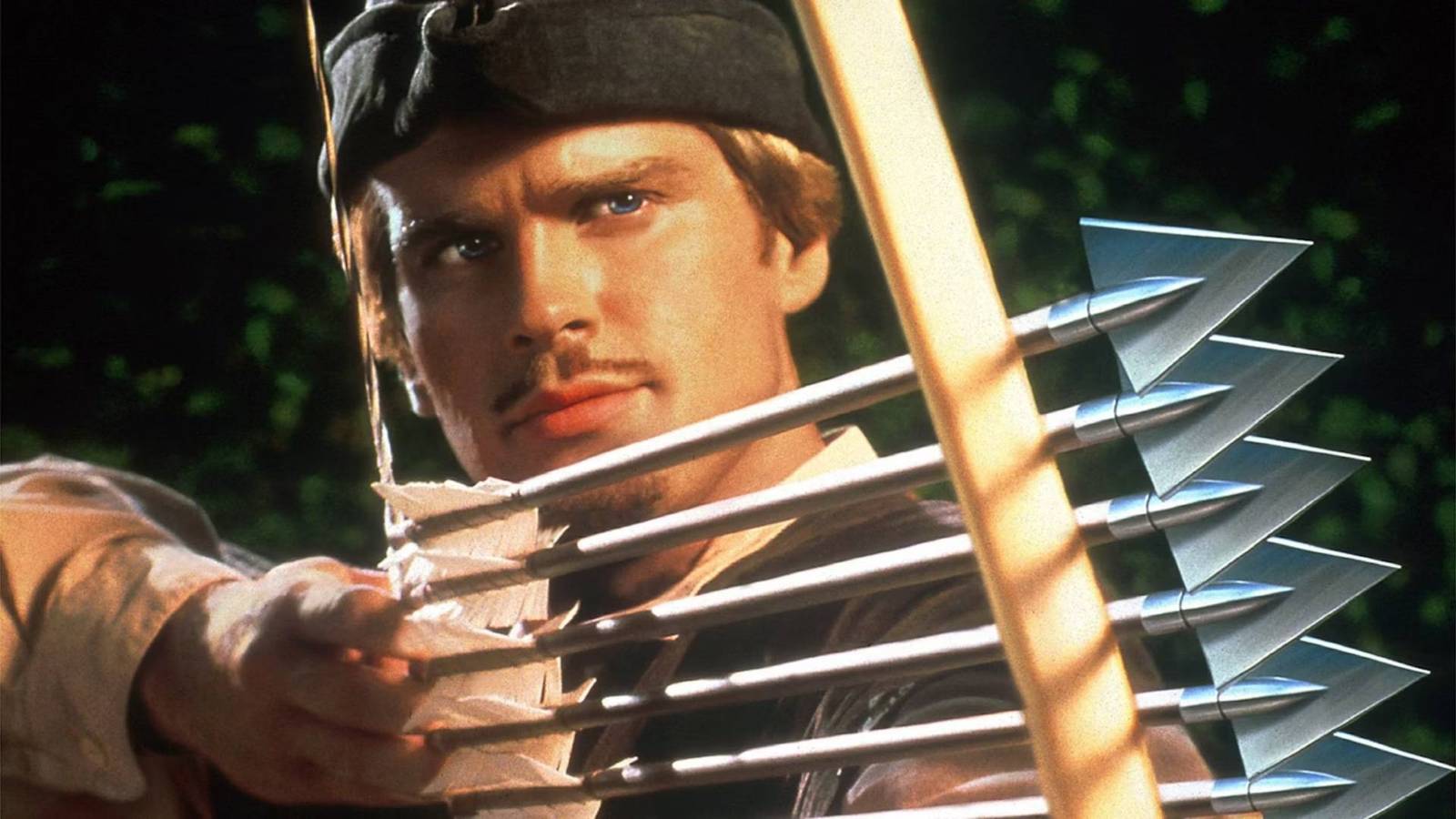
Robin Hood has been stealing from the rich and giving to the poor for centuries, but bringing the legendary outlaw to the screen is trickier than it looks. He needs to be a convincing action hero, a charismatic leader, and a champion of the downtrodden, all while making archery look effortlessly cool. Get the balance wrong, and Nottingham's most wanted becomes either a dull historical figure or a pantomime hero. Fortunately, cinema has given Robin Hood some terrific incarnations. Silent-film pioneers established him as a swashbuckling adventurer, Hollywood's Golden Age turned him into an enduring symbol of courage, and later adaptations explored everything from the bittersweet realities of ageing to full-blown comedy. Even Disney found room for a memorable interpretation. The best movie Robins aren't necessarily the most historically plausible or the most accurate to the earliest legends. They're the ones who understand what makes the character tick: his defiance of corrupt authority, his loyalty to his friends, and his irrepressible charm. These five performances stand above the competition, although their approaches to the legendary outlaw couldn't be more different. Cary Elwes In Robin Hood: Men In Tights (1993) Cary Elwes might be playing Robin Hood in a Mel Brooks comedy, but his performance is so effortlessly charming that he could have starred in a straight-faced adventure just as convincingly. In Robin Hood: Men in Tights, the actor plays Sir Robin of Loxley, who returns from the Crusades to discover that Prince John (Richard Lewis) has seized his estate and is squeezing the local population for money. Fortunately, Robin has a talent for archery, a gift for rallying allies, and absolutely no intention of taking himself too seriously. Crucially, Elwes understands the joke without becoming the joke. His Robin delivers absurd dialogue with the poise of a traditional swashbuckling hero, allowing Brooks' increasingly ridiculous gags to land around him. The famous declaration that he can speak with an English accent, unlike certain other screen Robins, takes a cheeky swipe at Kevin Costner's Robin Hood: Prince of Thieves (1991). Elwes' theatrical delivery makes the gag even funnier because he genuinely sounds like someone born to play the part. Men in Tights is a terrific parody rather than the most complete cinematic interpretation of the legend. Its scatological humor and scattershot jokes won't work for everyone, and its Robin depends on the audience recognizing the conventions being mocked. Elwes makes those conventions look wonderfully appealing, but other performances capture different dimensions of the character with greater historical or cinematic significance. Douglas Fairbanks In Robin Hood (1922) Douglas Fairbanks established the cinematic blueprint for a physically daring Robin Hood. His silent film Robin Hood, directed by Allan Dwan, was an enormous production for its time, with elaborate sets and spectacular action sequences that helped demonstrate what Hollywood adventure filmmaking could achieve. Fairbanks' Robin is an athletic showman. His physical agility is central to the character, whether he's vaulting through elaborate environments, escaping danger, or demonstrating his prowess with a bow. Silent cinema demanded expressive physical storytelling, and Fairbanks had the charisma and gymnastic ability to make Robin's exploits legible without dialogue. Fairbanks' movements communicate confidence, mischief, and an almost childlike delight in outsmarting his enemies. Robin Hood also gives the outlaw a more elaborate backstory than a straightforward collection of forest adventures. Robin begins as a nobleman at court before turning against the corrupt Prince John and finding his place among the dispossessed. The contrast between courtly privilege and outlaw rebellion establishes the political foundation that later adaptations would repeatedly revisit. The recreation of medieval architecture and court life was designed to immerse audiences in Robin's world, rather than simply provide a backdrop for a series of comic stunts. Fairbanks' performance is a foundational piece of film history, but silent cinema's expressive conventions can make his Robin feel more like an idealized action hero than a psychologically complex character. Later actors would add sharper romantic tension, richer dialogue and greater emotional nuance. Nevertheless, without Fairbank’s nimble, exuberant performance, the legend's subsequent screen adventures might have looked very different. Sean Connery In Robin And Marian (1976) Richard Lester's Robin and Marian offers a fascinating insight into Robin Hood’s older life. Sean Connery plays an aging outlaw whose legendary exploits belong increasingly to the past. It reunites Connery with Audrey Hepburn's Maid Marian for a bittersweet adventure about love, regret and the physical cost of a lifetime spent fighting for justice. Robin returns to England after years serving Richard the Lionheart on the Crusades. When the king dies, Robin and Little John (Nicol Williamson) head back to Sherwood Forest, where their old world has changed. Marian has become a nun, the Sheriff of Nottingham (Robert Shaw) remains a formidable adversary, and Robin must confront the uncomfortable reality that his reputation cannot make him young again. Connery is perfectly suited to the role because he can convey both the authority of a legendary hero and the vulnerability of a man who has outlived his own mythology. His Robin retains flashes of the old charm, but his physicality is noticeably different from Fairbanks' effortless acrobatics. He's a seasoned warrior who can still wield a sword, yet every confrontation carries the possibility that this might finally be the fight he cannot win. The final confrontation with Shaw's Sheriff brings Robin's legend to a tragic, deeply personal conclusion. Connery's performance makes the stakes emotional rather than merely physical, asking what happens when an aging hero refuses to surrender the principles that defined him. Third place reflects Robin and Marian's extraordinary character work, although its reflective tone sacrifices some of the rollicking adventure that makes the best Robin Hood films so rewatchable. This is the outlaw at his most human, rather than his most entertaining. Brian Bedford In Robin Hood (1973) Robin Hood doesn't need to be played by a human to become a definitive screen hero. Disney's Robin Hood proves the point by casting Brian Bedford as an anthropomorphic fox whose wit, courage, and easy charm make him one of animation's most enduring outlaws. Bedford provides the voice for a mischievous Robin without being cruel, confident without becoming arrogant, and genuinely committed to helping Nottingham's impoverished residents. His vocal performance gives the character a relaxed, conversational warmth. Robin Hood’s political conflict is unusually clear. Prince John, voiced by Peter Ustinov, taxes the people into poverty while indulging his own greed. Robin responds by stealing the money back, often humiliating the prince in the process. Bedford brings real tenderness to Robin's romance with Maid Marian, voiced by Monica Evans. Their reunion carries the excitement of childhood sweethearts rediscovering one another. The film's musical interludes, meanwhile, add a distinctly folk-inspired world that feels rooted in popular storytelling rather than grand historical spectacle. The animation makes the character especially effective. As a fox, Robin can embody the cunning associated with his name while remaining an approachable hero for younger audiences. His relationship with Little John, voiced by Phil Harris, supplies the easy camaraderie that any successful version of the Merry Men needs. Bedford's Robin is perhaps the most consistently lovable interpretation on this list, and the film's mixture of comedy, romance, music and social commentary makes the legend accessible across generations. He narrowly misses the top spot because one other actor became so inseparable from Robin Hood that his performance continues to define the character nearly a century later. Errol Flynn In The Adventures Of Robin Hood (1938) There have been plenty of memorable Robins, but Errol Flynn remains the gold standard. The Adventures of Robin Hood captures everything audiences want from the legendary outlaw: spectacular sword fights, daring rescues, romantic chemistry, gleeful defiance of authority, and a hero who seems to enjoy every second of being a thorn in the establishment's side. Flynn's Robin begins as Sir Robin of Locksley, a Saxon nobleman who refuses to accept Prince John's seizure of power while Richard the Lionheart is away. When he challenges John's supporters, particularly the ruthless Sir Guy of Gisbourne (Basil Rathbone), Robin becomes an outlaw and gathers a band of followers in Sherwood Forest. Flynn is particularly exceptional in his ability to combine genuine heroism with an infectious sense of fun. He can deliver a rousing declaration against tyranny, crack a joke at his enemy's expense, and leap into a sword fight without losing the audience's sympathy. Robin's confidence never feels like empty swagger because Flynn backs it up with physical daring. The duel with Rathbone is a particular highlight. Their swordplay gives Robin a worthy opponent, while Rathbone's controlled menace makes every exchange feel dangerous. Flynn's performance thrives on that contrast – his Robin is playful, but he isn't invincible, and his opponents are capable enough to make his victories satisfying. The Adventures of Robin Hood's spectacular Technicolor cinematography, elaborate costumes, and Erich Wolfgang Korngold's rousing score elevate Flynn's performance further. Flynn also performed many of his own stunts, reinforcing the physical authenticity of his swashbuckling hero. Other actors have offered more psychologically complicated Robins, and Bedford's animated fox might be even more immediately lovable. Yet Flynn combines charisma, athleticism, humor, and moral conviction so perfectly that his performance feels like the definitive expression of the legend. Flynn’s Robin Hood makes rebellion look irresistible. Release Date May 13, 1938 Runtime 102 Minutes Director Michael Curtiz, William Keighley Cast Olivia de Havilland Maid Marian Writers Seton I. Miller, Norman Reilly Raine
5 Best Versions Of Robin Hood In Movies, Ranked
Full Article
Original Source
Read the full article at Screenrant →KhanList aggregates and links to publicly available news content. We do not host full articles from third-party sources. Always verify important information with original sources.