
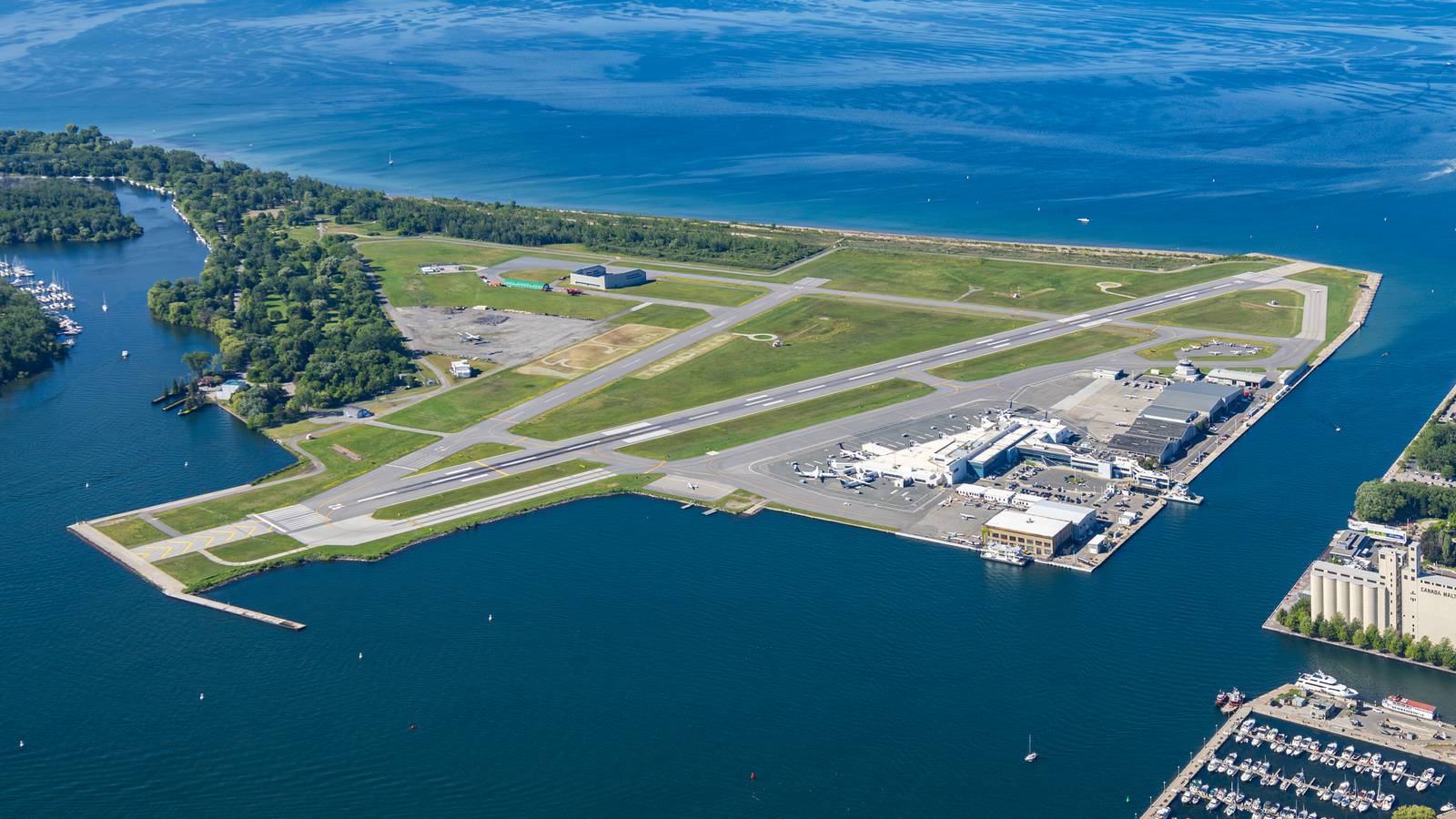
Published Aug 8, 2026, 2:00 PM EDT Jack comes to Simple Flying with a lifelong interest in all things aviation. He holds a degree in Aerospace Engineering from Georgia Tech, and is a certified private and remote pilot. Beyond these experiences, Jack previously worked for a corporate flight department where he gained first-hand experience in the world of business aviation. Currently, Jack works in the professional services industry and continues to build his flight hours outside of work. Runway construction rarely attracts the same attention as new terminals or aircraft deliveries, yet it is poised to become one of the aviation industry's biggest operational challenges over the next two years. Across North America and Europe, airports are racing to rebuild runway ends, install new safety systems, and expand protected overrun areas before regulatory deadlines take effect. While these projects are designed to improve safety, they are also creating a growing operational squeeze for airlines as temporary closures, shortened runway lengths, and construction restrictions reshape schedules and route economics. One of the biggest drivers is Canada's requirement that airports handling more than 325,000 annual passengers establish 492-foot (150-meter) Runway End Safety Areas (RESAs) by July 12, 2027. Similar runway safety initiatives are underway elsewhere, ranging from full runway reconstructions in Texas and Spain to Engineered Materials Arresting System (EMAS) installations at major US Airports. Some projects require weeks of complete runway closures, while others rely on overnight construction to limit disruption. Regardless of the approach, airlines increasingly find themselves adapting to payload restrictions, revised operating procedures, and reduced airport capacity while work progresses. The effects extend well beyond the construction sites themselves. Every temporary runway closure influences aircraft performance calculations, scheduling flexibility, and airport traffic. At constrained airports, even modest reductions in available runway length can limit the aircraft types that can operate or force airlines to reduce passenger or cargo loads under certain weather conditions. Those operational compromises have turned what might appear to be routine infrastructure work into an issue with meaningful commercial implications. The following five airports highlight how this global wave of runway safety investment is unfolding, illustrating how a regulatory push toward safer runway operations is reshaping airport infrastructure and airline networks ahead of the 2027 deadline. Billy Bishop Toronto City Airport Racing to meet Canada's 2027 deadline Credit: Billy Bishop Toronto City Airport Few airports illustrate the scale of the coming runway safety transition more clearly than Billy Bishop Toronto City Centre Airport(YTZ). Located on Toronto Islands and surrounded by Lake Ontario, the airport has little room to expand using conventional methods. Yet it must still comply with Transport Canada's requirement that airports handling more than 325,000 annual passengers establish 492-foot (150-meter) Runway End Safety Areas (RESAs) by July 12, 2027. To meet that deadline, PortsToronto has launched one of the airport's most complex infrastructure projects in decades. The work involves extending the landmass at both ends of the runway to create the required safety areas, with project costs estimated between C$61 million and C$64 million (approximately US$45 million to US$47 million). Rather than lengthening the runway itself, the extensions provide additional protected space beyond the pavement to reduce the consequences of an aircraft overrunning the runway during takeoff or landing. Constructing new land around an active island airport presents unique engineering challenges. Much of the work is being completed overnight using marine barges and temporary construction platforms to minimize disruption to scheduled flights and ferry operations. According to PortsToronto, daytime flying continues largely as normal while crews perform heavy construction after the airport closes each evening. That phased approach allows Porter Airlines and other operators to maintain most of their schedules, although overnight activity and periodic operational restrictions remain unavoidable. The project has also revived debate over whether Billy Bishop should instead install an Engineered Materials Arresting System, or EMAS. The FAA-approved technology uses crushable concrete blocks that safely slow an overrunning aircraft within a shorter distance than a conventional RESA, making it attractive for airports constrained by water, highways, or urban development. Supporters argue EMAS could have reduced construction costs and environmental impacts, while PortsToronto has maintained that physical RESAs provide the most appropriate long-term solution for the airport's operating environment and regulatory obligations. Billy Bishop's experience reflects the broader challenge facing many airports before 2027. Barcelona El Prat Airport Accepting short-term disruption for long-term reliability Credit: Shutterstock Barcelona-El Prat Airport (BCN) is undertaking one of Europe's most significant runway infrastructure projects as it prepares for future traffic growth while maintaining modern safety standards. Airport authorities have scheduled a temporary closure of one runway for approximately 50 to 60 days to complete pavement rehabilitation and associated safety improvements, requiring airlines to operate with reduced runway capacity during the construction period. Although the work is primarily focused on resurfacing and infrastructure renewal, it also includes upgrades designed to improve the runway's long-term operational resilience. Performing the project in a concentrated construction window allows the airport to complete multiple improvements simultaneously rather than extending disruption over several years. Even so, temporarily removing one runway from service at one of Spain's busiest airports creates operational challenges for airlines that rely on tightly coordinated arrival and departure schedules. Top 5 Busiest Spanish Airports in 2025 City Total Passengers Madrid 68,179,054 Barcelona 57,483,036 Palma de Mallorca 33,806,427 Malaga 26,760,549 Alicante 19,950,394 During the closure, air traffic controllers will manage aircraft movements using the remaining runways, reducing overall airport capacity and requiring airlines to adjust schedules where necessary. While the airport is expected to remain fully operational, periods of peak demand may require carriers to accept revised departure times or temporary operational constraints. For airlines, reduced runway availability can affect more than scheduling. Lower airport capacity limits operational flexibility during adverse weather or periods of heavy traffic, increasing the importance of efficient aircraft sequencing and on-time performance. Airport operators have therefore timed the project to minimize its impact while ensuring the improvements are completed before future passenger growth places even greater demands on the airfield. Barcelona's investment reflects a broader industry trend in which airports are modernizing critical infrastructure before safety requirements or deteriorating pavement create larger operational problems. Although passengers may experience little more than occasional delays, the project demonstrates how maintaining runway safety often requires carefully balancing construction with the continuous movement of hundreds of flights each day. Boston Logan International Airport Turning to EMAS where expansion is difficult Credit: Shutterstock Boston Logan International Airport (BOS) faces a familiar problem for major airports in densely developed coastal cities: there is little room to simply extend a runway when additional safety distance is needed. Surrounded by Boston Harbor and established urban development, Logan has increasingly relied on EMAS to improve runway overrun protection without requiring large-scale land expansion. EMAS is designed to provide an alternative where a conventional RESA cannot be accommodated within the available footprint. The system consists of specially engineered cellular material that progressively crushes beneath an aircraft's landing gear if the airplane travels beyond the paved runway. By absorbing the aircraft's kinetic energy, the material can bring an aircraft to a controlled stop over a comparatively short distance. The Federal Aviation Administration has documented multiple successful aircraft stops involving EMAS installations at airports across the United States. According to the agency, the technology has safely stopped 26 aircraft involving 497 passengers and crew, demonstrating its ability to mitigate runway overrun events where conventional safety areas are difficult to construct. For an airport such as Logan, the technology offers an important advantage because expanding a runway end could require substantial land acquisition or construction in environmentally and geographically constrained areas. EMAS can provide additional protection within a smaller footprint, allowing airport operators to strengthen runway safety without fundamentally altering the surrounding airport environment. Physical runway extensions can require extensive construction periods, while EMAS installations can often be completed with less disruption to the existing runway configuration. That can help airports preserve capacity while still addressing safety requirements. Boston's approach illustrates why runway safety projects do not follow a single blueprint. Airports with abundant surrounding land can create conventional safety areas, while facilities constrained by water, highways, buildings, or protected land may need engineered alternatives. As traffic grows and regulators continue emphasizing runway overrun protection, technologies such as EMAS are becoming increasingly important to airports that cannot expand outward. Philadelphia International Airport Another American hub packed in an urban landscape Credit: Shutterstock Philadelphia International Airport (PHL) provides another example of how a major commercial airport can improve runway safety without acquiring large amounts of additional land. The airport recently completed an EMAS installation designed to provide additional protection against runway overruns while working within the physical limitations of an established metropolitan airport. The project involved installing EMAS at the end of a runway where extending the traditional paved safety area would have been considerably more difficult. Like BOS, Philadelphia's location within a heavily developed urban region leaves limited opportunities for large-scale expansion around the airfield. EMAS therefore offered a practical way to increase the margin of safety without requiring the airport to fundamentally alter its surrounding footprint. For Philadelphia, completing the installation removes a significant infrastructure project from the airport's future construction schedule while strengthening protection around an active runway. Sugar Land Regional Airport Less infrastructure forces temporary shutdown Credit: Shutterstock Sugar Land Regional Airport (SGR) in Texas is preparing for one of the most disruptive projects in this group, with Runway 17-35 scheduled to close for 30 consecutive days while crews complete reconstruction and related safety improvements. Unlike larger airports that can shift traffic between multiple commercial runways, Sugar Land has fewer alternatives for accommodating aircraft during the closure. The shutdown will temporarily affect the airport's general aviation and business aviation users, requiring pilots and operators to plan around nearby facilities while the work is underway. For aircraft owners and charter operators, that can mean additional ground transportation, repositioning, or operational costs depending on where replacement services are obtained. The project demonstrates how smaller airports can be affected by similar runway construction projects. Major international airports can sometimes absorb infrastructure work by redistributing traffic across their airfield, but smaller facilities may have to remove an entire runway from service to complete major rehabilitation efficiently. Once the work is finished, Sugar Land will have a renewed runway and upgraded safety infrastructure designed to support continued aviation activity.
5 Airports Rebuilding Their Runways Before The 2027 Safety Deadline Squeezes Airlines
Full Article
Original Source
Read the full article at Simpleflying →KhanList aggregates and links to publicly available news content. We do not host full articles from third-party sources. Always verify important information with original sources.