
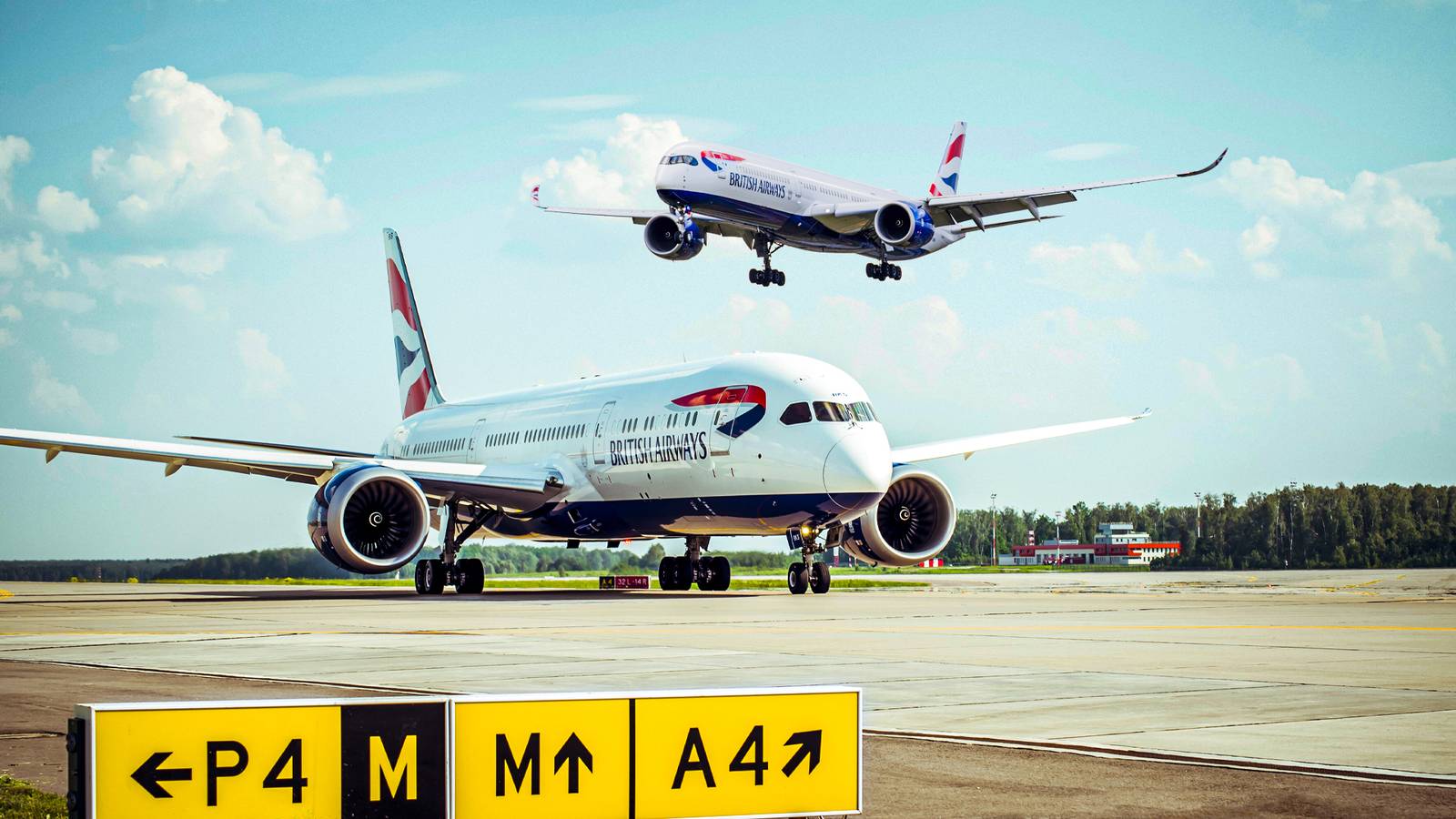
Credit: Iroshaya & Airlinephoto | Shutterstock, Simple Flying Published Nov 9, 2026, 10:00 AM EST Airline and Airport Management Graduate, Student Commercial Pilot and Commercial Aviation Writer. Based in London & Nagoya Operating a widebody long-haul fleet is one of the most capital-intensive endeavors in all of commercial aviation, putting network planners in a position where they need to manage payload capacity, aerodynamic efficiency, and passenger comfort across thousands of global route miles. Many carriers commit exclusively to either Boeing or Airbus for their twin-aisle operations, though an elite group of global network operators actually use dual-fleet strategies incorporating both the 787 Dreamliner and the A350 family. This list takes a closer look at five major international airlines that successfully operate both modern composite widebody types together, analyzing how carrier network strategies, route lengths, and cabin reconfigurations dictate the division of labor between Seattle's Dreamliner and Toulouse's flagship twin-jet. Drawing on fleet tracking data and operator reports, we explore the distinct operational roles assigned to each aircraft type across these global networks and where both aircraft fit in a much wider fleet strategy. Singapore Airlines Consistency above all else Singapore Airlines operates Boeing 787-10s primarily on high-density regional routes across Asia alongside one of the largest A350 fleets in global commercial aviation. As noted in Simple Flying analysis, the airline utilizes the stretched Dreamliner variant to maximize passenger capacity on shorter trunk routes where rapid turnaround and high seat count take precedence over ultra-long-range fuel burn. Complementing its regional Dreamliners, Singapore Airlines deploys its A350-900 fleet on long-haul and ultra-long-range intercontinental sectors connecting Singapore Changi Airport (SIN) to major global hubs. The carrier is actively retrofitting 41 long-haul A350-900 airframes, comprising 34 standard long-haul units and seven ultra-long-range variants, with brand-new first class and business class cabin products to keep its A350 fleet at the forefront of global passenger luxury. The clear division of labor allows Singapore Airlines to tailor passenger experience and seating density directly to stage length, ensuring maximum operational efficiency across both medium and long-haul networks. Passengers are noticing the quality too, with reviews from outlets such as Prince of Travel highlighting how seamlessly the carrier transitions passengers between its regional Dreamliner services and flagship A350 long-haul operations and how those products stay consistent. Etihad Airways Scaling a massive widebody fleet around the Boeing 787 Etihad Airways is an airline that has shown a clear reliance in recent years on the 787 Dreamliner as the foundational core of its entire long-haul and regional widebody network. Fleet data from Planespotters indicates that the carrier flies 37 787-9s and 10 787-10s, making the Dreamliner family its largest widebody group, surpassing its combined twin-aisle types and even exceeding the operational size of its narrowbody Airbus A320 family aircraft. Alongside its massive Dreamliner roster, Etihad operates the Airbus A350-1000 as part of a broader fleet growth and modernization strategy that also incorporates upcoming deliveries of the Airbus A321LR, the Airbus A330neo, and the Boeing 777-9. With all of these additions, it would be natural to assume that the Dreamliner will see a gradual phasing out; however, the Dreamliner does not seem to be going anywhere, especially as the airline looks to bring in a further 10 787 aircraft, as per Aviation Geeks. With this order, the 787 will still be the backbone of Abu Dhabi's long-haul operations for the foreseeable future. Deploying both 787s and A350-1000s enables Etihad to scale capacity dynamically across Western European, North American, and Asian corridors, matching aircraft gauge precisely to seasonal passenger demand fluctuations. The airline is looking to add a wide range of new routes over the coming years, headlined by announced routes such as Abu Dhabi International Airport (AUH) to Calgary International Airport (YYC) and new destinations in China such as Shenzhen Bao'an International Airport (SZX). Japan Airlines Perfectly matching each type to route demand Japan Airlines operates one of the most sophisticated dual-widebody operating strategies in commercial aviation by strategically pairing extensive 787 operations with a high-profile A350 fleet, both of which feature industry-leading cabins. According to fleet reports from Planespotters, Japan Airlines operates 23 787-8s and 22 787-9s alongside 28 A350 airframes split between the smaller -900 and larger -1000 variants. The balanced allocation allows the carrier to optimize payload capacity, seating density, and fuel burn across vastly different operational environments, tailoring aircraft gauge to specific route economics. The deployment strategy for Japan Airlines' A350 fleet features a distinct structural division between domestic trunk networks and ultra-long-haul international corridors. The carrier uses its A350-900 aircraft primarily on high-capacity domestic routes across Japan, providing for immense passenger volumes between Tokyo Haneda Airport (HND) and regional economic centers with exceptional turnaround efficiency. In stark contrast, the larger A350-1000 is designated as the true international flagship, connecting Tokyo to premier global business capitals such as New York, London, and Paris with cutting-edge private suites and multi-class cabin configurations designed for extreme long-haul comfort. Simultaneously, the 787 fleet handles a vital supporting role across medium-to-long-range Asian and secondary North American routes. The lighter composite structure of the Dreamliner family allows Japan Airlines to test new international markets with optimized trip costs and lower financial risk. The fleet setup is clearly working incredibly well for Japan Airlines as the carrier is further expanding its dual-fleet capabilities. Following firm commitments made for 20 additional A350-900s configured entirely for international layouts, deliveries scheduled from 2027 will deepen the airline's reliance on both Boeing and Airbus widebodies to future-proof its transpacific network. British Airways A comprehensive UK fleet blending Boeing versatility and Airbus flagship reach British Airways stands out as one of the elite global operators flying every single iteration of the 787 Dreamliner family alongside the A350. Fleet tracking data from Planespotters indicates that British Airways operates 12 787-8s, 18 787-9s, and 14 787-10s, complemented seamlessly by 18 A350-1000 twin-jets. This expansive widebody mix provides network planners with extraordinary flexibility to carefully allocate capacity across an extensive transatlantic and global route network, headed out of London Heathrow Airport (LHR). The operational division within British Airways is meticulously mapped to passenger demand profiles and stage-length requirements. The smaller 787-8 handles thinner secondary routes where high-frequency scheduling outweighs sheer passenger volume, while the stretched 787-10 and flagship A350-1000 manage high-density trunk routes equipped with the carrier's modern Club Suite business class product. These aircraft operate across highly diverse global corridors, and ultimately are perfect for this type of role. British Airways can ensure that high-yield corporate markets receive top-tier hard products while secondary destinations benefit from optimal trip economics. Fleet modernization plans continue to evolve across the carrier's network as older quad-jets are permanently retired. As reported by Aerospace Global News, the 787-10 fleet is scheduled to begin replacing Gatwick-based Boeing 777-200ERs starting in 2029, further improving the wider British Airways network outside of Heathrow. The dual fleet strategy is by no means simple to manage, integrating Rolls-Royce Trent engines across its A350s and select Dreamliners alongside General Electric GEnx powerplants on other Dreamliner subvariants. Despite this challenge, British Airways successfully manages complex maintenance synergies and delivers a uniform premium passenger experience worldwide. Qatar Airways Mastering long-haul and ultra-long routes with both Boeing and Airbus flagships Qatar Airways is home to one of the largest and most balanced dual widebody fleets in commercial aviation, holding the prestigious distinction of being the global launch customer for the Airbus A350 program. According to detailed Planespotters fleet data, Qatar flies 34 A350-900s and 30 A350-1000s alongside 32 787-8s and 29 787-9 Dreamliners, with substantial additional orders pending for both manufacturer types. The massive operational footprint cements Hamad International Airport (DOH) as a critical intercontinental connector linking East and West through massive widebody coverage. The airline assigns distinct operational roles to each aircraft family based strictly on stage length, payload capacity, and route economics. While Qatar operates a higher volume of individual flights with its 787 fleet across regional Middle Eastern and shorter European sectors, the A350 dominates ultra-long-haul intercontinental corridors and is the aircraft of choice for many of the airline's flagship routes. As per Simple Flying analysis, Qatar Airways deploys its A350 fleet on roughly 17 routes exceeding 4,000 miles (6,437 km), compared to just three for the Dreamliner, making excellent use of the larger passenger payload and greater fuel range of the A350-1000 to connect Doha directly with distant global markets. This tactical allocation allows Qatar Airways to maximize fuel efficiency and passenger comfort across complex connecting itineraries channeled through Hamad International Airport. Whether offering the award-winning Qsuite business class environment or taking advantage of advanced composite cabin humidity systems, Qatar's synchronized deployment of both the Dreamliner and the A350 really sets the global benchmark for modern dual-fleet widebody management.
5 Airlines Operating Both Boeing 787 Dreamliners & Airbus A350s
Full Article
Original Source
Read the full article at Simpleflying →KhanList aggregates and links to publicly available news content. We do not host full articles from third-party sources. Always verify important information with original sources.