
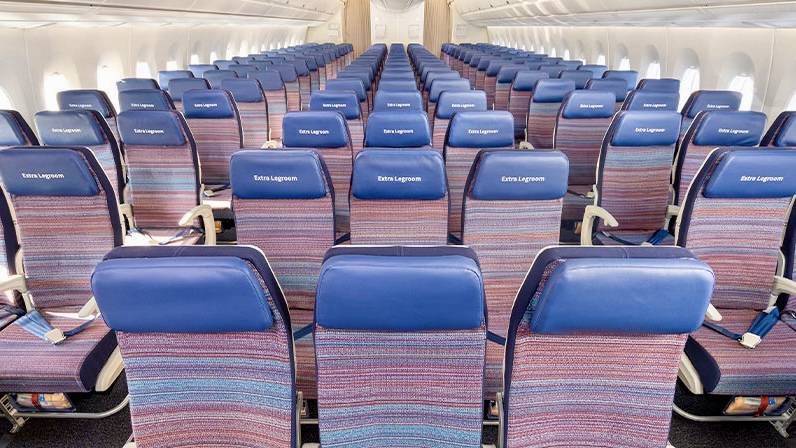
For airlines, economy class represents a delicate balancing act between making the most of available cabin space and delivering an experience passengers will remember for the right reasons. While premium cabins attract attention with their lie-flat seats, exclusive dining, and personalized service, economy class remains the most important part of the journey for the majority of travelers. Korean Air recognizes that improving this experience requires more than offering a competitive fare, investing in everything from high-resolution entertainment screens to better catering and onboard connectivity. Kenneth Chang, Executive Vice President and Chief Marketing Officer of Korean Air, explained to Simple Flying's Sumit Singh that the airline's approach centers on understanding what passengers genuinely value rather than making compromises to reduce costs. From maintaining generous seating arrangements to introducing Starlink connectivity and self-service snack bars, the SkyTeam member is working to make long-haul travel more comfortable. This demonstrates how practical improvements can make a substantial difference to the passenger experience. Economy Seat Comfort Comes First Credit: Korean Air Comfort remains the foundation of any successful economy class product, particularly when passengers spend 10 hours or more in the same seat. Although airlines frequently focus on cabin density to maximize revenue, Korean Air believes the physical experience should not be compromised simply to accommodate additional passengers. Chang explained that "the seat has to be comfortable. If you're comfortable, then your mind starts going in different angles, saying 'what else do I want?'" The philosophy reflects the belief that comfortable passengers are more likely to appreciate other elements of the onboard experience. Korean Air also takes a firm position on seat pitch and cabin density, resisting configurations that could negatively affect passenger comfort. Chang noted that some airlines consider a 3-4-3 arrangement on aircraft like the Boeing 777 or Airbus A350 acceptable, but Korean Air believes such layouts can compromise the experience it wants to deliver. As he explained: "We don't sacrifice pitches nor density. I know that a lot of airlines say three-four-three on triple sevens or A350s is good enough, but the way we see it is that's too much." By prioritizing personal space, the airline aims to distinguish its economy class product in a competitive market where even small differences in seat dimensions can affect comfort over several hours. That commitment extends to evaluating seat designs, including recline and how passengers of different heights experience the available space. Chang described how Korean Air received complaints about the seats introduced on its Boeing 787-10 aircraft despite maintaining the intended seat pitch. The airline discovered that a five-degree tilt could provide sufficient comfort, while six degrees made the experience more difficult for shorter passengers, particularly those below five feet five inches tall. This willingness to reassess a seemingly minor design decision demonstrates how passenger comfort depends on practical testing rather than specifications alone. Larger Screens & 4K Entertainment Credit: Korean Air In-flight entertainment has become an important differentiator in economy class, as passengers increasingly expect the sharp displays and intuitive viewing experiences they enjoy at home. Korean Air has established a standard of 13-inch or larger entertainment monitors for its economy class cabins, with resolutions of 4K or better on newer installations. Chang explained that incoming aircraft would feature these upgraded displays, including the Boeing 787-10 fleet, giving passengers a more immersive way to watch films, television programs, and other entertainment during their journeys. Screen quality forms part of a broader commitment to providing substantial entertainment choices rather than simply installing impressive hardware. Korean Air invests considerable time and money in assessing the content passengers want, recognizing that a large, high-resolution screen becomes less valuable if the available programming fails to match their interests. Chang explained that "we have really strict policies on what we want to do for customer experience. We give them the full content of what they want to enjoy." Combining better displays with carefully selected programming helps deliver a more complete experience. These improvements are particularly relevant on longer flights, when entertainment becomes one of the most important ways passengers manage their time onboard. A sharper display makes films more enjoyable, while a larger screen can make extended viewing more comfortable. Although premium cabins often receive the most attention for entertainment technology, Korean Air's approach shows that economy class passengers can also benefit from meaningful hardware upgrades, making entertainment an essential component of its offering rather than an optional extra. Economy Catering & Meal Quality Credit: Korean Air Food is another area in which Korean Air seeks to deliver a considered economy class experience, particularly because meals can shape passengers' perceptions of an airline during long journeys. Rather than treating catering as an opportunity for straightforward cost reductions, the carrier aims to ensure economy class passengers receive satisfying meals. Chang described how he works closely with David Pacey, who oversees catering, through weekly meetings that also involve customer relations representatives, allowing the airline to examine feedback about what passengers enjoyed and which elements failed to meet expectations. This process gives Korean Air a structured way to assess catering decisions, bringing operational experience together with the opinions of passengers. Feedback can identify whether dishes are appealing, whether the overall service feels adequate, and where adjustments might improve the experience. Chang emphasized that "if you go on economy class and get a meal from us, you'll feel like it's fully served." His comments underline the airline's intention to maintain satisfying standards of presentation and quality even in the cabin where fares are generally lowest. Maintaining that standard matters because passengers often judge a journey through a series of relatively small interactions, from the meal they receive to the attention offered by cabin crew. A well-presented meal will not transform an uncomfortable flight by itself, but it can strengthen the overall impression when combined with comfortable seating, good entertainment, and attentive service. Korean Air's approach suggests that catering quality is an important part of the broader passenger experience, reinforcing its commitment to customers across cabin classes. Self-Service Snacks Credit: Korean Air Changes to flight routes have influenced Korean Air's approach to onboard refreshments, particularly as the war between Russia and Ukraine has forced some services to take longer routes. Chang explained that certain flights have become approximately two hours longer, creating additional challenges for passengers who must remain onboard for extended periods. These include routes between Incheon International Airport (ICN) and the likes of London Heathrow Airport (LHR) and Paris Charles De Gaulle Airport (CDG). In response, the airline introduced more substantial snacks to help travelers manage the extra time between scheduled meal services. In doing so, it recognized that longer journeys require more than simply maintaining the original catering schedule. Korean Air has also introduced self-service snack bars on some flights, allowing passengers to access refreshments without waiting for a crew member to distribute them, as Chang explained: "We've even introduced a self-service snack bar, so you don't have to rely on someone coming in every two or three hours to serve your snacks. We try to introduce whatever we can to make customers comfortable." This arrangement offers greater control over when passengers eat, whether they want something between meals or need a refreshment after waking during an overnight flight. It also provides a practical way to make extended journeys more accommodating. Convenience becomes increasingly valuable when passengers have limited space and few opportunities to move around freely. A self-service arrangement gives travelers greater flexibility while allowing the cabin crew to concentrate on other responsibilities. By responding to longer flight times with more substantial snacks and easier access to food, Korean Air demonstrates how practical changes can address operational challenges without requiring a major cabin redesign. Free Starlink Wi-Fi & Passenger Connectivity Reliable internet access has become an important consideration for passengers who want to communicate with family, work during a journey, or stream content beyond the airline's entertainment library. Korean Air chose Starlink after evaluating the technology and working with the provider for six months. hang explained that the airline believed it offered the right solution for improving the onboard experience, with installations introduced across Airbus A350 aircraft, Boeing 777 aircraft, and some single-aisle aircraft as of September 2026. Passenger adoption figures indicate that demand for connectivity increases with flight duration. Chang reported uptake of approximately 50% on short-haul flights, rising to around 65% on medium-haul services lasting five to seven hours, and reaching approximately 90% on long-haul journeys. These figures suggest that internet access becomes especially valuable when passengers have more time to fill, whether through messaging, online entertainment, or work. Korean Air continues investing in its entertainment content, while Starlink provides another option for passengers who prefer familiar online services. The airline hopes to complete installation across its entire fleet by the second half of 2027, although certification requirements mean that fitting the same equipment to every aircraft is not straightforward. Aircraft Number In Fleet Number On Order Airbus A220-300 10 - Airbus A321neo 20 36 Airbus A330-300 17 - Airbus A350-900 3 3 Airbus A350-1000 - 20 Airbus A380 6 - Boeing 737-800 2 - Boeing 737-900 9 - Boeing 737-900ER 6 - Boeing 737 MAX 8 7 11 Boeing 737 MAX 10 - 62 Boeing 747-8 5 - Boeing 777-300 4 - Boeing 777-300ER 25 - Boeing 777-9 - 40 Boeing 787-9 14 6 Boeing 787-10 12 53 Chang explained that each fleet must be recertified because differences in aircraft interiors can affect the approval process, even when another airline has certified the same aircraft type. Once approval is secured, Korean Air can complete an installation in approximately one day. This process should help expand connectivity while maintaining the required standards across different aircraft configurations. The latest data from ch-aviation shows that Korean Air currently has a total of 150 aircraft in its fleet, and a further 231 on order, including 62 Boeing 737 MAX 10 and 40 Boeing 777-9 aircraft. Cabin Cleanliness, Crew Attention & Passenger Feedback A comfortable economy class cabin depends on more than seats, TV screens, and refreshments, since cleanliness and passenger behavior strongly influence how people feel throughout a flight. Korean Air considers comfort and attentive care fundamental to the experience of purchasing a ticket. Cabin crew members are trained to walk through the cabin regularly, while bathrooms are cleaned every 15 minutes under the airline's procedures. These routines help keep the cabin welcoming, particularly on longer services where repeated use can quickly affect cleanliness. Passenger behavior is another consideration, especially when travelers are trying to sleep in a confined environment. Chang explained that loud conversations can disturb nearby passengers and that Korean Air expects customers to respect one another. Where passengers fail to comply with instructions, the airline can subject them to a review process that may result in a warning or temporary placement on a no-fly list. Such measures reflect the challenge of balancing individual preferences with the needs of everyone sharing the cabin. Korean Air's attention to feedback ties these elements together, allowing the airline to identify problems and test improvements rather than assuming its original decisions are always correct. Chang confirmed that customer comments are reviewed during weekly meetings and that the airline may test an issue directly so decision-makers can understand the experience for themselves. The seat-recline adjustment on the Boeing 787-10 illustrates this approach, showing how passenger feedback can lead to practical changes. Korean Air continues refining its economy class cabin. As it does so, its emphasis on comfort, connectivity, food, cleanliness, and responsive service reflects an ongoing effort to improve the experience without sacrificing the standards that distinguish its product on a global scale.
4K Screens, Free WiFI, & Self-Service Snacks: How The World's Best Economy Seat Continues To Stand Out
Full Article
Original Source
Read the full article at Simpleflying →KhanList aggregates and links to publicly available news content. We do not host full articles from third-party sources. Always verify important information with original sources.