
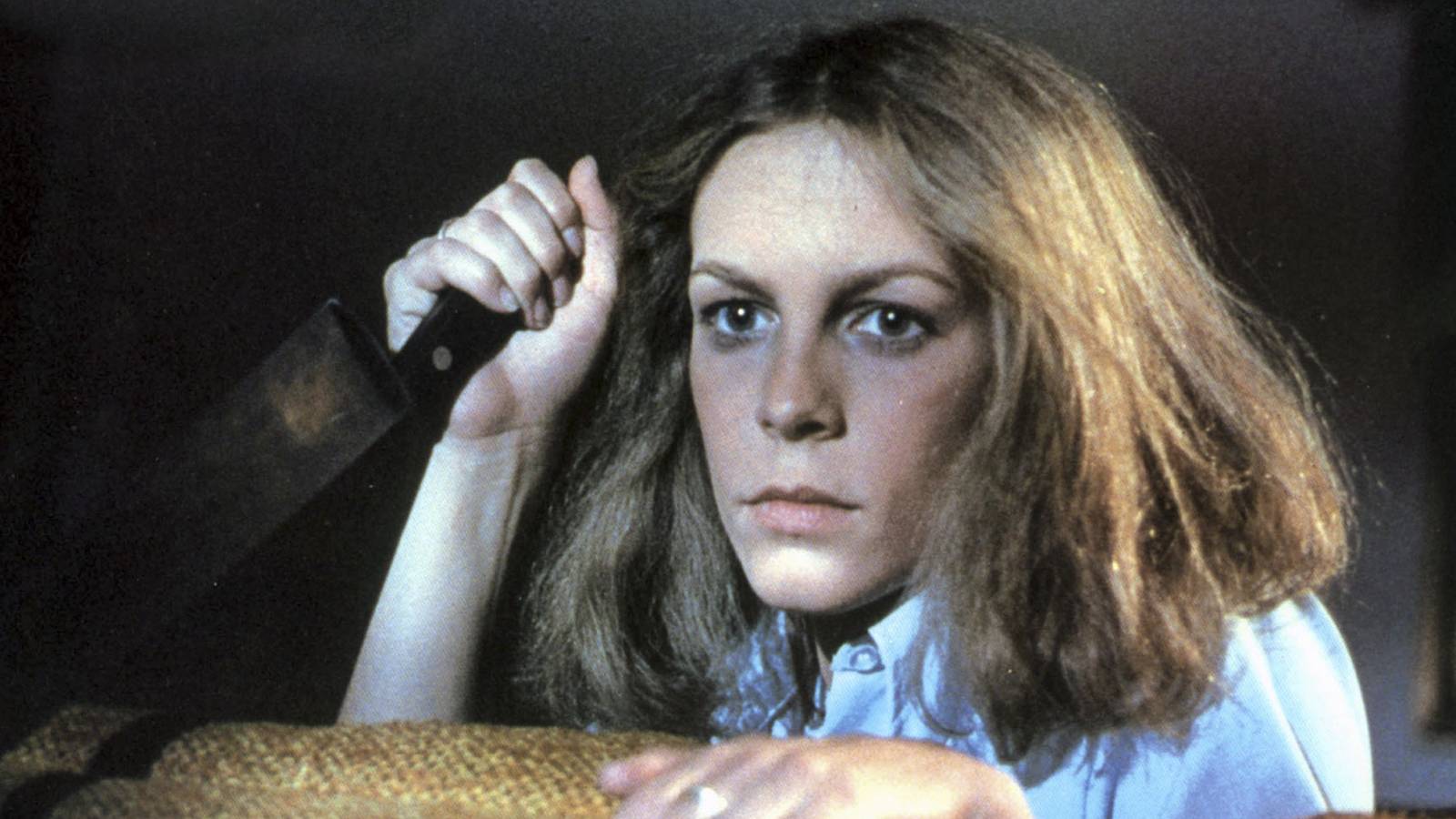
Image via Compass International Pictures/Aquarius Releasing Published Aug 25, 2026, 11:26 PM EDT Daniel is a 27-year-old List Writer for Collider living in the south suburbs of Chicago, Illinois. As an avid film buff, he watches and analyzes many films and TV shows, especially in the horror genre, and regularly attends movie screenings. Sign in to your Collider account 1978 was a transformative year that arguably defined '70s cinema. A year marked with so much excellence and acclaim, it was truly one of the best years in movies, period. From the blockbuster monster hit Superman to the Best Picture-winning epic The Deer Hunter. It was a time to really be a movie fan, and nearly every popular genre thrived. But none more so than the horror genre. Horror helped shape '70s cinema into how we know it today. Yet, it was 1978 that saw some of the biggest highlights from this decade, featuring legendary classics and landmark masterpieces that have changed the face of horror for the rest of the century. New subgenres kicked off this year, and there was just so much creativity and terror released every month. From a cult classic B-movie to one of the greatest zombie films of all time, here are ten movies that prove 1978 was a tremendous year for horror. 10 'Jaws 2' Image via Universal Pictures Kicking things off is the sequel to one of the most beloved adventure horror movies ever, Jaws 2. Directed by Jeannot Szwarc, this admittedly rushed, uneven continuation to the first Jaws from 1975 may not be anywhere near as good as its predecessor, but it has its moments and is slowly getting slightly better recognition. Reluctantly starring Roy Scheider, who only appeared as a contractual obligation, it sees him as Chief Martin Brody, who once again must protect his community when another killer great white shark stalks the shores of Amity Island. Yeah, its pacing is slow, the new supporting characters aren't as complex or as iconic as the ones in the original, and the story is an obvious rehash of its predecessor, but for all its faults, Jaws 2 has a few great moments that certainly make it at least worth watching once. The action is still tense, the higher body count and gore are certainly a plus, and although it's well-known that Roy Scheider didn't want to be in the film, he still brought his level of professionalism and managed to play Brody with just as much care and intrigue. It's not a perfect horror film at all, but Jaws 2 is steadily becoming a cult favorite among some fans. Plus, say what you want about this film, but it still is not as bad as the two other atrocious sequels. 9 'Attack of the Killer Tomatoes!' Image via NAI Entertainment Get ready to laugh at one of the most hilariously bad horror B-movies of all time, Attack of the Killer Tomatoes! A film that truly embodies the meaning of a cult classic, this cheesy, goofy monster attack flick instantly draws you in with its wacky, nonsensical premise about mutated tomatoes that go to large sizes and start consuming humanity. It's wild, insane, full of hammy dialogue and bizarre performances, perfectly cementing itself as one of the most recognizable films of this year. It's by no means actually well-made, but there's no denying its cultural impact and continued popularity today. It doesn't try to take itself seriously, and that's what makes it so rewatchable and strangely timeless. Attack of the Killer Tomatoes! represented the strange, light-hearted spirit of late '70s B movies, and some fans still can't get enough of it. 8 'Patrick' Image Via Filmways Australasian Distributors We journey to Australia for this next one. Directed by Richard Franklin, the twisted horror thriller Patrick is an obscure but brilliant concoction of science fiction and supernatural terror, all blended into a near-perfect film that deserves all your attention. After murdering his parents and falling into a catatonic state soon after, the deranged Patrick (Robert Thompson), over time, develops psychokinetic powers and begins terrorizing the staff of a hospital. This mind-bending Aussie horror flick may have slipped under most audiences' radars for a long time, but it's steadily on the rise in recent years thanks to a slow-building fan base who enjoy its unique, eerie premise. It's a film where the killer strikes without even leaving his bed. There's hardly anything more one-of-a-kind in horror than this creative premise, and it's because of its creativity, shockingly splendid kills, and genuinely solid direction that has made this underrated '70s horror gem truly more noticeable now. 7 'Piranha' Image via United Artists If there's one film that better exemplifies Jaws' influence on the horror genre in the late 1970s, it would be Piranha. Directed by the king of horror comedies, Joe Dante, this Jaws-inspired animal attack flick is arguably the best and most recognized Jaws rip-off in cinema. While noticeably campy, clichéd, unoriginal, and incredibly low-budget, it's honestly a blast of fun that requires you to not put much thought into it, as it just wants to tell a story about scientifically engineered and aggressive piranha that escape captivity and go on a rampage in a public river. While it never came close to capturing the suspense, terror, or even the quality of Jaws, Piranha is still an amusing thrill ride that serves as a perfect horror pop-corn flick. It's cheesy and at times over-the-top, but isn't boring, and just wants to have fun with its premise. If you have time to kill, this B-horror cult classic can distract you for a few hours, giving you a fun but goofy experience. 6 'Damien: Omen II' Image via 20th Century Fox Richard Donner's masterpiece The Omen passed the 1970s, becoming one of the scariest, most captivating American horror films of all time. But its great success and timeless terror did not carry over to any of the sequels it spawned, as none of them could recapture its magic. But, in 1978, the first sequel, Don Taylor's Damien: Omen II, arguably came the closest. Starring Academy Award winner William Holden, it follows a now thirteen-year-old Damien Thorn (Jonathan Scott-Taylor) as he slowly begins to understand his dark destiny to take over the world. Though far from fully recapturing the intense suspense and eerie mystery of the original, Damien: Omen II does have its moments of pure terror, creepy death scenes, and some fascinating performances from a talented cast of mostly A-listers. It also feels fresh for a sequel, trying to actually continue Damien's story rather than rehash parts of the first film. Is it all perfect, not exactly, but it's still scary, thrilling, and the story can still really satisfy hardcore fans of the original. Collider Exclusive · Horror Survival Quiz Which Horror Villain Do You Have the Best Chance of Surviving? Jason Voorhees · Michael Myers · Freddy Krueger · Pennywise · Chucky Five killers. Five completely different ways to die — if you're not smart enough, fast enough, or self-aware enough to avoid it. Only one of them is the villain your particular set of instincts gives you a fighting chance against. Eight questions will figure out which one. 🏕️Jason 🔪Michael 💤Freddy 🎈Pennywise 🪆Chucky TEST YOUR SURVIVAL → 01 Something feels wrong. You can't explain it — you just know. What do you do? First instincts are the difference between the survivor and the first act casualty. ALeave immediately. I don't need to understand a threat to respect it. BStay quiet and observe. If I can see it, I can understand it. If I can understand it, I can avoid it. CStay awake. Whatever this is, I am not going to sleep until I feel safe again. DConfront it directly. Fear grows in the dark — I'd rather know what I'm dealing with. ECheck everything, trust nothing. The threat might be closer than I think — and smaller. NEXT QUESTION → 02 Where are you most likely to find yourself when things go wrong? Setting is everything in horror. Where you are determines which rules apply. ASomewhere remote — a cabin, a campsite, off the grid and away from people. BA quiet suburban neighbourhood where nothing ever happens. Except tonight. CIn my own head — the most dangerous place of all, depending on what's already in there. DWherever children are — because something about this place attracts the worst things. ESomewhere ordinary — a house, a toy store, a place where the last thing you'd expect is a threat. NEXT QUESTION → 03 What is your most reliable survival asset? Every survivor has a quality the villain didn't account for. What's yours? APhysical fitness — I can run, I can swim, I can outlast something that relies on brute persistence. BSpatial awareness — I always know the exits, the hiding spots, the fastest route out. CPsychological resilience — I've faced my worst fears before. They don't have the same power over me. DEmotional steadiness — I don't panic. Panic is what gets you caught. EScepticism — I don't underestimate threats because of how they look. Size is irrelevant. NEXT QUESTION → 04 What kind of fear is hardest for you to fight through? Knowing your weakness is the first step to not dying because of it. AThe unstoppable — something that will not stop, cannot be reasoned with, and is always getting closer. BThe invisible — a threat I can feel but can't locate, watching from somewhere I can't see. CThe psychological — something that uses my own mind and memories against me. DThe unknowable — something ancient, shapeless, that feeds on the fear itself. EThe mundane — a threat so ordinary-looking that no one will believe me until it's too late. NEXT QUESTION → 05 You're with a group when things start going wrong. What's your role? Horror movies are brutally clear about who survives group situations and who doesn't. AThe one who says "we need to leave" first — and means it, even when no one listens. BThe one who stays quiet, watches the others, and figures out the pattern before anyone else does. CThe one who holds the group together when panic sets in — because someone has to. DThe one who asks the questions nobody wants to ask — because ignoring them gets people killed. EThe one who takes the threat seriously when everyone else is laughing it off. NEXT QUESTION → 06 What's the horror movie mistake you're most likely to make? Honest self-assessment is a survival skill. Denial is not. AGoing back for someone — I know I shouldn't, but I can't leave them behind. BAssuming I'm safe once I've found a hiding spot. That's when it finds me. CFalling asleep when I absolutely cannot afford to. Exhaustion is its own enemy. DLetting my curiosity override my instincts — I always need to understand what I'm dealing with. EDismissing the threat because of how it looks. That's exactly what it wants. NEXT QUESTION → 07 What's your best weapon against something that can't be stopped by conventional means? Every horror villain has a weakness. The survivors are always the ones who find it. AThe environment itself — I use the terrain, the water, the geography against it. BPatience — I wait, I watch, and I strike at the one moment it doesn't expect. CLucidity — if I can stay in control of my own mind, it loses its primary weapon. DCourage — facing it directly, refusing to run, taking away the fear it feeds on. EImprovisation — I use whatever's at hand, however unconventional. Creativity over brute force. NEXT QUESTION → 08 It's the final scene. You're the last one standing. How did you make it? The final survivor always has a reason. What's yours? AI kept moving. I never stopped, never hid for too long, never let it corner me. BI figured out the pattern before anyone else did — and I used it against the thing following it. CI stayed awake, stayed lucid, and refused to give it the one thing it needed most. DI stopped being afraid of it. And the moment I did, everything changed. EI took it seriously from the start — and I never once made the mistake of underestimating it. REVEAL MY VILLAIN → Your Survival Odds Have Been Calculated Your Best Chance Is Against…Your instincts, your strengths, and your particular way of thinking under pressure point to one villain you actually have a fighting chance against. Everyone else — good luck. Jason VoorheesJason is relentless, but he is also predictable — and that is the gap you would exploit. He moves in straight lines toward his target. He doesn't strategise, doesn't adapt, doesn't outsmart. He simply pursues. Your ability to keep moving, use the environment, and resist the panic that freezes most victims gives you a genuine edge. The Crystal Lake survivors were always the ones who stopped running in circles and started thinking about terrain, water, and distance. You think like that. Which means Jason, for all his indestructibility, would face someone who simply refused to be where he expected. Michael MyersMichael watches before he moves. He is patient, methodical, and almost impossible to detect — until it's too late for anyone who isn't paying close enough attention. But you are paying attention. You notice the shape in the window, the car parked slightly wrong, the silence where there should be sound. Michael's power lies in the invisibility of ordinary suburbia — the fact that nothing ever looks wrong until it already is. Your spatial awareness and instinct to map every room, every exit, and every shadow before you need them is precisely the quality Laurie Strode had. You are not a victim waiting to happen. You are someone who already suspects something is wrong — and acts on it. Freddy KruegerFreddy wins by getting inside your head — using your own fears, your own memories, your own subconscious as weapons against you. That strategy requires a target who can be destabilised. You are harder to destabilise than most. You've faced uncomfortable truths about yourself and you haven't looked away. The survivors on Elm Street were always the ones who understood what was happening and chose to face it rather than flee from it. Freddy's greatest weakness is that his power evaporates in the presence of someone who refuses to give him the fear he feeds on. Your psychological resilience — the ability to stay grounded when reality itself becomes unreliable — is exactly the quality that keeps you alive here. PennywisePennywise is ancient, shapeshifting, and feeds on terror — but it has one critical vulnerability: it cannot function against someone who genuinely stops being afraid of it. The Losers Club didn't survive because they were braver than everyone else. They survived because they faced their fears together, and faced them honestly. You ask the questions others avoid. You look directly at what frightens you rather than turning away. That directness — the refusal to let fear fester in the dark — is Pennywise's worst nightmare. It chose the wrong target when it chose you. You are exactly the kind of person whose fear tastes like nothing at all. ChuckyChucky's greatest advantage is that nobody takes him seriously until it's already too late. He exploits the gap between how something looks and what it actually is. You don't have that gap. You take threats seriously regardless of how they present — and you never make the mistake of underestimating something because of its size or appearance. Chucky relies on surprise, on the delay between recognition and response. You close that delay faster than almost anyone. Your instinct to treat every unfamiliar thing with appropriate scepticism — rather than dismissing it because it seems absurd — is the exact quality that keeps you breathing. Against Chucky, not laughing is already winning. You are very good at not laughing. ↻ RETAKE THE QUIZ 5 'I Spit on Your Grave' Image via The Jerry Gross Organization Hailed as one of the most conversational films of the 20th century, Meir Zarchi's B-movie splatter thriller classic I Spit on Your Grave cemented the brutally violent tone of the late 1970s exploitation horror craze. It is quite literally a hard film to watch, a relentlessly bleak and graphic tale of murder, revenge, and utter depravity. When a young aspiring writer is horrifically assaulted and left for dead by four men, she dishes her own deadly kind of justice on them. It's bloody, horrific, and certainly not for the faint of heart. While some might find its mean-spirited tone and relentless violence a bit of a turnoff, it's remarkable and brave for pushing the envelope on showing this kind of subject matter in cinema. It's not easy to watch all the way through, but that's what's made it so iconic all these years. Overall, I Spit on Your Grave not only defined horror in 1978, but became a timeless cult classic that's just as harrowing and intense as it was upon release. 4 'Magic' Image via 20th Century Fox By far the most underappreciated horror gem of 1978, the late Sir Richard Attenborough's dark psychological thriller Magic deserves its place as one of the best horror movies of the decade. Two-time Oscar winner Sir Anthony Hopkins shines in one of his many compelling horror roles, playing a disturbed ventriloquist whose life spirals out of control when he acquires an eerie-looking dummy that seemingly has a murderous mind of its own. Sure, it's slow in parts, and the third act is a bit all over the place, but it's got a perfect balance of suspense and mystery, plus a superb performance by the great Anthony Hopkins, who scared the pants off audiences in 1978, thirteen years before donning the iconic role of Hannibal Lecter in The Silence of the Lambs. A twisted blend of mind-bending tension, suspense, and even dark humor, Magic is quite a remarkable cult classic that can scare anyone who gives it a chance. 3 'Invasion of the Body Snatchers' Image via United Artists Philip Kaufman's tremendous remake of the 1956 seminal sci-fi horror classic Invasion of the Body Snatchers perfectly encapsulated the fear and uncertainties of late 1970s America. A trailblazing classic in its own right, this 1978 retelling cranks the terror and suspense of the original up to eleven, bringing the idea of a secret invasion hitting much closer to home. The late Donald Sutherland stars as a San Francisco health inspector who leads a dwindling group of survivors through the city as it's being taken over by an extraterrestrial race of doppelgängers. Trading 1950s Cold War tension with post-Watergate government worries, the 1978 version of Invasion of the Body Snatchers is a bold, fresh interpretation that outshines its predecessor in many ways. It's ageless and just as paranoia-inducing to watch now as ever before. The suspense is palpable, the performances are riveting, and it never lets up the intensity. It's a standout of the 1970s and is often considered one of the greatest horror remakes of all time. 2 'Halloween' Image via Compass International Pictures 1978 continued the meteoric rise of the slasher craze with arguably the classic that cemented the subgenre's legacy, Halloween. Directed by the king of horror, John Carpenter, Halloween is not only a perfect slasher but simply one of the most legendary horror films in history, a film that has changed the landscape of cinema and given pop culture endless influence. Starring Donald Pleasance and the great Jamie Lee Curtis in her breakout role, it sees the streets of a normal American town turned into a hunting ground as a deranged masked serial killer, Michael Myers, escapes captivity to go on a killing spree, leaving his psychiatrist to find and stop him before it's too late. From Carpenter's impeccable directing talents and eerie film score to the dark, claustrophobic suburban setting, Halloween has plenty to satisfy and terrify any who experience it, and have them coming back for multiple rewatches. It was a landmark for slashers and horror itself for creating some truly iconic characters and moments that have since become immortalized in cinematic history. We can't seem to give enough praise for this staple of the genre, and, of course, it remains one of the best horror films of 1978, as well as the rest of the decade. 1 'Dawn of the Dead' While Halloween would have topped this list based on how recognizable and influential it is alone, there's one more that arguably deserves to be placed here, and that's the late George A. Romero's magnum opus of the zombie subgenre, Dawn of the Dead. This molded zombies into the pop-cultural sensations that we know them today. The story is purely perfect, following four survivors during the early days of a zombie outbreak as they work together to secure and turn an enormous shopping mall into their new home. With flawless writing, remarkable direction, solid performances, and thoughtful, timelessly praised critiques that address public consumerism and modern capitalism, Dawn of the Dead is simply magnificent and one that horror lovers all need to see. It placed zombies on top as the most recognizable movie monsters for decades, and its influence continues to stretch far today and across several forms of entertainment. It not only defined horror in 1978, but transcended this year and became just one of the most compelling horror movies ever made. Dawn of the Dead Release Date September 2, 1978 Runtime 127 minutes Cast David Emge Stephen "Flyboy" Andrews Ken Foree Peter Washington A nurse, a policeman, a young married couple, a salesman and other survivors of a worldwide plague that is producing aggressive, flesh-eating zombies, take refuge in a mega Midwestern shopping mall. Director George A. Romero
48 Years Later, These Are the 10 Best Horror Movies of 1978
Full Article
Original Source
Read the full article at Collider →KhanList aggregates and links to publicly available news content. We do not host full articles from third-party sources. Always verify important information with original sources.