
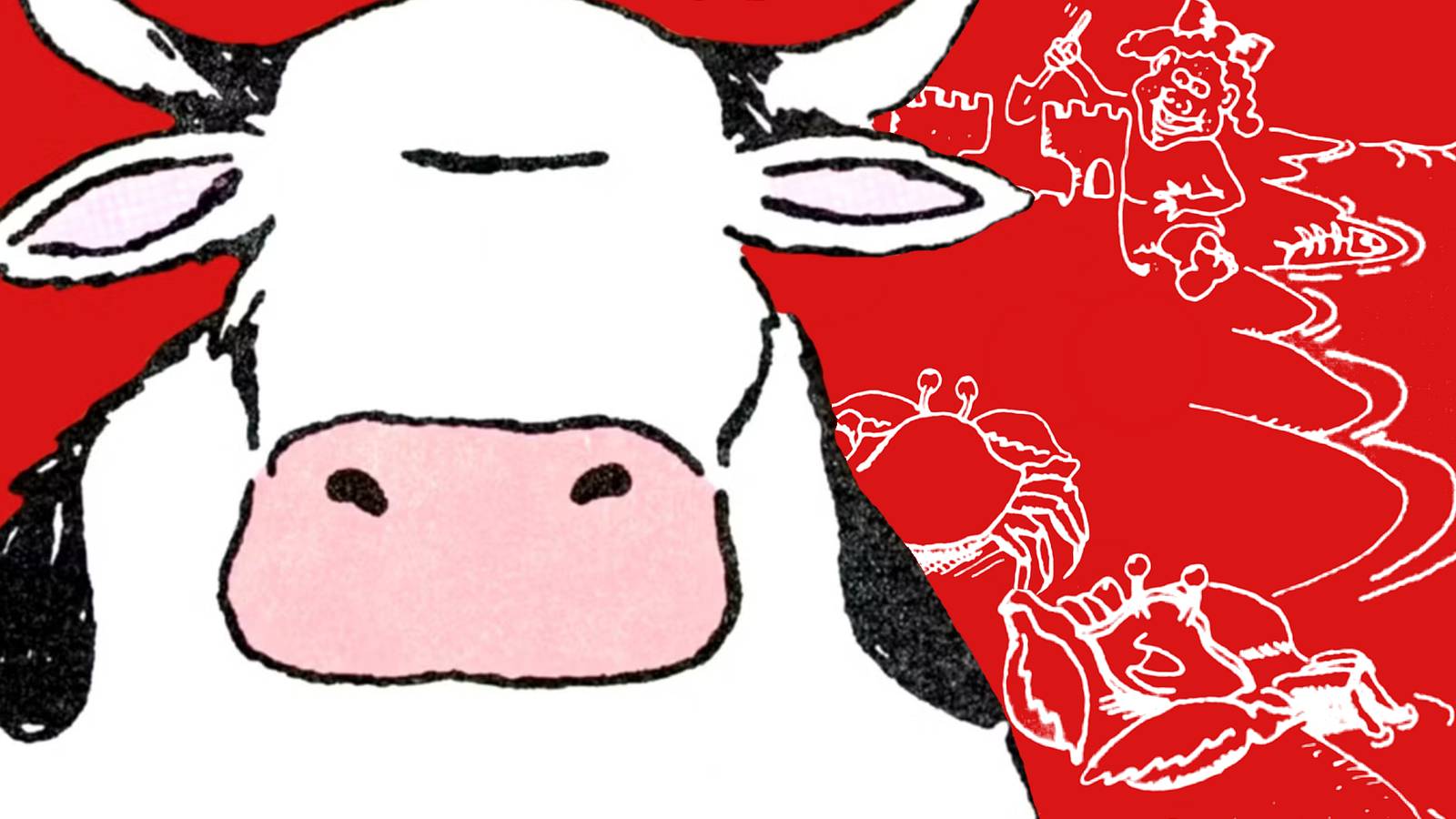
Published Aug 25, 2026, 7:30 PM EDT Robert Wood is a writer and editor based out of Cheshire, England. He is the author of 'The False Elephant: and 99 Other Unreasonably Short Stories' - 100 stories, each told in exactly 100 words. Rob got into comics via Bendis' Ultimate Spider-Man and the UK anthology 'The Mighty World of Marvel,' which was running Frank Miller's Daredevil, Classic Hulk and Contest of Champions II. Prior to journalism, he worked in copywriting and copyedited for Oxford University Press. He is on X as @PinchTwigs and Instagram as roobwoodjourno. Sign in to your ScreenRant account Gary Larson's The Far Side gave comic strip fans some of the greatest gags of all time, and yet not only was the first of the bunch one of the best, but it created a foundation for Larson's most iconic recurring joke. Across The Far Side history, Gary Larson is in love with the idea of taking humans and animals and swapping their roles. The animals act like humans, and the humans act like animals... and not particularly smart ones at that. Larson's love of nature is so apparent that National History Magazine named him the 'unofficial cartoonist laureate of the scientific community' and an interview with 20/20 saw him asked if he secretly preferred animals to people (Larson denied it, but replied "I never met a red setter I didn't like.") Looking back to Larson's first ever Far Side, fans can see the exact moment the humans/animals gags started... Far Side's First Comic Showcases Larson's Unique Sense of Humor Published on January 1, 1980, Larson's first The Far Side comic shows two crabs watching some children making a sandcastle, with one stating, "Yes... They're quite strange during the larval stage." It's a great gag that heralds Larson's long career of treating humans as animals and vice versa. The gag hinges on the crabs regarding the kids as humans would usually regard animals, but that's only where it starts. Any parent will agree that the crabs are 100% right in their observation, and Larson's later work makes it clear that the strangeness only grows more pronounced the older humans become. However, this comic also showcases one of Larson's greatest tricks of composition - using the foreground and background to create multiple 'panels' within one image. Far Side famously uses a single panel in most of its comics, but Larson is adept at breaking up the space to tell jokes that require multiple physical levels. Larson would later use thought balloons, shadows, underground/undersea moments and different floors of a building to divide his gags, but the foreground/background trick is the most subtle incarnation, and it was there from the very beginning. In this case, the comic takes advantage of the average person's habit of reading a comic strip from top to bottom. First they see Larson's young grotesques, then the crabs having an earnest discussion, then the comic's caption connects the two. The reader finds themselves echoing the crab's thoughts before they even know them, making the reveal even funnier. Far Side's First Comic Kicked Off Larson's Biggest Obsession Far Side's theme of animals acting like humans and humans acting like animals is its most enduring, so it's impressive to see that Larson's obsession was there from the very beginning. Robin Williams summed up Larson's approach in his foreword to The Far Side Gallery 4, stating that The Far Side made him feel like he was "watching a National Geographic special on Prozac." This habit allows Larson to explore human foibles in a unique way, depicting dogs with relationship issues, mischievous cows and murderous fish. One of the triumphs of The Far Side is that even in Larson's morbid, goofy situations, his human readers can see themselves reflected. At the same time, Larson sometimes subverts this pattern, depicting animals behaving in ludicrous ways that NO-ONE could ever recognize, often leaning into the 'nature documentary' presentation to make the contrast even more pronounced. Gary Larson's The Far Side comic - featuring crabs treating young humans as the 'larval stage' of just another animal - is as funny today as when it was first printed, while also setting up the defining characteristics of the comic strip that make it so beloved by so many people. Writer Gary Larson Colorist Gary Larson
46 Years Later, The Far Side's First Comic Is an Undefeated Masterpiece
Full Article
Original Source
Read the full article at Screenrant →KhanList aggregates and links to publicly available news content. We do not host full articles from third-party sources. Always verify important information with original sources.