
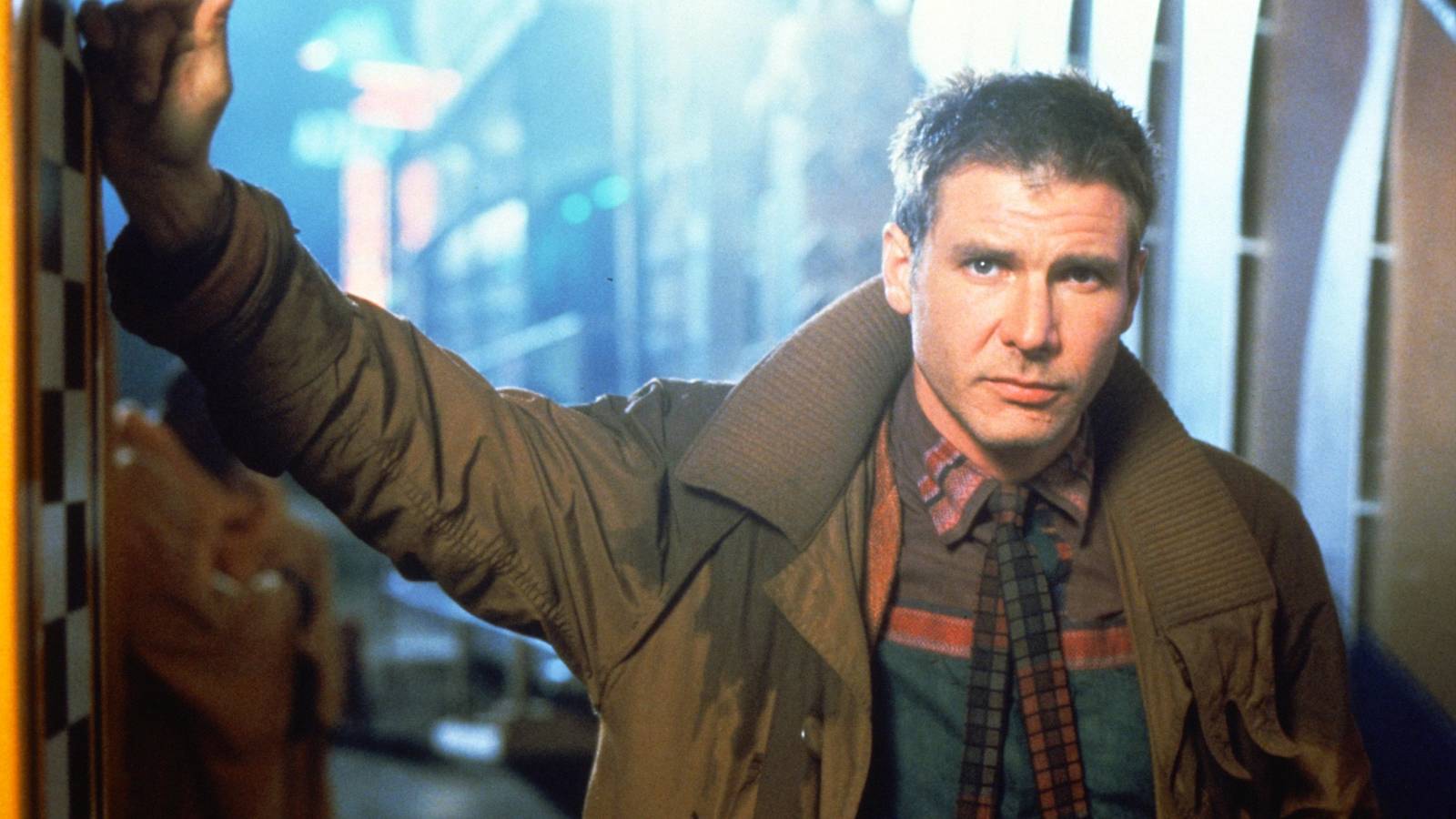
Published Aug 23, 2026, 3:42 PM EDT Felipe Rangel is a Movie and TV Journalist ScreenRant. He has been writing about movies and TV since 2021. Felipe joined ScreenRant in 2022, working across different teams, covering everything from breaking news to features to reviews and more. Felipe is a writer who is an avid film and TV fan, with superhero movies and series being his biggest passion. He graduated from college in 2019, having studied Journalism. Before college, he spent a month studying at the Oxford English Centre. His superhero knowledge expands to the comics, with his undergraduate thesis being "Politics Reflected In American Comics." Sign in to your ScreenRant account Blade Runner is one of the most iconic movies of all time, and to this day, it continues to hold the title of the greatest sci-fi movie quote of all time. When one thinks of unforgettable movies, franchises like Star Wars, Jurassic Park, the Marvel Cinematic Universe, and more are quite popular answers. That said, not all franchises started with a bang. Back when it was released in theaters on June 25, 1982, Blade Runner was not one of those iconic movies that came out of the gate as a box office hit and universally beloved. Studio interference, a box office clash with Steven Spielberg's E.T. the Extra-Terrestrial, marketing the movie as a summer blockbuster instead of a slow-paced detective sci-fi movie, and more made Blade Runner stumble at first. However, when Blade Runner: The Director's Cut came out in 1992, scrapping pieces of the movie that did not work, like a boring and studio-mandated voice-over from Harrison Ford, public opinion of the movie fully changed. Now a classic, Blade Runner stands at a near-perfect 89% critics' score on Rotten Tomatoes based on 134 reviews, with an even better 91% audience score. Voigt-Kampff Analysis · Empathy Calibration How Well Do You Know Blade Runner? “All those moments will be lost in time, like tears in rain.” 🤖ReplicantsMore human than human 🌃NeoNoirRain-soaked streets 🏙DystopiaLos Angeles 2019 👁TyrellCorpCommerce is our goal 🌞2049A new blade runner BEGIN VOIGT-KAMPFF → 01 In Ridley Scott’s Blade Runner (1982), replicants are bioengineered beings created by a powerful corporation. What is the name of the company that manufactures them? AWeyland-Yutani BCyberdyne Systems CTyrell Corporation DOmni Consumer Products ✓ Correct! The Tyrell Corporation, led by the genius Dr. Eldon Tyrell, creates the Nexus-6 replicants with the motto “More Human Than Human.” Their massive pyramidal headquarters dominate the Los Angeles skyline. ✗ Retired! The answer is the Tyrell Corporation. Weyland-Yutani is from Alien, Cyberdyne Systems from Terminator, and OCP from RoboCop. The Tyrell Corporation’s Dr. Eldon Tyrell created the Nexus-6 replicants, including the film’s antagonist Roy Batty. NEXT → 02 The “Tears in Rain” monologue is widely considered one of cinema’s greatest death scenes. Which actor delivered this improvised speech as the replicant Roy Batty? AHarrison Ford BRutger Hauer CSean Young DEdward James Olmos ✓ Correct! Rutger Hauer played Roy Batty and famously rewrote the monologue the night before filming, trimming it down and adding the immortal line “like tears in rain.” It remains one of the most poetic moments in science fiction cinema. ✗ Retired! The answer is Rutger Hauer. Harrison Ford played Deckard, Sean Young played Rachael, and Edward James Olmos played Gaff. Hauer’s Roy Batty delivered the haunting “Tears in Rain” speech on a rain-soaked rooftop as his four-year lifespan expired. NEXT → 03 Blade runners use a specialized test to determine whether a subject is human or replicant by measuring emotional responses and involuntary eye movements. What is this test called? AThe Voigt-Kampff test BThe Turing test CThe Nexus protocol DThe Empathy Index ✓ Correct! The Voigt-Kampff test uses a bellows-like device to monitor pupil dilation and involuntary blush responses while asking emotionally provocative questions. The opening scene of the film features Leon Kowalski failing the test spectacularly. ✗ Retired! The answer is the Voigt-Kampff test. The Turing test is a real-world concept for testing AI intelligence. The Voigt-Kampff machine measures empathic responses through eye movement — replicants struggle to fake genuine emotional reactions to its disturbing scenarios. NEXT → 04 Blade Runner is loosely adapted from a novel by the legendary science fiction author Philip K. Dick. What is the title of this 1968 novel? AThe Man in the High Castle BA Scanner Darkly CUbik DDo Androids Dream of Electric Sheep? ✓ Correct! Philip K. Dick’s “Do Androids Dream of Electric Sheep?” (1968) explores themes of empathy, identity, and what it means to be human. While the film departs significantly from the novel, both ask the same fundamental question about the nature of consciousness. ✗ Retired! The answer is “Do Androids Dream of Electric Sheep?” All four are Philip K. Dick novels, but only this one served as the basis for Blade Runner. The novel’s androids, mood organs, and electric animals were reimagined into the neon-noir dystopia we know today. NEXT → 05 Rachael is a unique replicant who believes she is human because she has been implanted with someone else’s memories. Whose memories does Tyrell give her? AEldon Tyrell’s daughter BTyrell’s niece CDeckard’s mother DA random donor’s childhood ✓ Correct! Tyrell implanted Rachael with the memories of his niece, giving her a fabricated past complete with childhood photographs and emotional recollections. This made her uniquely difficult to identify as a replicant — it took Deckard over 100 questions on the Voigt-Kampff test. ✗ Retired! The answer is Tyrell’s niece. Deckard discovers this during his investigation, noting that Rachael’s memories — including the spider outside her window — actually belonged to Tyrell’s niece. This revelation is what shatters Rachael’s understanding of her own identity. NEXT → 06 Blade Runner is famous for existing in multiple cuts. The definitive version, released in 2007 and personally overseen by Ridley Scott, removed the studio-imposed voiceover and happy ending. What is this version called? AThe Director’s Cut BThe Workprint CThe Final Cut DThe International Cut ✓ Correct! The Final Cut (2007) is the only version where Ridley Scott had complete artistic control. It removed Harrison Ford’s narration, cut the happy ending, restored violence, and fixed continuity errors. At least seven different cuts of the film exist. ✗ Retired! The answer is The Final Cut. The Director’s Cut (1992) was actually assembled without Scott’s full involvement. The Final Cut (2007) is the only version Ridley Scott was completely satisfied with, and it’s now considered the definitive way to experience the film. NEXT → 07 In Blade Runner 2049 (2017), Ryan Gosling plays a replicant blade runner known by his serial number KD6-3.7. What is the human name he adopts over the course of the film? AJoe BAdam CRick DLeon ✓ Correct! Officer K adopts the name “Joe” after his holographic companion Joi tells him he looks like a “good Joe.” The name takes on deeper meaning as K grapples with the possibility that he might be something more than just a replicant following orders. ✗ Retired! The answer is Joe. His AI girlfriend Joi gives him the name, calling him “a good Joe.” Leon is a replicant from the original film, and Rick is Deckard’s first name. K’s journey from obedient machine to someone who chooses his own name is the emotional core of 2049. NEXT → 08 The original Blade Runner’s haunting synthesizer score — a groundbreaking blend of orchestral noir and electronic atmosphere — was composed by which legendary musician? AJohn Carpenter BHans Zimmer CTangerine Dream DVangelis ✓ Correct! Greek electronic composer Vangelis (Evangelos Odysseas Papathanassiou) created the iconic score, blending Yamaha CS-80 synthesizers with saxophone and orchestral elements. The soundtrack wasn’t officially released until 1994, over a decade after the film, due to rights disputes. ✗ Retired! The answer is Vangelis. John Carpenter scores his own films, Hans Zimmer composed for 2049’s sequel (with Benjamin Wallfisch), and Tangerine Dream scored other 1980s sci-fi films. Vangelis’ atmospheric score is inseparable from Blade Runner’s identity. REVEAL MY SCORE → Voigt-Kampff Complete · Results Logged Your Replicant Dossier 👁 / 8 Blade runner — or lost in tears in rain? ↻ RERUN VOIGT-KAMPFF As such, there is no denying that Blade Runner has become one of the most iconic movies of all time, doing a lot for the sci-fi genre specifically. With impactful performances from actors like Ford, Rutger Hauer, Edward James Olmos, and more, and a complex story about the sense of self and what it truly means to be human, Blade Runner delivered the best line in sci-fi movie history. Blade Runner's "Tears In Rain" Scene Explained Blade Runner's best quote and the greatest line in sci-fi movie history belongs to Hauer's Roy Batty, who is not really a villain, after all, the film presents quite complex characters. After being hunted by Ford's Rick Deckard throughout the movie, Batty surprisingly saves the man who was after him at the very end. After helping Deckard from falling off the roof, a dying Batty turns to Ford's character in his final moments for one last speech, and it is poignant. After talking about all he has experienced, Batty poetically says, "All those moments will be lost in time, like tears in rain." By saving Deckard's life and delivering this emotional speech about memory and, most of all, humanity, Batty definitely shows Ford's characters that the replicants are not as different as he imagined. This also makes Deckard question whether he is a human or a replicant at the very end of the movie, a question that even Denis Villeneuve's Blade Runner 2049 would not fully answer decades later. An interesting fact is that Hauer improvised the best part of that speech, the "tears in rain" line, as revealed by the actor, director Ridley Scott, and screenwriter David Peoples in Dangerous Days: Making Blade Runner. Why "Tears In Rain" Remains Unbeatable Blade Runner does not have the best action sequences in the sci-fi genre, nor is it worldbuilding as dense as those of other franchises. However, this quote really gets to the bottom of the question of what it means to be human, which is a recurring theme across the genre and the many sci-fi subgenres. It is deeply moving that, after being chased throughout the entire movie, Batty would show such compassion by saving Deckard's life and then ponder on the end of his own. Additionally, the visual is particularly strong, with Batty saying the line as heavy rain falls, really hitting the point home. Aside from its meaning within the wider genre, the fact that this Blade Runner line completely recontextualizes what Deckard thought of life, serving as a turning point for the franchise, helps understand why, 44 years later, it continues to be the best sci-fi movie line ever. Release Date June 25, 1982 Runtime 118 minutes Director Ridley Scott Writers David Webb Peoples, Hampton Fancher, Philip K. Dick Producers Michael Deeley, Run Run Shaw Sequel(s) Blade Runner 2049 Franchise(s) Blade Runner
44 Years Later, Blade Runner's Best Quote Remains The Greatest Line In Sci-Fi Movie History
Full Article
Original Source
Read the full article at Screenrant →KhanList aggregates and links to publicly available news content. We do not host full articles from third-party sources. Always verify important information with original sources.