
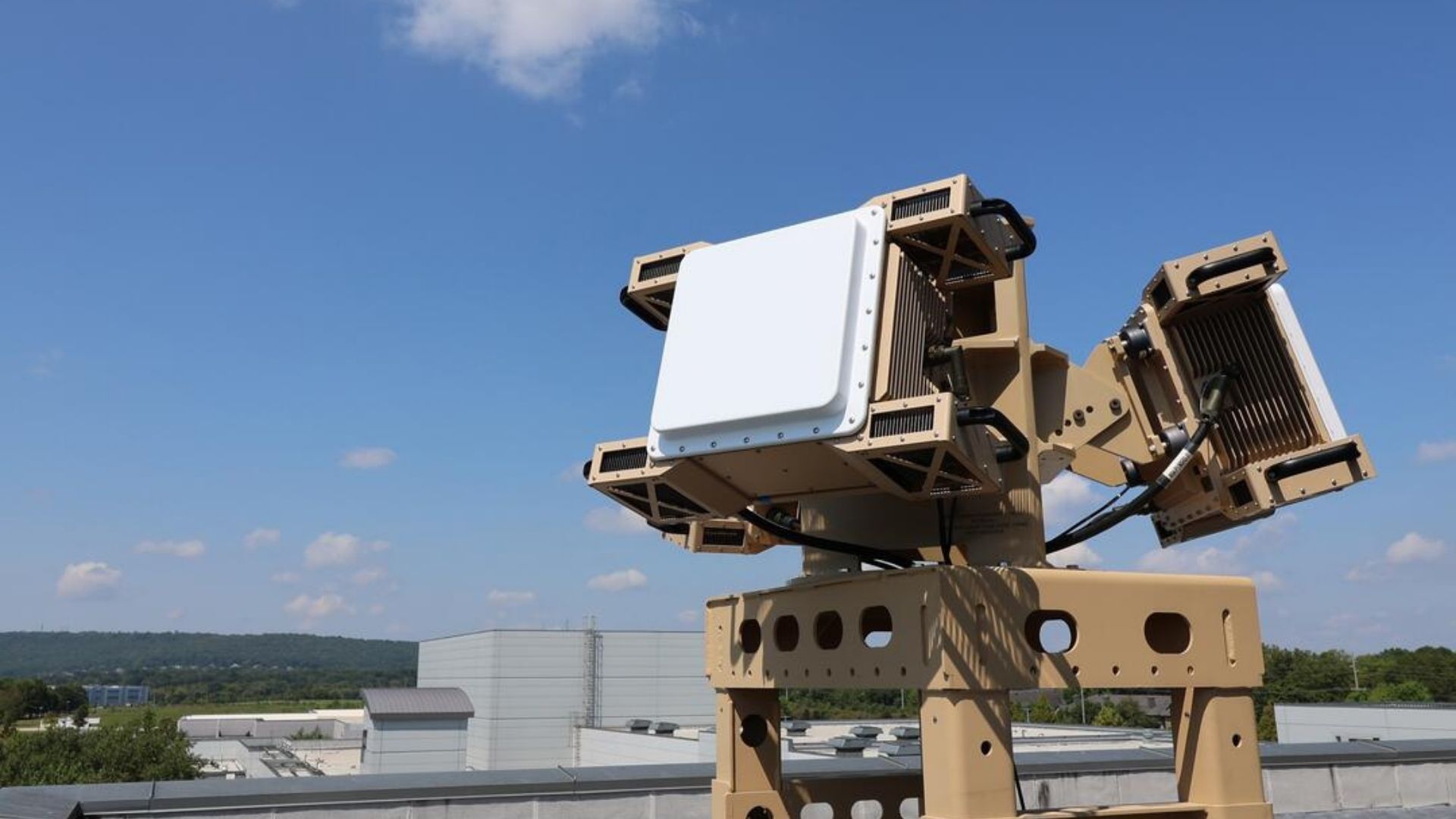
Curtiss-Wright has won roughly $40 million in contracts to supply critical hardware for the U.S. Army’s Indirect Fire Protection Capability Increment 2 (IFPC Inc 2). Leidos awarded the contracts for the ground-based air-defense system. Curtiss-Wright will provide electromechanical actuators and compact mission computers for mobile defense platforms. IFPC Inc 2 will help the Army counter cruise missiles, rockets, and unmanned aircraft systems. The system can acquire, track, and engage threats from ground-based positions. Precision control for launchers Curtiss-Wright’s electromechanical actuators will provide precise movement and positioning for the system. The company adapted commercial roller screw and motor technologies for military applications. Roller screws convert rotary motion into controlled linear movement. That makes them useful when equipment needs accurate positioning while handling substantial forces. The actuators can operate across different force, speed, and positioning requirements. Curtiss-Wright also modified the technology to meet the Army’s environmental and performance standards. Electromechanical actuation can offer advantages over hydraulic systems in certain defense applications. It eliminates hydraulic fluid while providing direct electrical control over mechanical movement. That can matter on mobile platforms where engineers must manage space, weight, and power consumption. Defense equipment also needs to maintain reliable performance under demanding operating conditions. Lynn M. Bamford, Curtiss-Wright’s chair and CEO, said the contracts expand the company’s support for Leidos and the Army’s IFPC program. She highlighted the military’s demand for more efficient systems with lower size and weight requirements. Higher power efficiency also remains important as mobile platforms add more onboard technology. Rugged computers handle missions Curtiss-Wright will also supply its DuraCOR 8044 mission computer for IFPC applications. The rugged system targets platforms with strict size, weight and power requirements. The DuraCOR 8044 uses Intel’s 11th-generation Xeon W processor, known as Tiger Lake-H. Curtiss-Wright designed the computer for demanding mobile and embedded applications. Its intended applications include ground and airborne platforms, sensors, and manned or unmanned vehicles. That makes rugged computing an important component of modern defense systems. Mission computers process information from sensors and other onboard equipment. In an air-defense system, that processing supports the flow of information needed to identify and track potential threats. The physical design also matters in military environments. Computers mounted on vehicles can face vibration, temperature changes, and limited space. The DuraCOR 8044 addresses those constraints while providing computing capability for systems that cannot depend on conventional computing infrastructure. Guam defense adds strategic role IFPC Inc 2 has a broader role in the Army’s plans for defending against evolving aerial threats. The system is expected to support operations in the Indo-Pacific, including the Defense of Guam. Guam holds strategic importance for U.S. forces in the region. Its location also makes layered air defenses important as potential threats become more diverse. IFPC is designed to address several threat categories from a ground-based platform. Its ability to detect, track, and engage those targets depends on multiple technologies working together. Curtiss-Wright’s actuators will contribute to the system’s mechanical control. Its mission computers will provide computing hardware for the mobile defense architecture. Curtiss-Wright will perform the work through its Aerospace & Industrial and Defense Electronics segments. The $40 million award adds specialized hardware to an Army program focused on countering increasingly complex aerial threats. Get the latest in engineering, tech, space & science - delivered daily to your inbox.Aamir is a seasoned tech journalist with experience at Exhibit Magazine, Republic World, and PR Newswire. With a deep love for all things tech and science, he has spent years decoding the latest innovations and exploring how they shape industries, lifestyles, and the future of humanity.
$40M deal upgrades Army air defenses with precision actuators and rugged computers
Full Article
Original Source
Read the full article at Interestingengineering →KhanList aggregates and links to publicly available news content. We do not host full articles from third-party sources. Always verify important information with original sources.