
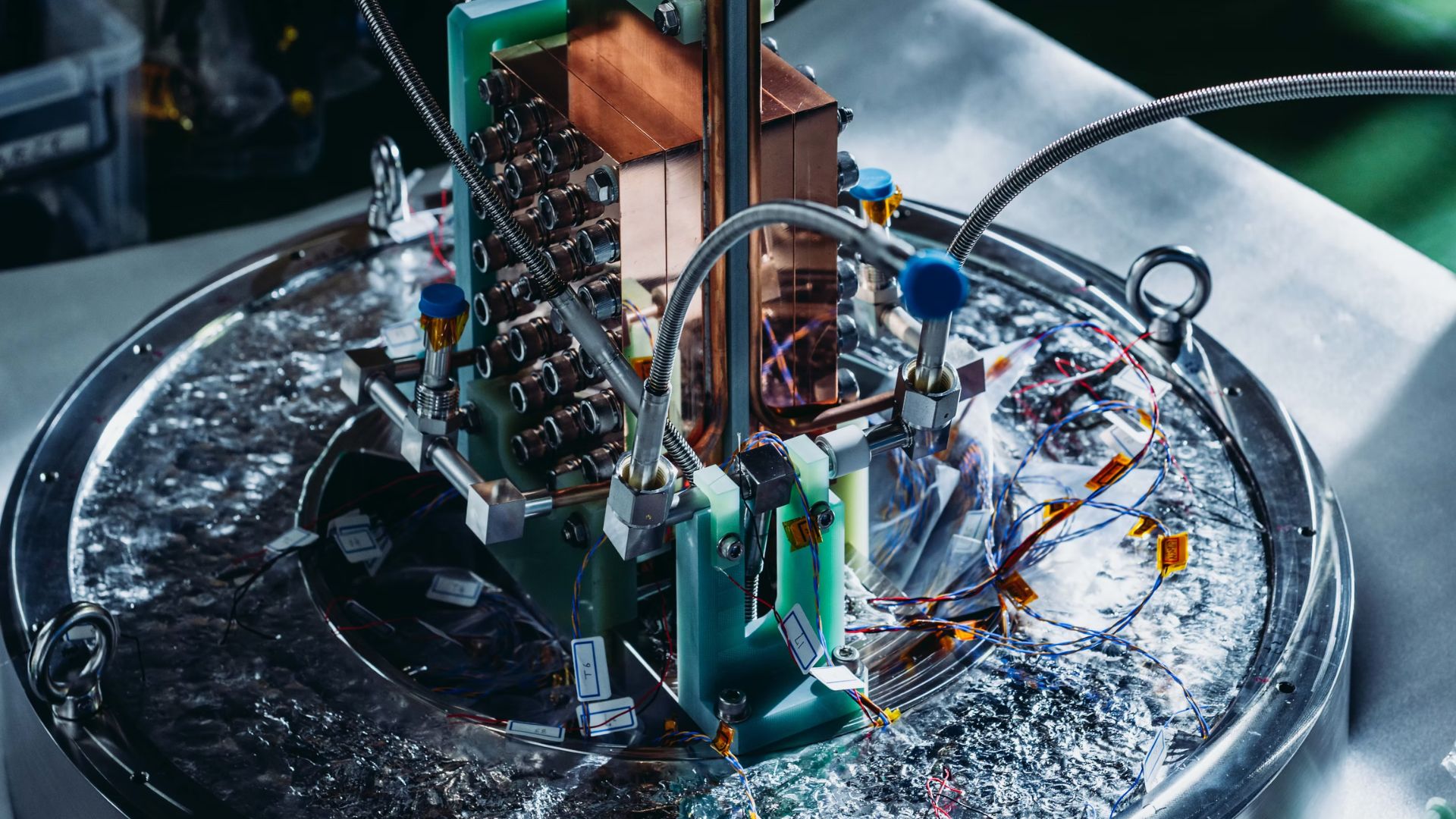
A newly published peer-reviewed study has verified a high-temperature superconducting magnet design developed by Helical Fusion. The paper appears in the Journal of Physics: Conference Series, an academic journal from IOP Publishing. It presents laboratory data on the company’s conductor, named UROCOIC, following its initial presentation at the 38th International Symposium on Superconductivity. The release of the paper also coincides with the project passing an official review under Japan’s MEXT SBIR Phase 3 program. The research focuses on a major technical obstacle in fusion energy. Stellarator reactors use magnetic fields to trap extremely hot plasma. “Helical Stellarators require superconducting coils with complex three-dimensional geometries while maintaining high current capacity and mechanical robustness under intense electromagnetic loads,” explained Helical Fusion. Protecting delicate internal materials To solve this problem, engineers created the UROCOIC architecture, which stands for Unitized Reinforcing Outer Cover On Internal Components. The design places an external metal jacket over the internal superconducting tapes. This outer layer absorbs physical stress directly, protecting the delicate internal materials from bending or cracking under load. For the experiment, a Japanese manufacturing partner built a test magnet called a double-pancake coil using the UROCOIC conductor. Notably, the team built the coil without conventional electrical insulation between its layers. In standard superconducting magnets, insulation traps heat when a small section warms up, which can cause the magnet to suddenly fail in an event called a quench. Leaving the coil uninsulated allows heat and excess current to bypass hot spots, preventing damage and keeping the system stable. Researchers from Helical Fusion and the National Institute for Fusion Science placed the test coil inside a specialized cryogenic chamber. They chilled the system down to 10 Kelvin (-263°C) and operated it at temperatures up to 30 Kelvin (-243°C or -405°F). The team then applied a background magnetic field of 7 Tesla using external coils, creating a maximum field of 8.9 Tesla on the test magnet itself. The test coil ran continuously at an electric current of 40 kiloamperes without quenching or losing its superconducting state. It also withstood physical forces of 356 kilonewtons per meter caused by the interaction of the current and the magnetic field. During sudden changes in the external magnetic field, the uninsulated coil remained stable and yielded key data on how fast electrical currents adjust inside the winding. Direct experimental evidence This test provides direct experimental evidence that the conductor can handle the forces present inside an operating fusion device. Helical Fusion plans to use this magnet technology in its next experimental machine, called Helix HARUKA. If those tests succeed, the company aims to scale up the conductor for Helix KANATA, a full-scale commercial fusion power plant planned for the 2030s. “We will continue advancing the Helix Program and integrating these technologies into Helix HARUKA, bringing us another step closer to realizing the world’s first commercially viable fusion power plant based on the Helical Stellarator,” concluded Junichi Miyazawa, Co-Founder and Vice CTO at Helical Fusion. Get the latest in engineering, tech, space & science - delivered daily to your inbox.An active and versatile journalist and news editor. He has covered regular and breaking news for several leading publications and news media, including The Hindu, Economic Times, Tomorrow Makers, and many more. Aman holds expertise in politics, travel, and tech news, especially in AI, advanced algorithms, and blockchain, with a strong curiosity about all things that fall under science and tech.
-405°F cryogenic superconducting fusion magnet passes 40 kA electric current test
Full Article
Original Source
Read the full article at Interestingengineering →KhanList aggregates and links to publicly available news content. We do not host full articles from third-party sources. Always verify important information with original sources.