
By most measures, adults are smarter than your average preschooler. We know more stuff, have a lifetime of experience, and have superior logic and reasoning skills. And yet, in scientific and psychological studies pitting adults against children, the children tend to come out on top far more often than you’d think. That’s exactly what happened in one notable study out of UC Berkeley. Study asks kids and college students to turn on puzzling music box Psychologists from UC Berkeley and the University of Edinburgh came up with a fascinating idea for a study. They recruited a group of preschoolers around four or five years old and another group of college undergrad students; essentially adults. Then they introduced each participant to a mysterious and made-up object called a “blicket detector” or “blicketness machine.” Essentially, the blicket detector was a small box that could be activated to glow and play music. It could only be activated when the correct “blickets,” or clay shapes, were placed on its surface. Researchers demonstrated the concept to each participant and then instructed them to figure out how to turn on the box on their own. The preschoolers won in a landslide. The kids overall showed a far better ability to correctly identify which shapes, or combinations of shapes, were blickets. “The kids got it. They figured out that the machine might work in this unusual way and so that you should put both blocks on together. But the best and brightest [college students] acted as if the machine would always follow the common and obvious rule, even when we showed them that it might work differently,” wrote Alison Gopnik, senior author of the study. Studies reveal key skills we lose as we age Gopnik theorized that children were incredibly good at this task because, while they may lag behind adults in several cognitive areas, what they excel at is learning and exploration. In problem solving, what’s more important than sound logic is a willingness to try novel solutions. That’s exactly why the kids succeeded where the adults failed. “If the child sees that a square block and a round block independently turn the music on, then they’ll take a square and take a circle and put them both on the machine together to make it go, even though they never actually saw the experimenters do that.” Simply put, kids were better at figuring out how the machine worked because they were more willing to try different solutions. Adults were more likely to get locked into more obvious “rules,” and had trouble deviating from the examples the researchers showed them. What’s especially interesting is that we can track and measure exactly how this skill changes in our brains over time. In 2017, Gopnik and colleagues authored a follow up study to the original research examining “changes in cognitive flexibility… from childhood to adolescence to adulthood.” The updated research found that not only were preschoolers way ahead of adults in this fluid thinking, it was a skill that noticeably degraded as we age. The data showed that 4-year-olds correctly activated the blicket about 92% of the time. That number plummeted to 56% for 6- and 7-year-olds. And just 25% of adults were successful at the task. “As they grow older learners are less flexible: they are less likely to adopt an initially unfamiliar hypothesis that is consistent with new evidence,” the paper writes. But all is not lost if you’re unfortunate enough to be a grown up. Embracing play and exploration may pay off in our ability to think creatively and try unusual approaches to novel problems: “It is also plausible that a playful protected environment may lead to more flexible, exploratory and childlike learning, even in adulthood.”
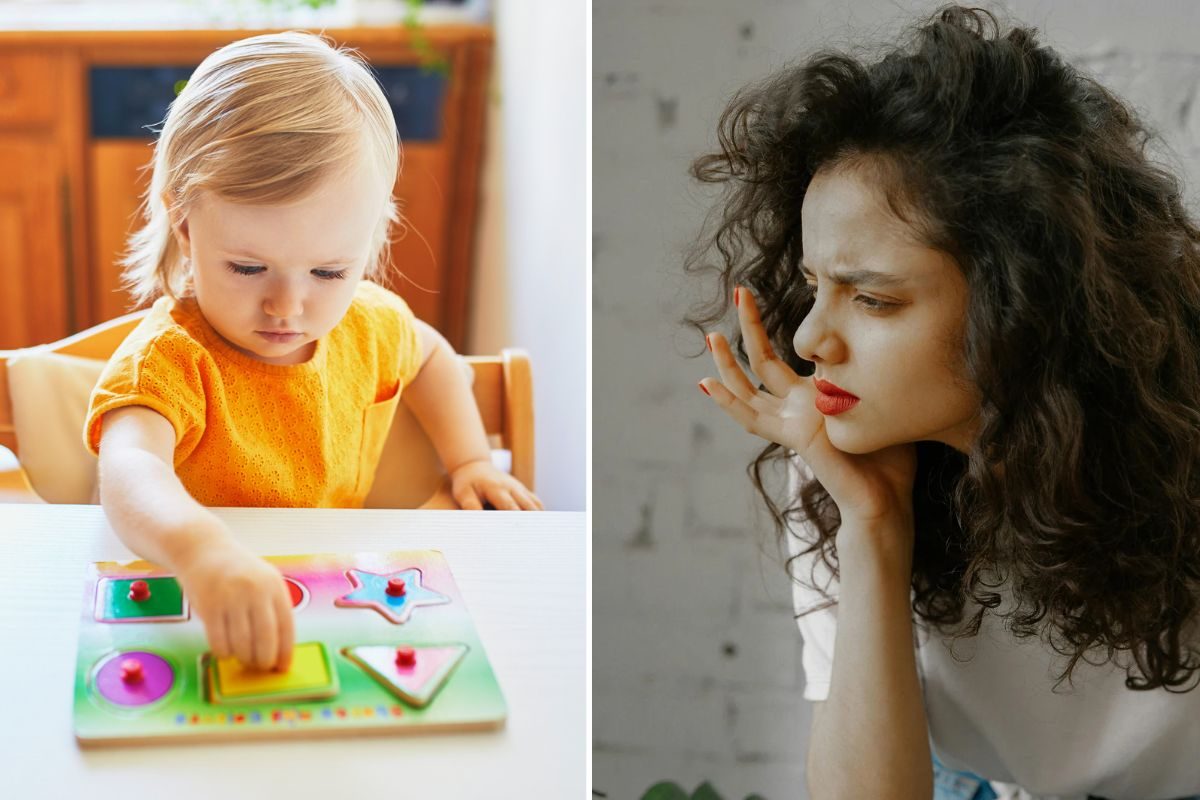
4-year-olds and adults were given the same strange puzzle. The preschoolers won in a landslide.
Full Article
Original Source
Read the full article at Upworthy →KhanList aggregates and links to publicly available news content. We do not host full articles from third-party sources. Always verify important information with original sources.