
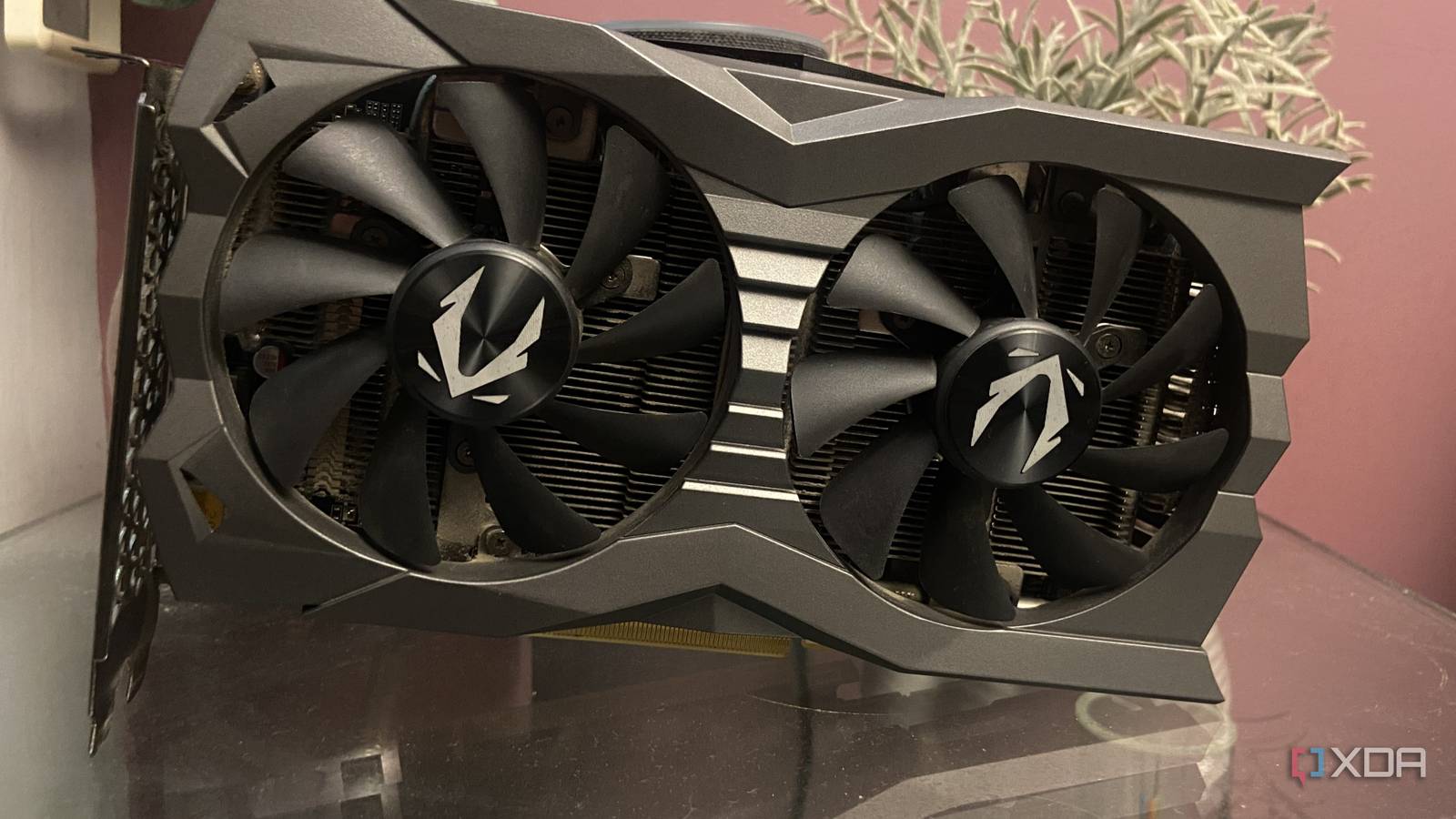
Published Sep 14, 2026, 7:00 AM EDT Abhinav pivoted from a career in banking to pursue his first love in writing. Even while working full-time, he continued contributing as an editor-at-large, a role he has held for more than 7 years. A lifelong tech enthusiast who has built three gaming and productivity powerhouse PCs since 2018, his passion for technology keeps him closely following the semiconductor industry, from NVIDIA and AMD to ARM. His MSc dissertation explored how artificial intelligence will reshape the future of work, reflecting his curiosity about the wider social impact of emerging technologies. The memory crisis has stung the dedicated graphics market, making already expensive GPUs a lot more expensive for consumers. Nvidia's latest Blackwell GPUs launched within an MSRP range from $299 for an entry-level card to $1,999 for the flagship. Street prices right now, however, tell another story, because somehow, the entry-level card is near $470 and the flagship regularly crosses the $5,000 territory, with the entire lineup carrying a massive premium on the launch price. At the same time, GPUs are more useful than they've probably ever been before. The rise of local AI and free, self-hosted services truly demonstrate the transformative potential of a high-VRAM graphics card in a rig, and it's precisely the kind of potential that is reflected in your subscription bills at the end of every month. Fortunately, you don't have to splurge on a Blackwell or RDNA 4 GPU to put a perfectly capable card in your PC, because the secondary market gives you a lot of great options to choose from. Here are my top four picks. Nvidia GeForce RTX 3090 24GB of VRAM and a mature CUDA stack makes it a steal Credit: Nvidia. The Ampere flagship launched about 6 years ago in September 2020 at a retail price of $1,499, and it continues to deliver strong value to anyone who trusts it in their PCIe slot. Packing 24GB of GDDR6X, a CUDA core count of 10,496 and 350W of board power for an average price of $790-$850 on the used market, this card gives you massive VRAM headroom and compute capabilities to go with it for a sweet price. With that VRAM, you'd find yourself with a long list of reasoning models that you can run locally on your PC. The RTX 3090 carries more memory than every Blackwell card below the $5,000-plus RTX 5090, and CUDA means that llama.cpp, Stable Diffusion, and PyTorch will work without the configuration hassle that AMD and Intel cards bring. The GPU is the cheapest way into 24GB of CUDA-powered VRAM, but I wouldn't expect this price to stick around this range for a long time. AMD Radeon RX 7900 XTX The home lab owner's favorite pick from the bunch I couldn't say this list was fair unless I mentioned AMD's RDNA 3 flagship. With 24GB of GDDR6, 96 compute units, and 355W board power, the Radeon RX 7900 XTX can be an asset to any home server at a price that won't burn a hole through the buyer's wallet. Our very own Adam Conway runs this beast on a Proxmox LXC and calls it "perfect for larger self-hosted LLMs." What's even more interesting about this entry is the fact that nothing in the current RDNA 4 lineup replaced this card, while Nvidia's current-gen 24GB-plus option starts at $5,000 and above. It's great for Jellyfin, virtual machines, and containers, and remains a popular option for those who like to run Linux. Even if you don't have a home lab, it's still a capable 4K gaming card. Right now, the RX 7900 XTX can be found on the used marketplace for as low as $700-$780, but inflation seems to be catching up fast here as well. AMD Radeon RX 6800XT Still a great value pick at 1440p This is the second card on the list that was launched back in 2020, but there's good reason for you to consider it if you're currently gaming on 8GB of VRAM. The first reason, of course, is the 16GB of GDDR6, which doubles your VRAM in this VRAM-starved GPU economy. The second reason is the suspiciously generous pricing on the used market space, which doesn't seem to have realized how valuable a big VRAM buffer is. Don't let your seller catch the wind, though, because these cards are still up for grabs at around $520-$550. The third reason is the software ecosystem that this card brings. AMD recently announced that it intends to bring the latest FSR 4.1 upscaling to RDNA 2 GPUs in early 2027, which means good news for gamers who like a little AI magic to boost visuals and frame rates. But don't worry if Team Red change their mind, though, because an unofficial version can force it on your games right now. Again, please don't tell your seller. Nvidia GeForce RTX 3060 12GB 12GB of VRAM on a budget to keep your graphics and your wallet comfortable This might look like a wild-card entry on this list, and I'm with you there. But if you went through this list and still felt like you were priced out of an upgrade, this might be one of the most cost-efficient, reliable, and reasonably future-proof purchase. Used units go for around $280 right now, which puts it a little below the launch MSRP. Unlike every other GPU on the list, this card's prices are far less susceptible to fluctuation, or so it seems at the moment. 12GB of GDDR6 memory on a 192-bit bus can take care of your gaming needs at 1080p and 1440p at medium preset, and you still get DLSS 4.5 with this card, and for gaming, you could get a lot more if you're open to modding via OptiScaler. Home server crowd gets access to NVENC and CUDA ecosystems too, so transcoding and local AI workflows also stand to benefit. I nearly gave this spot to Intel's Arc A770 instead, which seemed like a better buy at a similar price with 16GB of VRAM, but after a careful perusal of user reviews, I had to change my mind. Alchemist has been discontinued, DX9 titles run through a translation layer, and frame pacing, which matters to most gamers, is subject to heavy variance. That's a lot of compromises I would be asking someone to make alongside the Arc, and that makes the closest Nvidia card the automatic winner. The secondary market is a good place to look for a GPU right now The retail market has been letting down consumers for a while. Outside a few timed OEM deals, there isn't much value to be found. At such a time, looking backwards makes more fiscal sense. When you're looking to buy from the secondary market, though, it's worth doing some basic due-diligence. It's worth asking questions about mining and workload history, verifying if the card's memory is healthy before the return window closes, and buying from trusted sellers. This isn't new advice, but it's worth keeping in mind when buying a component that's five or six years old.
4 used GPUs that suddenly make sense again now that new cards cost double MSRP
Full Article
Original Source
Read the full article at Xda-developers →KhanList aggregates and links to publicly available news content. We do not host full articles from third-party sources. Always verify important information with original sources.