
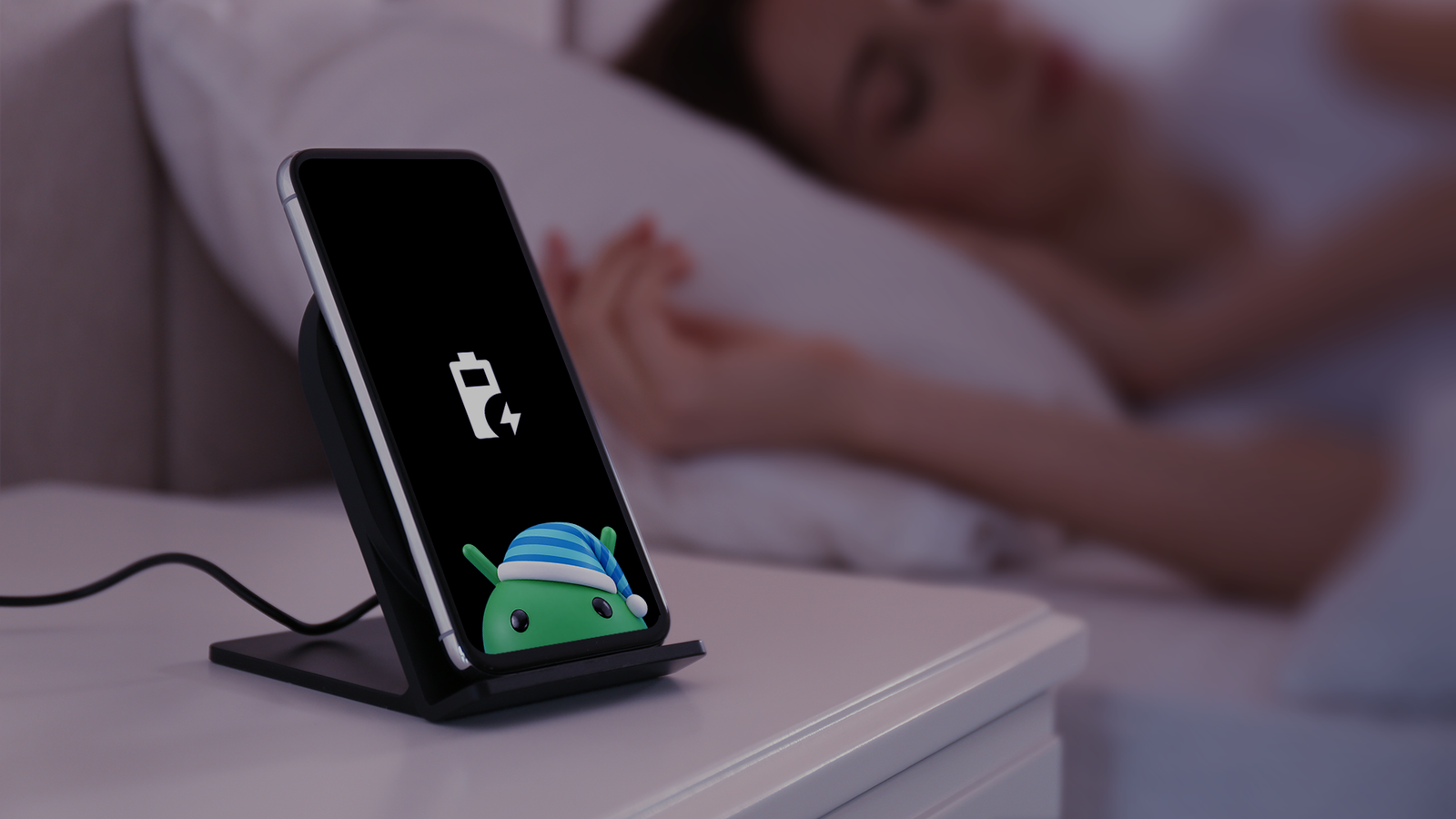
Published Sep 4, 2026, 9:30 AM EDT Faisal believes in technology that puts control and freedom in your hands. He fell down the Android rabbit hole in his childhood because it promised just that. He has bylines at Android Headlines, SlashGear, WhatMobile, How-toGeek and XDA, spanning the last 7 years. The goal of his work is to help others liberate their digital lives and to make technology feel fun again. He writes extensively about open-source software (OSS), easy productivity, home-labbing, power user tinkering. Faisal has a Bachelor's in English literature. He also enjoys watercolors, retro video games, animation, and cats. About a decade ago, if you plugged your phone in to charge overnight, it did nothing but do just that. It would steadily spike to 100% and keep baking the battery at max voltage the rest of the night. The point is that the smartphone in its idle state at night, plugged in and online, wasn't any different from charging it during the rest of the day. That's no longer true. For one, Android phones have widely adopted "smart" charging systems. When a phone is held at 100% for hours under maximum voltage and heat, it degrades the battery inside it. Modern charging systems intelligently calculate when you will wake up and pick up the phone. Using that estimate, it relies on trickle-and-pause charging past 80% to make sure the battery hits 100% as you are about to wake up. That's only one of the things your phone secretly does while it's charging at night. While you sleep, your phone is hard at work doing all kinds of jobs. Gboard's AI training sessions The secret sauce for Google's prediction features When your phone is charging at night, idle, and connected to Wi-Fi, a hidden Android service wakes up. It's called the JobScheduler. JobScheduler pings Gboard that your device is available for nightly downtime tasks. At that point, Gboard becomes active, and the servers send out an AI model to your device. Your phone downloads this AI model along with training instructions. This model then trains on your typing data. All day long, Google's Gboard app has been recording and saving your typed words and phrases, autocorrect interactions, accepted autocomplete suggestions, and so on. This data is sitting in your device's local storage. The AI model trains on this locally stored typing information to produce mathematical data points called weight gradients. These gradients represent the sum total of the model's learning. Only these mathematical gradients (not your actual typing data) are sent to Google's servers and used to improve Gboard. Credit: Lucas Gouveia / Android Police Technically, it's possible to reverse-engineer the typed keywords the AI was trained on by using those gradients. That's why Google scrambles the data with random noise and encrypts it alongside other users' data to protect your keystrokes. It does housekeeping work Frees up storage and keeps it healthy The longer you've kept and used a phone, the slower its storage gets. I'm talking about the actual flash storage hardware. That hardware also accumulates junk or ghost files and useless system logs that waste storage space. Also, your phone apps store their data in special databases which can balloon in size over time, causing apps to stutter and lag. Your phone performs regular system maintenance to prevent those problems. Once again, our friend, the JobScheduler, recognizes when the phone is idle and charging to trigger the maintenance routines. First, the maintenance service takes care of uncleared storage blocks on the flash storage. This keeps the storage hardware running at optimum speeds. Credit: Lucas Gouveia / Android Police | Vector Only / Shutterstock The app databases come next. The operating system reorganizes and cleans up messy databases, so apps can access them without unexpected lags. Finally, it erases garbage and orphaned files to free up space. It's how the gallery app can cluster people and pets by faces You might have noticed your phone's gallery app neatly sorts and tags photos of people and pets by their faces. The gallery app can also identify blurry or poorly framed photos and recommend deleting them to save space. It's also how you can search photos in your gallery using natural language. It's all thanks to the invisible heavy work your phone does at night. Intelligently scanning hundreds of photos to group them by faces and tagging them for natural language searches eats a lot of device resources. That's why the JobScheduler verifies that your phone is idle at night, plugged in, and connected to Wi-Fi before any AI sorting begins. A media scanning service scans new, edited, and deleted media files in your phone's storage. It saves relevant metadata from these files in the central MediaStore repository on the device. The on-device AI crawls your media library for photos with facial features. It then produces mathematical vectors based on those facial features, which helps the AI cluster faces together. That's how the sort by face feature works. The photos don't contain any information about the image contents themselves. To make images searchable by subject matter, they have to be tagged appropriately. So relevant photos (say ones with animals or cars) can be surfaced by typing those words in the search field. An AI model classifies images based on their contents, and an OCR (optical character recognition) model scans your media gallery and creates a local searchable index. AI vision models also isolate screenshots, duplicates, and blurry photos. Credit: Android Authority Unlike Gboard's federated learning system, however, these models run entirely on a device. Overnight app tuning So your favorite apps launch faster If you've used older Android systems, you might remember the agonizing lag between tapping an app shortcut and the app actually launching. For many people, it was a defining difference between iOS and Android because apps on iOS launched in a snap. That gap has mostly closed over the years. You might guess that it's because of modern hardware (and that is heavily in the mix), but even modest Android phones don't suffer that same lag anymore. It's all thanks to even more invisible work your Android device does overnight. Normally, the app code has to be translated into CPU-readable code on the fly as it loads and launches. That's where that lag comes from. Starting with Android Nougat (version 7), the operating system took a new approach towards app launches. During the day, the phone internally tracks your most-used apps (using Android Runtime, or ART). Not only the most-used apps, but also the most-used features and interfaces within those apps. Credit: Lucas Gouveia / Android Police At night while your phone charges, a background service silently optimizes app launches ahead of time, based on the data it collected during the day. The result is that the next day, the same app loads and launches a little bit faster. Your phone may look idle charging overnight, but in truth it's anything but When you leave it plugged in by the bedside, your phone manages its charging speed to protect the battery inside. It's cleaning house and optimizing app launch times. Plus, the sophisticated features of the gallery and keyboard apps are powered by overnight machine learning.
4 things your phone secretly does only while it's charging at night
Full Article
Original Source
Read the full article at Androidpolice →KhanList aggregates and links to publicly available news content. We do not host full articles from third-party sources. Always verify important information with original sources.