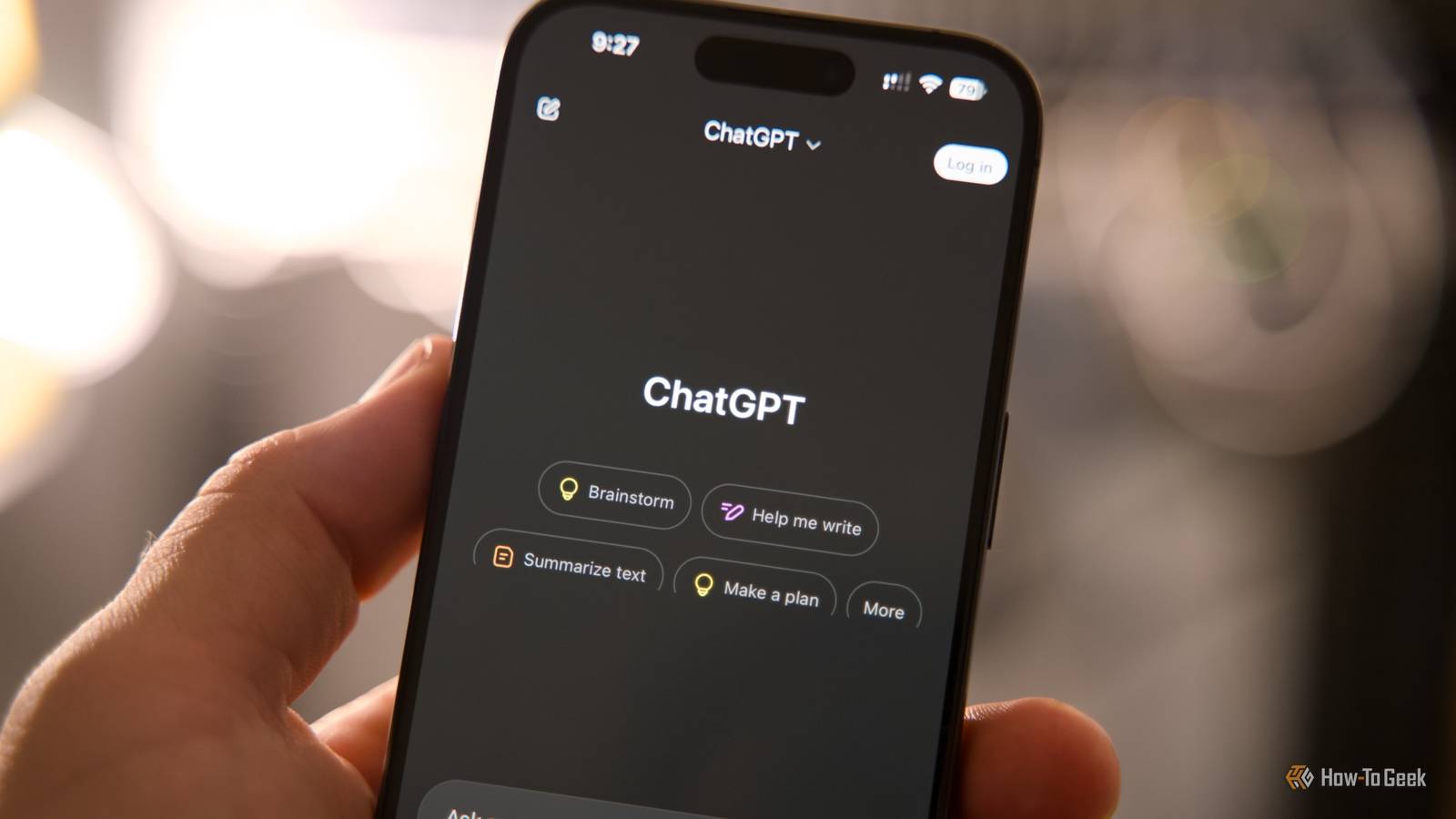
Published Jul 31, 2026, 10:30 AM EDT Aggy is a veteran writer and editor in the technology and gaming space. Having served as a Managing Editor for high-traffic digital publications, alongside being an editor and consultant for over a dozen sites. Aggy's published work spans a wide and respected array of tech and gaming outlets, including WePC, Screen Rant, How-To Geek, Android Police, PC Invasion, and Try Hard Guides. Beyond editorial work, Aggy's direct experience in the tech sphere extends to app development. Aggy has published two games under Tales and is always eager to learn and do more. He also likes working on computers and researching in his spare time. He knows about Windows, Linux, Audio, Video, and much more. Paying a fee every month for an AI tool sounds manageable until you actually stop and think about what you're getting for it. You're renting access to a model like ChatGPT that you can't modify, can't run offline, and can't trust with anything sensitive—and the moment you stop paying, you lose everything. Local large language models fix most of that, and they're more usable today than most people expect. Your data stays on your computer Cloud tools send your information to other servers When deciding which AI tools to use day-to-day, the most important question you should ask involves where your data goes. With a local AI model, you'll never worry about it leaving your computer. That's a very different story from tools like ChatGPT. Everything you type or upload travels over the internet to someone else's servers, where it can be stored, reviewed, or potentially used to train future models unless you specifically opt out. All of your data or your company's data is sitting on infrastructure you don't control, governed by terms of service that can change overnight without much notice. For companies bound by strict rules, this creates massive problems. You could have broken real laws just to find out the best move forward. You could give up medical, business, or other information that you don't really have control over, because you likely don't have the permissions you need. Local AI models get around all of these issues. They run entirely offline, so your data never touches the internet to begin with, which means they're built to be compliant instead of retrofitted to be. I use Llama.cpp, but there are plenty of others that are safe to use and competent enough to get basic tasks done. You stop paying a monthly bill Renting access gets expensive over time Credit: Jorge Aguilar / HowToGeek Running local LLMs means you stop paying a monthly bill entirely, which starts to matter a lot once you do the math on what cloud AI actually costs over time. ChatGPT's Plus subscription is $20 a month, and while that sounds reasonable at first, it never goes away. That means costs stack up over time, turning into a permanent line item on your bank statement. For developers hitting the API with any serious workload, that figure climbs fast. The underlying problem is that you're renting access instead of owning anything, and the moment you stop paying, your access to the best models disappears with it. Tools like Ollama, LM Studio, and llama.cpp are free and open-source, and the models themselves can be downloaded directly from places like Hugging Face. What was a recurring monthly expense becomes a one-time hardware investment if you want to go that far. I like using a machine on the side, but you can use your own computer if it is good enough. That's actually how I started, just using it while I used my regular computer. If you're serious, set up a dedicated computer to act as a server instead. Once the machine is set up, the software and the models are yours to keep and use as much as you want, with no per-token charges, no pricing tiers, and no surprise bills because an automated script ran longer than you planned. That also means no usage caps, which anyone who's hit ChatGPT's limits mid-session will appreciate. You control the safety filters yourself Cloud models refuse safe prompts too easily Credit: Jorge Aguilar / HowToGeek Local models let you control how strict your safety filters are, which makes a huge difference compared to tools like ChatGPT. With those services, content moderation is baked in and centrally enforced, and it has a habit of getting in the way at the worst times. I hate false refusals. That happens when the AI blocks a basic prompt because it triggered a keyword or something, but you didn't actually say anything bad. Ask it how to kill a Python process, or write a cooking scene where someone fillets a fish, and it might just refuse. Companies enforce this heavy moderation because users keep trying to jailbreak their cloud models. Luckily, open-weights models are a different story. You can download them in uncensored or lightly filtered versions depending on what you need. Some models come with no filters at all, so you decide how strict you want them to be. There is no third party filtering what you get to say or hear. While Claude is the absolute worst at following instructions instead of doing what it thinks is right, ChatGPT is still pretty bad. I once tried to get ChatGPT and Claude to follow a math equation my way instead of their own, and ChatGPT didn't understand, while Claude flat out locked me out of a chat. That kind of thing is annoying and one of the biggest reasons I wanted to find my own AI. You can train the model around your specific workload Basic system prompts only take you so far Credit: Jorge Aguilar / HowToGeek When deciding whether an AI assistant is actually worth your time long-term, how well it fits into your specific way of working matters more than most people realize. Every AI is made differently, including the one in your own home. Local models let you tweak the AI to fit your routines in ways cloud tools like ChatGPT can't. ChatGPT lets you write system prompts and save some memory, and there are things like Gems or smaller GPTs, but you can't touch the underlying model itself. If your work is very specific, or you need rules to be understood instead of just looking up, you'll eventually hit a ceiling. You can get really deep into AIs, but my favorite is GPT4All's version. You can create a folder and dump your files inside. The software reads that folder and uses your files as a direct reference, making it easy to ground the responses. Other AIs have similar features, but that one is the best I've seen. Go for local, it's worth it Local models aren't a perfect replacement for everyone. Setup takes more effort than creating an account, and the quality of the AI depends on your hardware. If you're mostly doing light, casual work and don't mind your data leaving your machine, a cloud subscription is still a reasonable call. The software has gotten so good that you're mostly trading a little setup time for complete control.
4 reasons I'm canceling my ChatGPT subscription for local AI
Full Article
Original Source
Read the full article at Howtogeek →KhanList aggregates and links to publicly available news content. We do not host full articles from third-party sources. Always verify important information with original sources.