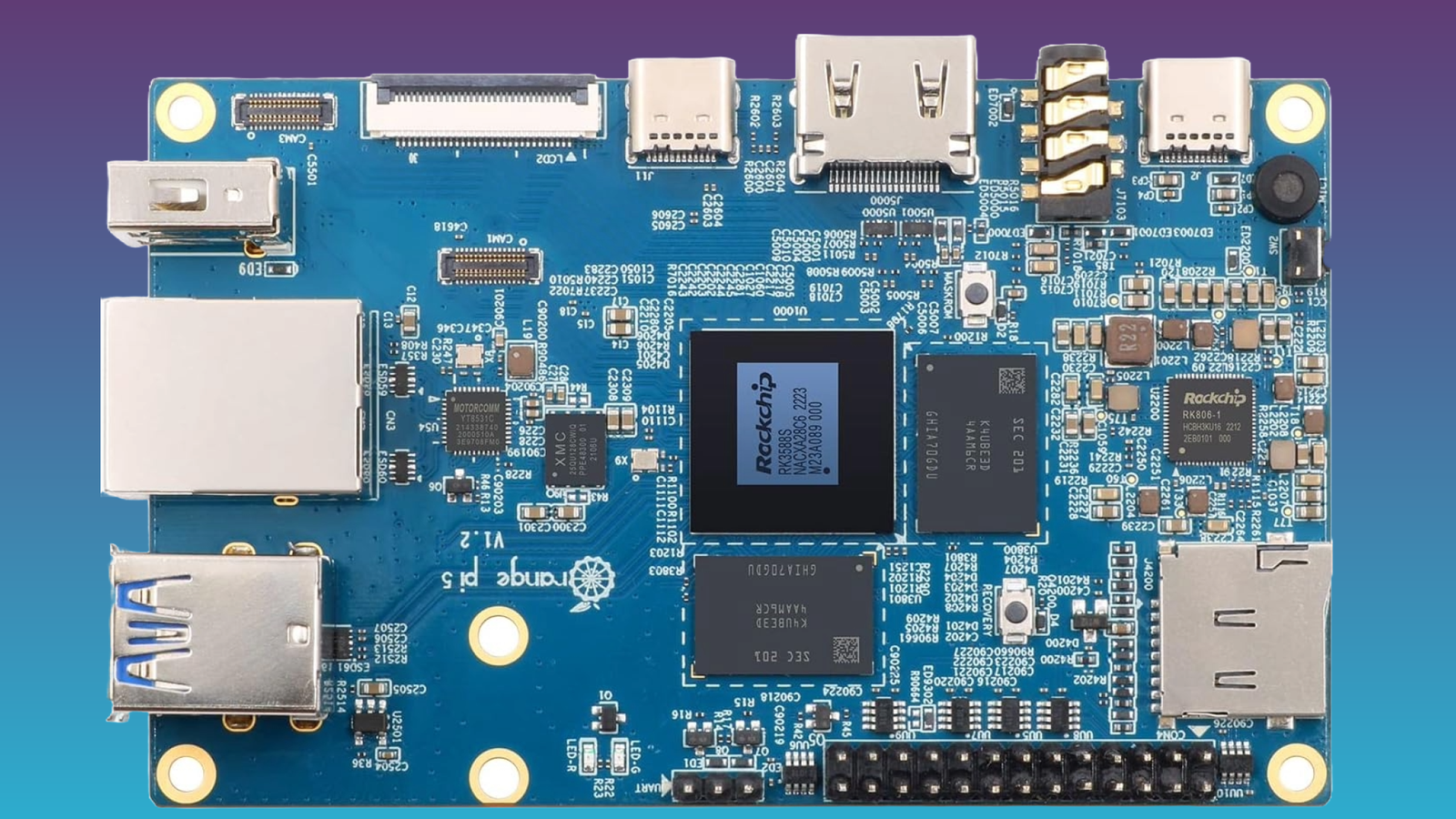
Published Jul 23, 2026, 11:15 AM EDT Sydney Butler is a technology writer with over 20 years of experience as a freelance PC technician and system builder and over a decade as a professional writer. He's worked for more than a decade in user education. On How-To Geek, he writes commerce content, guides, opinions, and specializes in editing hardware and cutting edge technology articles. Sydney started working as a freelance computer technician around the age of 13, before which he was in charge of running the computer center for his school. (He also ran LAN gaming tournaments when the teachers weren't looking!) His interests include VR, PC, Mac, gaming, 3D printing, consumer electronics, the web, and privacy. He holds a Master of Arts degree in Research Psychology with a minor in media and technology studies. His masters dissertation examined the potential for social media to spread misinformation. Outside of How-To Geek, he hosts the Online Tech Tips YouTube Channel, and writes for Online Tech Tips, Switching to Mac, and Helpdesk Geek. Sydney also writes for Expert Reviews UK. He also has bylines at 9to5Mac, 9to5Google, 9to5Toys, Tom's Hardware, MakeTechEasier, and Laptop Mag. When it comes to single-board computers, you have other flavors of Pi to choose from than just Raspberry these days. The Orange PI series of competing products might lack the vast community support and software library of the Raspberry Pi, but when it comes to one specific use case, the choice is much less clear. If you're running a homelab, and you need an SBC-shaped and -sized computer to fill a server role, there are numerous reasons why it makes more sense to go for an Orange Pi. A much higher cap on RAM Some people need the space Credit: Nick Lewis/How-To Geek RAM is a sore point across the world for any device that needs modern memory. Its skyrocketing prices have dramatically increased prices for Orange Pi and Raspberry Pi boards, and it seems this is the new normal for the foreseeable future. That said, you need as much RAM as you need, and the upper limit for RAM is very different between Orange Pi and Raspberry Pi boards. As of this writing, the Raspberry Pi 5 tops out at 16GB of RAM, which is more than enough for the vast majority of casual users. If you have a job for your SBC that needs more than 16GB of RAM, then you have no choice but to go with an Orange Pi (or some other alternative) that offers more. As I write this, the biggest Orange Pi you can buy in terms of RAM is the Orange Pi 6 Plus 32GB. And a 64GB version is advertised as available on the Orange Pi site, but as far as I can tell, no one is actually selling that model. Orange Pi 6 Plus 32GB RAM Brand Orange Pi Storage Dual PCIe 4.0 M.2 2280 NVMe SSD slots, microSD (TF) slot, 64Mbit SPI Flash The Orange Pi 6 Plus is a high-performance ARM single-board computer powered by the 12-core CIX CD8180/CD8160 SoC with integrated AI acceleration delivering up to 45 TOPS of combined CPU, GPU, and NPU performance. This 32GB LPDDR5 model is designed for AI development, virtualization, media servers, Docker, edge computing, and advanced homelab projects. CPU CIX CD8180/CD8160, 12-core 64-bit (8× Cortex-A720 + 4× Cortex-A520) Memory 32GB LPDDR5 Operating System Debian, Ubuntu, Android, Windows, etc Ports 2× 5GbE Ethernet, 2× USB 3.0 Type-A, 2× USB 2.0, 2× USB-C 3.0 (DisplayPort), HDMI, DisplayPort, 3.5mm audio, 40-pin GPIO Display HDMI (up to 4K60), DisplayPort 1.4 (up to 4K120), dual USB-C DisplayPort Alt Mode, eDP (up to 4K60) Either way, if you're using an AI model or running numerous VMs, then you need that RAM, even if it means a 32GB Orange Pi 6 Plus costs twice as much as a 16GB Raspberry Pi 5. Of course, that extra money gets you more than just additional RAM. More powerful CPUs Crunching even more numbers In general, generation-for-generation, the Orange Pi boards often have more powerful processors than the Raspberry Pi. That said, the latest Raspberry Pi 5 is no slouch with its modern quad-core CPU, which can easily handle general computing needs if you give it some active cooling. With an Orange Pi, you currently have the option of up to 12 CPU cores in the Orange Pi 6 Plus, or an eight-core option in the Orange Pi 5, which has four cores similar to the Pi 5, but then an additional power-efficient set of four cores set on top of that. So, when it comes to multithreaded performance (which matters a lot in a homelab), the Orange Pi series usually has the Raspberry Pi family beat. Better AI acceleration Thinking is its strong suit You can absolutely run small local AI models on a Raspberry Pi's CPU, but get ready for unusable speeds. If you want practical AI performance, you need to invest in an additional (and pricey) AI HAT attachment as seen here. Credit: Raspberry Pi With the latest Orange Pi models, an NPU (Neural Processing Unit) is part of the base system. Orange Pi claims that its Orange Pi 6 Plus offers a combined 45 TOPS of AI performance when working in conjunction with the CPU and GPU. The NPU itself can do about 28.8 TOPS, which is the most relevant number, but it's perfect for the AI features that certain self-hosted services offer these days, such as facial recognition for security feeds or allowing you to do intelligent searches of your photos without the help of cloud computing. Faster Ethernet and more ports When in doubt, go wired Credit: Orange Pi If you buy a Raspberry Pi 5 or 4 today, then you get a single 1Gbps Ethernet port which, again, is more than enough for most people. However. Orange Pi has several models that come with dual Ethernet ports. A clear indication that these are intended as serious network appliances. Models like the Orange Pi 6 and 6 Plus offer 2.5GbE and 5GbE respectively. Which also makes them appropriate for handling large data volumes, such as from a NAS. Orange is the new Raspberry While I still think the Raspberry Pi is the best SBC for most people, there's no denying that if you need what the Orange Pi is selling for your homelab, it's a difficult choice to ignore.
4 reasons homelabbers are choosing Orange Pi instead of Raspberry Pi
Full Article
Original Source
Read the full article at Howtogeek →KhanList aggregates and links to publicly available news content. We do not host full articles from third-party sources. Always verify important information with original sources.