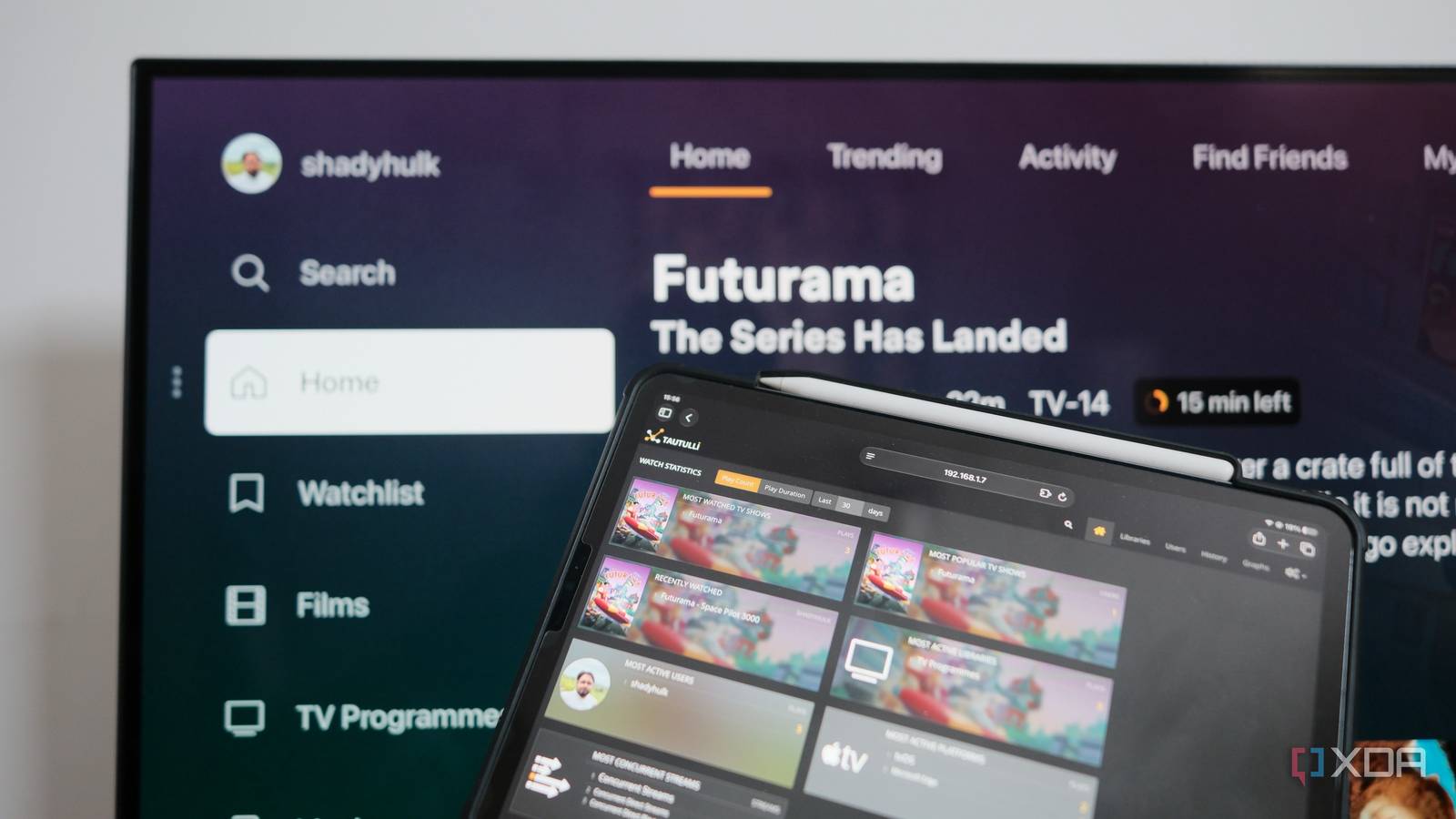
Published Jul 22, 2026, 3:00 PM EDT Samir Makwana is a technology journalist and editor from India since past 18 years and his work appears on MakeUseOf, HowToGeek, GSMArena, BGR, GuidingTech, The Inquisitr, TechInAsia, TechWiser, and others. He has written news, features, and gadget reviews for national technology media publications. His passion is to help people with their technology problems and gadget purchases. For that, he has worked for some of the biggest international technology publications, covering news, explainers, how-to guides, listicles, and product-buying guides. He has worked as an editor and managed teams since 2015. His expertise broadly covers computers, smartphones, game consoles, headphones, smart home products, browsers, and apps. I always thought my Plex setup was pretty solid with a great server running and a well-organized library. Once set up, I could stream my library virtually on any device in a polished manner. But Plex is capable of more than just streaming my content and organizing scattered files. To elevate my experience, I discovered a bunch of companion apps that improve my Plex server. I didn't think I needed them, worried they'd complicate my setup. Yet, I couldn't ignore the features offered. After trying them out over the past few weeks, I had one recurring question: how does Plex not already have them? Tautulli showed me how little I knew about my server Stats changed how I monitor my server I relied on Plex's activity dashboard to reveal everything I should know about my server. And whenever someone complained, I'd check and confirm that it worked for me. I wanted to end those buffering complaints. So I installed Tautulli for detailed monitoring by logging details like who was streaming what and when. The watch history, analytics, and graphical statistics help me track usage and monitor the activity of my Plex server. I can see whether Direct Play works for a file across different devices. I learned the hard way that some of my remote streams were being transcoded, which put the server's CPU through heavy workloads for weeks. Plex's dashboard didn't flag that as a problem because nothing was technically broken. Since then, I've been keeping an eye on stream history and transcode activity as routine maintenance. To avoid burdening my network, I used Plex's settings to cap remote-access streaming quality to 1080p. Tautulli is still my first stop whenever something feels off with the server. Tautulli Tautulli is an open-source app for Plex media server to monitor, get analytics, and track users' watching habits. Putting up proper overlays and posters Tautulli always showed playback stats, especially when playback stopped quickly. But it never showed why, which made me suspect it wasn't just people not liking a movie or show. When my family flagged a wrong movie or episode playing instead of the correct one, I figured it was a metadata problem. I counted on Plex to organize my media library into movies, shows, and music. At times, it didn't. Kometa steps in to ensure that correct metadata gets tagged so that accurate overlays and posters are shown for the relevant files. Like many, I didn't bother with Plex's metadata-fetching capabilities, especially given my large library of movies and shows. Before using Kometa, I never checked for duplicate files or mismatched artwork. Turns out a handful of filenames needed fixing. But Kometa takes a really long time to update all the metadata since it's designed to be thorough. Kometa-generated overlays flagged the files that needed better subtitles. That has been a game-changer, especially for foreign movies and shows. Browsing my media library feels like a streaming service, not a folder of files. Kometa Kometa is a free tool that gives you full control over the metadata of your media libraries on a Plex server. Managing media library and storage with the Maintainerr Remove already watched content It was getting difficult to scroll through my library and actually find something to watch. Along with the to-watch backlog, I hosted a lot of content that no one wanted to rewatch. Typically, I'd delete such files manually and hope no one would miss them. That was part of the server maintenance, but I never thought of it as a tedious chore. After all, I had limited storage, and I was the only one responsible for managing it. I found Maintainerr while looking for a way to stop deleting media files manually to make space. I was sold on its one feature that quietly runs in the background rather than removing files outright. It let me set a rule for unwanted content after a set number of days, which showed such files in the "Leaving Soon" collection. It's a nice heads up for everyone to catch up before they vanish. For all the movies that were meant to be watched someday, they showed up in the collection and were watched by everyone. I realized I was hoarding content and then manually deleting the ones I'd viewed. Maintainerr quietly helped to get rid of content already watched and free up space. Maintainerr Maintainerr is an open-source, self-hostable app that finds and deletes the unwanted and unwatched content from your Jellyfin, Plex, and Emby media servers. Seerr to manage everyone's request queue Ending that specific annoyance With Maintainerr freeing up storage, casual requests for new content started coming my way since I managed the Plex server. Before long, those requests turned into texts I'd forgotten or accidentally duplicated. Instead of scattered texts or spreadsheets, I set up Seerr to handle all those media requests. At first, it felt like overkill, but it quickly helped me get rid of the texts meant for content requests. Besides approving the content requests, I linked Radarr (movies) and Sonarr (TV Shows) to my Seerr instance to automatically fetch anything that wasn't in my library. The only side effect was that my family started requesting content more often and realized that picking exactly what they wanted to be felt more deliberate than scrolling through a streaming service's recommendations. Instead of downloading yet another app, everyone preferred to use Seerr's web UI to send requests. Seerr Seerr is an open-source request management and media discovery tool that works with Jellyfin, Plex, or Emby server. The apps quietly built my media server infrastructure Honestly, none of these apps were even on my radar when I deployed a Plex server. I didn't go looking to fix a problem that I didn't know I had. From monitoring server stats to automatically fixing metadata, my Plex server started feeling like my personal streaming service. On top of that, Seerr removes a friction point in honoring everyone's requests, and Maintainerr ensures there's enough storage space to download new content. None of these apps felt like an extra effort. The setup was finally working the way it should have all along. Also, you don't have to try all four at once. Pick whichever problem sounds like yours and install the app to see where it leads. That's how I ended up with four.
4 Plex companion apps showed me what my server was missing
Full Article
Original Source
Read the full article at Xda-developers →KhanList aggregates and links to publicly available news content. We do not host full articles from third-party sources. Always verify important information with original sources.