
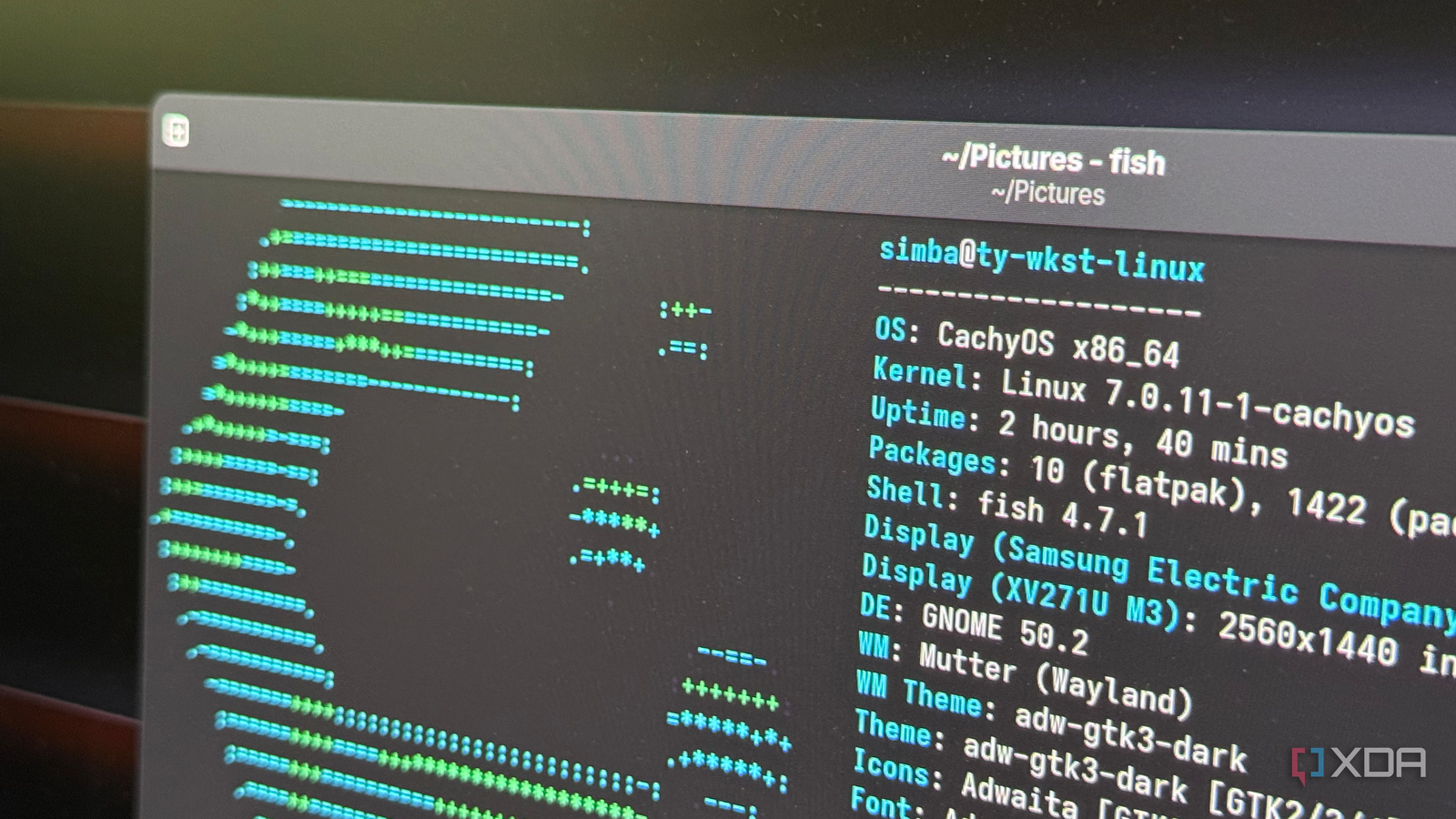
Published Sep 7, 2026, 9:00 AM EDT His love of PCs and their components was born out of trying to squeeze every ounce of performance out of the family computer. Tinkering with his own build at age 10 turned into building PCs for friends and family, fostering a passion that would ultimately take shape as a career path. Besides being the first call for tech support for those close to him, Ty is a computer science student, with his focus being cloud computing and networking. He also competed in semi-pro Counter-Strike for 8 years, making him intimately familiar with everything to do with peripherals. SteamOS is an excellent OS for plug-and-play gaming on Valve hardware, and it fares pretty well as an OS on other AMD-based hardware as well when you want a more locked-down, console-like experience. But for a general-purpose gaming PC, the needs are different. Driver flexibility, non-Steam library support, choice of desktop environment, and tinkering room are all things that SteamOS can't give you in spades like a conventional Linux distro can. These four Linux distros are far better suited to every-day use on a gaming PC than SteamOS currently is, and I'd recommend reaching for them first. What SteamOS is good for It has got its perks To start with, it's worth giving Valve their flowers for SteamOS as a desktop operating system first. Built on Arch, there's a solid foundation in place for any changes that they wish to make, and SteamOS is a far-cry from vanilla Arch. It's wrapped into an image that features immutability and atomic updates, meaning they're applied in an all-or-nothing fashion that also allows for easy rollbacks to a known-good state. That's one of the reasons why the Steam Deck is so reliable and pretty much impossible to brick. Valve also controls both sides of the Proton compatibility layer here, so the integration with the games in your Steam library simply can't get any tighter. Valve just opened up SteamOS to any desktop PC running an AMD GPU earlier this year, and while it was possible to hack it onto non-Valve hardware previously, it was a real first step for those wanting to turn their AMD-based PCs into home consoles. Valve has confirmed that Nvidia support is being worked on, but also said it's unlikely to land in the hands of consumers until 2027. If you're running an RTX card, SteamOS on desktop currently isn't an option. Bazzite The most popular option Bazzite is one of the most-recommended Linux distros for gaming, and it's what I'd point to if someone wanted the SteamOS philosophy without the hardware restriction. It's built on Fedora Atomic, not Arch, and along with images for AMD/Intel, it also features installs that support Nvidia GPUs, complete with drivers pre-installed. If you're running an AMD GPU and want to throw it on an HTPC, it's arguably a better fit for that than a desktop OS. They offer images with Steam Gaming Mode, which is the Gamescope tuning that makes Big Picture mode feel native rather than bolted on after the fact. As is the case with SteamOS itself, though, Nvidia support for this particular image is spotty, and in my experience, it's not worth the hassle. CachyOS Quickly becoming a favorite amongst Linux users I'm definitely a little bit biased because it's what I run on my own machine, but CachyOS is the pick for anyone who wants Arch but with a little help. You get a guided installer, rolling releases with a custom kernel tuned for performance, and package repos that are compiled specifically for modern CPUs instead of generic x86 binaries. The trade-off that you're getting with CachyOS compared to something like Bazzite or SteamOS is that it's not trying to be hands-off. CachyOS is a desktop operating system, not a gaming appliance, though you can absolutely set it up that way. Getting gaming packages installed is quite literally a one-click affair, but you don't get the same immutable atomic base as the others. With that said, you still have rollback from snapshots, which is good enough for me. It's performant, can come with virtually any desktop environment you want, and has that Arch foundation that gives it great flexibility. Nobara The classic gaming option Before Bazzite and CachyOS, Nobara was one of the default recommendations for Linux gamers, and for good reason. The Fedora-based distro is built and maintained by the same developer behind Proton-GE, which is a community Proton fork that a huge share of Linux gamers already rely on. It shows in Nobara's setup and daily use: gaming-tuned kernel patches, both Nvidia and AMD driver support out of the box, an initial setup that is quick and painless, and even HTPC and handheld support. Arch Linux The base for SteamOS makes a great desktop distro on its own This entry in the list might seem a bit confusing considering SteamOS already runs on Arch, so why wouldn't someone want to just use that? The only thing that vanilla Arch and SteamOS share is the base layer, and that's where the resemblance ends. SteamOS takes Arch and essentially locks it down into a very curated, read-only, single-purpose image, which is great for an appliance-type of system, but not great for a desktop. Vanilla Arch is precisely the opposite. Nothing is curated for you, nothing is hidden, and there's absolutely no training wheels. You get AUR, which gives Arch the broadest package availability of any distro on this list (for better and for worse), and a rolling release, which gives you the newest kernel and Mesa versions as soon as they're available, which is great if you're running newer hardware. The trade-off is setup time and maintenance, which is quite real on Arch. There's no atomic updates, no immutability, and every package you install is up to you. The base Arch image is almost as barebones as it gets for a desktop OS, but in exchange for that, you get to make every choice on your system, which is great. SteamOS will continue to improve on the desktop SteamOS is already an excellent OS to use for something you want to function as a "pick the controller up and play" system, and that's been proven on the Steam Deck and Steam Machine. Valve's stated wish to bring Nvidia support to SteamOS means they want it to be more than just an OS for their own hardware, and that's promising for those wanting a more polished alternative to community-maintained distros. There are very few problems with the operating systems on this list, but they still have some rough edges, and that last 5% can be the difference in a newcomer sticking to it or jumping ship back to Windows.
4 Linux distros I'd trust with my gaming PC before SteamOS
Full Article
Original Source
Read the full article at Xda-developers →KhanList aggregates and links to publicly available news content. We do not host full articles from third-party sources. Always verify important information with original sources.