
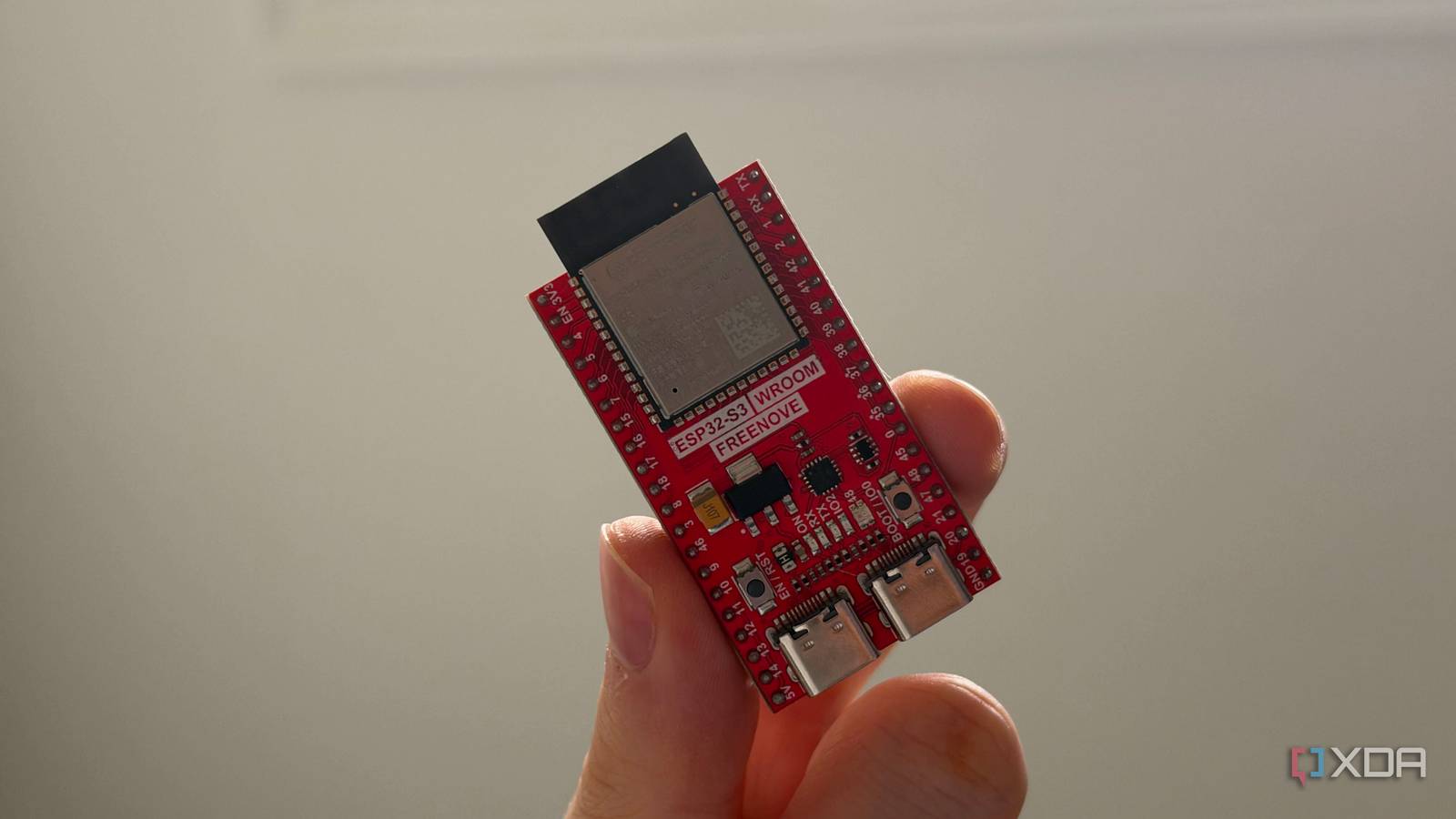
Published Sep 30, 2026, 3:31 PM EDT His love of PCs and their components was born out of trying to squeeze every ounce of performance out of the family computer. Tinkering with his own build at age 10 turned into building PCs for friends and family, fostering a passion that would ultimately take shape as a career path. Besides being the first call for tech support for those close to him, Ty is a computer science student, with his focus being cloud computing and networking. He also competed in semi-pro Counter-Strike for 8 years, making him intimately familiar with everything to do with peripherals. Most junk drawers aren't full of gadgets that are totally broken. They're usually full of stuff that is forgotten, often lost, or have become obsolete for daily use. These devices still have life left in them, and one of the best ways to revive them is with an ESP32. It's a tiny, inexpensive microcontroller from Espressif with Wi-Fi and Bluetooth built in, and it has become the default bridge between old hardware and modern control. Most of these projects don't require writing code, and several can be flashed straight from a browser tab. The ESP32 is a family of chips, so before you buy one for one of the projects below, make sure it has the features you need. The original ESP32, the S3, the C3, and the C6 have different radios, so check before you try and deploy one of these projects. Make a dumb air conditioner, fan, or TV smart with an IR blaster IR can control many things Anything that takes commands from an infrared remote can take them from an ESP32 instead. Pair the board with an IR LED, or buy a pre-built IR transmitter module so you can skip the transistor circuit, then flash ESPHome. The ESP32 can then send the same signals your remote does, and you can trigger them from Home Assistant or your phone, which is much more convenient than having to fish around for the remote. Adding an IR receiver lets it capture codes from the original remote, making it easy to build something 1:1 with the original. Any ESP32 should work for this project. Turn old wired speakers into a Bluetooth-capable audio interface Good speakers can outlive their inputs An ESP32 paired with an I2S DAC can receive Bluetooth audio from your phone and hand it off as an analog signal. If your speakers are powered or connect to an old stereo with an aux input, the DAC's line-out plugs straight in with no fuss. If you're repurposing something like old bookshelf speakers that are pssive, you'll probably need a small amplifier. The most beginner-friendly software is Squeezelite-ESP32, which installs from a web page and adds AirPlay and Logitech Media Server playback alongside Bluetooth. It needs a module with 4MB of PSRAM, such as an ESP32-WROVER. Alternatively, if you only want Bluetooth, you can do so with a few lines of code. However, Bluetooth audio does requires Bluetooth Classic, which only the original ESP32 has. The S3, C3, and C6 won't work here. With regard to quality, expect something that is fine for background listening but won't impress an audiophile. Make your garage door opener smart again Lost remote? No problem Credit: Break a Layer In late 2023, Chamberlain, a manufacturer of garage door openers, the first-party smart-access system for those doors, blocked third-party access to MyQ, their first-party smart-access systems. In response, Home Assistant removed its integration and pointed users toward ratgdo, and it's still the answer today for self-hosters. The ratgdo32 is an ESP32-based board that connects to the same low-voltage terminals your wall button uses, giving you local control of the door, the opener light, and the remote lockout, along with obstruction sensor status. A simple relay won't do the job on newer Chamberlain and LiftMaster openers. Their Security+ 2.0 wall buttons speak a serial protocol, but the good news is the ratgdo speaks that protocol natively. You can flash ESPHome firmware from a browser, or use the HomeKit firmware if you don't run Home Assistant. Older ratgdo boards used an ESP8266, so make sure you buy the ratgdo32 if you plan to deploy this on a newer door. Give an HTPC or home server a remote power button Useful for those home lab users out there A PC's power button just shorts two pins on the motherboard's front-panel header. An ESP32 driving an optocoupler across those pins can "press" it remotely, a second optocoupler handles reset, and a third reading the power LED header tells you whether the machine is on. The optocouplers keep the ESP32 electrically isolated from the motherboard, so it can't do any damage to your PC. This is a lifesaver for an old PC repurposed as a home server, or an HTPC, especially one with flaky Wake-on-LAN or a tendency to hang. Remember that the ESP32 needs power while the PC is off, so use a separate USB charger, or a USB port your motherboard that stays powered in standby. These are great entry-level projects for the ESP32 The ESP32 is really modestly powered, but it doesn't need a lot to be an effective tool in your home. It's one of the best things you can deploy to bring old hardware into the modern age, and many of these projects are a great starting point if you've never touched one previously. A good place to start would be the Bluetooth proxy, as it's a really simple browser-flash with no extra wiring. Brand AITRIP Connectivity Features UART, USB
4 forgotten gadgets an ESP32 can resurrect on the cheap
Full Article
Original Source
Read the full article at Xda-developers →KhanList aggregates and links to publicly available news content. We do not host full articles from third-party sources. Always verify important information with original sources.