
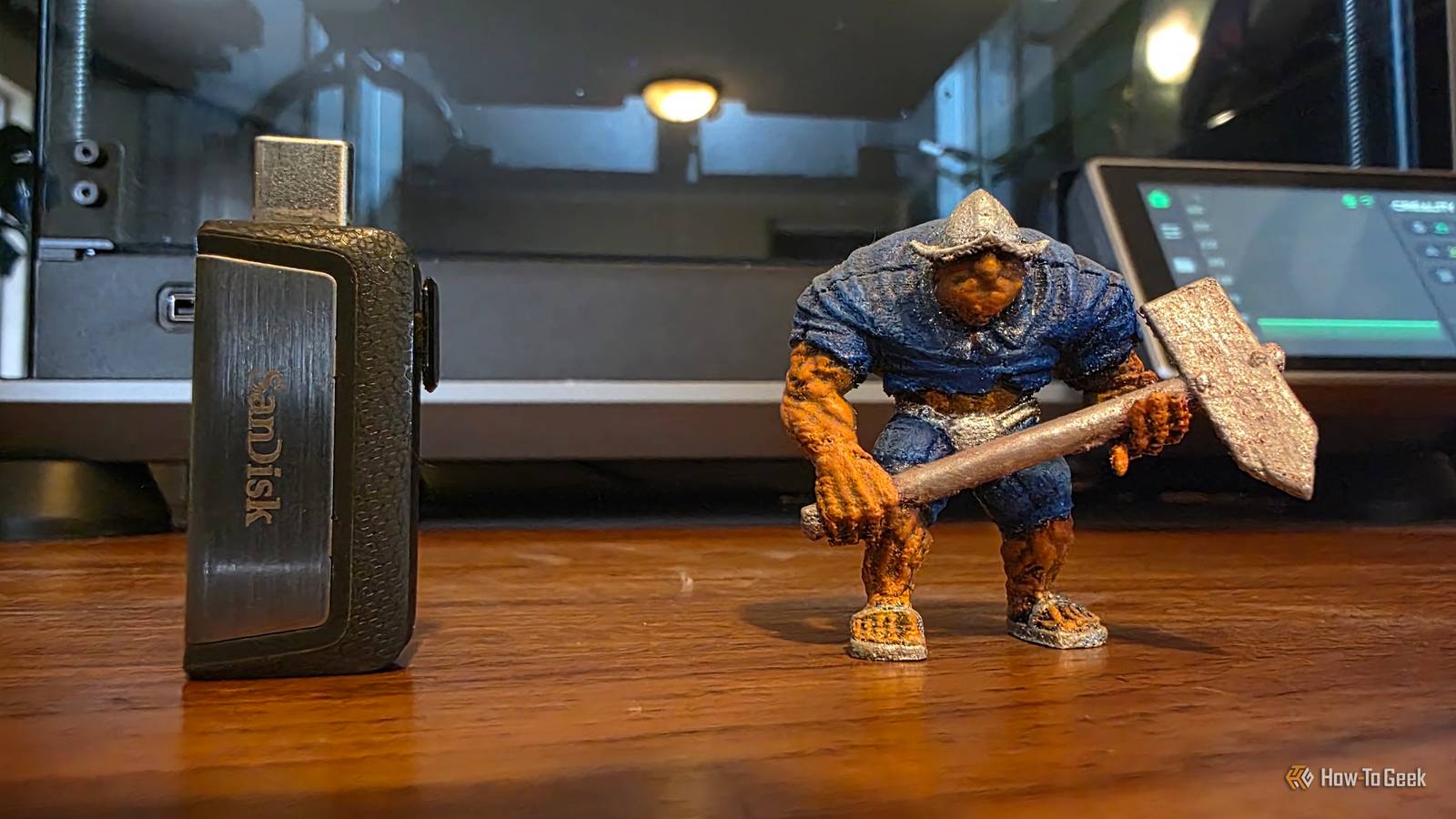
Published Oct 18, 2026, 6:30 PM EDT Sydney Butler is a technology writer with over 20 years of experience as a freelance PC technician and system builder and over a decade as a professional writer. He's worked for more than a decade in user education. On How-To Geek, he writes commerce content, guides, opinions, and specializes in editing hardware and cutting edge technology articles. Sydney started working as a freelance computer technician around the age of 13, before which he was in charge of running the computer center for his school. (He also ran LAN gaming tournaments when the teachers weren't looking!) His interests include VR, PC, Mac, gaming, 3D printing, consumer electronics, the web, and privacy. He holds a Master of Arts degree in Research Psychology with a minor in media and technology studies. His masters dissertation examined the potential for social media to spread misinformation. Outside of How-To Geek, he hosts the Online Tech Tips YouTube Channel, and writes for Online Tech Tips, Switching to Mac, and Helpdesk Geek. Sydney also writes for Expert Reviews UK. He also has bylines at 9to5Mac, 9to5Google, 9to5Toys, Tom's Hardware, MakeTechEasier, and Laptop Mag. When I got back into 3D printing a few years ago, I focused on printing large things. That's why my first CoreXY printer was a Creality K1 Max, with a build volume large enough to print a complete cosplay helmet in one go. However, over time, I've become more interested in printing tiny things. In particular, I've been getting back into painting miniatures. While I enjoy buying injection-molded kits and painting them, there are so many cool 3D models you can download that I'd love to print and paint. Unfortunately, my luck at printing these models at smaller scales has been mixed, and as I've worked through the challenges, it's become clear why. Tiny layers barely get a chance to cool Not so fast! If you're printing a very small model, your 3D printer's nozzle may return to the start of the next layer before the layer you just printed has time to cool. This means the new extrusion can distort the previous layer, and, of course, this is an error that can compound over time with each new layer. This doesn't just affect small prints, but can also affect big prints with small features, like tapers. You can mitigate this in your slicer software. For example, the PrusaSlicer official documents list numerous ways to control how your model cools, including setting a minimum layer time. Alternatively, you can print multiple copies of your smaller model at once, giving each model's previous layer more time to cool. Your nozzle doesn’t get smaller with the model Threading the needle, but the needle is tiny When you scale down a model, all the features get smaller, which means you need a smaller model to increase the resolution of your printer and the smallest features it can print. Changing nozzles isn't that hard on modern printers, and you can go down from the typical 0.4mm to a 0.2mm or 0.1mm nozzle, but that's usually the practical limit. If you want to print small, detailed models all the time, it's probably worth having a dedicated printer with the smallest nozzle you can manage. Luckily, since the models you want to print are so small, you can get away with a small desktop model with a low build volume. Tiny feet don’t give your print much to stand on Where the rubber meets the road Your model needs to be firmly attached to the build plate, but as you scale it down, the contact points with the bed also become thinner and smaller. If you're printing figures with legs in particular, this can become an issue. You could add features like a brim to better secure a small footprint, and it shouldn't do anything to harm the final finish of the model. Alternatively, you can add a base like the ones you see above to your model. Not only does this make it easy to display, but it also provides a solid, clean contact patch with the build plate at any scale. Scaling down can turn working clearances into fused plastic You don't want to bridge every gap Credit: Clockspring 3D / Patreon The other problem when scaling down is tolerances. Once you go below a certain size, your printer will no longer be able to produce intentional gaps, and the two sides of that gap will simply be fused together. This affects articulated models, when parts that are supposed to be hinged or move get so small that they're just one piece. Scaling up is rarely a problem, but there's a limit to how small you can make things before you're so far from the intended scale that the mechanics of the piece no longer work. There's no real fix here other than altering the model itself, taking the effects of a smaller sale into account. You might want to widen a gap relative to the scale of the rest of the model, or thicken linkages that would be oversized at a regular scale, but now actually stay in one piece when you go small. You can use a benchmark model like Clockspring's Torture Toaster to determine how small your printer can go before you just get one fused lump. Finishing the print can be harder than printing it You thought you were done? 3D prints always need some form of finishing when the print head stops moving, and the smaller the model, the tricker it becomes. Removing supports and cleaning the marks they leave is relatively easy. The smaller you go, the harder this cleaning process is, and the more likely you are to simply break the model while cleaning it. My next step might be a resin printer The 3D printing technology with the resolution and finish I'm looking for already exists, but it's not FDM printing. I've resigned myself to the fact that resin 3D printers are the way to go when it comes to purely cosmetic models with lots of fine detail. I've been hesitant because I'm aware of how messy and tricky resin printing can be, but the technology has come a long way, and I think consumer resin printers are now at the point where I could live with one. So, all I can say is that I'm looking into it, but there's probably one of these fascinating little machines in my future somewhere.
3D printing miniatures is harder than it looks: 4 problems that only show up when you go small
Full Article
Original Source
Read the full article at Howtogeek →KhanList aggregates and links to publicly available news content. We do not host full articles from third-party sources. Always verify important information with original sources.