
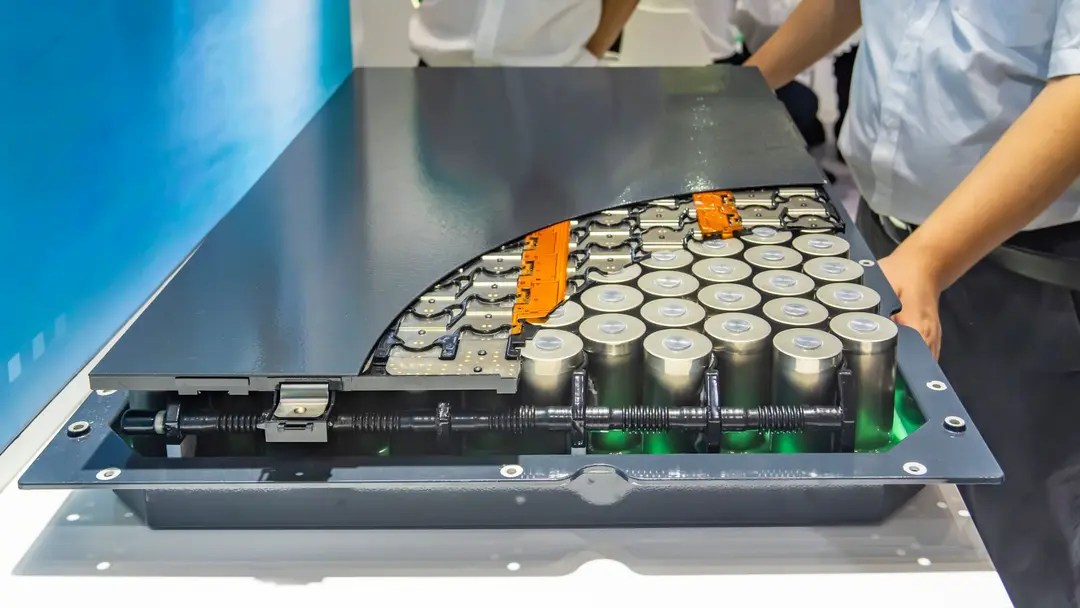
Researchers at the Korea Advanced Institute of Science and Technology (KAIST) may have solved the biggest drawback of electric vehicle range anxiety. Supercharging feels convenient at the station, but under the hood, it batters battery health. Now, a team led by Professors Kang Taek Lee and EunAe Cho has built a “3D digital twin” to pinpoint exactly why fast-charging degrades batteries. Until now, engineers focused on average numbers: the total amount of binder glue or pore space in an electrode. The KAIST digital twin proved that where these elements sit changes everything. It was identified that microstructural distribution is just as crucial to fast-charging performance and longevity as the total amount of materials used. Specifically, it matters how binder materials and pore spaces are arranged inside the battery electrode. Using a 3D digital twin modeled after a commercial graphite anode, the team simulated localized micro-level degradation processes that are difficult to measure experimentally. Key degradation mechanisms modeled During battery charging, lithium ions move through electrolyte-filled pores to store themselves inside graphite anode particles, held together by a binder. However, rapid charging causes several microscale issues. For instance, excess ions fail to enter the graphite quickly enough and form performance-degrading metallic deposits on the surface (lithium plating). Further, the protective solid electrolyte interphase (SEI) layer can become too thick or uneven. At the same time, incoming lithium causes graphite particles to swell, pushing against surrounding materials and generating internal mechanical stress that shortens battery lifespan. The existing physical experiments and standard computational models cannot isolate these simultaneous microscale behaviors. Hence, this new work created a 3D digital twin based on an actual commercial graphite anode. Researchers reconstructed the exact three-dimensional architecture of the graphite particles, binder, and electrolyte pores. This simulated fast charging across various electrode thicknesses, porosities, and binder distributions to map lithium-ion movement, pinpoint lithium plating, and isolate structural stress. The thickness penalty The simulations revealed that anodes with nearly identical overall charge capacities can still suffer vastly different internal degradation, depending on how binder materials and pore spaces are arranged. In standard 50-micrometer thin anodes, binder distribution caused less than a 4 percent difference in total capacity, masking critical internal damage. Specifically, concentrating the binder near the separator narrowed the pathways for lithium-ion movement. It increased performance-degrading lithium plating near the current collector by over 10% compared to designs with evenly distributed binder. Spread evenly throughout the electrode, binder material creates uniform lithium-ion transport pathways and consistent protective film formation. This structural impact is more pronounced in high-capacity designs. In 83 μm-thick anodes, strategic binder placement increased charge capacity by 18% over uneven distributions. In addition, an ideal pore-space placement provides buffer zones for graphite particles to expand during charging, preventing severe localized stress. Therefore, the researchers advocate shifting battery design focus from total component volumes to precise spatial arrangements for fast-charging applications. “This research is significant in that it used a 3D digital twin to uncover internal battery problems that were difficult to detect from overall charging performance alone,” said Professor Lee. Manufacturers can design longer-lasting, rapid-charge EV batteries without trial-and-error guesswork when they evaluate electrode layouts virtually before building physical prototypes. Get the latest in engineering, tech, space & science - delivered daily to your inbox.Mrigakshi is a science journalist who enjoys writing about space exploration, biology, and technological innovations. Her work has been featured in well-known publications including Nature India, Supercluster, The Weather Channel and Astronomy magazine. If you have pitches in mind, please do not hesitate to email her.
3D digital twin identifies causes of battery degradation during fast charging
Full Article
Original Source
Read the full article at Interestingengineering →KhanList aggregates and links to publicly available news content. We do not host full articles from third-party sources. Always verify important information with original sources.