
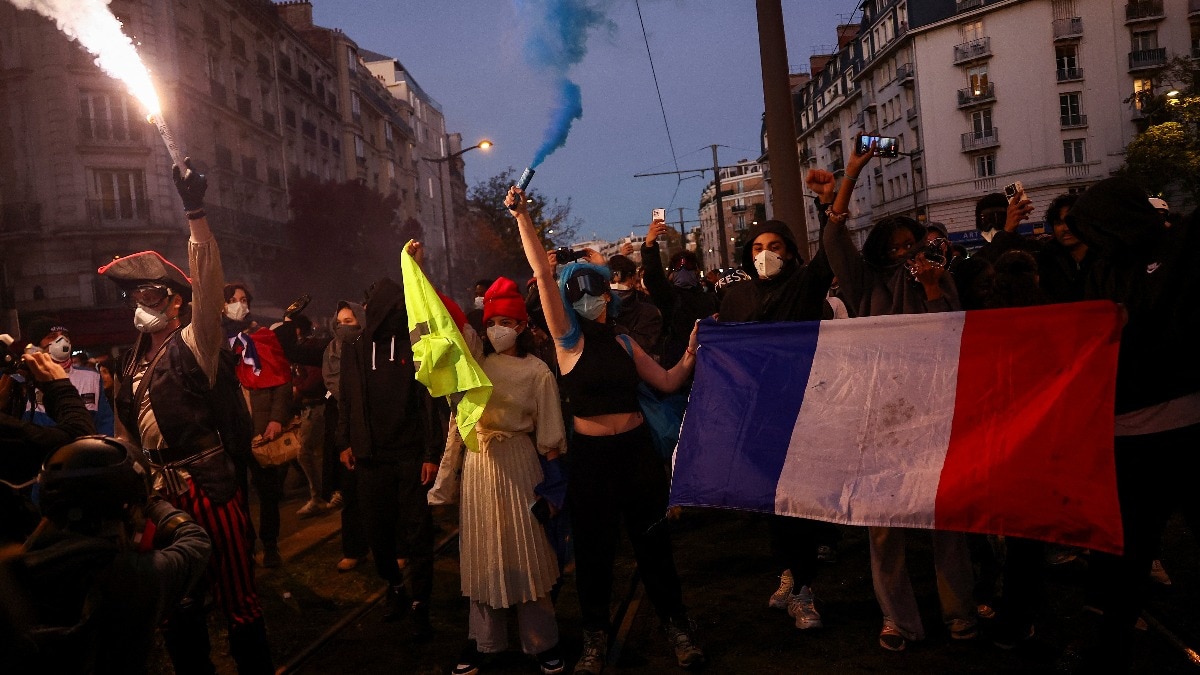
About 3.2 lakh people protested across France on Saturday against high living costs and strained public services, according to government estimates, marking a fall in turnout from the previous two weekends.The Interior Ministry estimated that 70,000 people joined the main demonstration in Paris, where police moved the march away from the city centre following a last-minute court battle. Organisers' turnout estimates were much higher.Government figures put nationwide participation at more than 5 lakh on October 17 and 4.1 lakh on October 24.Saturday's protests were largely peaceful through the afternoon, though police fired tear gas in Lyon and Toulouse. Tensions also broke out at the end of the march in Marseille. Authorities deployed in force to prevent a repeat of the October 17 riots and looting, which damaged shops, businesses and public buildings across the country.PARIS MARCH MOVED FROM CITY CENTREFrance's top administrative court on Saturday upheld a ban on a march between the landmark Paris squares of Nation and Bastille, rejecting a challenge from unions. Authorities instead approved a route along boulevards on the eastern edge of the capital to reduce the risk of unrest near government buildings, tourist sites and central shopping districts.Student protesters criticised the decision to keep the march out of central Paris and vowed to blockade high schools and universities next week.“Starting this Tuesday, we will blockade our universities and high schools, and we will do so again on Thursday before joining the demonstration on November 5 called by workers and trade unions,” said Sabrine Kharbach, spokeswoman for the Union etudiante union.With Saturday's demonstrations falling on Halloween, authorities warned that masks could be used to conceal the identities of troublemakers. Interior Minister Laurent Nunez said existing laws allowed police to prohibit face coverings when public order was threatened.About 150 gatherings were planned nationwide. The US Embassy advised travellers to avoid demonstrations and large gatherings.STUDENTS, UNIONS JOIN PROTESTSThe movement began with student protests in September over deteriorating schools, overcrowded classrooms and a university admissions system widely seen as unfair.Trade unions and Yellow Vest protesters have since joined, demanding action on fuel prices, inflation and living costs. The protests gathered momentum as President Emmanuel Macron's minority government began talks on its 2027 budget.“The French economy is doing badly no matter what happens, because today we're being run by a group of incompetents who juggle billions, while families are struggling with a few cents,” protester Jerome Rodriguez said during the Paris march.Far-left leader Jean-Luc Melenchon, whose ratings have risen ahead of next April's presidential election, marched at the head of the Paris demonstration. Far-right leader Marine Le Pen leads opinion polls, while potential centrist successors to Macron remain divided.The government's promises to reform education and ease fuel costs have failed to calm the protesters.“When I was little, I was told young people were the future,” said Aaron Berthier de Grandry, a 15-year-old student planning to join his third consecutive weekend of protests.“Well, if we, as the future of France, lack resources, that means France will end up collapsing.”The French protests have also inspired youth-led demonstrations elsewhere in Europe, with gatherings planned in more than 30 German cities on Saturday.ECONOMIC PRESSURE MOUNTSThe unrest comes as the government faces growing pressure over its finances. Ratings agency Fitch on Friday unexpectedly revised its outlook on French debt to negative. Public debt is nearing 120 per cent of economic output, while rising borrowing costs are adding to pressure to curb spending.Data released on Friday also showed that the economy shrank in the third quarter.The Chamber of Commerce estimates that retailers have lost more than €1 billion. Other estimates put the losses at twice that amount when uninsured damage and lost revenue are included.Shops along Paris' main shopping boulevards remain boarded up or behind security grilles, even as early Christmas lights have gone up. Outlets belonging to Hermes, Louis Vuitton and Burberry were among those targeted during earlier unrest.The government is pressing ahead with a law that would make rioters liable for up to €10,000 in damage caused by them or by groups they are deemed to belong to. Rights groups and some lawyers say the measure risks undermining the right to peaceful protest.- Ends
3.2 lakh march across France, students threaten blockades ahead of next protest
Full Article
Original Source
Read the full article at Indiatoday →KhanList aggregates and links to publicly available news content. We do not host full articles from third-party sources. Always verify important information with original sources.