
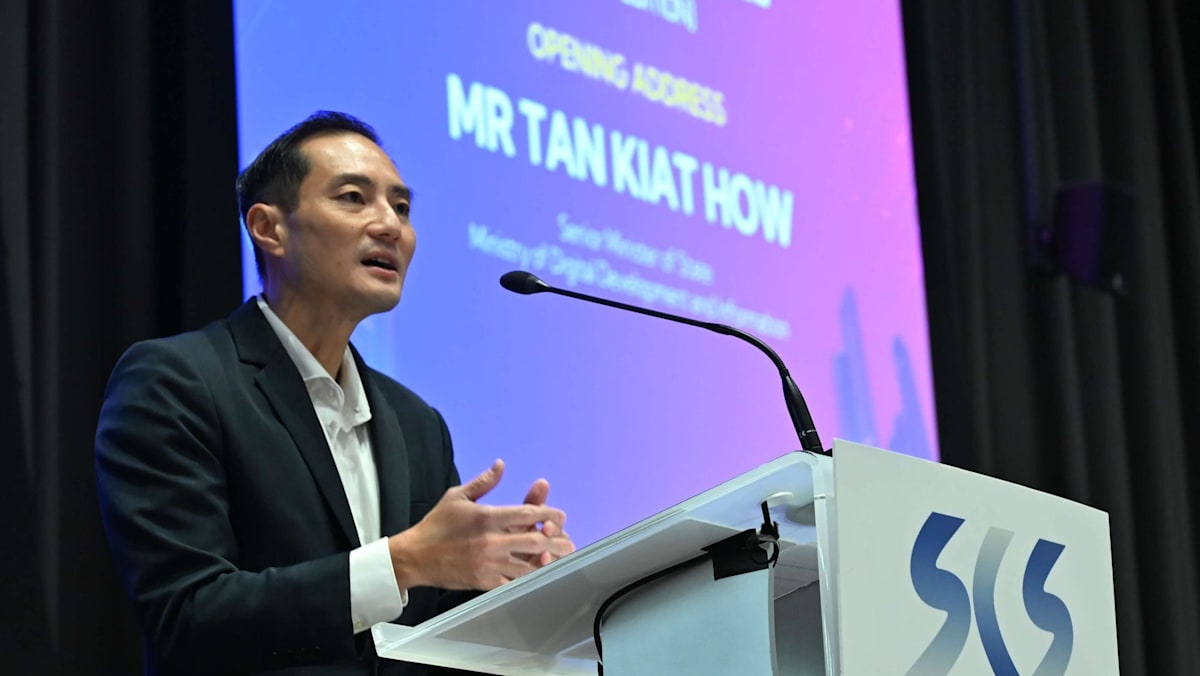
SINGAPORE: About 3,000 year-long internships will be offered to tertiary students over the next three years to help them gain work experience and transition into employment as artificial intelligence (AI) reshapes entry-level jobs in the technology sector.The internships are part of Bridge2Tech, a set of expanded initiatives under the Infocomm Media Development Authority's (IMDA) TIP Alliance+, which now includes students from autonomous universities.The year-long internships have been offered to eligible Information and Digital Technologies students from the Institute of Technical Education and polytechnics since 2022. Announcing the initiative at the Singapore Computer Society's TechConnect event on Monday (Oct 19), Senior Minister of State for Digital Development and Information Tan Kiat How said new pathways between education and employment were needed as AI changes how young professionals gain experience. Employers are also increasingly seeking new hires who can contribute from the outset, he noted.The 10- to 12-month internships will be integrated into students' curricula and jointly designed by educational institutions and employers, with IMDA providing funding support to encourage more companies to participate.They will allow students to work on substantial projects, learn from experienced colleagues and develop professional judgment through real-world experience, IMDA said in a press release on Monday.Mr Tan acknowledged concerns among fresh graduates about their employment prospects as AI increasingly replaces or assists with some tasks junior professionals used to do.“These concerns are real. We should not dismiss them or offer easy reassurance,” he said.For example, Mr Tan noted that AI can now assist with many tasks junior engineers used to learn from, such as writing simpler programmes, debugging code, testing applications or maintaining systems.“If the work through which young professionals traditionally gained experience is changing, how will the next generation develop that experience? Some describe this as the disappearing early rungs of the career ladder,” he said.“Employers still need experienced engineers. But those engineers need to begin somewhere.” Mr Tan added that fresh graduates could not be expected to enter the workforce with years of practical experience, nor could they simply be told to learn more AI."If AI is changing the first rungs of the career ladder, we must build new bridges between school and work," he said.He added that building these pathways was a shared responsibility among educational institutions, employers, industry associations and the government.MORE SUPPORT FOR TECH COURSES, CERTIFICATIONSBeyond more internship opportunities, students will also receive greater support to pursue industry-recognised certifications in AI, cloud and cybersecurity. Eligible students can receive IMDA funding of up to 90 per cent for approved courses and certifications, subject to applicable caps. A new Government Tech Domain Pathway will also be open for applications in November.The pathway will allow students to apply technology to meaningful industry problems, Mr Tan said.It aims to equip students with government-specific domain knowledge and an understanding of public-service requirements, preparing them for technology careers in the public sector and companies providing digital solutions to government agencies.The pathway is part of IMDA's broader efforts to complement students' technical capabilities with industry-specific knowledge.The government is working with partners on a HealthTech pathway for 2027, Mr Tan said.EMPLOYERS MUST RECOGNISE SKILLS AND PRACTICAL EXPERIENCEAs students are asked to go beyond qualifications and apply skills and demonstrate what they can do, employers must also be prepared to recognise and value these capabilities, Mr Tan said.He noted that more than 200 employers had pledged support for skills-based hiring under TIP Alliance+.“A diploma or degree remains valuable. But qualifications alone cannot tell an employer everything about a person’s potential,” Mr Tan said.Employers should translate these commitments into actual hiring practices, from how jobs are advertised and candidates assessed to how skills and experience are recognised, he added.
3,000 year-long internships to be offered to tertiary students as AI reshapes entry-level jobs
Full Article
Original Source
Read the full article at Channelnewsasia →KhanList aggregates and links to publicly available news content. We do not host full articles from third-party sources. Always verify important information with original sources.