
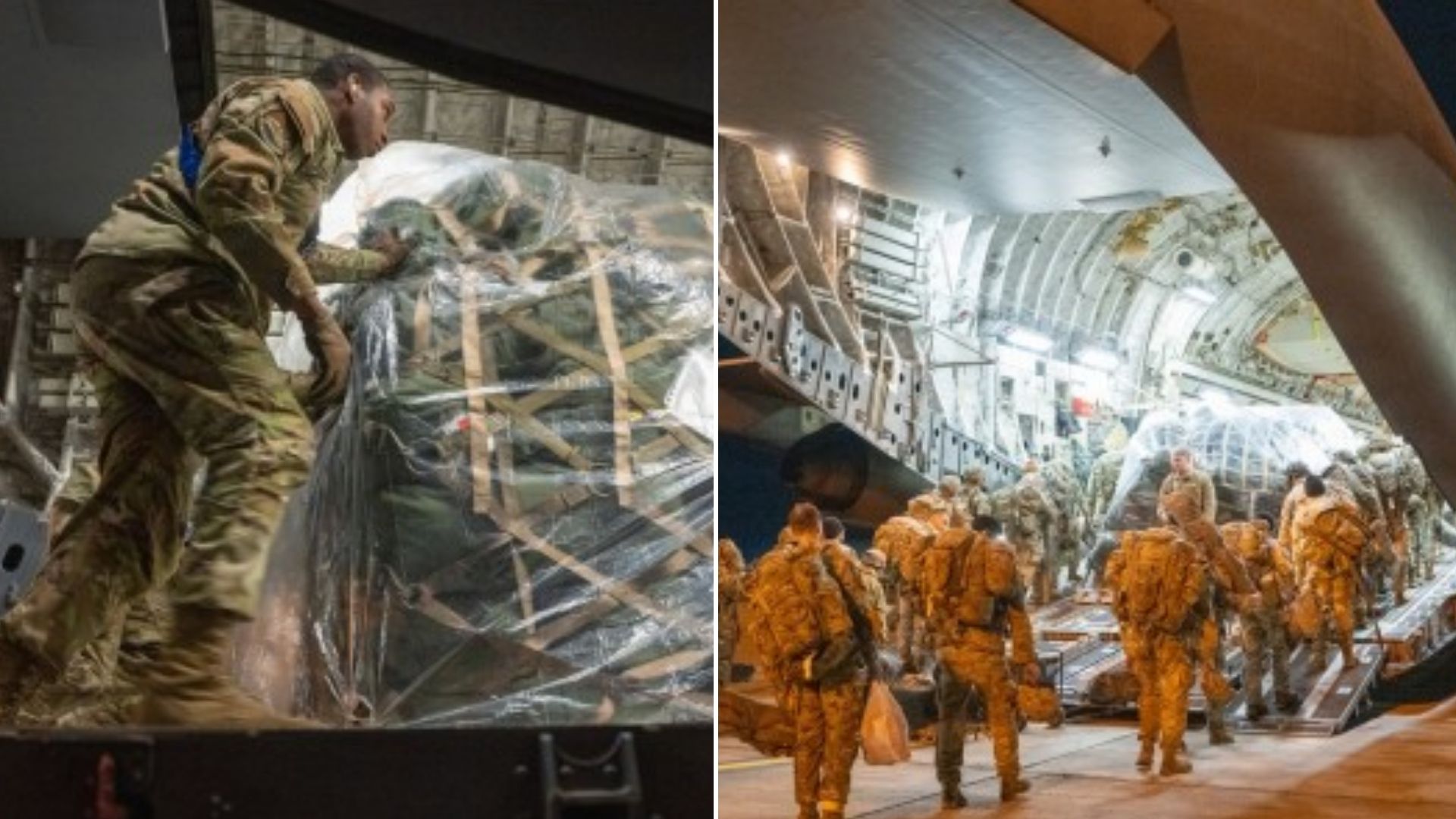
The US Army has demonstrated how rapidly it can move airborne forces across the Pacific, with paratroopers from Alaska flying nearly 3,000 miles to conduct a joint airborne assault in Hawaii without stopping along the way. The operation, called Arctic Aloha, took place on November 5, 2026, as part of the Joint Pacific Multinational Readiness Center (JPMRC) Rotation 27-01. Soldiers from the 11th Airborne Division departed Joint Base Elmendorf-Richardson in Alaska, prepared their parachutes and combat equipment during flight, and linked up with an infantry company arriving from Japan before conducting a unified battalion-level airborne insertion. The exercise tested the division’s ability to project combat power across the Indo-Pacific while maintaining communication with commanders and coordinating with other military services. Preparing paratroopers for an eight-hour flight One of the operation’s most important elements was in-flight rigging. Instead of boarding the aircraft wearing their parachutes and full combat equipment, soldiers completed these preparations while airborne. The process involves putting on, adjusting, and inspecting parachutes and equipment inside the aircraft before reaching the drop zone. According to the Army, this allowed paratroopers to avoid carrying the additional weight for nearly eight hours, helping preserve their physical endurance before landing. The operation also required coordination between aircraft departing from different locations. The main force flying from Alaska conducted an in-flight link-up with an infantry company returning from Japan after participating in Operation Keen Sword. Together, they formed a unified battalion task force for the insertion into Hawaii. Approximately 300 paratroopers subsequently conducted the airborne assault on the island of Hawaii, demonstrating the ability to combine forces arriving from separate locations. Testing a new approach to Pacific warfare Arctic Aloha also served as a practical demonstration of the Army’s October 2026 operational guidance, How the Army Fights. The framework organizes land warfare around four interconnected elements: convergence, strike, close battle, and endurance. During the exercise, I Corps coordinated space, cyber, and electronic warfare capabilities to establish an operational advantage, demonstrating convergence. Theater forces and the 25th Infantry Division then conducted simulated strikes against enemy air defenses, representing the strike element. With those conditions established, the 11th Airborne Division initiated the close battle by parachuting into the designated area to seize key infrastructure and secure terrain. The fourth element, endurance, concerns the ability to maintain and project combat power across long distances and difficult operating conditions. The Alaska-to-Hawaii flight tested this requirement by moving troops across the Pacific while maintaining communications with I Corps, US Army Pacific headquarters, and joint forces in Hawaii. The approach reflects the challenges of operating across the Indo-Pacific, where military forces may need to cover enormous distances between islands while coordinating with air and naval units. Why the 11th Airborne matters Based in Alaska, the 11th Airborne Division is the Army’s only formation organized specifically for both Arctic and Pacific airborne operations. Its soldiers train to operate in extreme cold, mountainous terrain, and the island environments of the Indo-Pacific. The division’s commander said the exercise demonstrated its ability to project a battalion task force directly into the Pacific theater. He also highlighted its potential to deploy toward Northern Europe by flying over the Arctic. Following the Hawaii operation, the paratroopers were scheduled to return to Alaska and conduct another airborne assault in field training exercises at the Richardson Training Area. JPMRC 27-01 involved approximately 10,000 personnel from the US Army, Air Force, Navy and Marine Corps, alongside international allies and partners. The larger rotation also brought together the 11th Airborne and 25th Infantry divisions to improve joint coordination. Arctic Aloha demonstrates that projecting military power across the Pacific requires more than long-range transport aircraft. It also depends on the ability to coordinate forces in flight, maintain command links, and arrive ready to fight. Those capabilities will be increasingly important as the US military prepares for operations across the vast distances and dispersed terrain of the Indo-Pacific. Get the latest in engineering, tech, space & science - delivered daily to your inbox.Kaif Shaikh is a journalist and writer passionate about turning complex information into clear, impactful stories. His writing covers technology, sustainability, geopolitics, and occasionally fiction. A graduate in Journalism and Mass Communication, his work has appeared in the Times of India and beyond. After a near-fatal experience, Kaif began seeing both stories and silences differently. Outside work, he juggles far too many projects and passions, but always makes time to read, reflect, and hold onto the thread of wonder.
3,000 miles, no stops: US Army flexes Pacific muscle with paratroopers’ Hawaii assault
Full Article
Original Source
Read the full article at Interestingengineering →KhanList aggregates and links to publicly available news content. We do not host full articles from third-party sources. Always verify important information with original sources.