
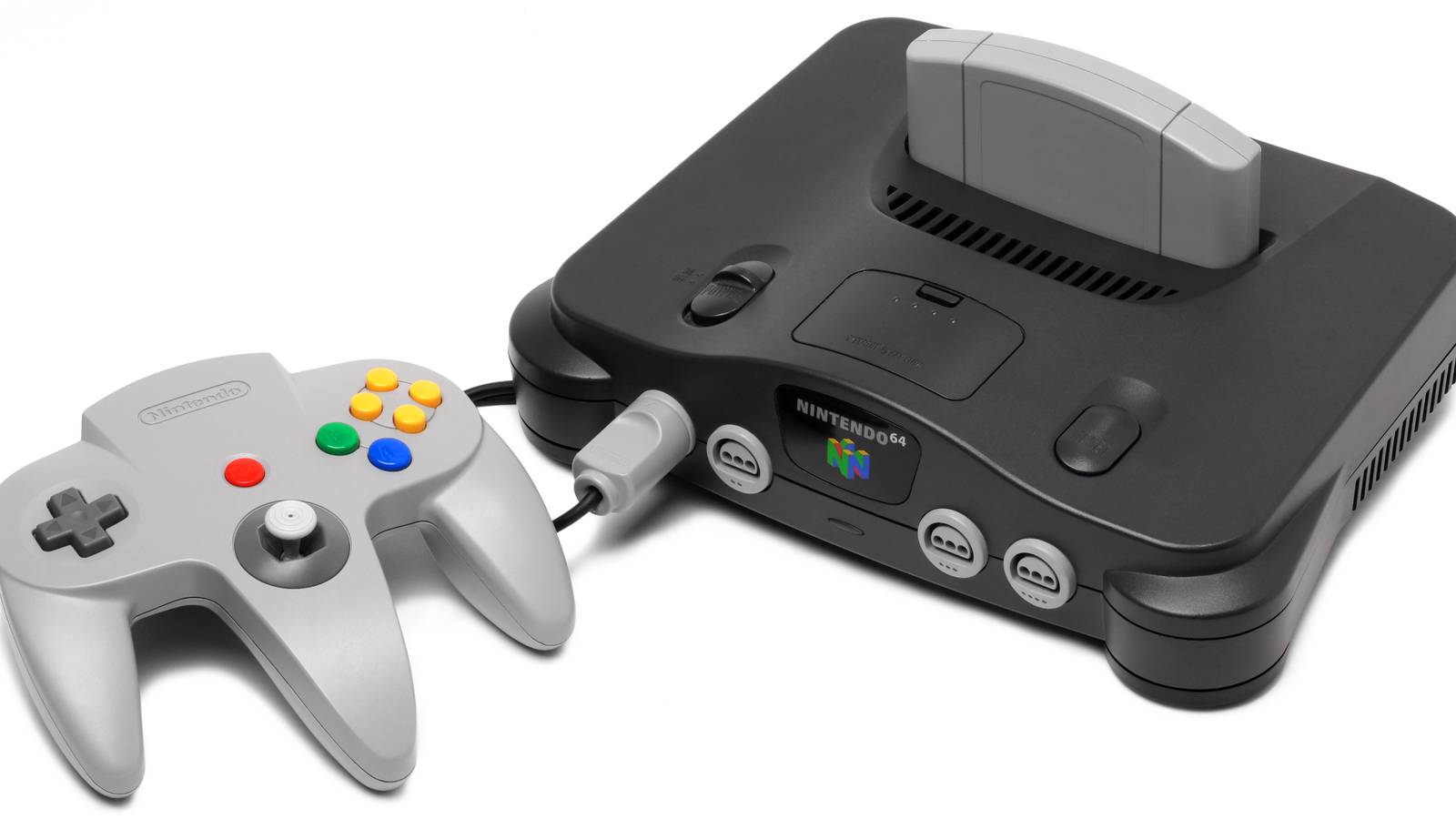
Published Oct 2, 2026, 4:00 PM EDT Jason Venter is a long-time gamer from beautiful Oregon who has spent much of his life inside playing games or writing. He contributes to Polygon to share those passions, after previously freelancing at sites like IGN, GameSpot, GamesRadar, and HonestGamers, among others. It could really make a splash Nintendo When the Nintendo 64 launched in North America on Sep. 29, 1996, many of us only had eyes for a portly plumber. He was all over our television screens, using brief ad spots to entice us with his beautiful 3D worlds and jumps of joy. Our overwhelming desire to get our hands on Super Mario 64 was intensified by the fact that other than Pilotwings 64, there weren’t any other options available when the console came out. Then, just over a month later, Nintendo launched Wave Race 64 to keep those other two games company. I was in my late teens at the time, and I didn’t have money to buy any new games, let alone a Nintendo 64. That all had to wait another year. But the local video rental place let desperate players rent consoles by the hour, and that’s exactly what I did. Copies of Super Mario 64 were all out, so Wave Race 64 was the very first game I ever played on the system. I could have done a lot worse. Wave Race 64 was a revelation, and a surprisingly good showpiece for the new experiences the Nintendo 64 made possible. Technically, it was the second game in the franchise, following 1992’s Wave Race on the original Game Boy. But it felt like a completely unprecedented experience at the time, even though games like Cobra Triangle and Eliminator Boat Duel had already let us take to the waterways on the NES. Other games made water a backdrop. Wave Race 64 made it the star. Image: Nintendo Originally, the game was set to feature boats and function a bit like F-Zero, except on water. However, Nintendo wanted software that could show off its exciting new water effects while also differentiating itself from other games already on the market, including 1996’s ride-on arcade racer Aqua Jet. By slowing things down just a bit and featuring courses with water that more visibly and persistently influenced movement, Nintendo proved liquid could finally impact courses in ways asphalt, mud, and sand could not. Wave Race 64 offers three modes for the single player: Championship, Time Trials, and Stunt Mode. There are only eight unique courses, though players can attempt mirrored versions of them on the Reverse difficulty setting by completing the available selections on the Normal, Hard, and Expert settings. In the general racing modes, the goal is to ride the waves around colored buoys, veering to their left or right (as indicated by color) in order to gain speed boosts. If the player fails to pass a buoy on the correct side, that counts as a “miss” and they lose any speed boosts they’d built up to that point. If they miss too often or stay outside the course boundaries for too long, they are disqualified. Thus, a strong performance requires that the player pay close attention to buoys, not just to advance at suitably high speed, but to even remain in the race. Races proved challenging but rewarding, even on the normal setting. Once you build momentum on the water, it’s entirely too easy to go speeding past a buoy on the wrong side, especially when you jostle against the other drivers. Trying to move slowly to take tighter turns doesn’t quite work, because the water keeps you moving forward, so it’s important to anticipate upcoming turns and drift accordingly. Choppy waves and obstacles in the water, like the posts in Drake Lake, also might reorient you at the worst possible moment, setting you up for failure. It all takes some getting used to, but the unconventional challenge adds to the fun. Besides the sometimes grueling Championship, the other single-player modes are Time Trials, where the primary goal is to achieve the best time without worrying about other racers, and Stunt Mode, where there are rings the player can pass through for points. A split-screen, 2P Vs. mode functions like a match race in Super Mario Kart, allowing players to compete directly for bragging rights. Only courses unlocked in Championship are available in any other modes, which offers an incentive to get good at competing against the AI. Thanks to its challenging but rewarding gameplay, made possibly largely by the Nintendo 64’s ability to convincingly offer water physics in 3D, Wave Race 64 captured the hearts of an entire generation of players. When Nintendo launched its next generation of hardware, Wave Race: Blue Storm was one of the best GameCube launch titles, though some critics and players felt that it too closely resembled its predecessor. Free sign-up Get Polygon’s Wishlister newsletter A weekly cheat sheet to what you’ll eventually love to play. No buying, no commitment — just saving for later. Sign up free Free. Unsubscribe anytime. In 2026, 25 years after the most recent Wave Race game released, it’s difficult not to wonder how the franchise might have fared on later console generations. A Wii version was apparently planned, using motion controls. That might have been a lot of fun. Even though it didn’t happen, later hardware such as the Wii U and Switch might easily have brought the same vision to life with the benefit of additional processing power. Now, as Nintendo expands its Switch 2 library, the time feels right for an overdue update to the franchise that helped put the Nintendo 64 on the map. Wave Race 64 became available to play on Switch Online on Aug. 16, 2022, for those of us with the Expansion Pack. But can you imagine how much fun it might be to ride the waves once more, this time taking advantage of the most powerful hardware Nintendo has ever produced? We can, and we’d love to do it soon.
30 Years Later, Nintendo's Forgotten N64 Racing Game Deserves a Switch 2 Rebirth
Full Article
Original Source
Read the full article at Polygon →KhanList aggregates and links to publicly available news content. We do not host full articles from third-party sources. Always verify important information with original sources.