
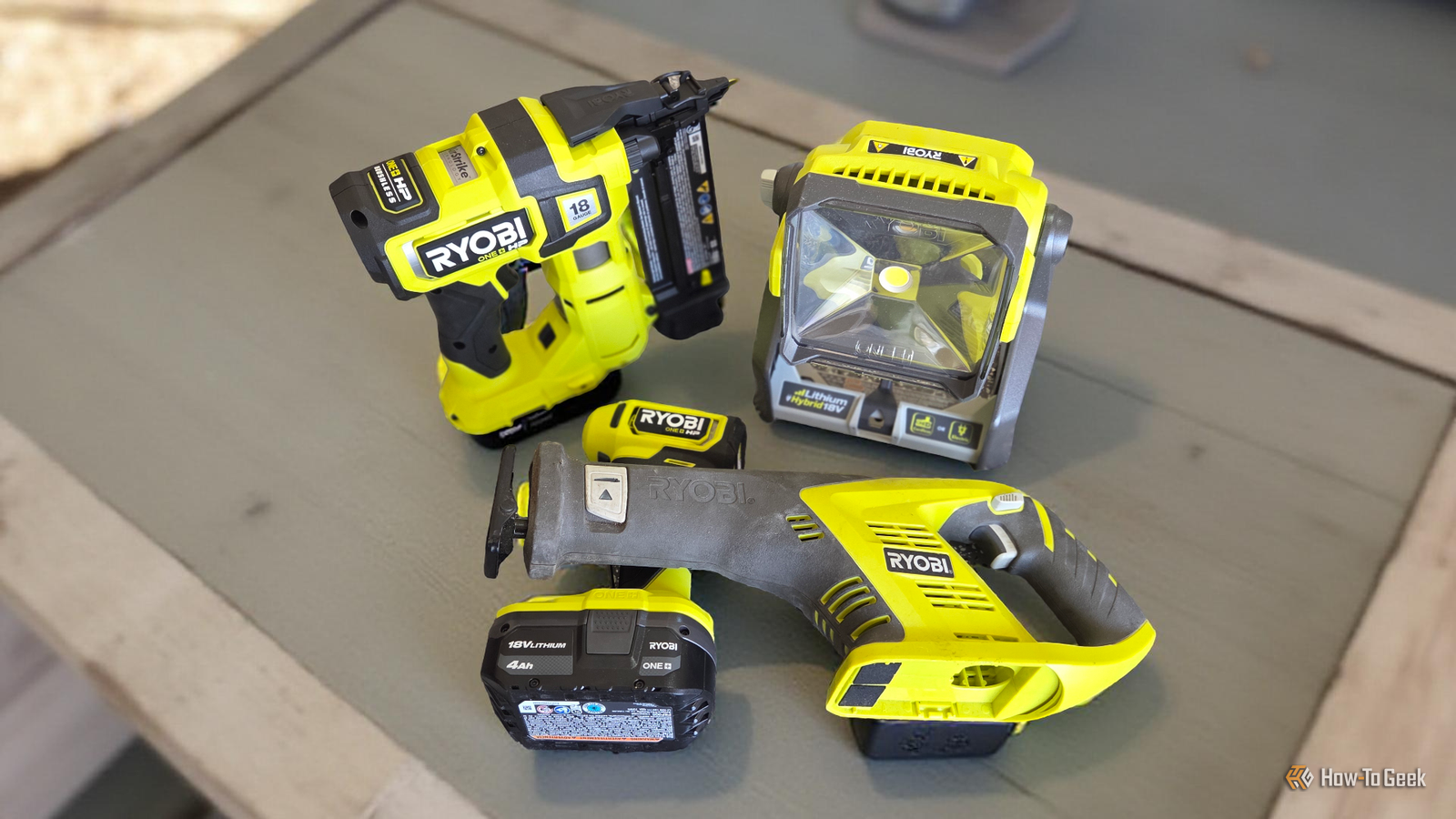
Published Aug 21, 2026, 8:45 AM EDT Cory Gunther is a senior author and Newsletter Editor at Valnet, covering cutting-edge tech, Android, and more for How-To Geek. He's covered Android, cars, and technology for over a decade. When he's not reviewing the latest gadget, you can find him off-roading in his Toyota truck, fixing said truck, or doing something outdoors with friends and family. He's covered CES, SEMA, and MWC and reviewed countless phones, TVs, speakers, EVs, e-bikes, and more. Before Valnet, Cory worked for GottaBeMobile. His writing has also appeared on SlashGear, InputMag, and AndroidCentral. He's written over 9,000 articles. It's no secret that Ryobi gets a lot of hate on forums and social media, but for the average homeowner or DIYer, they're more than enough. There's a reason it's one of the most popular power tool brands in the US. That said, there are instances where your Ryobi tools could be holding you back. Fun fact: The company that owns Ryobi also owns Milwaukee, RIDGID, HART, and a few others. That's Techtronic Industries (TTI) out of China, which is why they're both so prominent in Home Depot. That doesn't mean they're the same, as Ryobi is geared toward hobbyists, while Milwaukee is geared toward professionals. Here are a few things to think about. Newer brushless models are substantially better Ryobi makes excellent tools at an affordable price point, and they're readily available at Home Depot. As a result, millions of people own several, myself included. In fact, I've been buying Ryobi tools for over 20 years and still love them. However, if you're using a bunch of Ryobi tools that are 7–8 years old or older and don't have newer "Brushless" motors like the 18V ONE+ HP line, you're not getting the most out of your tools, time, or battery packs. Newer Ryobi tools with HP Brushless motors (or any brand with brushless motors) deliver a vastly better experience. Without getting too technical, brushless motors are more durable, more efficient, have fewer moving parts, produce less heat, and deliver more power, torque, and performance. It enables manufacturers to release compact, lightweight tools that outperform models from yesteryear. I still have countless Ryobi tools I bought 10+ years ago, and they all work perfectly fine. More importantly, I can use them with brand-new battery packs, as the entire ONE+ line is backward compatible. However, none of those have brushless motors, and I've slowly replaced several with upgraded models. You'll instantly notice a massive difference in the overall feel, performance, and runtime. It's quite significant. Again, if you're just a homeowner who uses a tool a few times a year for little tasks, it's not that big of a deal. However, DIYers or hobbyists who use the tools more frequently would certainly benefit from newer models. Upgrade to brushless today! Ryobi 18V Hammer Drill and Driver Combo Get a good Brushless hammer drill and impact driver and be ready for any job around the house. On the job site Ryobi tools aren't as durable or powerful as premium brands Credit: Cory Gunther / How-To Geek I'm not saying you can't use Ryobi tools on a job site or in a mechanic shop, because I've seen and heard from plenty who do. What I am saying, though, is that they'll typically be a little more fragile and not quite as powerful as other brands. If you're just starting out, it might be all you can afford, and that's fine. But in the long run, you might be better off just buying a premium brand from the start. See, Ryobi is solid, but premium brands like Milwaukee, Makita, and DeWALT are engineered for heavy daily use by contractors. You'll get higher-output motors, rugged housings with better materials or thicker plastics, metal gears, etc. Part of the reason your Ryobi tool might be 30–40% cheaper than a similar Milwaukee is that Ryobi is built for homeowners, and often uses lighter-duty plastics and slightly different build materials. Even if it's owned by the same company as Milwaukee. Those premium brands are built to take a beating, handle drops better, and are just engineered to a slightly higher standard. In over 20 years, I have broken only one Ryobi tool, and I still have a blue Ryobi drill that's over 22 years old and works fine. Then again, I don't use them daily. Then, the longer you're on the job, the more you'll notice others are finishing faster thanks to more powerful and capable tools. Eventually, you'll see that Ryobi is holding you back, and you might want to upgrade. Table saws and woodworking Trust me, spend more money on something else Credit: Patrick Campanale / How-To Geek Again, the way and frequency of your tool use are hugely important in determining whether Ryobi will hold you back. If you're a very casual DIYer who occasionally uses woodworking tools like a Ryobi router or joiner, you might be OK. That said, Ryobi's specialty is making a little bit of everything, but its power tools, like drills, drivers, and lawn care equipment, are its strong suit. Some of Ryobi's woodworking items, like sanders and routers, constantly have negative reviews, and people all over Reddit are quick to point out that most people should completely avoid most Ryobi table saws. They're just not built to a good enough standard for durability and precision. The rip fences are inaccurate and flimsy, the motors aren't all that powerful, and the non-standard miter slots can be frustrating. If you're using Ryobi table saws or woodworking tools, there's a good chance they're holding you back or making projects more difficult than necessary. Ryobi tools are good, but they're not the best It's also worth noting that if you still have some of Ryobi's older battery packs, they'll be a significant bottleneck in your overall experience. Don't let outdated battery packs hold you back. You can have the same 18V 4Ah battery in a tool, then toss in a newer Ryobi 18V 4Ah HP (High-Performance) battery, and you'll immediately notice a difference. The newer batteries feature upgraded cell pouch technology, improved thermal performance, and better sustained performance. It makes a huge difference in my impact wrench, weed whacker, and other tools. Ryobi tools aren't the "best," but I still love mine. Just make sure you know where they might be holding you back.
3 ways your Ryobi tools are holding you back
Full Article
Original Source
Read the full article at Howtogeek →KhanList aggregates and links to publicly available news content. We do not host full articles from third-party sources. Always verify important information with original sources.