
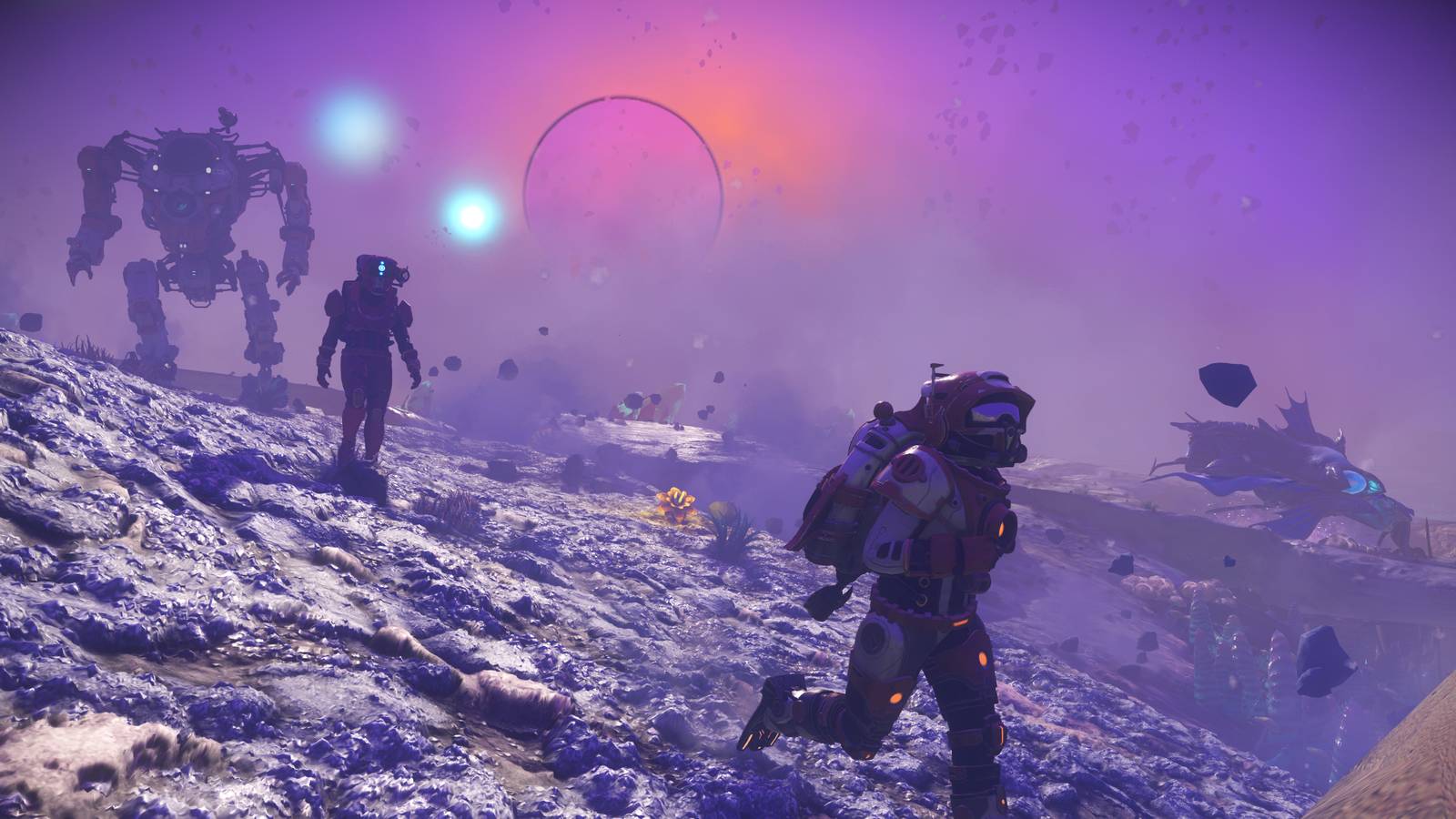
Published Aug 28, 2026, 9:00 PM EDT Sharmila is an engineer-turned-gaming hardware journalist and freelance contributor at ScreenRant who has been covering the gaming and tech industry since 2021. While she first built her expertise writing about video games, she has since pivoted towards gaming hardware, with a focus on PC components, peripherals, handhelds, and performance-driven tech. When she’s not testing gear or writing about the latest hardware trends, she can usually be found diving into competitive shooters or keeping up with the evolving esports scene. Sign in to your ScreenRant account Survival games like No Man's Sky and Valheim have a way of eating your free time without you noticing, especially when they are open world. One night you’re just “checking out the tutorial,” and three weeks later you’re still awake at 1 a.m. trying to find one more piece of ore or one more safehouse to fortify. Some of these experiences are built for a weekend, but the ones I’ve got on this list aren’t. They’re the kind of games people put hundreds, sometimes thousands, of hours into, and each one earns that time in a completely different way. What separates these open-world survival gems from most others is the lack of a finish line. You’re just dropped into a world with a set of systems—building, crafting, combat, hunger, and exploration—and left to decide for yourself what you’re playing for. And if this is exactly the kind of experience you were looking for, well, I won’t keep the names from you any further. 3 Valheim Valheim comes from Iron Gate, a small Swedish studio, and it launched into early access on Steam on February 2, 2021. Within its first month, it had already sold more than 5 million copies, which was a wild number for a game originally developed by a tiny team of five. Interestingly, it has remained in early access for more than five years, with Iron Gate preparing for its 1.0 release on September 9, 2026. An Xbox version arrived in March 2023, and PlayStation 5 and Nintendo Switch 2 versions are also scheduled to launch alongside the 1.0 release. The setup is simple on paper: you’re a fallen Viking sent to Valheim, a mysterious tenth world inspired by Norse mythology, and you have to fight, build, explore, and sail your way through it. What makes Valheim stick with people is the pacing. You start with basically nothing, and every step forward feels earned. You gather resources, craft better equipment, build a home, and gradually push into more dangerous territory. The game is broken into biomes, and you’re meant to work through them roughly in order: the Meadows, the Black Forest, the Swamp, the Mountains, the Plains, the Mistlands, the Ashlands, and eventually the Deep North. Each biome has its own boss fight, its own materials, and its own way of trying to kill you. The Swamp will throw undead and other monsters at you if you’re not ready. The Mountains will freeze you if you don’t have adequate protection. It’s a game that respects preparation, punishing players who skip steps. Building in Valheim is where a lot of players lose entire weekends. The construction system lets you put up longhouses, fortified gates, and entire fortified villages. It’s built upon a structural integrity system that actually matters: stack things up wrong, and your roof can collapse. Combined with sailing, exploring, crafting, and boss progression, Valheim gives you a dozen different reasons to keep playing that have nothing to do with each other. You might come back for the building, while your friend might come back for the combat. Either way, you both can still find yourselves grinding for months. 2 No Man’s Sky No Man’s Sky has one of the more well-known redemption stories in gaming. Hello Games, the small studio behind it, released the game in August 2016 to a rough reception—the launch version fell short of many players’ expectations and of some of the features and experiences that were promised before release, and the backlash was significant. What happened next is the part people actually talk about now. Instead of walking away, Hello Games kept updating the game for free, year after year, adding major new features and content without charging existing players for those updates. These updates have genuinely reshaped No Man’s Sky for good. There’s been VR support, expanded base building, land vehicles, freighters you can own and customize, multiplayer, and entirely new storylines and factions. For example, 2026 brought the Remnant update, which added customizable vehicles and a gravity gun; Xeno Arena, which added the ability to train, breed, genetically modify, and battle alien creatures; and The Swarm, which introduced the Hive of Glass and massive community-wide space battles. What makes No Man’s Sky a seemingly never-ending game is that it never really stops giving you a reason to keep flying. You can spend fifty hours just building out a base on one planet, then decide you want to see what’s past the next star, and the game just lets you go. Scanning new species, upgrading your ship, mining resources, running trade routes, managing settlements, exploring storylines—none of it is strictly required, but that’s the point. It’s less a game with a finish line and more a very large sandbox that keeps getting bigger the longer it exists. And if you’re among the many who liked it years ago and dropped off, it’s genuinely a different game now and has become worth going back to. 1 Project Zomboid Image by Katarina Cimbaljevic Project Zomboid comes from The Indie Stone, and it’s been in early access for well over a decade at this point, which is either a warning sign or a badge of honor depending on how you look at it. In this case, it’s the latter. The game is an isometric zombie survival sim set in the fictional Knox County, Kentucky, and it runs on one simple, brutal premise: there is no cure, and when your character dies, they’re dead for good. You can create a new character and continue in the same world, but there are no conventional respawns or do-overs for the survivor you just lost. That permadeath is what gives every decision in the game actual weight. For years, the stable version of Project Zomboid was Build 41, and it’s what most people mean when they talk about the “classic” experience—the crafting, the skill system, the moodles that track things like hunger, panic, injuries, fatigue, and the ever-present dread of hearing a horde shuffle past a window. The developers have since moved on to Build 42, a major overhaul that expands and reworks Knox County, adds new animations and deeper crafting and building systems, introduces animals and animal husbandry, expands the game’s occupations and skills, and makes major changes to lighting, atmosphere, and environmental storytelling. After spending years in development and going through an unstable testing phase, Build 42 reached the public Stable branch in July 2026. It’s been a long road, which is very on-brand for a studio famous for its transparent, if slow, development updates known as “Thursdoids.” What makes Project Zomboid a long-term game is the tension between routine and chaos. You’ll spend an afternoon in-game boarding up windows, farming, and organizing your pantry, feeling almost safe—and then one bad decision, one door left unlocked, one horde you didn’t hear coming, and it’s over. Multiplayer adds an entire other layer: You’re not just managing the zombies, but you’re also managing trust between actual people. It’s a game that rewards patience and punishes carelessness in equal measure, and that push and pull is exactly why people keep coming back to Knox County long after they’ve “learned” the game.
3 Open World Survival Games That You'll Be Playing For Months
Full Article
Original Source
Read the full article at Screenrant →KhanList aggregates and links to publicly available news content. We do not host full articles from third-party sources. Always verify important information with original sources.