
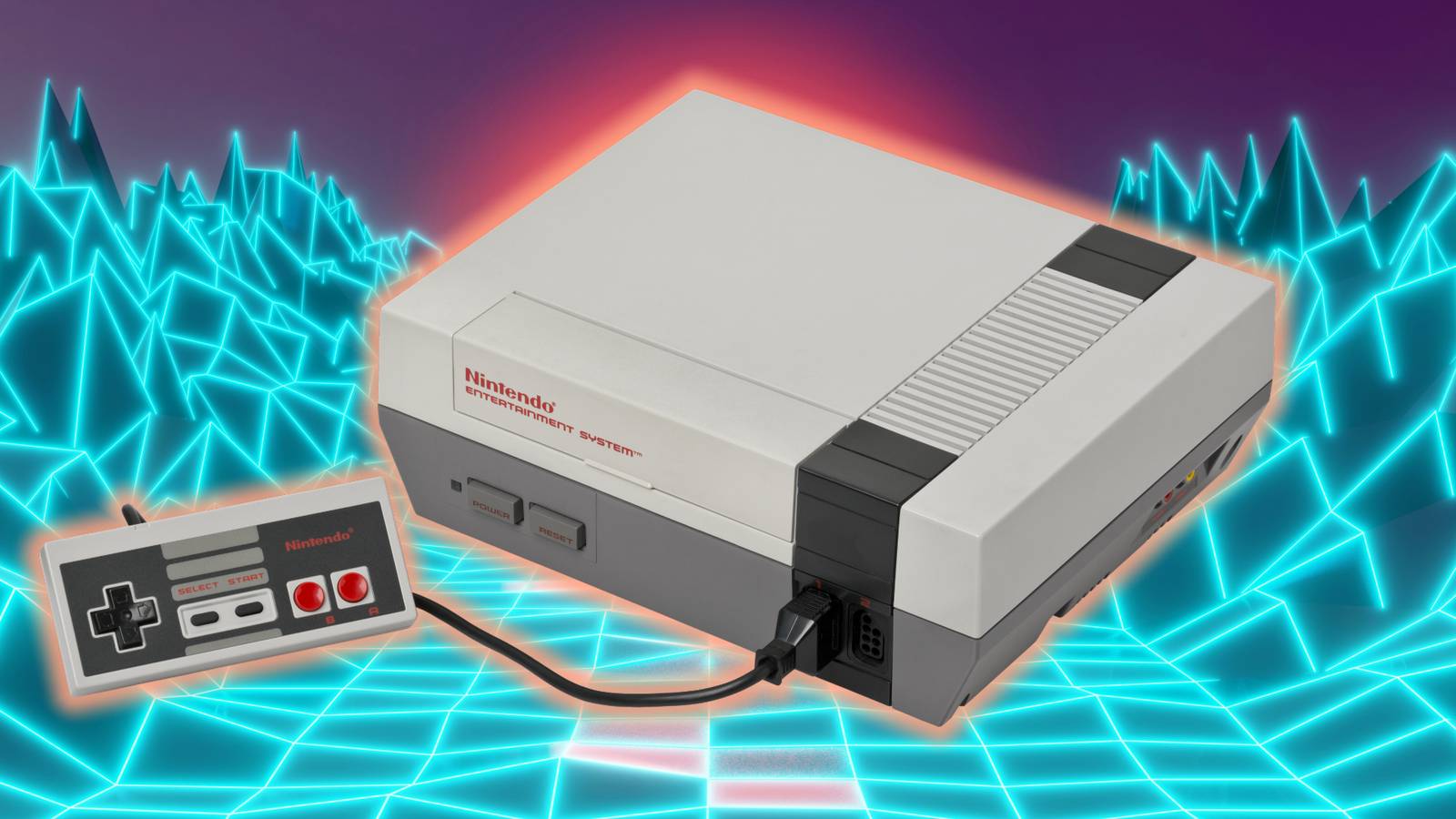
Published Sep 22, 2026, 10:00 PM EDT Sharmila is an engineer-turned-gaming hardware journalist and freelance contributor at ScreenRant who has been covering the gaming and tech industry since 2021. While she first built her expertise writing about video games, she has since pivoted towards gaming hardware, with a focus on PC components, peripherals, handhelds, and performance-driven tech. When she’s not testing gear or writing about the latest hardware trends, she can usually be found diving into competitive shooters or keeping up with the evolving esports scene. There was a time when stuffing a cartridge into a console usually meant a fun but rather predictable experience: playing until you ran out of lives, then starting again, and so on. But it’s safe to say we’ve come a long way from that idea—and much of the credit goes to the Nintendo Entertainment System (NES), one of the oldest yet most innovative consoles of its time. The NES arrived at a strange point for the video game industry, for the excitement surrounding home consoles had crashed hard at that time, while the medium was still figuring out what such hardware could actually do. Games were becoming more ambitious, but developers were working with tiny amounts of memory, primitive hardware, and controllers that had only a handful of buttons. Somehow—and luckily—those limitations only fueled some of the biggest and brightest ideas in gaming history. Interestingly, the NES didn’t particularly offer very powerful hardware in the first place. Instead, it inspired developers to build games around its limitations. These developers figured out ways to make gamers explore and not simply chase high scores, remember locations and not just grind levels, experiment with mechanics and not just follow a straight path, and, finally, come back to a game because there was always something they hadn’t discovered yet. Decades later, many of these “OG” games still boast a considerable fandom and continue to inspire modern titles for Nintendo platforms and beyond. And this is what makes looking back at the NES so fascinating. All these iconic games introduced ideas that developers would spend decades experimenting with in the quest to create even better experiences. 3 Super Mario Bros. Super Mario Bros. didn’t invent 2D platforming, but it proved that running and jumping through a level could be much more than just getting from one side of the screen to the other. The best part about Super Mario Bros.? Players are meant to discover the game's most crucial mechanics by playing through it instead of being given a tutorial that explains everything at the beginning. For example, the first Goomba is practically a lesson in disguise. You see the enemy, figure out that you can jump on it, and immediately understand one of the game's most important rules. The first question-mark block you encounter does something similar. You hit it to discover what comes out, and suddenly, you’ve realized the importance of experimenting with everything that pops up on the screen. And then there was the sense of momentum, too. Mario didn't simply move from left to right. He ran, jumped, accelerated, bounced off enemies, and carried that movement into increasingly complicated situations. Put those things together, and you get a game that teaches you how to play without ever stopping to explain itself. That approach would become one of the foundations of platformer design. You can still see its influence in the way modern platformers introduce mechanics, build difficulty, and teach players through the level itself. More than 40 years later, the basic language Super Mario Bros. established—run, jump, experiment, learn—still feels familiar. 2 The Legend of Zelda The Legend of Zeldahelped establish a kind of exploration that would eventually becomeone of gaming’s most recognizable formulas: give players a world, hide things inside it, and trust them to go looking. Released for the NES in 1986, it dropped players into a huge overworld without constantly pointing toward the next objective. You weren’t wandering around just to fill in a map, either. The world constantly gave you reasons to poke around, from suspicious-looking walls to caves tucked away in places you could easily walk past. The clever part was that Zelda rarely needed to put a giant arrow on the screen telling you where to look. Caves could contain useful items, heart containers, or money, while seemingly ordinary parts of the map could hide entrances to new, unexplored areas. Whether it was a wall or a bush, you had to look closely just to make sure you weren't missing something. Zelda also gave players a reason to remember the path they took and the choices they made throughout the game. If you ran into a locked door, it usually meant you'd have to return later with the right item. Discovering new weapons or tools could open up areas that were previously inaccessible. Even the dungeons followed the same philosophy. You weren't simply moving from one marked objective to another; you had to pay attention to locked doors, suspicious rooms, and items that might become useful somewhere else. And thank god for modern games that still use this trick. Hidden rooms, optional discoveries, item-based progression, and worlds that reward curiosity all owe something to the way Zelda approached exploration. It wasn’t just about making an enormous world, but it was more about making players believe what if… just what if there’s one more secret hiding somewhere? 1 Metroid Like Zelda, Metroid is focused on exploration too, but its approach was starkly different. Instead of giving you a huge overworld, it was a huge maze of interconnected rooms where every new upgrade could change the meaning of a place you’d already visited. The experience may start out on a limiting note at first, but then the upgrades start coming. New weapons and abilities make your character stronger and unlock exploration points too. The fun part is how Metroid made you second-guess the map. You’d walk past a room thinking there’s absolutely nothing you can do there, only to come back later with a new ability and realize you were missing something obvious. A ledge you couldn’t reach might suddenly have a purpose. An enemy that used to get in your way can suddenly help you advance in the game. Even familiar rooms can feel different when you return to them with a completely different set of tools. All of this makes Zebes—Metroid’s location of action—feel like one place rather than a collection of disconnected stages. You remember rooms because you know there was something you couldn’t do there yet. You were constantly building a mental map of the planet, remembering that strange door you couldn’t open or the ledge that looked just slightly too high to reach. The game rarely needed to tell you that something had changed. You could see it for yourself when an old area suddenly became useful again. You wouldn’t need to ask for context regarding the idea or the plot, either. Zebes does most of the talking through its empty corridors, hostile creatures, strange architecture, and eerie soundtrack. More importantly, Metroid on Nintendo showed that backtracking in a game didn’t have to feel like a chore. If the world changed every time your character gained an ability, going back could be just as exciting as moving forward. This idea would eventually become one of the defining features of the Metroidvania genre, but well, now you know the point of inspiration. Date Founded September 23, 1889 CEO Satoru Iwata Parent Company Nintendo Subsidiaries Nintendo EPD, Nintendo SPD, Nintendo EAD Consoles Nintendo DS, Nintendo 3DS, Nintendo Wii, Nintendo Switch, Nintendo GameCube, Nintendo 64, Super Nintendo Entertainment System, Nintendo Entertainment System, Nintendo Wii U, Nintendo Game Boy, Nintendo Game Boy Color, Nintendo Game Boy Advance, Nintendo Switch Lite Services Nintendo Switch Online
3 NES Games That Literally Changed Gaming Forever
Full Article
Original Source
Read the full article at Screenrant →KhanList aggregates and links to publicly available news content. We do not host full articles from third-party sources. Always verify important information with original sources.