
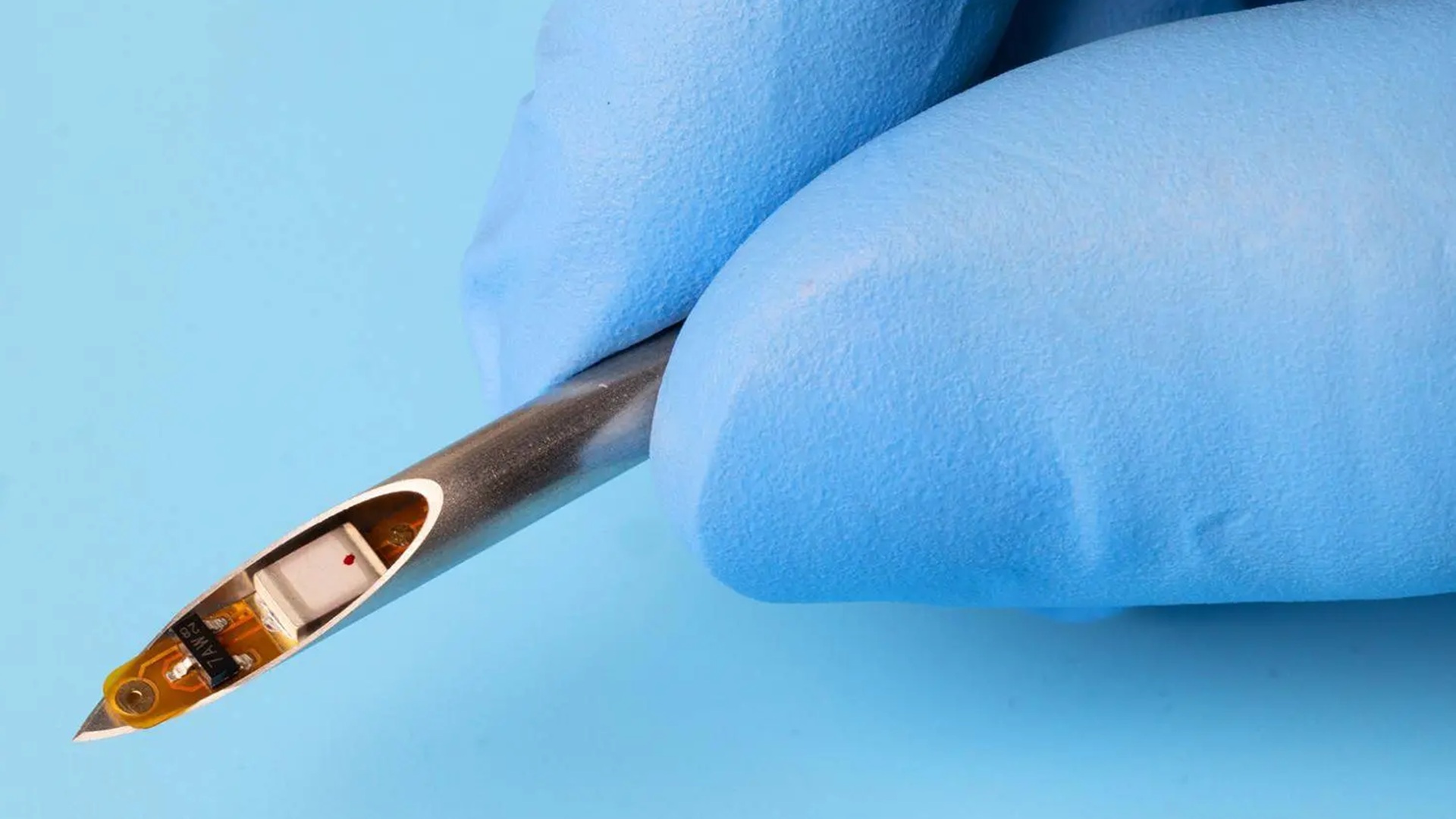
Georgia Tech engineers have developed a wireless networking system that lets tiny implants communicate through body tissue, potentially allowing sensors in one part of the body to trigger treatment somewhere else. The Smart Wireless Autonomous Networking System, or SWANS, uses the body’s natural ionic conductivity to transmit electrical signals between implanted and wearable devices. The approach avoids conventional wireless technologies such as Bluetooth and near-field communication, which can struggle to transmit signals through human tissue. The low-power technology allowed the researchers to build implants smaller than 3 millimeters, making them small enough to be delivered using a syringe rather than requiring surgery. The devices can communicate with other implants as well as an external wearable hub. Researchers demonstrated the system in rats by creating a network linking sensors and neural interfaces across the body. When a sensor detected movement in a rat’s front paw, another device was automatically activated to stimulate a hind-leg muscle, producing a contraction that mimicked part of the animal’s natural walking motion. Body becomes the network SWANS works by sending electrical pulses through surrounding tissue. Each implant can be programmed to recognize pulses with specific voltages and durations, allowing the network to selectively activate individual devices. The system could therefore separate where a biological signal is detected from where treatment is delivered. “With our system, you can now place sensors in the best possible place to detect a biological signal and place actuators in the best possible place to perform a therapeutic action,” said Alex Abramson, the study’s senior author and an assistant professor at Georgia Tech. “They don’t need to be connected, aligned, or even near each other; they can just send signals to each other through the surrounding tissue.” Traditional wireless systems present challenges for very small implants because their antennas and power requirements can increase device size. SWANS instead relies on the conductivity of biological tissue to carry its signals, reducing the hardware and energy required for communication. The implants use passive electronic components that consume essentially no power while waiting for a signal. They activate when triggered and can then perform a programmed action. Tiny implants coordinate treatment The researchers estimate that a small actuator activated once per day could operate for about a year before requiring replacement. Tests also found that the electrical pulses used for communication did not damage tissue samples. SWANS is not designed to move large quantities of information. Instead, implants exchange simple signals, such as whether a particular condition has been detected or whether an action should be triggered. More demanding data processing can take place on an external wearable hub. The hub can combine readings from multiple implants and coordinate therapeutic responses from devices elsewhere in the body. That architecture could eventually enable networks in which sensors monitor biological conditions continuously and automatically activate treatments when needed. Potential applications include neural stimulation and drug delivery, although the technology remains at the research stage. The researchers also demonstrated communication across different parts of the body, including devices positioned deep inside the stomach. “Our ultimate hope is to be able to fully automate human health — to be able to deliver a therapy exactly when it’s needed, where it’s needed, and to do so in a coordinated fashion across the body,” Abramson said. The study was published in the journal Science. Get the latest in engineering, tech, space & science - delivered daily to your inbox.With over a decade-long career in journalism, Neetika Walter has worked with The Economic Times, ANI, and Hindustan Times, covering politics, business, technology, and the clean energy sector. Passionate about contemporary culture, books, poetry, and storytelling, she brings depth and insight to her writing. When she isn’t chasing stories, she’s likely lost in a book or enjoying the company of her dogs.
3-mm implants communicate through body tissue to coordinate treatment without wires
Full Article
Original Source
Read the full article at Interestingengineering →KhanList aggregates and links to publicly available news content. We do not host full articles from third-party sources. Always verify important information with original sources.