
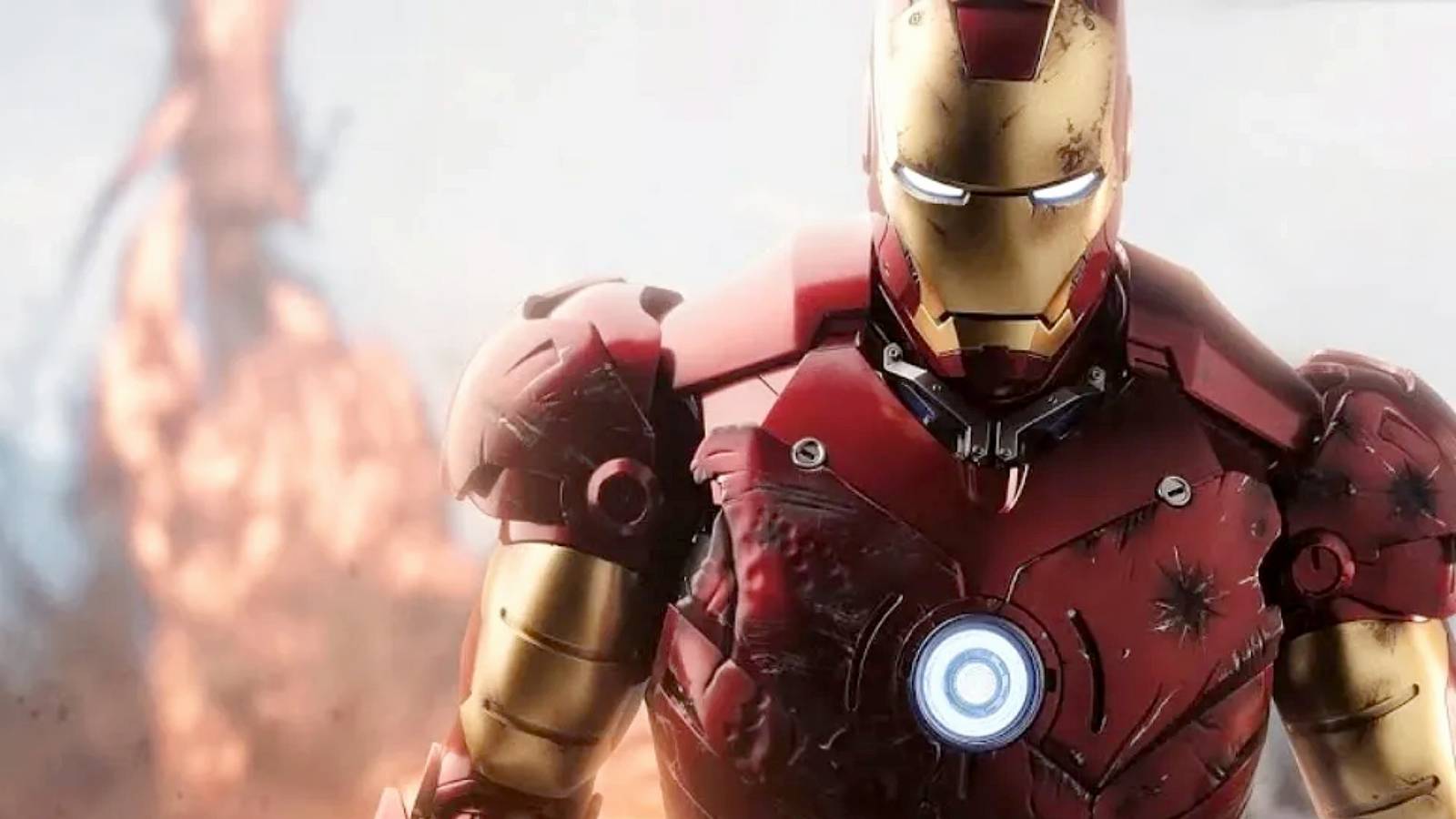
Published Sep 3, 2026, 9:30 AM EDT Simon Gallagher has worked in movie and TV journalism for more than 15 years. He has written more than 6000 articles and reviews, and edited thousands more. He is an expert in the entertainment industry, particularly in the golden age of screen superheroes. Simon is also a Rotten Tomatoes approved critic. Sign in to your ScreenRant account Marvel is making headlines again - this time because Avengers: Doomsday started filming without a script. Naturally when the online film community (and particularly X) learned that about it, they were all completely normal about it and didn’t overreact at all. That’s a rather dismissive statement, admittedly, because Doomsday’s production has been a wildly volatile one if you track it right back to when it was a totally different movie called The Kang Dynasty. People are bound to be a little iffy when presented with the idea of minimal forward planning. And remember, this is the MCU, a product we’ve insistently been told for years has precise plans that stretch out for miles. And even without that specific context, in the modern algorithm-defined world of blockbuster filmmaking, where even the best laid plans often turn into disasters, heading into a production that costs something like $300m with a fluid screenplay sounds like asking for trouble. Chaos will surely follow, even if the Russos are adamant that the script situation is a feature rather than a bug. They say the script is a “living organism,” which can change over time and influenced by what happens on set, and there is some evidence to suggest that can sometimes be a smart move. On the flip side though, a living organism that self-determines is basically the opposite of order, and there’s also evidence to suggest it can lead to ruin. Casablanca was famously written as it was filmed, which is a big tick for the positive, but the outcome of a more loose script set-up seemingly depends on a lot of factors and precisely who is in charge of pulling that chaos back together. The Russos have managed well with Marvel so far, but they must know that if Doomsday even remotely stutters, this will be brought up as the reason. And if it soars? Then Avengers: Doomsday will potentially join a small but distinguished group of masterpieces that started without finalized scripts. 6 Great: Iron Man (2008) There is a great lie, perpetuated for many years, that the Marvel Cinematic Universe was built on an ironclad master plan that spanned multiple phases. In actual fact, prior to the release of Iron Man in 2008, Phase One originally looked completely different, and even when Jon Favreau stepped into that first founding stone project, it was basically built on an outline and a prayer. In fact, given how Iron Man’s shooting schedule began, it’s quite remarkable that the movie that launched a multi-billion-dollar empire, especially since the fledgling Marvel Studios had no idea it ever actually would. Iron Man didn’t fly completely blind, admittedly; Favreau had an approved story structure and full action sequences planned out (the latter of which Joss Whedon later revealed was pretty normal for early MCU movies), but almost zero finished dialogue. According to Jeff Bridges, who played villain Obadiah Stane, the cast would “show up for big scenes every day and we wouldn’t know what we were going to say. We would have to go into our trailer and work on this scene and call up writers on the phone, ‘You got any ideas?’ Meanwhile the crew is tapping their foot on the stage waiting for us to come on.” The Oscar winner admitted later that it freaked him out, and said it was akin to “making a $200 million student film,” but ultimately, Jon Favreau’s handling of the situation meant that student film captured lightning in a bottle. How much of that was down to the excellent casting of Downey Jr - and Bridges himself - is hard to quantify, but we know he came up with the famous “I am Iron Man” line at the end at the very least. And even with almost two decades passed, the first MCU movie has aged incredibly well. And in the end, it's pretty fitting that arguably the biggest MCU movie so far should share something so fundamental with the very first release in the franchise. 5 Disaster: Transformers: Revenge of the Fallen (2009) Image courtesy of MovieStillsDb Let's start with a remarkable revelation: Transformers: Revenge of the Fallen made more than $800m at the global box office. That means that people - lots of people, in fact - ignored the reviews (and the 19% score on Rotten Tomatoes), and pretty terrible word of mouth (though not as poor as the critical reception), and just went and saw it anyway. Some of them possibly multiple times. Do we really deserve cinema? The sequel is also a textbook example of why shooting without a script can be a terrible idea. The original was not exactly Citizen Kane, but Michael Bay nailed the spectacle, and the production design was faultless, including remarkable transformation sequences. Critics were split, but audiences loved it - to the tune of almost $710m - and a sequel was inevitable. Then, sadly, the production ended up caught in the crossfire of the 2007–2008 Writers Guild of America strike, but Paramount still greenlit the production with only an 8-page treatment from writers Alex Kurtzman and Roberto Orci. As Shia LeBeouf relates it, the studio priorities don’t really require much analysis: “We were given a date, we were given a bunch of money, we were given a bunch of toys, and we had no script.” Bay isn’t a miracle worker, and when forced to prepare massive, multi-million-dollar action set pieces without any substance behind them, that’s exactly what he made. Later, the gaps were retroactively filled, but they didn’t bridge anything in any sort of satisfying way. With heavily improvised dialogue and a diabolical commitment to trying to add comedic subplots, Revenge of the Fallen is almost the blueprint morality tale against trying to hide fundamental issues with glossy CGI and giant robot testicles. Even Bay admitted it was a mistake, but that huge box office was enough to greenlight further sequels 4 Great: Gladiator (2000) ©DreamWorks/Courtesy Everett Collection Sometimes, between saying controversial things about other people's movies or his own stars, Ridley Scott makes incredible movies. And he’s so good at what he does that he doesn’t always need to conform to normal filmmaking rules. So when he started filming Gladiator, and his leading man, Russell Crowe, loudly proclaimed the script “rubbish,” he seemingly just tossed out what was unusable and almost started from scratch. Crowe revealed to Variety in 2023 that when he expressed his serious concerns with the script (which didn’t match the quality of the concept), the director agreed that he wouldn’t shoot anything that the star didn’t 100% endorse. Scott flew in writer William Nicholson who recalled Crowe being volatile but professional on set because of the weight of responsibility: “The film was in a lot of trouble when I got there and everything I did was helping, so I was the good guy,’ he says. ‘But Russell was under enormous stress and he knew that the film was all on his shoulders [as Maximus], so he really felt the pressure.” Even with Nicholson’s rewrites in place, Crowe still wasn’t happy with everything, but conceded, including on the famous “I will have my vengeance” line that became the crowning moment of Maximus’ arc. The movie’s creative team reportedly argued about all elements of the story, including Maximus fate, but the final result shows very little sign of that friction. Thanks to a combination of Scott’s impeccable eye for spectacle and storytelling and Crowe’s mesmerising performance, Gladiator is a genuine masterpiece that feels both classical and timeless and boasts a number of infinitely quoted lines. Including the one Crowe apparently mocked. 3 Disaster: Batman V Superman: Dawn Of Justice (2016) Another comic book movie for Doomsday fans to look to, but a very different outcome from Iron Man. Again, if you look at box office alone, Batman v Superman: Dawn of Justice wasn’t as pointed a failure as calling it a “disaster” might suggest, and, dear reader, I confess I have some fondness for some of it, but overall, it is not a very good movie. On the back of the far superior Man of Steel, Zack Snyder turned his sequel into a clash of the titans that transparently sought to kick up the hype by adding Ben Affleck’s hulking Batman to the brand top table. It ended up being one of those big-name heavyweight bouts that draws well but isn’t exactly an exhibition match. Dawn of Justice suffered a tortured development process, and while there was a script, written in its original form by David S. Goyer, Chris Terrio was brought in to rewrite and polish it during filming. Things were constantly retooled, and the schedule was pushed back to accommodate those changes, and the final movie feels both like an event and a passing moment on the way to setting up something else. Which is exactly what it was. Narratively, it’s a mess, jumping between grandstanding sequences that feel like the blueprint for so many hollow AI “proof of concept” films years later. Supporters these days tend to suggest the critical reception at the time was overly brutal, but the original version remains a clunker with impressive pieces sewn into it. The director’s cut is vastly superior, which just goes to show that the last-minute rewriting was probably a major part of the final cut’s issues. 2 Great: Jaws (1975) The movie that launched Steven Spielberg’s career might better be called Nightmare on Martha's Vineyard, given how legendary the production was for repeated issues that might have sunk another project. The shark’s mechanical issues are, of course, the most famous, but Jaws’ success is all the more profoundly impressive because it also had major script issues. Specifically, it didn’t have a finished one, with Carl Gottlieb charged with rewriting Peter Benchley’s original script on the fly. As the production’s budget ballooned and bad weather compounded the problems with Bruce the shark, Gottlieb was forced to write pages the night before filming. But in what can only be described as a perfect storm, that script set up actually helped save the movie. Spielberg wasn’t able to make the movie he intended because he couldn’t film his shark, and the weather wasn’t cooperating, so the script refocused on character tension and dread, and the titular predator turned into a mostly unseen threat. In other words, the exact reason Jaws is so successful as a monster movie, and so beloved decades later, was down to a serendipitous change of pace aided in no small part by poor preparation. 1 Disaster: Quantum of Solace There are quite a few disappointing James Bond movies, with several of them undermined by an over-reliance on tropes without substance, an over-abundance of goofiness, or ridiculously convoluted plots. The issue, though, is that some of those reasons are also why the best ones often work, so it’s a pretty fine line you have to walk. The worst crime any filmmaker can commit in the name of 007, however, is making something complicated and boring. Which is exactly what Quantum of Solace is. The critical consensus (63% on Rotten Tomatoes) suggests Daniel Craig’s second outing as the poutiest Bond wasn’t all that bad, but that was simply way too kind. Quantum of Solace is listless and infuriatingly dull at times, replacing Casino Royale’s taut suspense and instant swagger with extended chase sequences with very little substance between them. Again, script issues came down to the 2007–2008 writers' strike as production kicked off with only a barebones outline. Years later, director Marc Foster told Collider that he almost walked away because of that: “It was tricky because we didn’t have a finished script… Ultimately, at that time, I wanted to pull out. Ron Howard pulled out of Angels & Demons, which Sony was about to do, and they sort of shut down, and at the time I thought, ‘Okay, maybe I should pull out’ because we didn’t have a finished script. But everybody said, ‘No we need to make a movie, the strike will be over shortly so you can start shooting what we have, and then we’ll finish everything else.’ I said ‘Yeah, but the time crunch’…” Forster also admitted that he and Daniel Craig literally wrote scenes themselves hours before cameras rolled, despite neither of them being professional writers. To Foster’s credit, he seems to own the fact that the film’s attempt to hide its fundamental limitations is precisely why it turned out poorly: “The idea was to make a follow-up to Casino Royale and ultimately I felt like, ‘Okay, worst case scenario the strike goes on, I’ll just make it sort of like a '70s revenge movie; very action driven, lots of cuts to hide that there’s a lot of action and a little less story (laughs). To disguise it.” You can see that attempt very clearly in the frantic, hyper-edited pacing, but ultimately the resounding feeling is one of panic, not design. There’s no memorable dialogue, the plot is utterly unmemorable, and everything promised at the end of Casino Royale fades away as a wisp in the face of one of the worst Bond villain plans ever conceived.
3 Masterpiece Movies Made Without a Finished Script (& 3 That Were Disasters)
Full Article
Original Source
Read the full article at Screenrant →KhanList aggregates and links to publicly available news content. We do not host full articles from third-party sources. Always verify important information with original sources.