
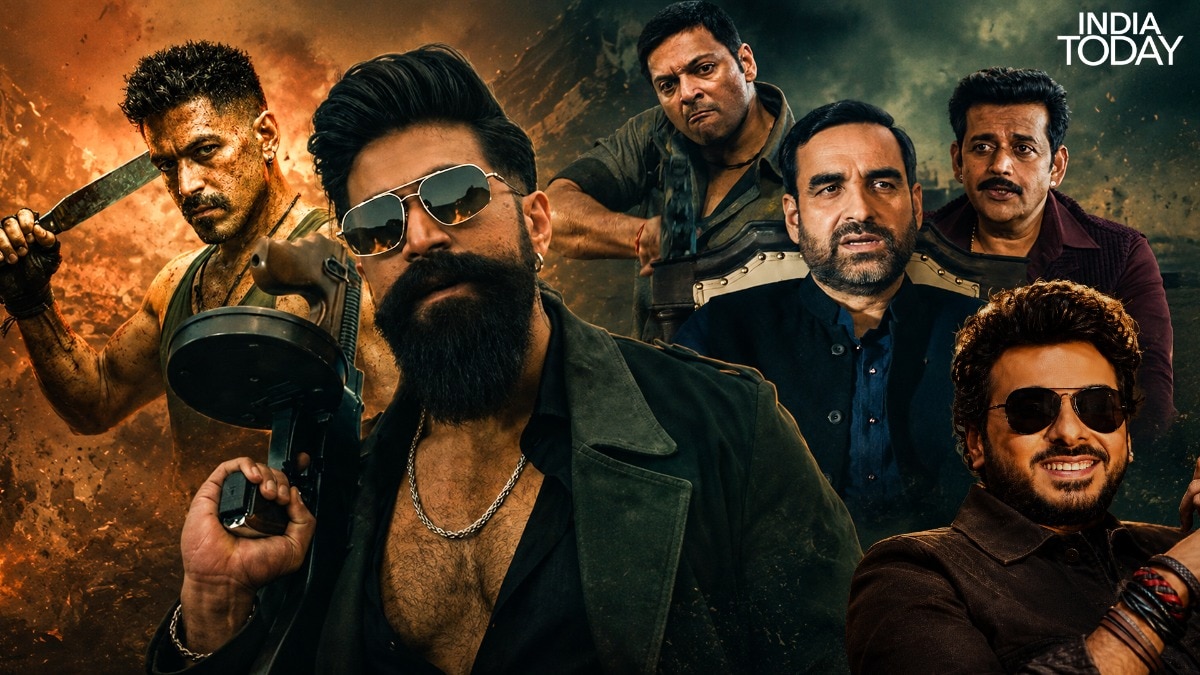
Remember when a three-hour film came with a warning label? Every second seemed to feel stretched, and audiences would keep looking at their watches, wondering when it would finally end. A long runtime once seemed like something Bollywood had to justify: trim the second half, cut a song, speed up the story, do anything to keep audiences from checking the time. But what if that fear is finally becoming outdated? Today, Bollywood doesn’t seem to fear the clock anymore.From Animal to Dhurandhar, and now Toxic: A Fairy Tale for Grown-Ups and Mirzapur: The Movie, filmmakers are increasingly saying: let the story take its time. Indian box office history reveals a clear trend where audiences are highly willing to embrace exceptionally long runtimes if the content delivers monumental scale, immersive world-building, or high-octane action, provided those extra minutes actually earn their place.While the trend is not entirely new, with Lagaan (2001) having a runtime of three hours and 44 minutes, Hum Aapke Hain Koun..! (1994) running for three hours and 26 minutes, and Dilwale Dulhania Le Jayenge (1995) clocking in at three hours and one minute, the appetite for longer films appears to have found its audience once again.Sandeep Reddy Vanga’s Animal, with a runtime of three hours, 21 minutes, became one of the biggest Hindi hits of 2023 despite its length. The film’s runtime was widely discussed before its release, but once it reached theatres, the conversation quickly shifted from “Is it too long?” to the film’s characters, violence and music. Audiences, for the most part, were willing to spend more than three hours in its world. Then came Ranveer Singh’s Dhurandhar: The Revenge (2026), another lengthy theatrical spectacle (three hours 45 minutes) that showed how little runtime matters when audiences feel they are getting an event-sized experience. Rather than treating its extended runtime as a deterrent, viewers embraced the film’s scale, action and world-building, turning its length into almost a footnote against its box-office run.While Bollywood may have sparked the trend, the South quickly followed suit with Yash’s Toxic: A Fairy Tale for Grown-Up (three hours 14 minutes) continuing that trend. Despite its lengthy runtime, the gangster drama has managed to maintain a strong theatrical run and cross the Rs 300-crore mark worldwide, suggesting that audiences are not necessarily walking into a film with a stopwatch. If the world on screen is compelling enough, those additional minutes can become part of the experience rather than a burden. The same conversation is extending beyond traditional theatrical releases. Mirzapur: The Movie is also entering the big-screen space with the familiarity of a franchise that has already trained its audience to invest in its characters and universe. With a runtime of three hours 17 minutes, here, too, the question is less about how long the film is and more about whether the theatrical experience justifies the time spent.Now, what has changed in the past few years?What has changed, perhaps, is the audience’s relationship with runtime. Earlier, a three-hour film could be viewed as a risk in itself. Today, viewers appear far more willing to sit through a long film, without looking at their phones, and watch with a belief that they are getting something they cannot experience elsewhere. Spectacle, scale, action, world-building and franchise familiarity can all make those extra minutes feel worthwhile.The bigger shift is that runtime is no longer necessarily the villain. For today’s theatrical audience, the real question seems to be much simpler: Is the film worth my time? If the answer is yes, three hours--or even more--doesn’t necessarily feel like too much.So, when did three hours stop being scary?Perhaps when audiences stopped measuring a film by its minutes and started measuring it by the experience it delivers.For years, runtime was treated almost like a mathematical equation. A shorter film meant more screenings in a day, potentially better theatre utilisation and, theoretically, a greater chance of audiences staying engaged. The assumption was simple: the modern viewer has limited patience, so give them the story quickly and get them out before boredom sets in.But the rise of event cinema has complicated that equation. When a film promises scale, spectacle, a larger-than-life world or the return of a beloved franchise, the theatrical experience is no longer simply about how quickly the story can be told. It is about how completely the audience can be immersed in it.That is why the three-hour mark no longer carries the same fear it once did. Audiences have shown that they are willing to give filmmakers their time, as long as the film gives them a reason to stay.- EndsPublished By: Prachi aryaPublished On: Sep 2, 2026 19:26 IST
3 hours? No big deal: Why Bollywood audiences are embracing longer films
Full Article
Original Source
Read the full article at Indiatoday →KhanList aggregates and links to publicly available news content. We do not host full articles from third-party sources. Always verify important information with original sources.