
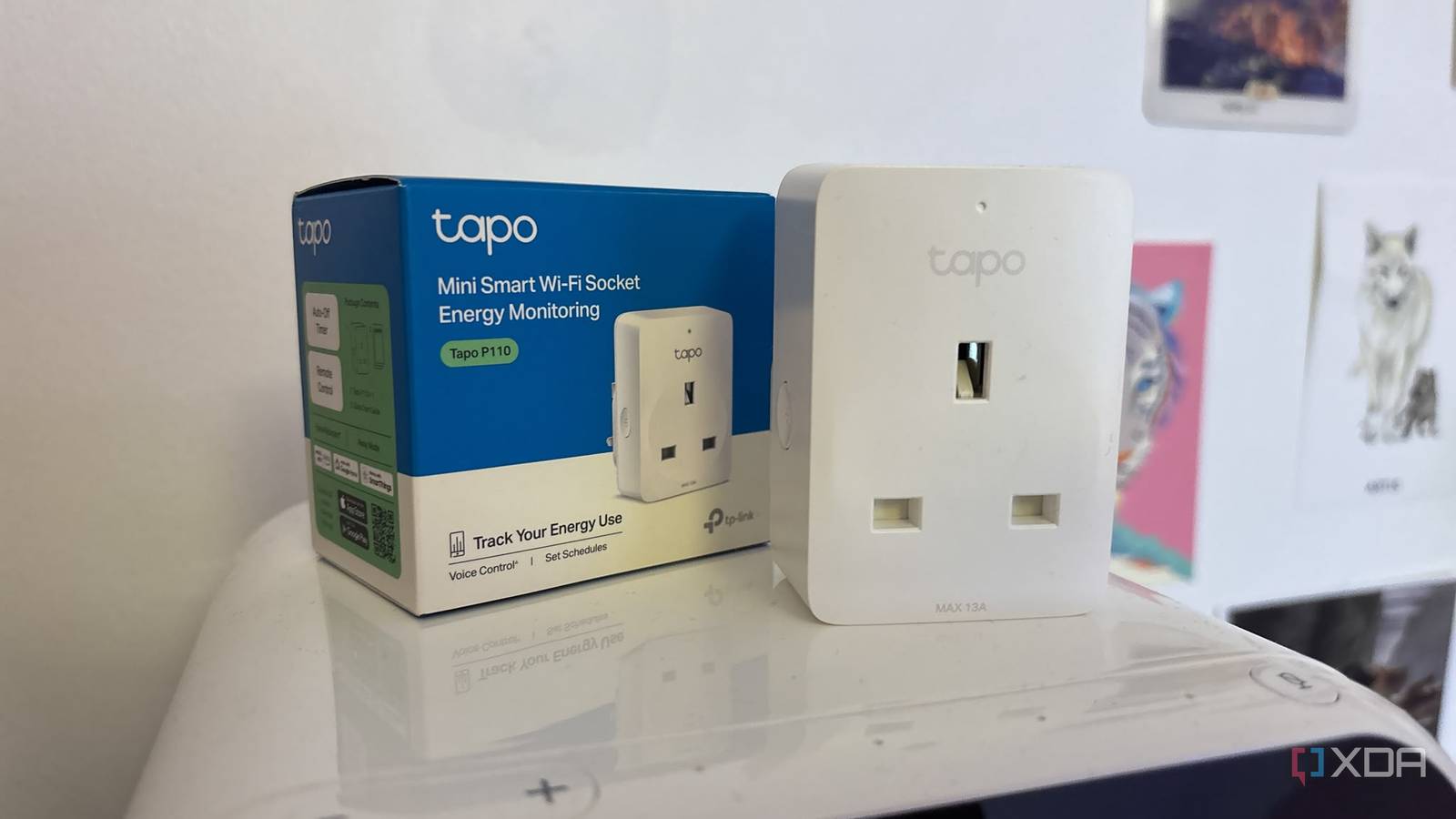
Published Nov 19, 2026, 5:00 PM EST Jasmine is Software and PC Hardware Author at XDA with years of tech reporting experience ranging from AI chatbots right down to gaming hardware, she's covered just about everything. Whether it's breaking news about the latest AMD NPUs or creating video tutorials on social media platforms, Jasmine has contributed to the world of AI and tech in a variety of ways including interviewing the CEO of Razer, AMD's Director of Product Marketing and the VP of Lenovo. Passionate about gaming and PC technology, she has built countless computers, keyboards and other peripherals - knowing them inside and out. Traditional time-based automations in Home Assistant rely heavily on fixed delays, such as assuming a washing machine cycle takes precisely 45 minutes. This can fail when you factor in features like eco-modes, half loads, or unexpected operational pauses. By replacing time-based assumptions with real-time power-draw metrics from energy-monitoring smart plugs, I ensured Home Assistant could track exact device states based on physical and electrical output. I switched over three practical, hands-on Home Assistant automations that utilized power draw thresholds instead of timers in order to reliably control dumb appliances around my home and get accurate notifications, safety cutoffs, and energy tracking. Washing machines and dryers With a range of modes, these can be hard to time It's difficult to use a timer for washing machines and dryers because they have complex operating profiles with varying cycle lengths, water-heating phases, and periodic pauses between washing and spinning stages that can make static timers unreliable. By using an energy-monitoring smart plug, Home Assistant could track active wattage to detect distinct operational states, including standby, active running, mid-cycle pausing, and completion. The automation triggered when my power sensor's value crossed an upper threshold of 5W to flag that a cycle had officially started. To prevent false completions during brief mid-cycle pauses where power consumption drops to zero, I added a "for at least" delay condition (5 minutes below 2W) that must be met before triggering. Once that power draw remains flat at baseline standby levels for the duration of the delay, Home Assistant then dispatches a notification to my phone and also announces via smart speaker that the laundry is ready. You can also set it up to send a persistent notification to your HA interface. Coffee machines are tricky to automate You don't want to accidentally cut power when you don't even have your coffee yet Standard drip coffee machines or manual espresso machines lack automatic shut-off features or sometimes rely on generic countdowns that either cut power while the pot is still being kept warm on a burner or keep heating elements energized long after brewing has actually finished. By monitoring the distinct power-draw signature of a heating element, Home Assistant can dynamically differentiate between an active brew cycle, a low-draw keep-warm state, and complete inactivity. The automation I set up uses a numeric state trigger that looks for a sudden surge in wattage exceeding 800W when the heating element engages. Upon detecting the initial heating spike followed by a drop to a lower sustained draw (the warming plate phase, which is 50 W), Home Assistant starts tracking how long the secondary draw persists without requiring an arbitrary hard-coded clock. When the power draw drops to 2W for more than 15 minutes (which signifies that the brew cycle is finished), the smart plug cuts power entirely, mitigating fire hazards and saving idle energy. A dehumidifier can be hard to keep track of Full water tanks can cause issues Portable basement dehumidifiers run on intermittent compressor cycles dictated by ambient humidity levels, but this can make it impossible to predict when their water collection buckets will fill up and force an automatic shutdown. Rather than guessing when a tank is full based on elapsed operating hours, an energy monitoring plug can track the active compressor load versus the dehumidifier's standby state. Under normal operating conditions, my dehumidifier draws a consistent high wattage of around 200W as the compressor and fan run concurrently. However, when the physical water tank fills up, the internal float switch cuts power to the compressor, causing the overall power draw to abruptly drop to a low power state of 2W while the unit's error light blinks. Home Assistant captures this specific drop and waits until it lasts over 30 minutes to ensure it's because the tank is full, not just because the room reached the target humidity, then sends an actionable notification to my phone to empty the water reservoir and prevent potential overflows. This will, of course, vary based on what dehumidifier you have and applies to my unit specifically. Real-time wattage thresholds provide so much intel Switching from rigid, time-based timers to dynamic power-draw logic can turn standard non-smart appliances into responsive nodes within Home Assistant. It takes your standard dumb appliances and turns them into what feels like smart appliances without the attached inflated price tag. By evaluating real-time wattage thresholds and incorporating stabilizing time delays, you can eliminate false triggers caused by operational pauses too. This telemetry-driven methodology ensures notifications arrive precisely when chores finish, safety shut-offs occur reliably, and overall home automation robustness is significantly improved. Make sure you check your smart plug's rating before using it with high-draw appliances, as dryers and some kettles or espresso machines can draw close to a typical plug's rated limit. Tapo P110 If you're looking for a smart plug that can monitor energy states, then the Tapo P110 is a great option.
3 Home Assistant automations that use power draw instead of timers to control your dumb appliances
Full Article
Original Source
Read the full article at Xda-developers →KhanList aggregates and links to publicly available news content. We do not host full articles from third-party sources. Always verify important information with original sources.