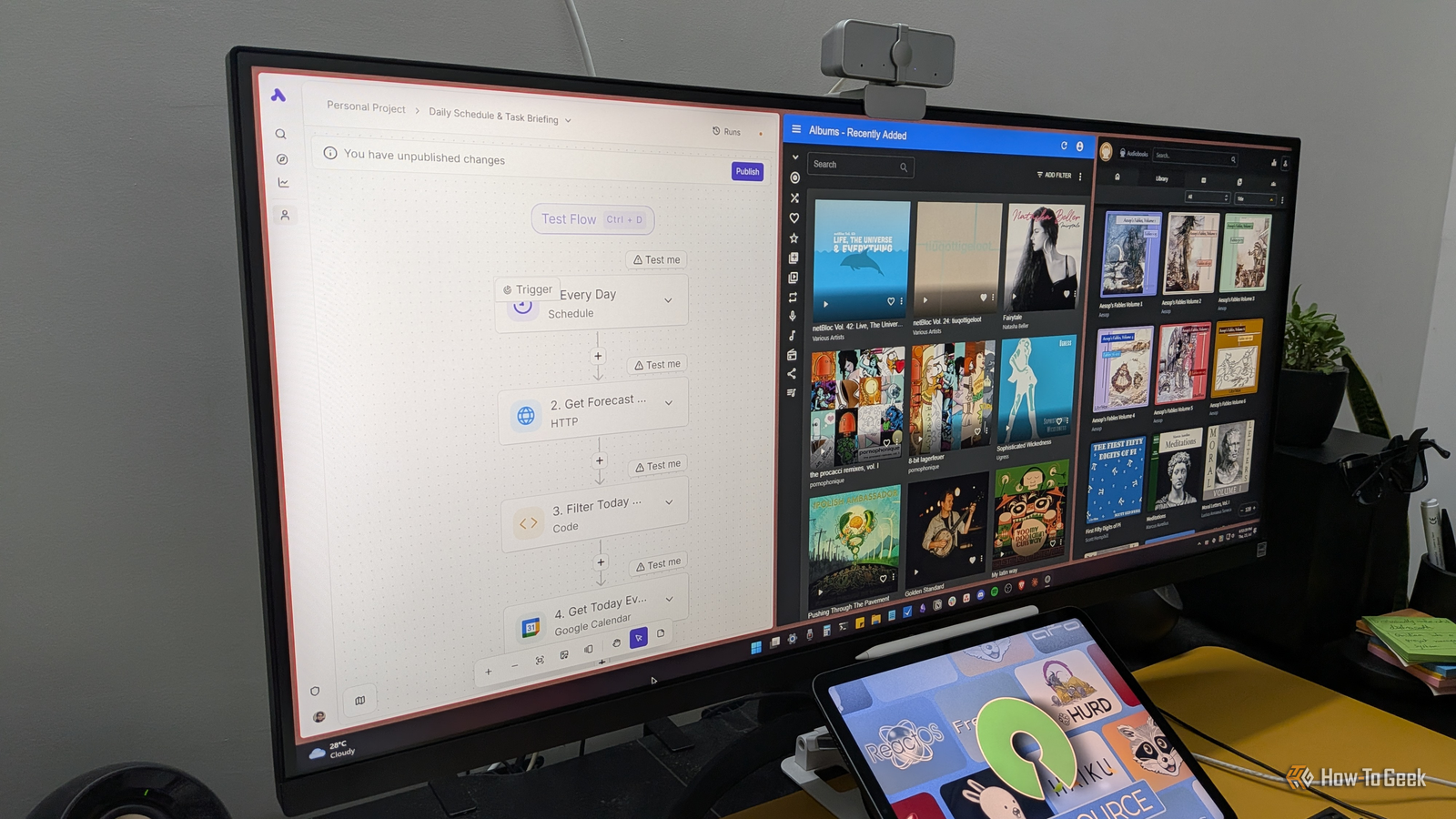
Published Jul 24, 2026, 12:30 PM EDT Dibakar Ghosh is a tech journalist at How-To Geek, where he focuses on Linux, Windows, and productivity tools. His goal is simple—help readers at every skill level get more done with the tech they use every day. He began his writing career in 2016 with WordPress tutorials, later moving into digital marketing, where he spent years reviewing complex tools for marketers. His work has also appeared on Authority Hacker, where he’s shared in-depth guides on digital workflows and online productivity. That experience now shapes his journalism, blending analytical depth with practical, real-world advice. When he’s not writing or testing software, Dibakar is usually watching movies or playing video games. He’s a huge Christopher Nolan fan and a strong proponent of the theater experience. In gaming, he has sunk hundreds of hours into Insomniac’s Spider-Man series, Returnal, Prototype, Darksiders, and Final Fantasy titles. Subscription fatigue is real. It feels like every useful app now locks its best features behind a monthly fee, whether you're streaming music, organizing your media library, or automating repetitive tasks. But this weekend, instead of signing up for another recurring payment, replace those subscriptions with these free, open-source alternatives (FOSS) and save some money in the process. Navidrome Build your personal Spotify Navidrome is a self-hosted music streaming server that lets you stream your personal library from virtually anywhere. You can install it on an old PC, NAS, Raspberry Pi, or homelab, then point it to your music folder, and it organizes everything into a polished streaming interface complete with artists, albums, playlists, genres, and search. The best thing about building your own music server is that you never have to worry about your library disappearing because licensing agreements expire. Every album you own remains available, whether it's a rare live recording, a local band's EP, or high-resolution FLAC files that streaming platforms don't offer. If you've ever felt frustrated or depressed after seeing a grayed-out track in one of your Spotify playlists, Navidrome is the antidote. That said, it's very much a "bring your own music" setup. Navidrome isn't a music streaming service with its own catalog, but rather a server you use to stream your personal music collection to all your devices. This makes it immediately useful if you already have a large offline music library. If you don't, but you'd like to build one, you can buy music from Bandcamp, Qobuz, HDtracks, or even the iTunes Store. Some artists, such as Steven Wilson, also sell high-resolution downloads directly through their official websites. Furthermore, once you've set up Navidrome, you aren’t necessarily limited to using its built-in music player. Because it supports the Subsonic API, you can connect it to a wide range of excellent client apps instead. My personal favorite is Symfonium, although it's paid and exclusive to Android. Tempo is an excellent FOSS alternative for Android, Amperfy is a great choice for iPhone and iPad, and Feishin is a solid cross-platform desktop client. Audiobookshelf Build your personal Audible Audiobookshelf is essentially Navidrome, but for audiobooks. Like Navidrome, you install it on a system—ideally the same home server—and point it to a folder containing your audiobook collection. It automatically organizes everything by fetching rich metadata, cover art, and other useful information. Feature-wise, you get chapter support, listening progress, bookmarks, a sleep timer, and multi-device synchronization. The web interface is modern, the mobile apps automatically sync your listening progress, and picking up where you left off on another device is effortless. It's a legitimate Audible replacement as long as you bring your own audiobook collection. My colleague Patrick Campanale switched from Audible to Audiobookshelf after becoming frustrated with how Amazon kept quietly burying audiobooks he had already purchased while constantly trying to sell him new ones. Also, if you feel locked in because all your audiobooks are in your Audible library, don't. You can use Libation to download DRM-free copies of the audiobooks you already own on Audible. That makes it easy to migrate your entire collection to Audiobookshelf. I should also mention that despite the name, Audiobookshelf isn't limited to just audiobooks—it also works well as a podcast server. You can download and host your favorite podcasts alongside your audiobooks, giving you a single interface to manage both types of content. Activepieces Build your personal Zapier Activepieces is an open-source workflow automation platform that connects apps, APIs, AI models, and local services through visual drag-and-drop workflows. If you've used Zapier, Make, or n8n before, you'll feel right at home. It supports more than 750 popular apps, and you can even connect custom MCP (Model Context Protocol) servers, giving you nearly as much flexibility as many premium automation platforms. As for the user experience, Activepieces offers an intuitive and approachable workflow builder. Instead of writing code, you create workflows by visually connecting apps and actions together. That makes automation much more accessible to people without a programming background. Its biggest advantage, however, is its flexibility. Activepieces is available as a web app with a generous free plan, along with paid plans that add advanced admin features and priority support. Alternatively, you can self-host the open-source version for complete control. That's especially useful if you've run into the free plan's limit of 10 active flows and have the technical know-how to host it yourself—which, if you're reading this article, I'm guessing you probably do. Stop renting everything App subscriptions aren't going away anytime soon, but the value they offer seems to be getting thinner by the day. The content you pay for can disappear at any moment, and many modern FOSS alternatives now match them in features and polish. If you ask me, the only real advantage subscription services still have is their plug-and-play convenience. But I don't think that convenience is worth spending hundreds of dollars a year when the FOSS alternatives take just an afternoon to set up.
3 free, open-source apps to replace your subscriptions this weekend (July 24–26)
Full Article
Original Source
Read the full article at Howtogeek →KhanList aggregates and links to publicly available news content. We do not host full articles from third-party sources. Always verify important information with original sources.