
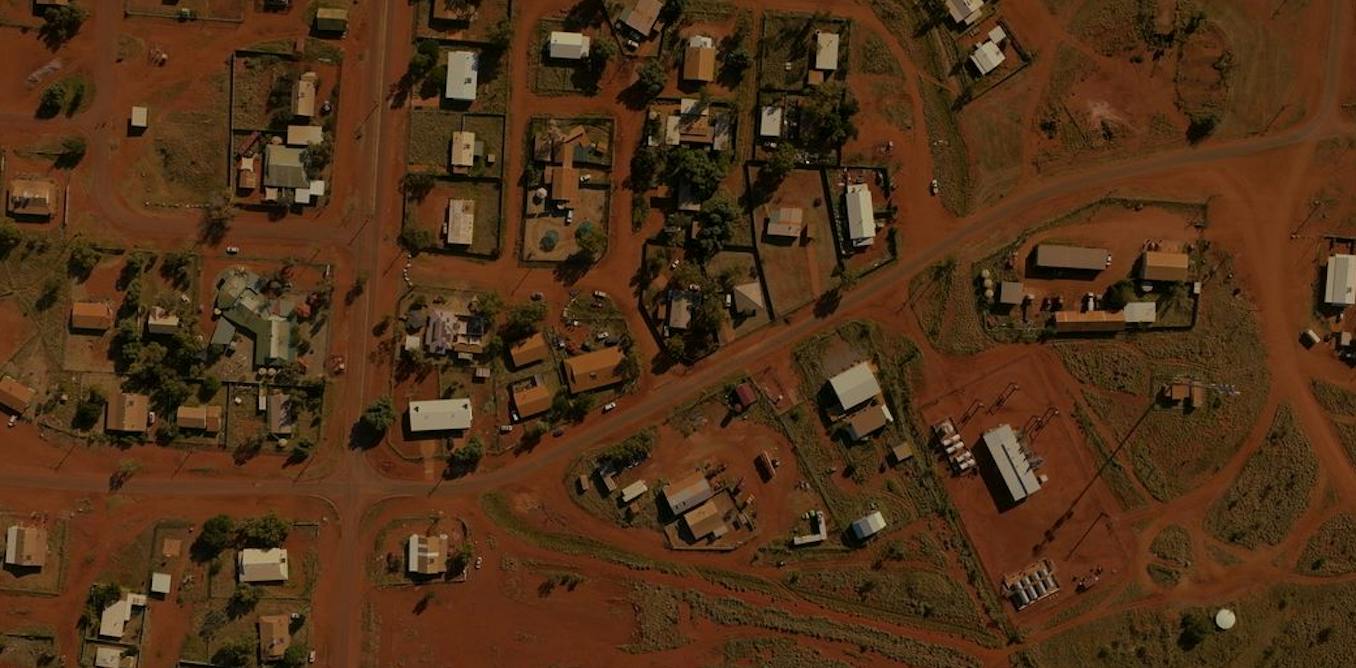
Aboriginal people are advised that this review mentions deceased Aboriginal persons and may be distressing for some. Some documentaries seek to answer a question. Others, like 2.6 Seconds: When Tragedy Meets History, force us to ask questions that have never been fully resolved. The title refers to the 2.6-second interval between the first and the second shots fired by former Northern Territory police officer Zachary Rolfe during an attempted arrest on November 9 2019. The target was 19-year-old Warlpiri-Luritja man Kumanjayi Walker. While those few seconds sit at the climax of the story, 2.6 Seconds demonstrates how the circumstances that led to Walker’s death stretched back much further. Rolfe was acquitted of all charges against him, including for murder and manslaughter, in March 2022. A lens on life in remote Central Australia 2.6 Seconds illustrates the extreme remoteness of the setting in which Walker’s fatal shooting took place. Directed by Darren Dale, the series is set in Yuendumu, a remote community with less than 1,000 residents, west of Alice Springs and more than 1,500 kilometres from Darwin. At its heart, the series is an examination of policing, power, race, and the enduring consequences of Australia’s colonial history. It places Walker’s shooting within the broader realities of life in the remote Northern Territory. It is especially effective in demonstrating how the past continues to impact the present in contemporary Aboriginal communities. Yuendumu is still marked by memories of state violence and dispossession, such as in the 1928 Conniston Massacre in which more than 60 Aboriginal people were killed. For the people in this region, this isn’t some distant and disconnected colonial event; it is part of their living historical memory. The documentary does not suggest a simplistic or direct link between those past events and Walker’s death. It does, however, explore how many Aboriginal families distrust modern policing due to a history of unresolved grievance and loss. One of the production’s greatest strengths is its commitment to context. Through extensive interviews, archival material and evidence examined during the court process, viewers are introduced to Kumanjayi Walker as far more than a statistic. We learn about a young man whose life was marked by instability, repeated contact with the justice system, and missed opportunities for support and intervention at critical points in his life. The documentary does not excuse Walker’s harmful behaviour, nor minimise the challenges he presented to those around him. Instead, it asks viewers to consider how a 19-year-old arrives at this juncture. Centering community and Elders The series is equally compelling in its examination of police decision-making. It recounts the findings of NT Coroner Elisabeth Armitage, who found failures in Rolfe’s risk assessment and arrest strategy. She concluded Walker’s death was indeed avoidable. What makes these findings particularly troubling is the context in which the arrest occurred. Walker had returned to Yuendumu to attend his grandfather’s funeral and participate in Sorry Business. The series further reveals there were no health services available in the community at the time, which means his bullet wounds could not have been treated. The documentary argues persuasively that greater reliance on local knowledge, community relationships and culturally-informed policing could have reduced the likelihood of a violent confrontation under already strained circumstances. Centering community and Elders Throughout the series, the voices of Yuendumu Elders, family members and community leaders provide personal narrative, creating an emotional centre. Particularly significant are the many young women, both Walker’s relatives and in the wider community, who became powerful public voices. Their dedication to truth-telling reminds viewers that public knowledge of such cases does not emerge automatically: it is brought into view by community members who refuse to let injustice disappear from public memory. Their reflections reveal grief and disappointment, but also resilience and determination. The documentary captures a community refusing to allow Walker’s death to be reduced to a legal case number. Thoughtful and emotionally confronting The greatest strength of 2.6 Seconds is that it does not tell viewers what to think or feel. It forces us to grapple with uncomfortable realities and disputed truths that persist to this day. It demonstrates how a fatal encounter can only be fully understood within a broader context of historical trauma and unequal power relations. The series asks difficult questions that extend well beyond Yuendumu and a single night in November 2019. How should policing and law operate in Aboriginal communities? What role should local knowledge, lore and cultural authority play in decision-making? And what does it take to restore public trust in those institutions after it has been severely damaged? This series offers no easy answers. Instead, it provides a confronting and deeply human examination of a tragedy that is still being felt. 2.6 Seconds: When Tragedy Meets History premieres on November 10 at 8:30pm on SBS and NITV, and can be streamed for free on SBS On Demand. I respectfully acknowledge the Walpiri-Luritja custodians and communities, their enduring connection to Country and their resilience. I acknowledge the family and community members who remain committed to truth-telling and have made this documentary series possible.
2.6 Seconds: new documentary explores the history, grief and looming questions of Kumanjayi Walker’s death
Full Article
Original Source
Read the full article at Theconversation →KhanList aggregates and links to publicly available news content. We do not host full articles from third-party sources. Always verify important information with original sources.