
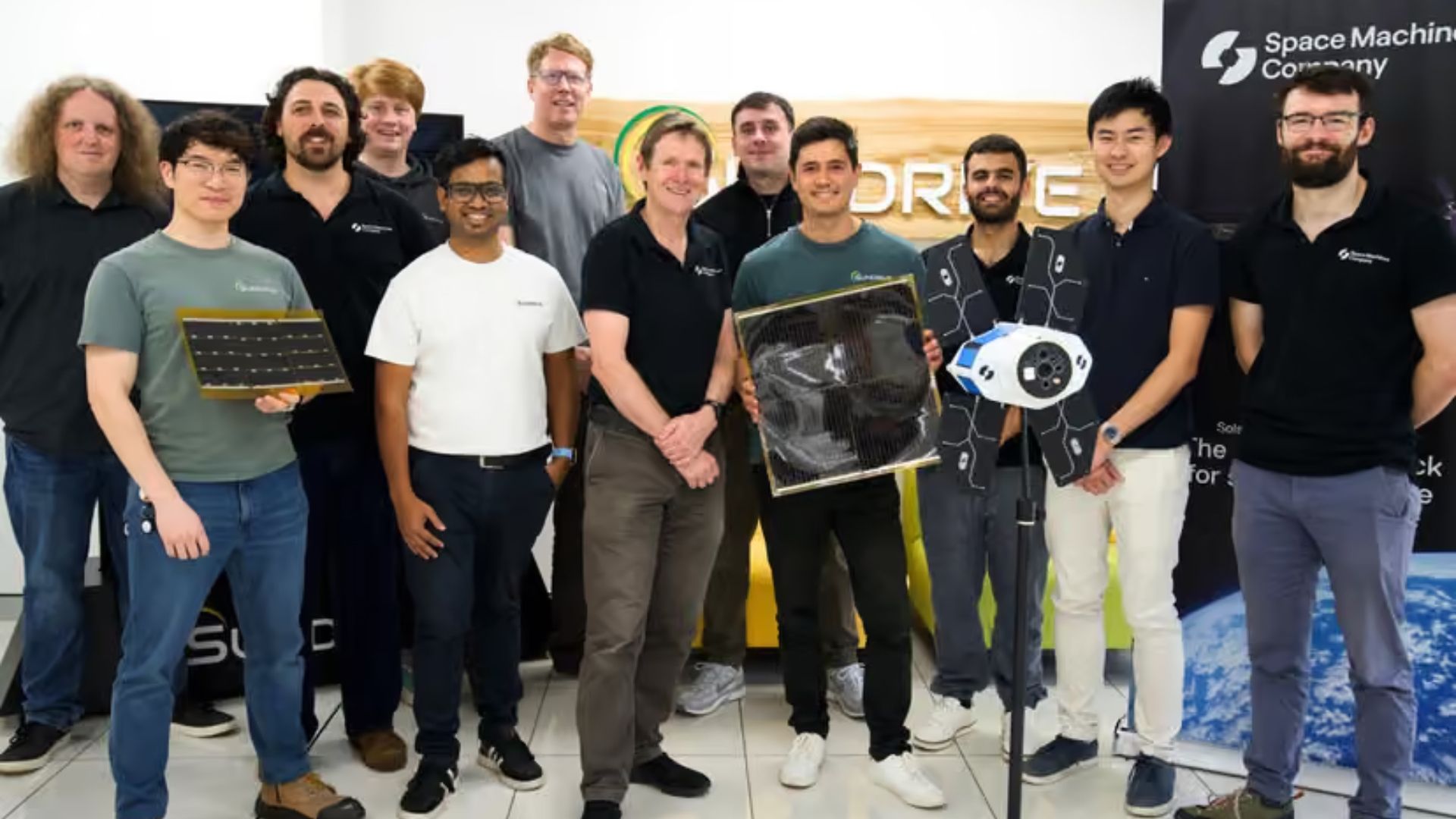
SunDrive Solar, an Australian solar technology company, has begun work to test and integrate its existing copper-based solar cell technology into space vehicles. To develop a flight-ready product, the company has joined hands with Space Machines Company (SMC), a New South Wales-based space hardware and software manufacturer. Under the collaboration, the companies will focus on mounting an array of solar panels atop SMC’s next-generation Optimus Viper spacecraft to meet its power needs. The vehicle, which weighs around 440 pounds, is designed for performing self-controlled operations in Low Earth Orbit. Designed for harsh space conditions The company officials noted that panels will have to survive the harsh environment of space while remaining lightweight — a critical requirement for the equipment. “A solar panel has to survive launch vibration, vacuum and extreme thermal cycling while staying as light as possible. Those are exactly the problems our structures, thermal, and test teams work on every day,” said Ian Partis, Vice President of Engineering, Space Machines Company. To achieve this end, SunDrive has selected its copper heterojunction (HJT) cells, which are ultra-thin and lightweight and have achieved 26.41 percent efficiency in previous laboratory testing on Earth. These qualities matter in orbit, SunDrive co-founder and Chief Technology Officer Vince Allen said, adding that every gram of array mass is a trade-off against payload. With its latest technology, the company has addressed concerns around the weight, cost, and efficiency of solar cells. Using its proprietary direct-copper plating technology, the Sydney-based company replaces the silver used in conventional solar cells with widely available copper. The metal is about 100 times cheaper per kilogram and roughly 1,000 times more abundant than silver, said Allen. This enables high-efficiency, scalable solar cells with reduced reliance on critical materials, he added. Flight-sized prototypes by 2027 Last month, the engineering teams from both the companies commenced the research and development work under the project. By April next year, the first phase of the project is likely to be completed, which includes building a prototype of flight-sized panels. According to a press statement, SunDrive will handle the solar cell and module design. At the same time, SMC will manage the panel’s structural design, testing, and integration with the Optimus Viper satellite model. Together, the companies will develop a method for bonding the solar modules to the panel substrate. Going forward, the companies will focus on phases that would aim at a flight-ready deployable solar array for SMC’s future spacecraft and for the wider satellite market. SpaceX has also secured a similar high-efficiency heterojunction (HJT) solar cell technology for its planned Starmind satellite network. On November 10, the company signed a deal worth more than $69 million with German equipment maker SINGULUS TECHNOLOGIES to build a production line of these solar cells, the first delivery for which is slated for the first half of 2027. The company said production would scale to support more than 100 gigawatts (GW) of production equipment, although it did not specify the output capacity of the first line. Meanwhile, companies across the globe are exploring other alternative solar cell technologies with less mass and improved efficiency for future space missions. In September this year, a U.S.-based aerospace company, Rocket Lab, announced the production of its newest space-grade solar cell, which is entirely germanium-free. The technology, called Inverted Metamorphic (IMM) Apex, delivers a 31.5 percent Beginning-of-Life conversion efficiency alongside a 40 percent reduction in cell mass, the company claimed. Get the latest in engineering, tech, space & science - delivered daily to your inbox.
26%-efficient copper solar cells tested to power 440-pound next-generation spacecraft
Full Article
Original Source
Read the full article at Interestingengineering →KhanList aggregates and links to publicly available news content. We do not host full articles from third-party sources. Always verify important information with original sources.