
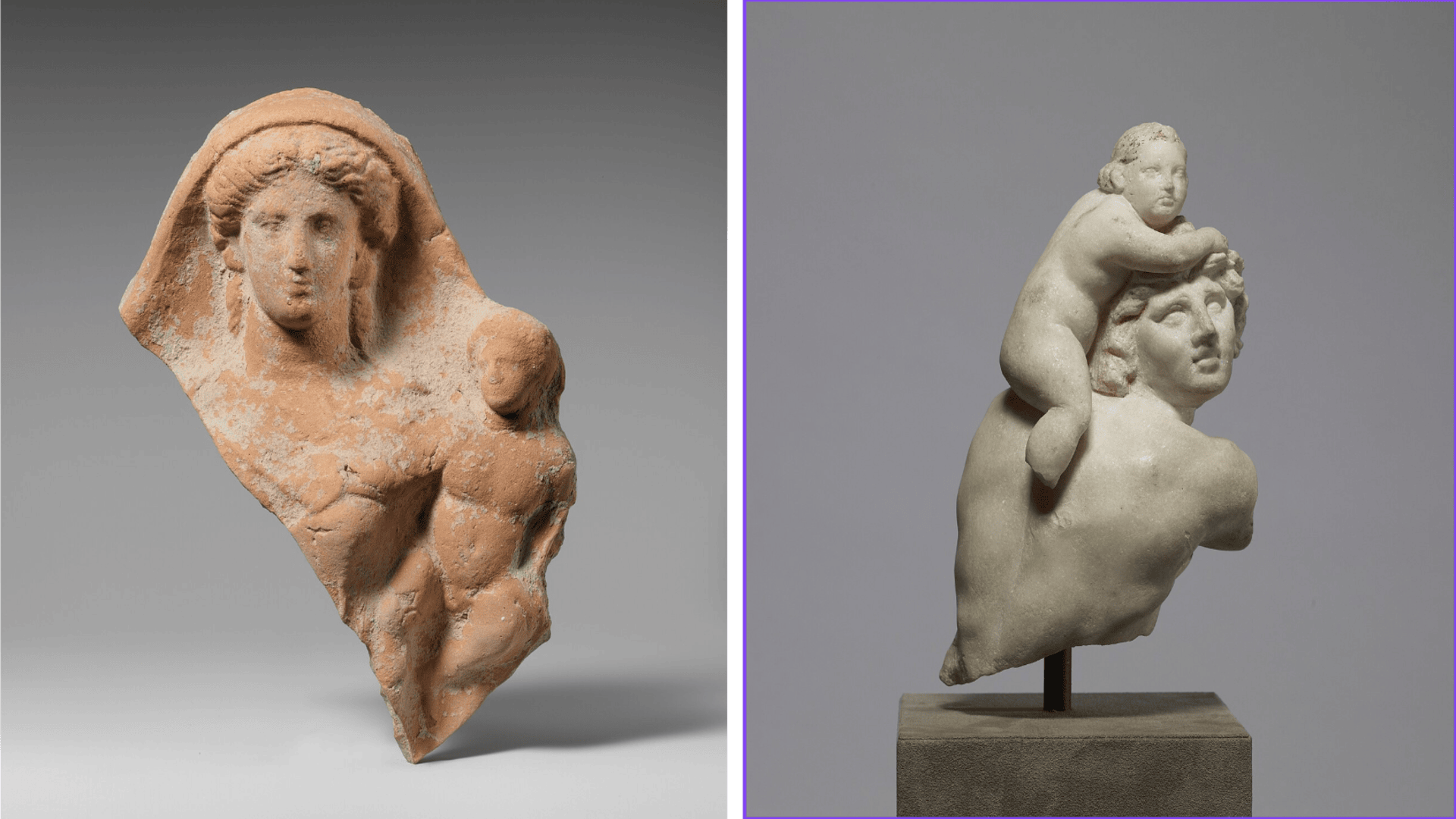
The deeply personal practice of child care has long been difficult to reconstruct in ancient contexts. However, a new study of a 2,500-year-old Greek colony in Sicily offers insight into how mothers breastfed their babies. Researchers at the University of Georgia analyzed chemical signatures preserved in children’s bones at Himera, an ancient Greek site on Sicily’s northern coast. Infants began weaning at around 3 to 4 months old but continued breastfeeding until approximately 3.8 years of age. “It was exciting to see 2,500-year-old evidence of mothers’ responsiveness to infant needs,” said Laurie Reitsema, a biological anthropologist at the University of Georgia. The study revealed shared traditions and individual differences in infant feeding practices within a multicultural society. Examining childhood in ancient Himera Himera was a Greek colony in Sicily between the seventh and fifth centuries BCE. Founded by Dorian and Chalcidian settlers, it developed into a multicultural city influenced by Greek, Phoenician, and indigenous Sicilian populations. Archaeologists have investigated more than 13,000 burials at the site, although research into children’s lives remains limited. To investigate childhood diets, researchers examined bone collagen from 58 individuals under 18 and 27 adult women. They measured nitrogen and carbon isotope ratios to glean what breastfeeding practices were, and when supplementary foods were introduced. According to the study, nitrogen isotope values are typically higher in nursing infants than in their mothers. Carbon isotope measurements helped identify dietary changes, particularly the introduction of plant-based foods. Early weaning, prolonged breastfeeding The analysis revealed that exclusive breastfeeding ended at about 3 to 4 months, which is six months earlier than the second-century physicians Soranus and Galen recommended. Their writing reflected earlier medical traditions. However, they didn’t stop altogether. Breastfeeding continued for about 3.8 years, exceeding Soranus’ recommendation of 1.5 to two years and Galen’s recommendation of three years. They suspected that the prolonged breastfeeding period may have supported infant survival. Previous research found that infant and childhood mortality at Himera was relatively low compared with other ancient European populations. However, the researchers cautioned that their sample consisted of children who died young, meaning their feeding experiences might not represent those who survived. Researchers also found that children consumed more plant foods than adults, with differences remaining evident until approximately age 10. Researchers compared the findings at Himera with evidence from other Mediterranean settlements. They discovered striking similarities with Apollonia Pontica, another Greek colony located on the Black Sea in present-day Bulgaria. Both communities showed comparable breastfeeding durations and childhood diets, suggesting shared cultural practices despite their different locations. But Roman-era settlements displayed greater variation. “The distinction may be both cultural and medical: Roman urban centres may have tended to adhere to Soranus’ elite medical advice, while Greek and provincial Roman contexts reflected longer traditional feeding practices,” as per the study. “This can help us ask how people lived together: whether traditions blended, remained distinct, or coexisted. It offers a glimpse into cultural interaction at an intimate, everyday level,” the researcher added. Infant feeding at Himera reflected shared cultural norms while allowing families to adapt practices to individual circumstances, as child care remains “deeply personal,” to conclude. Future research will examine evidence from individuals who survived childhood to investigate the possible health consequences of different weaning practices. The findings were published in the European Journal of Archaeology. Get the latest in engineering, tech, space & science - delivered daily to your inbox.Originally from LA, Maria Mocerino has been published in Business Insider, The Irish Examiner, The Rogue Mag, Chacruna Institute for Psychedelic Plant Medicines, and now Interesting Engineering.
2,500-year-old bones reveal Ancient Greek babies ate solids at 3 months, nursed for 4 years
Full Article
Original Source
Read the full article at Interestingengineering →KhanList aggregates and links to publicly available news content. We do not host full articles from third-party sources. Always verify important information with original sources.