
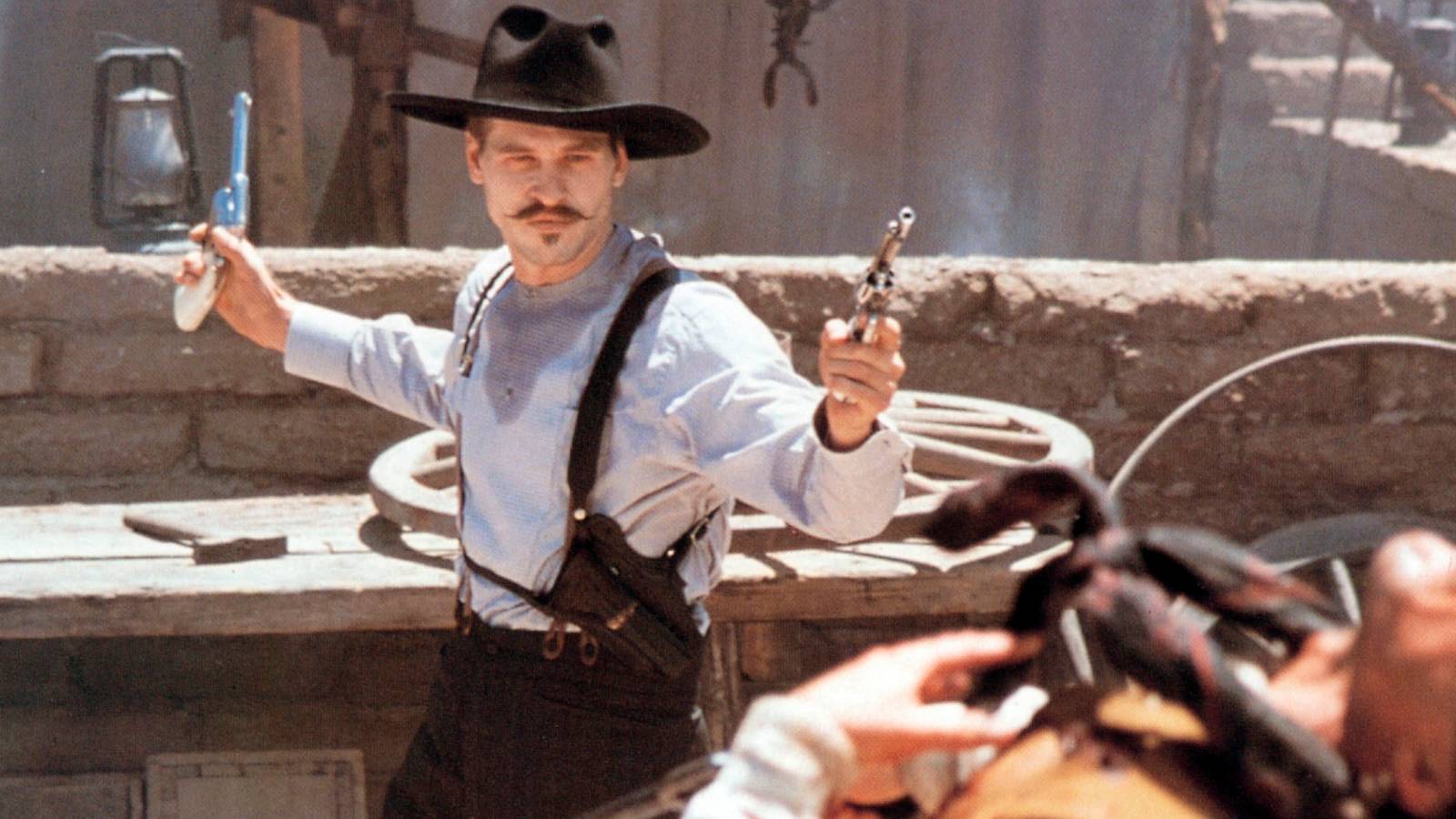
Published Sep 5, 2026, 9:00 AM EDT Nicholas Becher is a gaming journalist with an MFA in Creative Writing from FAU. With extensive experience playing video games, he covers all forms of gaming content at Screen Rant, from breaking news to the latest fan theories. Most-played games range from Clair Obscur to Civ to Elden Ring to Halo 2 and beyond. Doc Holliday is one of the most enigmatic historical figures of the Wild West, and there's been no shortage of tales about the notorious dentist-turned-gambler and gunfighter over the years. His role alongside Wyatt Earp in the events surrounding the OK Corral has been retold countless times, with fact and legend often becoming almost impossible to separate. Hollywood has capitalized on that mystique multiple times over the years, with Holliday portrayed by everyone from Kirk Douglas in Gunfight at the OK Corral to Dennis Quaid in Wyatt Earp, though Val Kilmer's unforgettable performance in 1993's Tombstone remains the most famous depiction by far. Yet some of the most compelling portrayals of Holliday have come from literature, where writers can dig deeper into the contradictions behind his reputation. And no fictionalization does that better than a little-known masterpiece by Bruce Olds titled Bucking the Tiger, a wildly inventive take on Holliday's life that also happens to feature one of the greatest opening lines ever written. Downbar Through The Sawdust If you're a fan of Westerns, there's arguably no more immersive and creative novel ever written than Bucking the Tiger, and it's a story I wish I could read for the first time all over again. From the very start, Bruce Olds puts readers directly into Doc Holliday's shoes in a style that you've likely never encountered in any other book in the genre: "Downbar through the sawdust, back here in the backmost backroom, four men—three of them carp-eyed, shaggy and increasingly deep in their drams—are draped over armless chairs, armless, wingbacked, split-bottomed chairs irregularly intervaled around an octagonal table inlaid with baize, derrydown green." This opening sentence almost feels like a new language in itself, and it sets the tone for what readers are in store for throughout the remainder of the novel. It sets the scene and tone perfectly, simultaneously giving readers more detail than they can handle and also leaving things ambiguous enough to keep us wanting more. Olds' style throughout Bucking the Tiger is intentionally crafted in way that makes readers feel like they've been teleported to another time period, placing us in the throes of the Wild West with every new line. The novel is packed with moments that will change your perception of what's possible in the written word, and is a quintessential read for fans of the Western genre. Bucking The Tiger Is A Literary Masterpiece Bucking the Tiger may be a fictionalization of Holliday's life, but it's arguably the closest thing to a complete story of his life that we'll ever get. Olds began writing Bucking the Tiger with the surviving historical record surrounding John Henry "Doc" Holliday—his Georgia upbringing, dental training, tuberculosis diagnosis, gambling career, relationships with figures like Wyatt Earp and Kate Elder, and the events surrounding Tombstone. Contemporary reviewers noted that, despite how experimental the finished book feels, a surprisingly large portion of it is grounded in documented history. Where Holliday's biography becomes uncertain or contradictory, however, Olds deliberately invents and explores what may have been rather than pretending the record is complete. Instead of writing "Doc did this, then Doc did that," Olds constructed what the publisher Macmillan calls a "genre-blurring collage" incorporating original poetry and lyrical prose, reconstructed newspaper reports, real and fabricated memoirs, invented letters and correspondence, simulated eyewitness accounts, historical photographs, internal monologue, quotations and altered epigraphs, song lyrics, folk history and legend, and more. The result was intentionally less about reconstructing Holliday's life than "re-storying" it, providing a masterpiece in creativity that shows Doc Holliday the man, the legends surrounding him, and the process through which a historical person becomes an American folk hero. I can't recommend this book highly enough, and if you're looking for a truly unmatched Western experience, Bruce Olds' Bucking the Tiger will stick with you forever.
25 Years Later, This Forgotten Western Has One Of The Greatest Opening Lines Ever Written
Full Article
Original Source
Read the full article at Screenrant →KhanList aggregates and links to publicly available news content. We do not host full articles from third-party sources. Always verify important information with original sources.