
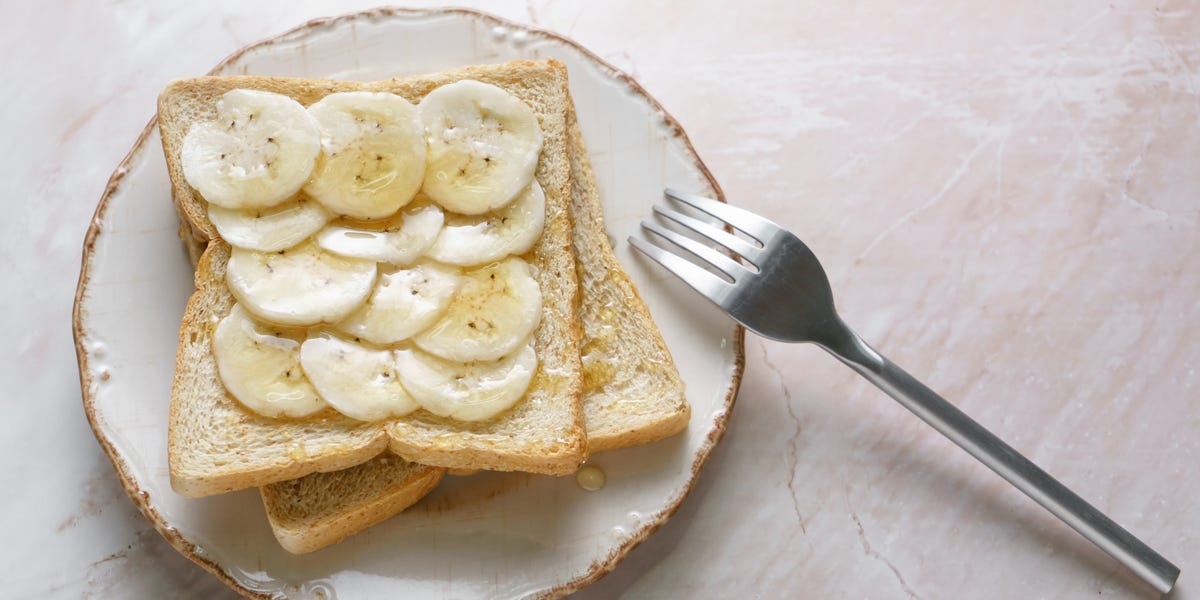
Whether you’ve got a stomach bug, a condition like irritable bowel syndrome (IBS), or just drank too many margs last night, your first instinct is probably to load up on saltine crackers and ginger ale (Anyone else? Just me?).After all, no one wants to eat the wrong thing and make an already angry stomach... angrier.“When your stomach is upset, you want to make sure you're doing everything to mitigate the symptoms and feel better,” says dietitian Valerie Goldberg, R.D. “You want easy-to-digest food. It’s best to avoid anything high in fiber or fat and to stick with simple carbohydrates and lean protein sources that the body can break down easily.”Since stomach issues can signal more serious underlying health problems, seek medical attention ASAP if an upset stomach lasts longer than three days or so, says Goldberg. In the meantime, she says these gut-friendly foods can ease queasiness and reduce emergency bathroom sprints.1. White Rice FotografiaBasica//Getty ImagesLow in fiber and high in simple carbohydrates, white rice is easy to digest—a major plus when your stomach is on the fritz, says Goldberg. It’s especially settling if you're nauseous.Eat up: Goldberg recommends pairing white rice with a simple, easy-to-absorb protein, like grilled chicken. If that feels too heavy, cook your rice in bone broth for added protein and flavor, or add collagen powder.2. BananasCaterina Oltean / 500px//Getty ImagesWith their soft and comforting texture, bananas are easy to absorb and digest. Plus, their soluble fiber helps, well, thicken things up if you’re suffering from diarrhea, says Goldberg. Just avoid them if you’re feeling nauseous; the smell might make you feel worse if you’re not typically a banana fan.Eat up: Goldberg recommends slowly noshing on frozen bananas, since the cooling effect soothes your stomach. Once you’re feeling a little better, try DIY “nice cream” with frozen banana, dates, and a dash of cinnamon.3. KombuchaGetty ImagesAs much as you might love sipping on ginger ale when you’re feeling under the weather, kombucha is a better-for-you option with less sugar, says Goldberg. Many kombuchas taste similar to ginger ale and contain probiotics, which can support a healthy gut microbiome and help reduce inflammation.Drink up: Kombucha often comes in funky flavors, so pick one you’re most likely to sip. Goldberg’s favorite flavor: Health Ade's Ginger Lemon, which gives you the zing of your typical ginger ale.4. Greek Yogurtwilatlak villette//Getty ImagesIf you don't have dairy issues, Greek yogurt can actually be super soothing for your stomach. Like kombucha, yogurt contains probiotics that can support a healthy gut. (No wonder it's a go-to for people taking antibiotics!)Eat up: Since simple, plain foods settle best when your stomach's upset, eat your Greek yogurt straight from the container, without any crazy add-ons, says Goldberg. You can return to granola- and nut butter-topped parfaits when you feel better.5. Applesauce8vFanI//Getty ImagesHospitals often give applesauce to gastrointestinal surgery patients for a reason, says Goldberg. Applesauce contains pectin, a thickening fiber found in apples, which works wonders when you have diarrhea. Plus, it's easy to get down when you don't feel like chewing much.Eat up: If you don't have dairy issues, Goldberg recommends mixing applesauce with plain Greek yogurt for a meal that's easy to eat and provides protein.6. Peppermint TeaChiara Benelli//Getty ImagesGet your mug ready: According to Goldberg, tea is super soothing when you have a stomachache. Peppermint tea, in particular, has been shown to help with indigestion.“Peppermint calms the stomach by reducing smooth muscle contractions and has known antimicrobial benefits,” explains Janelle Connell, R.D.N., senior translational science nutritionist at Viome. “Studies have shown that peppermint is effective at killing bacteria known to cause foodborne illnesses. Peppermint can be consumed as a whole herb, but when you're feeling digestive upset, it's often most soothing to drink peppermint tea."Drink up: If you're dealing with nausea, try it iced, says Goldberg. Drink it unsweetened, since many sweeteners (especially artificial ones) pull water into the colon and can make you feel worse.7. Saltine CrackersGetty ImagesMom was clearly onto something with her childhood stomachache remedies! While saltines aren't exactly super nutritious, they contain virtually no fiber, fat, or sugar, which makes them easy to digest and gentle on a weak stomach, says Goldberg.Eat up: "Pair saltines with soup that has some vegetables and a protein, like chicken," says Goldberg. Avoid soups that rely on plant-based protein sources, like tempeh or beans, which are higher in fiber and may cause additional tummy issues.8. Sweet PotatoesJulia Murray / EyeEm//Getty ImagesAnother stomach-loving carb, sweet potatoes are rich in easy-to-digest starch. "The bonus is that they're high in potassium, which is important for restoring electrolytes lost in diarrhea or vomiting," says Goldberg.Eat up: Peel sweet potatoes to remove extra fiber, bake until soft, and mash or puree. Add a dash of cinnamon and a drop of coconut oil for flavor.9. GingerBurcu Atalay Tankut//Getty ImagesAs a tea or as a natural ginger chew, the herbaceous, spicy root "has long been known to help manage nausea and reduce intestinal cramping," says Connell. Mahmoud Ghannoum, Ph.D., leading microbiome researcher and co-founder of BIOHM Health, adds that ginger also prevents indigestion, gas, and bloating. "With a supplemental dose of 1 gram per day, it is effective in pregnancy nausea and vomiting with no significant side effects," he explains.10. Coconut WaterSvitlana_Pimenov//Getty ImagesWhen water doesn't appeal, coconut water contains far less inflammation-inducing sugar than traditional juices, according to Goldberg. Plus, like sweet potatoes, it's also filled with the electrolyte potassium.Drink up: Sip on coconut water as desired, and add a dash of salt to help your body retain fluids.11. Cooked VegetablesArx0nt//Getty ImagesCooking vegetables makes them easier for your stomach to break down, which can ease stomach acid production—a major plus if you're not feeling well, says Goldberg. Cooked or not, avoid cruciferous vegetables like cabbage, Brussels sprouts, and cauliflower, which are typically harder to digest.Eat up: Lightly boil your veggies, add a dash of salt to replenish any lost sodium, and chew thoroughly. "The first part of digestion is chewing, and most people don't chew enough," says Goldberg. Your veggies should be as soft as applesauce before you swallow 'em.12. Bone Brothknape//Getty ImagesGoldberg says the sodium in bone broth can help replenish electrolytes, while collagen protein can help heal the gut lining. Connell adds that bone broth also contains the amino acid glycine, which supports a healthy gut barrier by protecting the cells lining the digestive tract.Slurp up: Grab one of the many best-selling pre-made broths on the market, like Kettle and Fire, or save the bones and scraps from your chicken feasts to simmer your own on the stovetop.13. BreadBurke/Triolo Productions//Getty ImagesOne reason you crave carbs when you're hungover: the simple, quick-digesting carbohydrates in bread can help settle the stomach, says Goldberg.Eat up: Though eating toast is pretty much an act of self-care for many of us, "toasting bread creates a spongy texture that can make it challenging to swallow," Goldberg says. If you truly want to settle your stomach, opt for soft, un-toasted bread that doesn't have a hard crust or contain any nuts or seeds. And go easy on the butter or jam.14. Oatmealwmaster890//Getty ImagesWarm, comforting oatmeal is a great source of soluble fiber, according to Goldberg—so it's another lifesaver when food seems to go right through you.Eat up: Keep your bowl simple and cook your oats in plain ol' water. "You could also add a protein powder that you already know agrees with your body," says Goldberg. Otherwise, avoid any funky add-ins.15. EggsLaurie Ambrose//Getty ImagesIf you need an easy protein source while riding the stomach struggle bus, go with eggs. "They contain all of the essential amino acids that get absorbed into our muscles," says Goldberg. Plus, the yolks contain healthy fats that can also help fast-track healing.Eat up: Goldberg recommends cooking your eggs however you like. Since your immune system may not be at its best, cook your yolks all the way through as an extra precaution. 16. Miso SoupWestend61//Getty Images"Miso is a traditional Japanese food made from fermented soybeans. As a fermented food, miso is a source of probiotics that provide digestive and immune benefits," explains Connell. "Miso is also rich in vitamins and minerals like vitamin K and zinc."Eat up: Take it easy on yourself and order takeout. You aren't feeling well, after all!17. Licorice Root TeaWestend61//Getty Images"Licorice root is most commonly available as a supplement (deglycyrrhizinated licorice) or as a tea," says Connell. "Licorice root has been shown to decrease inflammation of the stomach lining and increase the production of protective mucus which lines the stomach."Drink up: Order some organic loose leaf and put the kettle on. Avoid sweeteners and milk to stave off further irritation.18. Extra Virgin Olive OilGhannoum says EVOO can reduce symptoms, like bloating, constipation, fecal urgency, and incomplete...poops, especially in patients with ulcerative colitis. It also boosts good gut bacteria and can help lower LDL cholesterol, he adds.Eat up: Cook your veggies in it for an extra gut-friendly dish, or pour a glug over rice for added flavor and digestive support.19. Turmerickrisanapong detraphiphat//Getty ImagesThough it might stain your utensils and countertops, turmeric is a natural anti-inflammatory, says Connell. "One study demonstrated that turmeric reduced symptoms of bloating and gas in people with indigestion," she adds.Eat up: Blend it into a smoothie, season your soups or bone broths with it, or have a cup of turmeric tea.20. Lettucemikroman6//Getty ImagesGhannoum says lettuce is particularly good for indigestion because its high water content helps dilute angry stomach acids. Too much, though, may cause unwanted gas, he adds.Eat up: Have a salad with iceberg or romaine topped with non-cruciferous vegetables and drizzled with olive oil.21. FennelBenjamin Egerland / EyeEm//Getty ImagesFennel and fennel seeds are touted for their digestive benefits, says Connell. "Fennel reduces GI inflammation, aids in gastric motility, and has antimicrobial benefits against pathogens in the gut," she adds.Eat up: Chew on fennel seeds, or roast it with other non-cruciferous vegetables for a soft, easily digestible side.22. Dandelion Stefan Tomic//Getty Images"Dandelion leaves have a bitter taste that promotes the production of necessary digestive juices that aid in the absorption of nutrients," says Connell. She adds that dandelion can also help relieve constipation.Eat up: Connell says you can purchase dandelion greens to add to salad or stir-fries—or dried dandelion makes a tummy-soothing tea.23. Celery Lew Robertson//Getty ImagesLike lettuce, celery is mostly water and can help you stay hydrated while taking the edge off gurgling stomach acids that may be fighting their way up your esophagus, says Ghannoum.Eat up: Snack on stalks raw for a satisfying crunch, and be wary of toppings until you know you won't upchuck them.24. PapayaWestend61//Getty Images"Papaya naturally contains a digestive enzyme called papain," says Connell. "Papain helps break down proteins in the foods we eat and may ease digestion and absorption."Eat up: Call it breakfast, dessert, or a nighttime snack. Slice and serve!25. FlaxseedsIvaylo Ivanov / EyeEm//Getty ImagesSome studies suggest flaxseeds may help relieve constipation and the associated stomach pain.Eat up: Blend flaxseeds into a smoothie or stir them into overnight oats.Marissa Miller has spent a decade editing and reporting on women’s health issues from an intersectional lens with a focus on peer-reviewed nutrition, fitness trends, mental health, skincare, reproductive rights and beyond, and currently holds a certificate in plant-based nutrition from Cornell. She is an avid yoga practitioner, half-marathon runner, snowboarder, and former dance coach and choreographer. In addition to Women’s Health, her work has appeared in The New York Times, Washington Post, Wall Street Journal, NBC News, GQ, Vogue, CNN Style, and more. Marissa lives in Montreal with her two cats. She is represented by Howland Literary and her debut novel PRETTY WEIRD will be published by Skyhorse Publishing in 2021.Kayla Blanton is a freelance writer-editor who covers health, nutrition, and lifestyle topics for various publications including Prevention, Everyday Health, SELF, People, and more. She’s always open to conversations about fueling up with flavorful dishes, busting beauty standards, and finding new, gentle ways to care for our bodies. She earned a bachelor’s degree in journalism from Ohio University with specializations in women, gender, and sexuality studies and public health, and is a born-and-raised midwesterner living in Cincinnati, Ohio with her husband and two spoiled kitties.
25 Foods to Eat When You Have an Upset Stomach, According to Nutritionists
Full Article
Original Source
Read the full article at Womenshealthmag →KhanList aggregates and links to publicly available news content. We do not host full articles from third-party sources. Always verify important information with original sources.