Image via Columbia Pictures Published Aug 7, 2026, 7:07 AM EDT Ben Brewster is a filmmaker, critic, screenwriter, and actor whose work sits at the intersection of film culture, craft analysis, and storytelling. He is a movie list contributing writer at Collider and a contributing writer for High on Films, where he covers contemporary cinema, independent film, and festival releases with an eye toward narrative structure, performance, and visual language. Ben is an active film festival participant, having worked with Newport Film, the Nantucket Film Festival and as a screener for the Austin, Boston & Woodstock film festivals. He brings to that work a programming instinct shaped by years of close engagement with independent and documentary cinema. This comes with a deep investment in the kinds of films that rarely find their way into the mainstream conversation without someone willing to advocate for them. His background spans documentary and narrative filmmaking, film marketing, and production, including work with award-winning directors. This as well as developing his own indie production company, Lilac Creative Studio, through which he develops and produces original work across fiction and nonfiction forms. His debut documentary, Diamond in the Rust, is an examination of economic redevelopment and displacement in the Queens area of New York City. The film was recently accepted to the Unisphere Film Festival, the Defense of Democracy Film Festival, and the Urbanite Arts & Film Festival. This would mark his first festival recognition as a director. In addition to his writing and programming work, Ben hosts Beneath the Bloom, a film podcast exploring the work behind the scenes in cinema, and the struggles one can face to make a movie become a reality. The show reflects the same sensibility that runs through all of his work. A conviction that film is not merely entertainment but one of the most powerful tools human beings have for understanding each other. Across mediums, his work is driven by a deep belief in film as a communal, transformative art form. Sign in to your Collider account Many of the films that define a young man before entering adulthood usually include one specific thread. That is, a clash, most commonly portrayed between two, but sometimes more, boys or men. What separates these movies from a rather more mundane genre-centered list is the extent of shapes in which this tension can take. Some are those lighter-hearted buddy comedies we all grew up loving. Will Ferrell and John C. Reilly gave us Stepbrothers and Talladega Knights just to name a few. Jim Carrey and Jeff Daniels built a franchise out of Dumb and Dumber. Harold and Kumar took off after finding its cult following. For younger generations, the 21 Jump Street franchise, with its third film currently in development, gave us one of the funnier pairings of the 21st century between Channing Tatum and Jonah Hill. And the 90s kids will rightfully remind me of Chris Tucker and Jackie Chan. Of course, the cinephiles in the room would point out that a Robert Redford and Paul Newman pairing produced two classics in The Sting and Butch Cassidy and the Sundance Kid. These are all well-respected entries worth mentioning. But, I'm opting for a more nuanced approach. The movies on this list put friendship at its center for better or worse, and some break that two-person mold entirely. The buddy comedies are great, and they find their place, but the friendship itself can often take a backseat to whatever crime or chaos is the driving force behind the plot. There are still many lighter-hearted movies that deal with more ordinary stakes but deal with much deeper emotional stakes. Jason Segel gave us two of those with I love You, Man and Our Friend. Another is the Joseph Gordon Levitt and Seth Rogen - led 50/50 balancing the weight of what it means to be there as a friend in the most serious of circumstances with the comedic timing and genius of a stereotypical comedy film of the 2000s. Others, though, take a much darker route. In Mystic River, three childhood friends watch their shared history contradict itself in the middle of an unsolvable murder. Hunter S. Thompson's gonzo alter ego Raoul Duke (Johnny Depp) and the bond he holds with Dr. Gonzo (Benicio del Toro) in Fear and Loathing in Las Vegas is as much a portrait of a particular kind of male dependency as it is the drug-induced trip of an adventure. The Social Network, with its sequel coming out later this year, gave us one of the defining male betrayals of the 21st century. Mark Zuckerberg (Jesse Eisenberg) defuses his relationship with Facebook co-founder Eduardo Saverin (Andrew Garfield) in the pursuit of economic growth and modernization of the social platform. These movies describe the delicate form in which male companionship can take. It often shows in catastrophic but sometimes quieter that men often deny intimacy or emotional connection in favor of violence, ambition and individuality. All of these movies share a genuine and raw depiction of what male friendship actually can look like, regardless of the tone or narrative. 25 'The Other Guys' (2010) Image via Sony Pictures This is the lone buddy cop entry to make it onto the list. The Other Guys, blends Adam McKay's signature comedic timing with the propulsive energy and natural tropes of a 90s action comedy. It is certainly not Miami Vice, and it is not trying to be Smokey and the Bandit though either. McKay does something much more comedically intentional, using the difference between the personas of leads Mark Wahlberg and Will Ferrell to generate a kind of friction that slices through the dramatic tension of a traditional cop movie in the best way possible. They cannot stand each other, yet cannot seem to remove themselves from each other's orbit. The single thread holding the two lower-level paper pushers together is a shared goal: taking down Steve Coogan's white-collar villain. McKay uses the mechanisms behind the financier's criminal demise as a sharp and underrated satirical commentary on the 2008 economic collapse. The friendship is inherently accidental and that's what makes the duo work so well. 24 'The Long Walk' (2025) Image via Lionsgate David Jonsson — recently cast as the new black panther — stars alongside Cooper Hoffman in this Steven King adaptation of the same name. The story centers on a brutal competition in which boys walk as far as they can, with the last one standing winning enough money to pull their families out of poverty. The friendship between Jonsson and Hoffman is the pressure point that everyone is waiting to snap. The surprising element to it, is that it actually doesn't. As the walk marches on, and the stakes rise, the boys find more humanity in each other rather than less. Neither of them are chasing the prize in the way the competition demands. It asks for ruthless brutality, zero room for empathetic gestures and an instilled determination to win regardless of the obstacles. But by the end of the race, both boys are willing to sacrifice themselves for each other, because the friendship they've manifested meant more to them than any economic wealth awaiting them at the finish line. 23 'The Hangover' (2009) Some would offer Old School here as the definitive McKay-era buddy trio comedy. They wouldn't necessarily be wrong as much as they would be disrespecting the work that The Hangover did. This movie did numbers and earned its audience because, at its core it's about three middle-aged men clinging to the remains of their collective youth. The trio is keyed in on finding Doug (Zach Bartha) (their fourth and most reasonable member of their friend group), post bachelor party so that Bradley Cooper doesn't miss his own wedding. What makes this work so seamlessly, is the collision of the three personalities. Alan (Zach Galifanakis) is the chaotic engine for most of the disruptive, confusing situations the three find themselves in. He is completely unpredictable and sincere in his own delusions while oddly serving as the thematic moral heart of the film. Stu (Ed Helms) is the tightly-wound dentist slowly coming undone by the weight of the unbearable marriage he has with a wife that has already diminished him. Cooper's Phil, is the classic guy who still believes he's the life of the party. Together, they form something that should not last, but certainly does: a wolf pack, as Alan insists on calling them. 22 'Good Will Hunting' (1997) Image via Miramax Films Good Will Hunting only sits this low on this list, since it is the most obvious entry. A celebrated, critically decorated indie drama that has been written about at length since its 1997 release. But it earns every word of the attention that comes its way. The film is constructed around four young men born and bred in Boston's Southside, and it uses the insular and cyclical hardship of that culture to frame what it costs for a person wanting more in an environment like that. The relationship tying the story together is Will (Matt Damon) and Chuckie (Ben Affleck). The whole film is building up towards the interaction between the two, where Chuckie bluntly tells Will to leave his blue-collar construction job and go be what he actually is. It's a sobering testament from a character that wants nothing more than to be with his friend, but knows that the speech he gives is exactly what Will needs to hear. At its core, the movie is about that particular kind of love between men that shows itself not through warmth but through the confidence, dignity, and respect to tell someone to leave and let go. Image via Amazon Studios Riz Ahmed plays Ruben, a recovering addict and hardcore metal drummer whose entire identity is built around sound. When he loses his hearing, he loses a grip on the infrastructure of his life. Ahmed plays the building dread and disassociation of this realization with an utter intensity that never feels performative. After resisting for as long as possible, Ruben agrees to enter a home for deaf addicts, where he slowly and reluctantly begins to find his footing in a new world. The closest thing he finds to a mentor there is Joe (Paul Raci), a recovering alcoholic himself, steady, calm and clear-eyed in a way Ruben never had to be. The friendship between Ruben and Joe is the moral center of the film. When Ruben attempts to convince Joe to loan him money for cochlear implants, Joe refuses and tells him plainly that he is behaving like an addict. Joe saw him treating deafness as a disability to be cured rather than a life to be lived. He asks Ruben to leave the home. The films final image earns everything that came before it: Ruben standing outside his girlfriend's concert, the implants producing a completely distorted, unbearable sound, sits down on a bench and removes them. Silence. Joe had told him previously to find moments of stillness. Ruben had to lose everything twice to finally get what he meant. 20 'The Grand Budapest Hotel' (2014) Image Via Fox Searchlight The Grand Budapest Hotel builds its male bond on contradiction. Ralph Fiennes plays Gustave H., the impeccably mannered and well-dressed head concierge of an extravagant European ski resort in the 1930s. He is a man of exacting taste and operatic self-regard. Zero Moustafa (Tony Revolori) is an immigrant orphan escaping war who is assigned to Gustave as a lobby boy. What begins as a strictly professional arrangement, quietly becomes something neither of them would have the words to name. Gustave treats Zero with a dignity and an equality that the world around him refuses to extend. The two are soon on the run together, evading hitmen, outwitting soldiers and breaking out of prison through an increasingly absurd series of culinary contraband operations. The emotional weight of the film resides in the structure of the narrative. The older Zero (F. Murray. Abraham), in the 1960s sequences, speaks on these events with a bittersweet smile as if the man involved in them helped to shape his own world view. Gustave eventually names Zero his sole heir. It makes explicit what the story had been nudging the audience along to throughout its runtime. That, despite being thrown together by complete circumstance, in some of the worst of times, and separated by almost every social category imaginable ,these two men had become brothers. The movie explores how sometimes the closest friendships people covet are the opportunities for that in their own workplace. 19 'The End of the Tour' (2015) The End of the Tour is one of the darker and more complicated portrayals of male friendship on this list. Jesse Eisenberg plays David Lipsky, an overly eager journalist looking to write a piece on the critically acclaimed but deeply troubled author David Foster Wallace (Jason Segel). Segel plays Wallace with a quiet, but searching, exploratory depth, willing to acknowledge he may well be the dumbest guy in the room. Lipsky wants to become him, or at least dismantle him through his own written words. That impulse takes its ugliest form in two specific moments: Lipsky rummaging through Foster Wallace's medicine cabinet looking for clear evidence of a mental illness or a high dosage of his antidepressant nardil, and his relentless pursuit of a confession about a heroin dependency that caused him to have a psychotic break and hospitalization during his college days. Wallace denies this fully. He finds disgust in Lipsky's eagerness to feed him into the struggling drug-addicted author trope that often waters down the actual work produced by the artist anyway. What makes the movie truly painful, is what sits underneath the professional betrayal. Wallace was lonely, mentally adrift, and in the final years of a depression that would eventually take his life. A real friendship, a kind Lipsky performs but never offers, is what would have really meant something to Wallace. Instead, Lipsky burns every bridge available to him, including hitting on a high school friend of Wallace's while he has a girlfriend of his own back home. The journalism ethics violations are almost secondary to the human ones. The End of the Tour understands how some men use intimacy as a form of extraction, and what the cost can be for the people on the other end of that. 18 'The Odd Couple' (1968) Image by Paramount Pictures The Odd Couple works because Felix (Jack Lemmon) and Oscar (Walter Matthau) are, on paper, a complete mismatch, which is exactly what makes their bond so effective. Oscar is loud, messy, and comfortable in his own chaos, while Felix is neat to the point of anxiety, unable to let a wrinkle or a stray dish go unnoticed. Famed playwright and screenwriter Neil Simon builds the comedy out of that daily friction, but the reason why it feels deeper than normal is the unfortunate history of the two mens personal lives. Both are freshly divorced, lonely and ashamed in ways they won't admit out loud, and moving in together feels like a void neither one ever would have expected at this age. Lemmon and Matthau have easy-going chemistry that makes the whole situation feel real, and is benefited by Matthau reprising the role he originated with on stage. Underneath all the mess and the nagging is a real kind of care neither bothers putting into words. Oscar helps Felix loosen his grip and live a little, while Felix pushes Oscar to take better care of himself and his space. They argue like an old married couple and that comparison is not incidental. In fact, it's the core driving force of the narrative. The film argues that true friendship does not require uniformity, it only asks for a willingness to put up with someone else's flaws and to let them do the same for you. Felix learns he can survive on his own with the right person beside him, and Oscar learns what it actually means to show up for somebody. Moving past all the bickering of the two, the audience can find a safe home, and that turns out to be significantly more valuable than either man's pride. 17 'Shrek' (2001) Image via DreamWorks Pictures Shrek (Mike Myers) is on a hero's journey, but the ogre cannot fulfill his destiny without his trusty right-hand Donkey (Eddie Murphy). But that partnership takes time to develop. For most of the first entry into the Shrek franchise, he is actively trying to get rid of Donkey. Donkey refuses to see, refuses to judge, and he refuses to see anything other in Shrek than a friend worth having. Where Shrek is closed off and solitary, Donkey cannot stop moving, talking or joking. He pushes the stubborn ogre out of his comfort zone in a way no one else could, probably since no one else actually stuck around long enough to try. What makes the duo work so well is its alarming sense of asymmetry. The backbone of the entire franchise works on spoofing the fairytales of Pixar's dream worlds, and doing something not in line with the status quo of animation. No matter how many times people run away from Shrek, Donkey comes back. By the end of the tale, Shrek has not just reunited with the Princess, he's made a best friend who was willing to be right with him every time he shut down, kicked him or pushed him away. 16 'Midnight Cowboy' (1969) Image via United Artists Midnight Cowboy stands out because its friendship is raw, genuine and completely absent of sentimentality. It is born out of desperation and loneliness rather than any traditional idea of brotherhood. Joe Buck (Jon Voight) and Ratso Rizzo (Dustin Hoffman) start out as strangers trying to use each other. Joe a former dishwasher, is a naive hustler straight out of Texas in a completely new city, and Ratso a small-time con artist looking for an easy mark. They are two men built on a shared collective vulnerability, clinging onto each other because neither has anyone else in a place like New York City. The city isn't interested in people of their stature. As Ratso's health deteriorates, Joe is forced to shed his selfishness and step into the role of caregiver, and that shift is where the film finds its real heart. Their pairing works since they are opposites in almost every way. Joe is physically imposing yet hopelessly naive, dressed up in a cowboy fantasy that has nothing to do with who he actually is underneath it. Ratso is cynical, frail and disabled, hardened by a life of poverty that leaves him no room for illusions or fantasies. Voight and Hoffman avoid every Hollywood shortcut in portraying the characters, which is exactly why the affection that eventually surfaces between them feels like a smooth transition rather than manufactured artificially. The final moments on the bus to Florida, Joe holding a dying Ratso and trying to will him toward some form of peace and acceptance, stand as one of the more memorable and enduring depictions of platonic love from this cinematic era. They found in each other the only real home either one of them ever had.
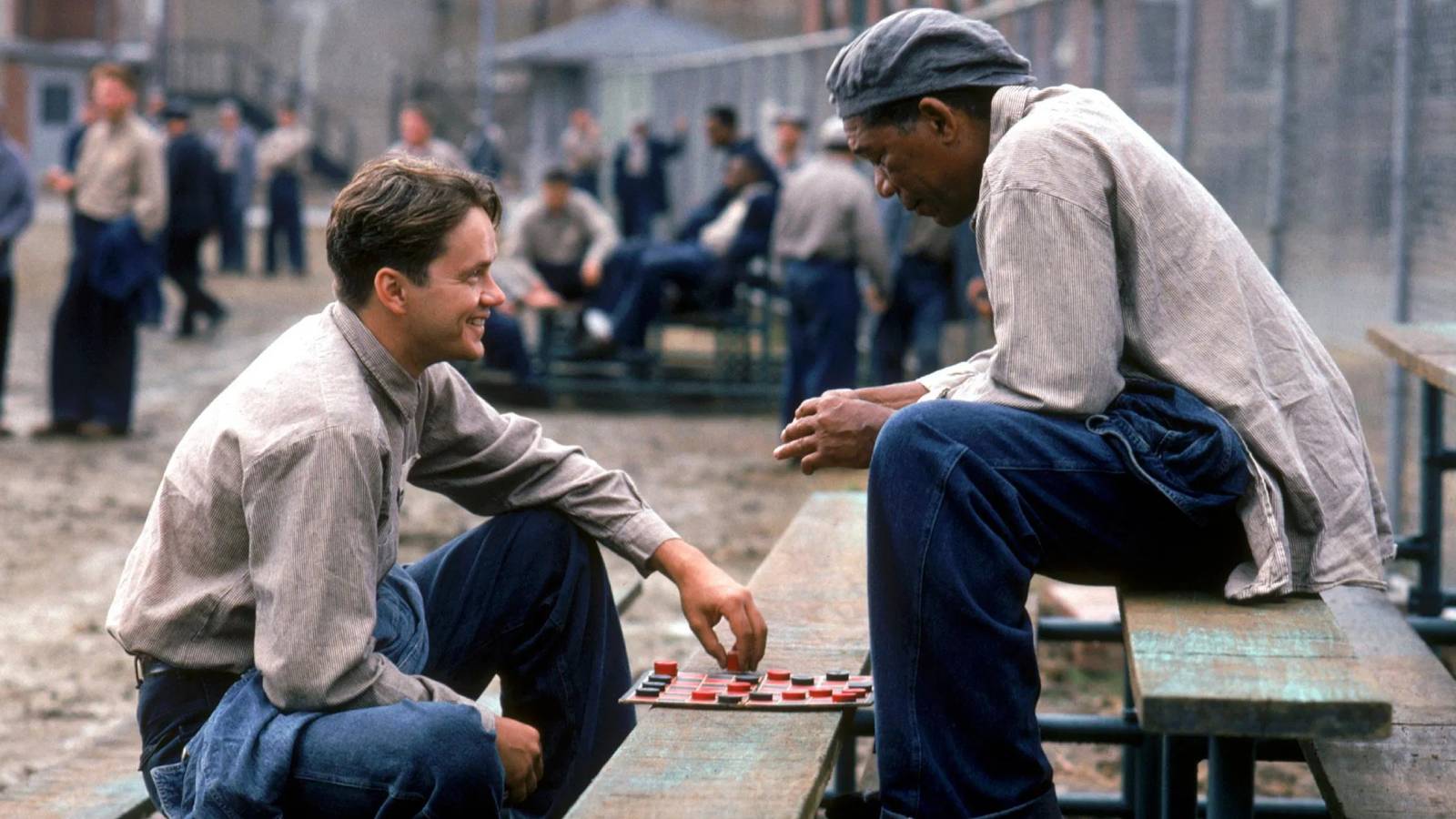
25 Films That Best Capture Male Friendship
Full Article
Original Source
Read the full article at Collider →KhanList aggregates and links to publicly available news content. We do not host full articles from third-party sources. Always verify important information with original sources.