
Jayne Kamin-Oncea-Imagn Images Despair! Another baseball season is in the books, which means many months of inactivity before the games matter again. But rejoice! Because as we do every year, FanGraphs is releasing our ranking of the top 50 free agents available this winter. In the past, Dave Cameron, Kiley McDaniel, and Craig Edwards helmed this exercise; this is my sixth year in the driver’s seat. As usual, my real superpower here was collaboration; the entire FanGraphs staff contributed at every step in the process. Below, I’ve provided contract estimates and rankings of the offseason’s top free agents, along with market-focused commentary for the top 25 players. A collection of FanGraphs writers – Davy Andrews (DA), Michael Baumann (MB), Brendan Gawlowski (BG), Jay Jaffe (JJ), David Laurila (DL), Eric Longenhagen (EL), Matt Martell (MM), Kiri Oler (KO), Matthew Roberson (MR), and Dan Szymborski (DS) – have supplied player-focused breakdowns for the entire top 50, designed to provide some context for each player at this point in their career. The two blurbs might overlap in places – player-focused breakdowns inevitably involve the market, and market-focused breakdowns inevitably involve the player – but combined, they’re designed give a fuller picture of how each player’s free agency might go and how the seasons to come might unfold. Huge thanks go to Meg Rowley for acting as a sounding board throughout the process, Eric and Brendan for their extensive contributions to my evaluation of the international players, Jason Martinez and Jon Becker for their market expertise, Dan for his early help providing projections, and Sean Dolinar for his technical assistance. The players are ranked in the order in which I prefer them. That’s often the same as ranking them in the order of the value of the contracts I’m projecting, but not always. In some cases, I prefer a player I expect will get less money over one who stands to make more. I’ll generally make note of that in the accompanying commentary, but just to reiterate, this list isn’t exclusively sorted by descending guaranteed dollars. All the dollar amounts you’ll see are estimated guarantees. Many contracts will include team options, player opt outs, vesting options, or performance incentives; those are not included in these estimates. Unless otherwise noted, the projections below are Steamer 2027 projections, but use our Depth Chart playing time allocations. The listed ages indicate the age-season the player is about to play. Each player’s crowdsourced projection will appear alongside my projection. For a comprehensive list of this year’s free agents, which will be updated to include signings as they occur and crowdsource results for players whose future deals we polled on, please consult our Free Agent Tracker. There are two huge themes to this year’s class of free agents. First, this class is the shallowest group in my six years at the helm, and likely going further back than that. That’s partially due to randomness – not every free agent class starts with the same level of talent – and partially due to contract extensions. Jesús Luzardo, Nico Hoerner, Chris Sale, and Max Muncy all signed extensions this spring. Garrett Crochet and Alejandro Kirk would have been in this class if they hadn’t signed extensions in 2025. Drew Rasmussen signed a short extension with a team option for 2027 that has removed him from the running. We were a vesting option away from having Yandy Díaz as an additional veteran slugger. That’s a lot of talent that could feasibly be on the market this year if things had gone differently over the past few seasons. Why didn’t things go differently? In part because of the second big theme: the impending lockout. It’s no secret that the league is preparing to lock out the players this winter as part of their CBA negotiation strategy. That means no contact between players and teams, and thus no contract negotiations or deals agreed to. If the negotiations drag out, it also threatens to curtail the 2027 season and thus, team revenue. Even if that isn’t a likely scenario, it’s certainly possible, and team budgets skew towards conservatism; plan around potential disasters by treating them as if they’re likely to happen, and you won’t get surprised when they do.You Aren't a FanGraphs MemberIt looks like you aren't yet a FanGraphs Member (or aren't logged in). We aren't mad, just disappointed. We get it. You want to read this article. But before we let you get back to it, we'd like to point out a few of the good reasons why you should become a Member. 1. Ad Free viewing! We won't bug you with this ad, or any other. 2. Unlimited articles! Non-Members only get to read 10 free articles a month. Members never get cut off. 3. Dark mode and Classic mode! 4. Custom player page dashboards! Choose the player cards you want, in the order you want them. 5. One-click data exports! Export our projections and leaderboards for your personal projects. 6. Remove the photos on the home page! (Honestly, this doesn't sound so great to us, but some people wanted it, and we like to give our Members what they want.) 7. Even more Steamer projections! We have handedness, percentile, and context neutral projections available for Members only. 8. Get FanGraphs Walk-Off, a customized year end review! Find out exactly how you used FanGraphs this year, and how that compares to other Members. Don't be a victim of FOMO. 9. A weekly mailbag column, exclusively for Members. 10. Help support FanGraphs and our entire staff! Our Members provide us with critical resources to improve the site and deliver new features! We hope you'll consider a Membership today, for yourself or as a gift! And we realize this has been an awfully long sales pitch, so we've also removed all the other ads in this article. We didn't want to overdo it. In case you didn't read all that, here's the short version. Membership includes:✓Ad-free browsing✓Unlimited FanGraphs & RotoGraphs articles✓Historical & platoon projections✓Leaderboard & player-page stat heatmaps✓One-click data exports✓Customizable player-page dashboards✓Dark & Classic site modes✓Weekly Members-only mailbag✓FanGraphs Walk-Off, your year in review✓Optional homepage photo removal✓Gift articles to non-Members✓Full postseason coverage It’s unclear whether that will affect the actual dollars handed out to this class. During the 2021-22 offseason, the last time there was a CBA negotiation, free agents did just fine, albeit with strange timing; lots of deals transpired before the lockout, and then after months of quiet, there was another rush before spring training started. That negotiation was pretty different than this one, though; neither side was proposing to fundamentally alter the sport’s economic picture the way both are this time. You can imagine this cutting both ways. The outcome of the negotiation is still up in the air. The hard-cap-and-salary-floor system the league is proposing would completely upend the market, and details about a phased implementation would go a long way towards determining 2027 budgets. The union’s proposal would be less seismic, but a soft floor and changes to TV revenue sharing would substantially alter teams’ spending outlooks. And those are just the initial proposals – things are sure to change at the negotiating table. The details are so uncertain that the only thing I’m sure of is that if I were a team, I’d be hesitant to put too many long-term deals on my books this winter. Teams above the various projected cap lines will have to worry about how to navigate the changing economic currents, while teams below the projected floor will have to consider how to spend their way up to compliance. I think that’s going to create a weird dynamic for both ends of the spending continuum. One way or another, some thrifty clubs are going to need to do more heavy lifting in the years to come. Likewise, if I’m a bean counter for the Yankees or Dodgers, I might be telling the decision-makers to wait for a resolution before signing any long-term deals. That said, the early bird gets the worm, and Tarik Skubal probably isn’t going to be available to anyone after the lockout. That’s because I expect him to be very motivated to lock down a deal before the game’s economic future gets renegotiated, and he’s so good that some team will likely swallow its doubts and offer him a record-breaking contract in November. It’s going to be a very strange market, in other words. Speaking of Skubal, he’s clearly the top free agent on the market. He’s a lock to secure a new record contract among full-time pitchers (curse you, Shohei Ohtani, for forcing me to make such a hedged statement). Even an injury scare this year didn’t slow him down; he returned in record time and didn’t miss a beat, ending with 26 starts, a 2.72 ERA, and a bunch of ERA estimators even better than that. The guy is a machine, a no-doubt ace who would be the best starter on nearly every team in baseball. And the bidding frenzy will be heightened by the vacuum behind him. If you’re looking for a true superstar to push your team to new heights, it’s Skubal or nothing. Between that and the fact that the deal he’s going to ask for is in a place where there are no comparable past offers, it’s pretty clear that Skubal stands alone as the prize of the winter. The group behind him features a variety of intriguing players, but no sure things. Trevor Rogers, Michael King, and Freddy Peralta are solid starters, but hardly capital-A Aces. Adrian Morejon is both a dominant reliever and someone who might be able to stretch out as a starter. On the hitting side, Seiya Suzuki and Randy Arozarena are thumping corner outfielders on the wrong side of 30. Jazz Chisholm Jr. is younger but less of a sure thing. NPB standout Teruaki Sato is younger still, but there are questions about how his power-over-contact game will work in MLB, and he has no clear defensive home. That’s a very thin group up top, but it’s not as though no one else on this list is interesting. There are 20 starters in my top 50, and many of those guys will be available on one- or two-year deals at reasonable rates. There are a couple proven closers and a couple multi-inning lefty relievers, a role that will surely be in demand after the Brewers Aaron Ashby’ed (and DL Hall’ed) their way to a World Series championship. We’ve got solid veteran catchers, a trio of center fielders, and utilitymen with carrying tools. The 31-50 section of the class looks like most years, really; these aren’t the kinds of guys who can opt out of free agency by signing lucrative extensions. The real shortfall is towards the top. If you’re a team looking to fill in around the edges, you probably won’t be disappointed by this group. If you’re looking for two stars to turn your club into a contender, prepare to be disappointed. Finally, I’ll offer a few assorted specific observations about this class. There’s uncertainty over which KBO and NPB players are headed stateside. That’s true every year, but it’s exacerbated by the looming lockout. I’ve included Sato, Kaima Taira, and Hiromi Itoh on our list, but there are more players in both leagues who would belong towards the back half of the top 50 if I knew for sure they were available — I just expect that they aren’t. For that tier of free agent, the salary available in MLB doesn’t blow the alternative out of the water, and this would be a very weird season to try to change continents and acclimate; you’re all but guaranteed an abbreviated spring training, and that’s if things go well. I’m higher than consensus on a number of left-handed pitchers, particularly lefties who have bat-missing stuff. I’ve watched the best teams in baseball hoard lefties for the past two years, and I see why; some of the lineups that you know you’re going to face in October are chock-full of star left-handed batters, and the league is increasingly left-handed anyway. I’m also higher than consensus on the youngest pitchers in this class. Skubal aside, there aren’t many bankable aces on offer, and that pushes me towards upside and youth. This class doesn’t have many arms who you’d be happy to have head up your playoff rotation; given that, I would prefer to sign guys who have the best chance of unlocking that kind of form, and that tends to be the younger guys with interesting tools. Towards the bottom of the list, I also made an effort to prioritize pitchers who ended the season in good form. Truthfully, a lot of the difference between the 46th and 56th players on a list like this comes down to personal preference and tiebreakers. You could make a reasonable case for a number of guys who came up just short for me; these happen to be the 50 I like best. On the hitting side, I’m notably low on the crop of center fielders with question marks: Daulton Varsho, Trent Grisham, and Luis Robert Jr. I have questions about all three, and I think that outfield defense is one of the skills that’s easiest to competently backfill from the minor leagues. I prioritized hitters with offensive value, whether it’s the Luis Arraez contact type or the Jake Bauers power type. That’s the group that feels hardest to replicate from the farm, and if I were a GM, I’d be approaching this free agency period with an eye towards what my farm system can do for me, and which holes are better filled by acquiring a veteran. That’s a broad, top-level view of the market. If you’re wondering why one player is lower than you’d expect, or why a certain category of player is over- or under-represented, or why someone was left off entirely, it’s probably due to how they fit into that picture. In fact, come and ask me about it! I’ll be chatting at 2 p.m. ET today to answer your questions about the list. With those themes and caveats in mind, let’s get to it. Contract Estimate Type Years AAV Total Ben Clemens 10 $38.0 M $380.0 M Median Crowdsource 8 $42.0 M $336.0 M Avg Crowdsource 7.91 $42.4 M $335.8 M 2027 Steamer Projections IP BB% K% GB% ERA FIP xFIP WAR RA9-WAR 192.0 5.6% 29.4% 43.1% 2.88 2.83 2.93 5.5 5.7 Ben’s TakeThere are no bad free agent markets for players as good as Skubal, which made his contract easier to forecast. Teams pursuing his services want Skubal specifically, not Skubal or someone like him. He’s the best free agent in the class by such a wide margin that his market is more or less separate from the rest. If you’re looking for a good pitcher who might turn in an ace-level season, there are a few options. If you’re looking for an ace, it’s just Skubal. Thus, the question is how much he’ll eclipse the old record contract for a pitcher, not whether he will. Yoshinobu Yamamoto’s 12-year, $325 million deal (which came with various player perks like opt outs and no-trade clauses) was the old standard, which is a good starting place for a Skubal deal. I expect him to go for cash over convenience and set a new high dollar figure for future pitchers to point to. Ten years is a long contract for a pitcher, but I think he’ll get there largely to spread the cash out across more seasons; if I tell my contract model to give Skubal a three-year deal, it wants to pay him $65 million a season, which just doesn’t fly with the way baseball budgets work. I expect Skubal to sign before December, and I’m not forecasting him to cause a broader market chill in the way that previous big-budget free agents have slowed down lesser signings. Skubal is one of one this winter. Player NotesThough Skubal won back-to-back Cy Young awards in 2024 and 2025, the Tigers tried to lowball him by offering him $19 million in arbitration going into his walk year. He ended up winning the largest salary in arbitration history at $32 million, but his season didn’t go quite as planned. Loose bodies in his left elbow required surgery, and while the experimental NanoNeedle Scope 2.0 procedure he received cut his return time to a month and a half, by then, the handwriting was on the wall for the Tigers. They dealt him to the Dodgers for a three-player package on August 2. While he continued to pitch like an ace, he couldn’t singlehandedly manifest a Los Angeles threepeat. Skubal’s 2.72 ERA was half a run higher than his American League-leading mark from 2025, and his 158 2/3 innings 36 2/3 frames shy of that season’s total, but his 2.51 FIP and 30% strikeout rate were both in line with his award-winning seasons, and the pitch modeling systems place his stuff on par with 2024, if not 2025. Under the hood, it all seems quite good. While he’ll likely set some kind of salary record, I’d take the under on $400 million, if only because his platform season included lost time, and because the impending lockout will compress his negotiating period, possibly scaring big spenders like the Dodgers and Mets with regards to even higher luxury taxes. Still, Skubal is by far the best free agent on the market, and would significantly upgrade any team’s rotation. – JJ Contract Estimate Type Years AAV Total Ben Clemens 4 $27.0 M $108.0 M Median Crowdsource 4 $24.0 M $96.0 M Avg Crowdsource 3.79 $23.7 M $89.8 M 2027 Steamer Projections PA BB% K% AVG OBP SLG wOBA wRC+ Off Def WAR 644 11.5% 24.7% .256 .346 .447 .346 120 13.6 -9.3 2.7 Ben’s TakeMind the gap! I think Suzuki will get 75% less guaranteed money than Skubal, but he’s the best hitter available this winter, and his career year — 4.5 WAR, 26 homers, Gold Glove finalist recognition — couldn’t have come at a better time. If Suzuki can play plus defense at a corner outfield spot and stay healthy – his last two seasons are his two healthiest – he’s an All-Star for at least the next few years. And there’s no question at all about his bat; he’s played five seasons in the majors, and his worst wRC+ was 118. Teams have mostly gotten out of the business of giving long-term contracts to hitters over 30, but when they do, it’s for bat-first types who have few holes in their game, and that describes Suzuki perfectly. He checks the three boxes of good eye, good contact, and good power, which gives him room to have a down year in one area and still be viable. I think that the uncertainty around the economic structure of the game will keep him from getting five-plus years, but that shouldn’t stop him from getting the second-biggest AAV in the class. Player NotesRemember when the free agent market had a variety of options among the hitters, players with different skill sets, defensive positions, ages, and projected price points? When you could pick between Aaron Judge, Trea Turner, and Willson Contreras if you had a few hundred million to spend? Yeah, you can’t do that anymore. For teams that want a genuine, reliable middle-of-the-order bat, it’s Suzuki or bust. And even then, this is a 32-year-old right-handed corner outfield bat who already started 28 games at DH in his walk year, and is only likely to play there more as time goes on. Since arriving in the U.S. in 2022, Suzuki is 55th among qualified position players in WAR and 24th in wRC+. That said: He played the best baseball of his career in 2026. Suzuki had just 14 homers and a .336 OBP as a rookie, but as he’s spent more time in Chicago, he’s maintained his bat speed, made more contact in the zone, and brought his walk rate into the double-digit range. After four years of poor defensive metrics, he was actually well above average in right field this past season, which contributed to a career-high 4.5 WAR. This being one of the most seller-friendly markets in baseball history for free agent offense, whoever lands Suzuki will probably end up overpaying, and the last couple years of his contract will probably be hairy. That said, this is a very, very good all-around hitter. He gets on base and hits for both average and power, and while strikeouts and double plays are a risk with most right-handed corner bats, Suzuki has kept those figures in a manageable range. He’s the best position player in this free agent class. – MB Contract Estimate Type Years AAV Total Ben Clemens 4 $26.0 M $104.0 M Median Crowdsource 5 $24.0 M $120.0 M Avg Crowdsource 4.36 $23.7 M $103.3 M 2027 Steamer Projections IP BB% K% GB% ERA FIP xFIP WAR RA9-WAR 175.0 7.0% 22.4% 40.7% 3.82 3.83 3.91 3.2 3.1 Ben’s TakeI’ve had Rogers in this spot from the moment I started collating my rankings, and several of my cross-checkers noted that he looked strange as the second pitcher on the list. But I didn’t change my mind as I did more research; in fact, my conviction increased. Rogers has what teams want in a free agent starter. He’s currently effective – by fWAR, he was the second-best pitcher in this class in 2026, and a whole alphabet full of advanced ERA estimators agree. He has plus stuff and plus command, and he’s currently doing it with a ton of four-seamers, which means that any number of pitch design teams will think they can kick things up a notch. And he’ll be entering his age-29 season next year, which makes him one of the youngest free agents on the board in addition to being one of the best. There are reasons to worry about Rogers — mainly his health and track record. He got off to a glacially slow start with the Orioles in 2024, and he’s missed about two seasons worth of playing time with various injuries. Those are two big reasons to worry! But his struggles mostly came from being out of sync and not using his prodigious tools well, at least to my eye, and he’s comprehensively fixed the command issues that held him back early in his career. I also gave him a small boost because he’s a lefty; the arms race to acquire lefty pitching to face some of the elite teams in baseball — think the Yankees, Dodgers, and Brewers — is a real thing, and if I were a team making a tie-breaking decision between two arms, I’d take the lefty for choice. Player NotesRogers had been struggling for a couple of years when Baltimore acquired him from Miami at the deadline in 2024. The O’s thought that the lefty could recapture his 2021 form, perhaps quickly enough to aid their playoff push that summer. While the latter situation didn’t come to pass — Rogers made four lousy starts and was then demoted — they were soon right about the former. The following winter, Rogers went to Driveline. He rebuilt strength that had atrophied following a back injury, tinkered with his delivery, and tweaked the grip on his sweeper. He looked like a new pitcher almost immediately. A dislocated knee delayed the start of his 2025 season, but upon his return, Rogers dominated. His fastball had gained more than a tick of velocity and, more importantly, a sturdier foundation boosted his command significantly. Suddenly, he was getting ahead in counts and surgically locating his fastball in places hitters couldn’t drive it. Alongside, the sweeper arguably became his best pitch overnight. The results speak for themselves. Rogers has posted a 3.20 FIP and accrued 7.3 WAR in 48 starts over the last two years, both of which ranked 17th best among starters in that period. In throwing a career-high 169 2/3 innings this year, he’s firmly established himself as a good, stable pitcher, a high no. 3 for stingy evaluators and a no. 2 for the rest of us. Even in a market flush with high-end lefties, Rogers should land a nine-figure contract. – BG Contract Estimate Type Years AAV Total Ben Clemens 4 $25.0 M $100.0 M Median Crowdsource 4 $25.0 M $100.0 M Avg Crowdsource 3.98 $25.6 M $102.0 M 2027 Steamer Projections IP BB% K% GB% ERA FIP xFIP WAR RA9-WAR 180.0 8.5% 22.1% 42.4% 4.07 4.11 4.09 2.5 2.5 Ben’s TakeThis was a tricky one for me, because I think King is going to return to the Padres on a renegotiated version of his last deal. But for now, he’s a free agent, and he’s one of the most desirable ones on the market. He opted out of his last contract, which had two years and $53 million remaining on it, after a solid 2026 season that saw him set career highs in starts and innings pitched en route to 2.6 WAR. He didn’t quiet the opposition to the same degree that he did during his dominant 2024 campaign, but it was an excellent bounce-back after he missed half the year in 2025. Like Trevor Rogers ahead of him and Freddy Peralta behind him, King has a few blemishes that suitors will have to weigh against his bona fides. He posted career worsts in a number of process statistics this year – lowest swinging strike rate, lowest strikeout rate, highest walk rate, highest xFIP, xERA, and SIERA. He withstood those headwinds thanks to a low BABIP and a high left on base percentage, but you probably shouldn’t count on that happening to the same extent again. That would make King more of a nice starter than an elite one, which is roughly what the projections say too. I rounded up from there because I value King’s steady presence and flexibility, and because the Padres under A.J. Preller have never been averse to paying up a bit to retain their own guys. Player NotesA former 12th-rounder who had found his niche as a late bloomer in the Yankees’ bullpen, King’s conversion back into a starting pitcher has been one of the most successful examples in modern baseball. Though King did miss time in 2025 due to first a nerve issue in his shoulder and then knee pain, he gave the Padres three good years, with 7.5 WAR, a 3.15 ERA, and a 3.86 FIP over 432 innings, plus another six good appearances in the postseason, and he was fully healthy in 2026. Tarik Skubal is obviously the best pitcher available this winter, but King, along with Freddy Peralta and Trevor Rogers, has a case for being the second-best arm in the class. King’s strikeout rate has declined, which is typically worth paying attention to, but his contact rate hasn’t risen to the same degree, suggesting the Ks are still in there somewhere. His approach is pretty straightforward: Sinkers, four-seamers, and sweepers for everyone, with changeups for lefties, and sliders for righties. A lot of teams that aren’t getting into the Skubal sweepstakes could use King, so he should do well no matter what’s in store in the next CBA. – DS Contract Estimate Type Years AAV Total Ben Clemens 5 $22.0 M $110.0 M Median Crowdsource 5 $20.0 M $100.0 M Avg Crowdsource 4.52 $19.6 M $88.6 M 2027 ZiPS Projections PA BB% K% AVG OBP SLG wOBA wRC+ HR WAR 607 9.2% 32.1% .254 .326 .471 .339 118 25 2.9 Ben’s TakeLike Munetaka Murakami before him, Sato is a bat-first NPB third baseman (and right fielder) whose strengths and weaknesses both jump off the page. He has plus-plus power and a swing geared to launch, with the strikeout problems that generally accompany that approach. He’d be one of the most whiff-prone sluggers in the majors; he swung and missed as frequently in NPB as Colson Montgomery did in MLB, and Montgomery set the single-season strikeout record. I’m not expecting Sato to whiff that much next year, but the error bars are large. He might be the next Murakami (or Montgomery), but you have to bake in some chance of failure when projecting any hitter who comes up empty this often. Defensively, Sato is below average, both at third base and in right field. Some teams likely see him as a first baseman, but he might also be more of a rotating corner guy whose defense you accept in exchange for some homers. Between that and the contact question, I wouldn’t be comfortable relying on Sato as a difference-maker for a likely playoff team; there are just too many fail cases. But there are a lot of boom cases as well. If he’s acceptable at third and the power plays, “perennial All-Star” is well within the realm of possibility. That makes me think an ascendant team looking to bank a little bit of spending and gamble a bit on a good outcome will sign Sato, much like the White Sox did with Murakami last year. Sato has the tools to be an impact player, and he’s so young that if he’s good next year, he’ll likely be good for a while. That seems like a good deal to me overall, even if every team won’t be interested. Player NotesSato was arguably the best prospect in NPB’s 2020 draft, as four teams put his name in as their first-round nominee (an uncommonly high number), with Hanshin winning the lottery for his rights. A college draftee, Sato broke camp with the big club right away in 2021 and had a strikeout-prone (38%) rookie season, followed by three more stable years, and then finally an enormous power-hitting breakout in 2025. Over the last two seasons, Sato has averaged 40 home runs and 80 extra-base hits; he won the Central League MVP in 2025 and, after notching the league’s triple crown, is the presumptive favorite to win again in 2026. Sato has show-stopping low-ball power, at times rotating with full-body verve and huge finish behind him, while at others he relies purely on the strength in his hands to do damage. Most of his slug comes via pull-side contact against pitches middle-down, softer stuff that doesn’t quite finish below the zone. All of Sato’s 2026 power metrics reinforce the visual scouting report; his 56% hard-hit rate, 108 mph EV90, and 116 mph max exit velocity are all plus. He has 30-homer MLB power. WIll he make enough contact to weaponize it? Sato had a 67% contact rate in 2026, both overall and against fastballs, and he swings through fastballs at the same rate that Cam Schlittler’s heater missed bats in 2026. That’s troubling. There are only a couple of productive third basemen from the past few years with sub-70% contact rates – Nolan Gorman, Jake Burger, and Mark Vientos – while Kazuma Okamoto, Ryan McMahon, Max Muncy and Eugenio Suárez are all right at 70%. There are a growing number of successful sub-70% contact rate hitters in the majors, including recent NPB expat Munetaka Murakami (60%, the lowest in baseball), so while Sato’s whiff data indicates he has some bust risk, he has enough power to be productive anyway. Sato’s defense (he plays a mix of third base and right field) is also a bit flimsy, especially his infield throwing accuracy. He’s probably best deployed wherever you think the opposing team is least likely to hit the ball that day, though whatever team likes Sato most probably has a more favorable view of his third base defense and might play him there every day. – EL Contract Estimate Type Years AAV Total Ben Clemens 4 $23.0 M $92.0 M Median Crowdsource 4 $24.0 M $96.0 M Avg Crowdsource 3.96 $23.5 M $92.9 M 2027 Steamer Projections IP BB% K% GB% ERA FIP xFIP WAR RA9-WAR 169.0 8.8% 22.4% 37.6% 4.33 4.32 4.29 1.9 1.9 Ben’s TakePeralta presents a real models versus eyeballs test at the top of the list. He has always felt more ace-y than his numbers would suggest, and he had a down season heading into free agency, which will give suitors pause. I know it’s popular to talk about how the Rays “fixed” him after the Mets “broke” him, but I think that’s reading too much into small samples. Peralta has always succeeded with a pile of whiffs and strikeouts. His lowest full-season strikeout rate before 2026 was 27.1%, but he was at 22.1% on the Mets and 19.7% on the Rays, with career lows in every bat-missing category you can imagine. His feel-good playoff run came with 10 walks and 16 strikeouts in 21 ⅓ innings. Teams won’t ignore his production over the past decade, but the warning lights put him the lowest in this trio of second bananas for me. I expect that Peralta’s suitors will skew towards teams that plan on using their bullpen a lot; his nibbling style has always led to high pitch counts and short outings. I also think that he’ll have to take either an AAV or number-of-years discount thanks to his troubling strikeout trajectory. But his time with the Rays was a good reminder that Peralta doesn’t have to strike everyone out to succeed. Put him in a big park with good outfield defenders, and he should out-pitch his peripherals again. Player NotesIt’s true that Peralta had what for him constitutes a down year in 2026, but unless he signs a lengthy deal with the Mets, there’s no reason that should impact his projections moving forward. Granted, next year will be the righty’s age-31 season, so all the usual aging curve caveats apply to a long-term deal, but nothing about Peralta’s most recent campaign signals that the decline has already begun. Even before a trade deadline deal sent Peralta to the Rays, his peripheral numbers with the Mets suggested that he’d been pitching better than his topline results indicated. His strikeout rate did dip to 21.4% in 2026 after sitting between 28% and 31% over the prior three seasons, but he posted a xwOBACON of .339 — his lowest mark since 2022. And as Peralta became more reliant on the fielders behind him, the Mets defense really let him down. Overall, New York ranked just below average with -2 FRV, but they were much worse with Peralta on the mound, posting -6 FRV over his 113 2/3 innings with the team. Only eight pitchers across the majors (minimum 110 innings pitched) endured worse defense. Meanwhile, the Rays treated Peralta to 7 FRV over 55 1/3 innings. Tampa Bay’s pitching development staff also convinced him to lean more heavily on his changeup and eliminate his slider (which had become a liability, allowing a .402 wOBA in 2026, compared to .197 in 2025), while also helping him tweak his delivery. Those adjustments led to a slightly higher arm angle and increased extension, which juiced the perceived velocity on his pitches. Overall, team evaluators should have no problem buying in on several more firmly above-average seasons from Peralta. – KO Contract Estimate Type Years AAV Total Ben Clemens 4 $23.0 M $92.0 M Median Crowdsource 4 $23.0 M $92.0 M Avg Crowdsource 4.14 $22.9 M $94.6 M 2027 Steamer Projections PA BB% K% AVG OBP SLG wOBA wRC+ Off Def WAR 560 10.2% 26.9% .234 .317 .408 .318 101 3.3 3.0 2.6 Ben’s TakeI waffled more on this projection than any other. Chisholm’s blend of speed and power is droolworthy; up-the-middle defenders with 30-homer power don’t grow on trees. But you can do the same kind of forecasting to the downside, too; Chisholm just got done with a season where he struck out nearly 30% of the time en route to a below-average offensive line, and his defense is inconsistent. I feel okay projecting a chance of good hitting and a chance of good fielding, but expecting him to make good on both is a stretch, and there’s surely some risk that you end up with an average-hit, average-field second baseman, a profile that sounds good on paper but generally isn’t coveted in free agency. I imagine Chisholm will want to bet on himself, and to me that means a shorter deal with the possibility of hitting the market again, probably via an opt-out, or perhaps by taking fewer years while peppering in escalators and incentives. This projection is me trying to split the difference between a model-based estimate and reading the tea leaves of how Chisholm and his camp want to play this, because his free agency outlook was considerably rosier this time last winter. Ultimately, I went with the deal that I think he’d get if he just took the best guarantee at a reasonable number of years, but I think there’s considerable volatility here. Player NotesAfter setting career bests with 31 homers, 31 steals, 4.3 WAR, and a 125 wRC+ (.242/.332/.481 line) in 2025, Chisholm publicly proclaimed a 50-homer, 50-steal season as a goal. Instead, he started the 2026 season slowly and failed to fully dig his way out, finishing with a .231/.312/.399 (98 wRC+) line and 19 homers, though he did swipe 41 bags. The data shows that his swing got longer and slower (from an average of 73.9 mph to 72.9), he chased outside the zone more than in any season since 2021 — particularly against fastballs and curveballs — and his quality of contact suffered. His barrel rate plummeted from 15% to 8.2%, and his xSLG from .481 to .366. The lesser impact only magnified a strikeout rate that inched toward the dreaded 30% threshold. Perhaps the biggest concern is that where Chisholm produced a combined 102 wRC+ against lefties in 2024–25 — much better than he’d done earlier in his career with the Marlins — he slipped to a 78 wRC+ (.218/.269/.381) with a 35% strikeout rate in 2026. By the end of the season, the Yankees were platooning him, something they might have done earlier had they not been so beset by injuries. The good news is that Chisholm still has his speed, athleticism, and exceptional range. His 8 FRV at second base was a career high, while his -6 DRS looks like an aberration given his previous marks. He’s still young enough to expect some kind of bounce back, but he’s got some work to do to shore up his game. – JJ Contract Estimate Type Years AAV Total Ben Clemens 3 $24.0 M $72.0 M Median Crowdsource 4 $16.0 M $64.0 M Avg Crowdsource 3.87 $15.9 M $61.5 M 2027 Steamer Projections IP BB% K% GB% ERA FIP xFIP WAR RA9-WAR 79.0 8.3% 29.0% 49.6% 2.83 2.85 2.99 1.5 1.6 Ben’s TakeThe best reliever on the market will look extra enticing in a year with so few standouts at the top of the class, but Morejon is even more interesting than that. After a flat-out dominant season – 86 innings of pure filth – teams can dream big on either using him as a high-leverage reliever or converting him into a starter. The Brewers and Padres have shown the value of a multi-headed, multi-inning back of the bullpen, and it’s a copycat league. But Morejon has four plus pitches and great command, which is going to be mighty tempting to teams that want an ace starter but aren’t contending for Tarik Skubal. He’s also one of the youngest free agents in this class, which certainly doesn’t hurt. This deal would be a big one for a reliever, even one with Morejon’s absurd numbers (he’s put up a 2.58 ERA and 2.46 FIP over the last three seasons). It’d be an especially big contract for someone experiencing what Craig Stammen called “shoulder stickiness” the last time we saw him, a phrase that made me gag the first time I heard it. But I kept looking at everyone else in this class and finding things to dislike, and kept looking at Morejon’s numbers and drooling. I imagine a lot of executives will have the same reaction. Health is never a given, but assuming this most recent injury doesn’t require surgery, Morejon is going to be one of the most desirable free agents of the winter. Player NotesOriginally developed as a starter, Morejon struggled to stay healthy — he dealt with multiple shoulder issues as a prospect, had Tommy John surgery in 2021, and suffered a significant elbow sprain in 2023 — and didn’t truly establish himself as an impact big leaguer until 2024, five years after he debuted, when he began a three-season run as one of the game’s best relievers. Since 2024, Morejon ranks third among relievers in WAR, first in innings pitched (223.1 IP), and is in the top 20 in K/9, BB/9, and every ERA and FIP category, with a 2.58 ERA and 2.46 FIP over that span. When you isolate left-handed relievers, the gap between Morejon’s output and inning volume compared to his peers is even more pronounced. He is the hardest-throwing qualified lefty reliever in baseball over the last two seasons combined (at at 98.8 mph, he’s a hair faster than Mason Montgomery) and has worked at least 43 more innings than every other lefty sitting 97 mph or above (Gregory Soto is next with 180 IP), though some amount of Morejon’s durability gravitas was lost at the end of 2026 when he couldn’t pitch in the NLDS due to yet another shoulder problem. Can Morejon be stretched out as a starter again? He’s nearly there already on innings, as with the playoffs included, he worked 90 innings in 2026. An effective sinker/slider guy in 2024 and 2025, Morejon improved his changeup and threw it more than ever in 2026; it generated an elite swinging strike rate at a whopping 33%. Morejon also hasn’t had strike-throwing issues, posting a 7.2% career walk rate that’s better than the league’s average among starters (8.3%). It stands to reason that whichever team likes Morejon best will be optimistic that he can be upcycled into the rotation. – EL Contract Estimate Type Years AAV Total Ben Clemens 2 $17.0 M $34.0 M Median Crowdsource 2 $12.0 M $24.0 M Avg Crowdsource 2.26 $13.3 M $30.0 M 2027 Steamer Projections IP BB% K% GB% ERA FIP xFIP WAR RA9-WAR 148.0 8.9% 23.1% 44.6% 3.75 3.85 3.88 2.3 2.7 Ben’s TakeThis is the first place where my own preference rankings meaningfully diverge from what I expect players to receive in free agency. I have Bubic meaningfully higher than either his AAV or total guarantee would suggest. That’s because if I were a GM, I’d want this guy on my team. It’s not the same situation as Adrian Morejon, but Bubic was great in the first half of 2025 before a rotator cuff injury cost him the rest of the season, and then he was good again in 2026, though he again missed time with an arm injury. The Dodgers traded for him midway through the year (good sign!) and then deployed him as a reliever down the stretch, where he looked phenomenal in a small sample before October. Our projections aren’t quite sure what role he’ll take, so we’ve got an in-between innings total and in-between ERA projection; if he starts, I’d expect him to not be quite this good on a rate basis, and if he relieves, to pitch fewer innings. Our pitch models thought every one of his offerings took a huge step forward as a reliever, and I buy it. I also feel good about a player leaving the Royals, an organization not known for its forward-thinking pitching development, and signing with whichever club is most bullish on his potential. You might end up with a guy who doesn’t play for you much because of injury – hey, it happens. But if Bubic manages to stay healthy, lots of his potential outcomes look pretty good to me. Good lefty starter? Yes, please. Multi-inning lefty reliever? They’re all the rage these days. One-inning reliever? I’d hope for more, but if he’s throwing the same pitches that he was this September in Los Angeles, he’d be a very good one. This is definitely the player where I differ the most from consensus. Player NotesA year after a rotator cuff strain cost him two months, Bubic lost four months to a flexor strain followed by a shoulder impingement. His ERA jumped by 1.21 points, and his FIP by 0.65. For the second year in a row, his chase and whiff rates dropped and his average exit velocity increased. This feels like a lot of bad news for a guy in the top 10, and we haven’t even mentioned his 2023 Tommy John surgery. But we’re looking at things the wrong way. When Bubic returned from his quadrimester on the shelf, he was with a whole new team, and he was back in the bullpen. The Dodgers dialed back his slider usage and had him throw either a fastball or a changeup about 85% of the time. He rewarded them with five scoreless appearances down the stretch before turning into a pumpkin in the playoffs. Bubic is one year removed from a 2025 season when he put up 3.4 WAR in just 20 starts, and two years removed from a 2024 season in which he looked like one of the best relievers in baseball. There’s obviously injury risk here, and Bubic’s preference for starting or relieving will affect the makeup of the teams looking to sign him. But teams will be looking to sign him either way. – DA Contract Estimate Type Years AAV Total Ben Clemens 3 $23.0 M $69.0 M Median Crowdsource 4 $24.0 M $96.0 M Avg Crowdsource 4.02 $23.9 M $96.2 M 2027 Steamer Projections PA BB% K% AVG OBP SLG wOBA wRC+ Off Def WAR 672 10.4% 23.1% .252 .352 .431 .346 120 15.5 -14.7 2.4 Ben’s TakeA generation ago, Arozarena would be number two on this list. He had a career year at the plate, ending the season as the third-best hitter in the majors. He posted a career-low full season strikeout rate and a career bests in every triple slash category. He made the most contact of his career, and also posted the highest ISO. Oh yeah, and he swiped 26 bags while he was doing it. No free agent in this class posted more WAR, including Skubal. It’s hard to imagine a better platform year, and Arozarena stands out relative to a light crop of hitters. I don’t think modern GMs will fixate on those numbers, though. Projection systems have him about 20% above average offensively next year, which passes the sniff test for me; that’s roughly the level Arozarena has played at for his career, and another year of aging offsets the recent uptick. But he doesn’t have much, if any, defensive value, and those steals are more pretty than valuable; he’s a neutral baserunner for his career, because he makes too many outs on the basepaths. That makes him one-dimensional, and I imagine that front offices will come to a similar conclusion. I’d be happy to have Arozarena in the middle of my order next year – I just wouldn’t want to commit a lot of money over many years to get him. Player NotesIf you want a right-handed corner outfielder and Suzuki is either too safe or too expensive, Arozarena’s your guy. He had a tremendous walk year, with his customary 20-homer, 20-steal production buoyed by some exciting new developments: a shorter swing led to a career-low strikeout rate and a full-season career high in batting average. Arozarena’s .281 average, with a low-double-digit walk rate and 26 hit-by-pitches, was good for a .381 OBP, the ninth-best figure among qualified hitters. It’s not all upside for the erstwhile Mariners left fielder. The shorter swing came with a reduction in bat speed and exit velocity, and I wouldn’t feel awesome about getting into business with a right-right left fielder who’d lost two miles an hour of bat speed in the past two seasons. That’s on top of the perpetual Arozarena problem: Even when he hits the absolute you-know-what out of the ball, he hits it on the ground more than you’d ideally like from an expensive power hitter. Arozarena is also what I’ll euphemistically call a boom-or-bust defender and baserunner, spectacular in both success and failure. It’s not for everyone. But while the 5.5 WAR he posted in 2026 has the whiff of a walk year fluke, he’s been a consistently above-average overall player throughout his career. And you can’t put a number on the unique joie de vivre he plays with. No GM is going to find the bargain of the century in this free agent class, so why not live a little? Arozarena led the American League in runs scored last year; he might’ve gone around 113 times, but you only go around once. – MB Contract Estimate Type Years AAV Total Ben Clemens 2 $19.0 M $38.0 M Median Crowdsource 3 $16.0 M $48.0 M Avg Crowdsource 3.09 $17.5 M $53.9 M 2027 Steamer Projections PA BB% K% AVG OBP SLG wOBA wRC+ Off Def WAR 651 5.2% 4.7% .304 .344 .406 .329 108 6.4 -0.1 2.9 Ben’s TakeArraez was a polarizing free agent last year, and he probably will be again. His offense is more exciting than it is valuable – it’s still valuable, to be clear – and that leads to a lot of hot takes for a guy who is just a solid player at the end of the day. Arraez has one standout skill, and it’s a valuable one: He puts the ball in play and gets on base. He’s played parts of eight major league seasons, and he’s posted a wRC+ above 100 in each of them. The ceiling here is low, of course – his career-best mark is 131 – but the floor is very high. The Phillies batted him cleanup to give him the best chance to put the ball in play with runners on base, and I think that he’d fit nicely anywhere from third to sixth in plenty of good lineups. Having Arraez on your team won’t turn it from bad to good, but he’s clearly a useful player with a bat in his hands. I don’t buy FRV’s view that he was an elite defender in 2026, but I do think he was about average at second base, which is still plenty valuable if you can hit. Arraez won’t appeal to every team, because a lot of organizations want to use minor league depth on the middle infield to get good defense at a bargain rate, but for teams that don’t have that option or that don’t want to max out on defense, Arraez is a solid alternative who won’t break the bank. I expect him to sign with a playoff contender that wants to lengthen its lineup but doesn’t feel the need to sign one of the top few hitters available this winter. Player NotesAfter posting two disappointing seasons in a row, Arraez had one last chance to get it right before hitting free agency, and he got it very right indeed. Playing in San Francisco connected him with Ron Washington, an underwhelming manager but a terrific infield coach with some big successes under his belt, most notably Marcus Semien. A lousy second baseman who had been converted into a lousy first baseman, Arraez had one of the biggest defensive turnarounds in Statcast history, finishing 2026 10 runs above-average at the keystone. DRS was less enthused, but if Arraez is even average with the glove at second base, it’s a huge boost to his value. Arraez is one of the most extreme contact hitters of this generation, but his offensive value is tied to his batting average, as he has little power and draws few walks. At first base, he’s an unimpressive player overall; the good hitters at the position have so much power that Arraez would need to hit .350 to compensate. He’s not going to do that most years, but as long as he plays a passable second base and keeps his average north of .300, he’ll be a good starter, albeit one who will inevitably be overrated by a certain segment of fans. Overrated doesn’t mean bad, however. – DS Contract Estimate Type Years AAV Total Ben Clemens 2 $19.0 M $38.0 M Median Crowdsource 3 $17.0 M $51.0 M Avg Crowdsource 2.48 $17.5 M $43.4 M 2027 Steamer Projections PA BB% K% AVG OBP SLG wOBA wRC+ Off Def WAR 588 14.3% 26.8% .237 .353 .428 .344 119 12.5 -11.3 2.2 Ben’s TakeEvery time I updated my view of this free agent class throughout the year, I moved Bauers up. In the end, I might have gone too far by floating him all the way up to the top 12, but I kept looking at the players I had ranked ahead of him and thinking “Man, I’d rather have Bauers.” Bauers comfortably clears the “first base dead zone” – a wRC+ in the 105-115 area – that feels easily replaceable on the waiver wire or from the minor leagues. He’s the best lefty slugger on the market, and he’s not that far behind Suzuki as the best slugger overall. He’s going to crack a few strikeout eggs while he makes his walk-and-home-run omelets, but he’s not just up there hacking with no idea of what’s going on. He has great plate discipline and his contact numbers aren’t abysmal; he’s just patient and willing to work deep counts waiting for a pitch to drive. The reason to fade Bauers is the lack of track record. He posted 3.6 WAR this year – and he has 3.2 career WAR. That’s cause for skepticism. But my projection is for a skeptic’s contract: not too many years, not too much AAV, easy enough to walk away from if things don’t pan out. And when I looked at it that way, I had a much easier time placing him on this list. I’d rather have Arozarena if I were looking for a slugger with little-to-no defensive value, but it wouldn’t be by a lot, and I could easily imagine preferring Bauers for handedness or roster construction reasons. In a lot of years, that’d put him 25th or so on a list of free agents. This year, he’s 12th. Player NotesBauers’ free agency will depend heavily on how much teams believe that the left-handed first baseman flipped a switch in September of 2025. As he has described it, Bauers realized he needed to get out of his own way and go to the plate not thinking about anything. That can be a tough explanation for us nerds to abide, as we tend to be more satisfied by an obvious change in approach or re-tooled swing mechanics when it comes to trusting that a sudden surge in performance is actually the real deal. But Bauers now has two seasons of above-average hitting on his ledger, and while he might be better served by not dwelling on the underlying numbers behind his performance, that doesn’t mean we can’t take a look. His expected stats have trended upward alongside his actual results, lending credibility to his newfound productivity. The “no thoughts, head empty” approach has led Bauers to more selective swing decisions. He’s whiffing less on pitches outside of the zone and doing more damage on pitches in the zone and just above it. Simplifying his mental process has translated to fewer strikeouts, more walks, and improved contact quality. Further, Bauers did supplement his internal approach with some external tweaks. He moved back in the box and opened up his stance, allowing even more time for those crucial swing decisions. Bauers doesn’t dazzle on defense, but given that he posted the fourth best wRC+ (143) among qualified left-handed hitters in 2026, Brewers skipper Pat Murphy appears to be correct in his assessment that Bauers is about to be very rich, whether he signs with the “horseshit Yankees” or not. – KO Contract Estimate Type Years AAV Total Ben Clemens 2 $19.0 M $38.0 M Median Crowdsource 3 $21.0 M $63.0 M Avg Crowdsource 3.26 $20.9 M $68.0 M 2027 Steamer Projections PA BB% K% AVG OBP SLG wOBA wRC+ Off Def WAR 630 8.9% 27.8% .239 .311 .440 .327 107 4.0 -0.3 2.6 Ben’s TakeFrom the free agency class that brought you “Wait, Luis Arraez is good at defense?” comes a blockbuster sequel. Lowe lives near the top of the first base dead zone offensively, which was cause for concern when it looked like he’d age out of playing the keystone at the same time his offense gently declined. But if he can play average second base defense – that’s about as high as I’m willing to project him given his track record of mediocrity at younger ages despite excellent marks this year – then he starts to get a lot more interesting. A 110ish wRC+ at first base? Boring. A 110ish wRC+ from a guy who can play on the middle infield? Now we’re talking. It’s a similar situation to Arraez, albeit with very different offensive styles. Lowe is teetering on the border of too many strikeouts, and he probably won’t post a career-high BABIP again in 2027. But 30 bombs is 30 bombs, and he usually walks enough to pair his power with a decent on-base percentage. You’d be sad if Lowe was the best player on your team, but that’s true for almost everyone in this class, and he’s a perfectly serviceable option as a role player. I have him and Arraez down for the same contract and expect the same teams to kick the tires on both of them. I expect the same teams to kick the tires on all four hitters slotted from 10 to 13, in fact; in a class full of maybe’s and projections, short-term deals for bankable offense become quite appealing. Player NotesEven in an era when players are evaluated for what they’ll do rather than what they’ve done, it’s jarring to see a nearly five-win player this far down the list. Lowe’s 4.9 WAR in 2026 ranked third among this year’s free-agent class, and it’s hard to find anything discouraging in his stats. He kept on pulling fly balls, walked a good bit, played in 150 games (a new career best), and posted by far the best defensive numbers of his life. You couldn’t dream of a better platform season. And yet, it’s hard to imagine 2026 as anything other than the high-water mark. That’s almost entirely because of his defensive value; at the plate, he mostly Xeroxed his recent production and seems like a reasonable bet to do it again. It defies common sense and everything we know about how fielders age to think that Lowe’s range could jump from the first percentile at second base in 2025 to the 98th in 2026. But the 20-run improvement he made year over year suggests just that, and all but dares teams desperate for lineup length to believe. I don’t buy it. On tape, Lowe looks fine. He charges pretty well and puts just enough mustard on the ball to make plays going to his right. It’s not always pretty, and he’s clearly no burner. Mostly, he looks like a fringy, maybe average second baseman. I suspect he’ll get paid like one. – BG Contract Estimate Type Years AAV Total Ben Clemens 3 $16.0 M $48.0 M Median Crowdsource 3 $14.0 M $42.0 M Avg Crowdsource 3.19 $13.9 M $44.1 M 2027 ZiPS Projections IP BB% K% ERA ERA+ FIP WAR 133.1 9.2% 21.4% 4.12 101 4.23 1.7 Ben’s TakeYou’re going to read about Taira’s “Fire Hydrant” nickname a lot this winter; he’s 5-foot-8 and stout, an unusual body type for a pitcher. That helps him create uphill plane on his explosive fastball, which touches triple digits, and he throws a bunch of decent secondaries behind it. I had seen some highlights of him as a closer in years past, and he was a dominant reliever in 2024 and 2025, but he switched back to the rotation and excelled again in 2026. He’s mostly worked in relief in NPB, and I imagine he would either be put in the bullpen initially or work as a short-stint starter stateside. Projecting foreign players transitioning to MLB is always tough, but it’s even harder with Taira. There’s nothing approaching a comp here stylistically. I defaulted to listening to Eric’s estimation and relying on the projection systems, but even the projection systems didn’t quite know what to make of him. To add a wrinkle, Taira is only a few weeks shy of turning 27 years old, so he’ll surely be considering how his first contract sets him up for a potential second deal. I projected a three-year pact, but for what it’s worth, I’m not particularly confident in that view. He’s a great player, though, and I’d want him on my team. Player NotesTaira was a nasty power reliever from 2019 through 2022, then dealt with stuff regression and forearm issues in 2023 and 2024, respectively, when the Seibu Lions first tried to move him into the rotation. When he returned from the forearm injury late in 2024, he was again used in relief; his stuff rebounded into the 95-99 mph range, and he was left in the bullpen in 2025. Taira entered 2026 having never thrown more than 60 innings in a single season, but the Lions gave him another shot in their rotation, and the right-hander responded by working 146 regular season innings and maintaining his velocity into the postseason. At a catcherly 5-foot-8, 220 pounds, Taira is a freaky, mold-breaking athlete with remarkable arm speed and pitchability considering how much effort is required for him to throw as hard as he does. For a stout little guy, his stride down the mound is enormous. This drop-and-drive style delivery creates flat angle on Taira’s elevated pitches, giving him the ability to miss bats at the belt with his fastball. Taira has pitches that finish in all four quadrants of the zone. He can elevate his fastball, which averaged 95 mph and touched 99 in 2026, to his arm side and mix in sinkers and changeups below that. To his glove side, he can command a low-90s cutter around the hands of lefty batters, and his slider finishes below that. His splitter, the pitch that garnered the most whiff and chase for him in 2026, drops beneath the zone entirely, and should be a plus big league pitch. He fields his position well and exudes poise and confidence on the mound. The risk here is that Taira has had just one healthy and productive season as a starter, and now MLB teams targeting him have to decide whether they think he can repeat it. If he can, he’ll be a mid-rotation starter. – EL Contract Estimate Type Years AAV Total Ben Clemens 2 $20.0 M $40.0 M Median Crowdsource 3 $17.0 M $51.0 M Avg Crowdsource 2.65 $17.8 M $47.2 M 2027 Steamer Projections IP BB% K% GB% ERA FIP xFIP WAR RA9-WAR 154.0 9.5% 17.1% 54.2% 4.24 4.26 4.20 1.6 1.8 Ben’s TakeTwo years ago, Holmes signed with the Mets and transitioned from relieving to starting. This year, he’s cashing in. A 60-day IL stint for a fractured fibula shortened his 2026 season, but he looked excellent in New York before the injury. He looked just okay in Chicago after returning – slightly diminished stuff and too many walks, but still with a knack for getting groundball outs. Injury or no, Holmes pretty clearly has the stamina and pitch mix to make it as a starter, which catapults him into the mid-range starter bracket, a lucrative place indeed. Holmes and the four starters sandwiched around David Bednar offer the same general proposition: They’ll give you some solid work in the regular season, perhaps with an IL stint mixed in, and you won’t be bereft if they have to start a playoff game for you. In a league increasingly searching for innings, and increasingly interested in starters who can give you four high-effort playoff frames in a pinch, these guys are going to be in hot demand. I put Holmes at the top of the group because I can see his past relief experience playing up in a hybrid postseason role, but generally speaking, I just value this class of pitcher very highly. Player NotesAs long as the groundballs are flowing, Holmes will keep going. For the sixth straight year, the 33-year-old posted a groundball rate in the 94th percentile or better, a stretch that includes several years in the 100th percentile. But coming off a fractured fibula that ended his Mets tenure and a tough post-deadline go with the Cubs, Holmes isn’t exactly the belle of the ball. The big thing that interested teams will need to decide is whether they want Holmes as a starter, which has been his most recent deployment and will earn him more moolah, or as a reliever, where his stuff plays better and he’s posted a better FIP, wOBA, and strikeout rate over his career. Prior to getting drilled by the comebacker that broke his leg, Holmes was fantastic in his first year as a full-time starter. That sample size is only nine games and 52 2/3 innings, but he had all the makings of a frontline starting pitcher. Whether that’s enough to convince pitching-needy general managers is yet to be seen, but in a very top-heavy class of starters, Holmes has positioned himself to cash in handsomely, so long as those same general managers don’t look too hard at his outings with the Cubs. In those nine games, Holmes walked everyone in sight and saw his ERA bloat from 2.39 to 4.25. Following the trade, the Cubs had Holmes throw his cutter more often than the Mets did, and it got annihilated. Moving forward, it would be wise for him to stick to the sinkers and sweepers he’s used to. – MR Contract Estimate Type Years AAV Total Ben Clemens 1 $25.0 M $25.0 M Median Crowdsource 2 $26.0 M $52.0 M Avg Crowdsource 2.02 $26.8 M $54.1 M 2027 Steamer Projections IP BB% K% GB% ERA FIP xFIP WAR RA9-WAR 168.0 6.5% 23.0% 44.2% 3.81 3.65 3.63 3.0 2.9 Ben’s TakeAny year now, Gray’s age will catch up to him. He’s a soft-tosser who operates on guile, and pretty much every warning light was flashing by season’s end. He gave up a ton of contact and struck out fewer hitters than he had in about a decade. But he made it work anyway. He got grounders and weak contact, emphasized his cutter, and used his expansive pitch mix to keep hitters on the wrong foot. Under the hood, it doesn’t quite look like this engine should work, but it’s hard to argue with the results; 2026 was Gray’s fourth straight year of three-plus WAR, and the last time he posted a FIP higher than league average was 2016. I think that his age and the scary peripherals will limit Gray to a one-year deal. But I’d be happy to sign him to that deal, even if it’s for a higher AAV than other pitchers in this general area. If you keep making the same bet, you’ll eventually lose it. But every year that a team bets on Gray and he doesn’t collapse, they’re banking tons of surplus value; you shouldn’t be able to get a playoff starter on a one-year deal. The math is too tempting for some squad to not pay up for him and see if he can defy time for another 30 starts. Player NotesI underestimated Gray seven months ago. When we published our bold predictions for the 2026 season shortly before Opening Day, mine was that Connelly Early would be Boston’s best starter not named Garrett Crochet. I was very much wrong, including the Crochet part of the equation; he missed most of the year with an injury. Early actually performed well before being dealt to the Nationals in July, but he was nowhere near as good as Gray. The veteran right-hander didn’t simply outperform the youngster, he was one of the best starters in the junior circuit. Gray’s ledger included an 18-5 won-lost record, a 2.72 ERA, and a 3.47 FIP over 169 frames. He won’t win the Cy Young Award, but he will almost certainly garner down-ballot support. Gray’s age contributed to my relative skepticism, and his birth year will also be on the minds of teams considering paying for his services going forward. The crafty spin-monster — Is there a better way to describe him? — turns 37 on November 7, so it remains to be seen just how much longer he can continue to confound baseball’s best hitters. Father Time remains undefeated, but he hasn’t caught up to Gray just yet. Aging like fine wine, the Vanderbilt product has averaged 175 innings annually over the past four seasons, with a 3.41 ERA, a 3.20 FIP, and more strikeouts than all but six pitchers. Several starters are ranked ahead of him on this list. Is Gray once again being underestimated? That could well prove to be the case. – DL Contract Estimate Type Years AAV Total Ben Clemens 3 $16.0 M $48.0 M Median Crowdsource 3 $15.0 M $45.0 M Avg Crowdsource 2.6 $15.6 M $40.5 M 2027 Steamer Projections IP BB% K% GB% ERA FIP xFIP WAR RA9-WAR 68.0 8.4% 26.3% 42.1% 3.44 3.42 3.58 0.8 0.9 Ben’s TakeI inserted Bednar into a run of starting pitchers to denote a tier break. I think of Holmes and Gray as proven commodities, and the guys you’ll read about later as more speculative. Bednar is also a proven commodity, and thus I elevated him above the other guys you’ll read about shortly. As the best conventional reliever in the class – Adrian Morejon is a different kind of deal – he’s going to have a robust market. Everyone could use a closer, and the way that playoff pitching is headed, everyone could use two or three closers, really. I don’t think Bednar rises to the ultra-premium level of reliever who sets new salary records, but I have him in the next level down from there. In recent years, that’s meant three to four years, at a mid-teens AAV. I think this is a three-year kind of offseason, though; an elite relief pitcher is the kind of guy that every team wants but most teams can convince themselves will be available at the trade deadline if absolutely necessary. I don’t think it’ll affect how much money Bednar makes per year, but I just don’t see any long deals for relievers this winter. Player NotesUpon trading for Bednar ahead of the 2025 deadline, the Yankees did with him what they have done with many other pitchers over the last handful of years: They made a few tweaks and turned him into one of the best relievers in baseball. Since joining the Yankees, he is eighth among major league relievers with 2.7 WAR. Across 86 games and 94 innings with New York, he has a 2.39 ERA and a 2.57 FIP. The key change has been his transformation into a splitter-first pitcher. In 2025, he threw his splitter 17.4% of the time with the Pirates and 23.4% of the time with the Yankees, making it his third-most-used pitch with both teams (19.7% overall usage rate), behind his four-seamer (44.0%) and curveball (36.2%). However, in his first full season with the Yankees, the splitter became Bednar’s primary pitch (41.2%), and opponents batted .149 with a .157 wOBA against it. He also became a groundball pitcher, with his groundball rate jumping from 44.1% to 51.6%. If there’s cause for concern as Bednar enters his age-32 season, it’s that his four-seamer lost nearly a tick of velocity in 2026. But he’s seemingly accounted for that with his splitter. He throws the two pitches from the same arm slot, and they look the same as they approach the plate before the splitter dives below the zone, leading to a lot of chases. Barring a drastic decline or serious injury, he should be a valuable addition to pretty much any bullpen. – MM Contract Estimate Type Years AAV Total Ben Clemens 2 $17.0 M $34.0 M Median Crowdsource 2 $18.0 M $36.0 M Avg Crowdsource 2.43 $17.6 M $42.8 M 2027 Steamer Projections IP BB% K% GB% ERA FIP xFIP WAR RA9-WAR 142.0 7.9% 22.5% 39.5% 4.28 4.18 4.13 1.8 1.7 Ben’s TakeAfter a standout rookie season, Soroka has been stuck in injury limbo for ages. It took him a long time to get back to the majors, and longer still to regain his effectiveness. It was no walk in the park, and the way forward wasn’t always obvious; he broke through as a sinker-dominant pitcher, but he used four pitches more frequently than his sinker in 2026. After all that suffering, though, he quietly turned in an excellent season in Arizona, and he’s hitting free agency for a third time at age 29 with a two-year track record of success. It’s not hard to find reasons to worry about Soroka’s health. He threw 215 1/3 innings combined from 2020 through 2025, and even in 2026, he hit the IL twice. The team that signs Soroka will presumably also invest in pitching depth or already have it to spare, because you can’t plausibly pencil him in for 33 starts. But in exchange for accepting heightened injury risk, there’s a lot to like here. Soroka pitched at a four-win pace when available this year. He has plus command and a feel for developing new pitches. I like pitchers who aren’t reliant on a single outlier offering or tactic, and Soroka fits that bill to a tee. My projected contract here is straightforward, but I wouldn’t be surprised to see Soroka sign a deal with more complicated escalators and vesting options. He might be a darn good pitcher, but he also might be unavailable. I wouldn’t want to break the bank to acquire him, but I don’t think teams will have to, and I don’t see any pitchers with a greater chance of turning in a real gem of a season at this price point. Player NotesSoroka missed time with arm inflammation and a glute strain in 2026, but grading on the Michael Soroka injury curve, he still had a great year. He threw 116 innings, his most since 2019. He posted his best ERA since that season and his best FIP since 2018. He achieved these results by limiting walks and really limiting home runs, which is why xERA is skeptical (4.10) and DRA- is downright incredulous (106). When the Diamondbacks signed Soroka, I thought he might return to his pre-Achilles sinkerballing ways. Instead, he tweaked his 2025 game plan, throwing his four-seamer and his curveball a third of the time and supplementing those pitches with a changeup to lefties and the sinker to righties. But the big change was that he added a cutter to bridge the gap between the four-seamer and the slurve. Maybe that tweaked mix is the reason Soroka’s home rate fell so drastically and he cut out so many walks. Batters did put more balls in the air against him, but his hard-hit rate really did improve. His chase rate did as well, and the stuff models really did buy his newfound command. Yes, this is an attempt to talk myself into believing in a low home run rate that only lasted for two-thirds of a season and came after moving from top-10 home run parks to a bottom-10 park. But even if — ok, when — his HR/FB% bounces back up, Soroka showed something intriguing. If the command and the walk rate are real, then so is he. – DA Contract Estimate Type Years AAV Total Ben Clemens 2 $17.0 M $34.0 M Median Crowdsource 3 $18.0 M $54.0 M Avg Crowdsource 3.14 $17.4 M $54.5 M 2027 Steamer Projections IP BB% K% GB% ERA FIP xFIP WAR RA9-WAR 140.0 7.0% 19.2% 38.1% 4.45 4.43 4.40 1.7 1.4 Ben’s TakeMize surely wishes the season had ended in July, when he was a hot commodity on the trade market coming off of a blistering start in Detroit. But my oh my, was he bad in San Diego; a 12% strikeout rate isn’t going to cut it, particularly when you’re allowing 2.6 homers per nine. His 7.46 ERA and 7.17 FIP were gruesome enough, but a 6.06 xFIP?! That hardly feels possible after removing home run luck. In any case, Mize now heads to free agency with a lot of question marks despite reasonable overall numbers on the season. Like Soroka, Mize is a little light in the workload department; he managed 26 starts this year, but it was his fifth straight season with an IL stint, and he’s never worked all that deep into games. The splitter that catapulted him to the first overall pick in the 2018 draft simply isn’t good enough to build an entire arsenal around, and he hasn’t figured out a secondary to replace it yet. But he has great command of his whole arsenal, particularly a sharp slider he leaned on more this year, and the splitter still plays against lefties. It’s not hard to talk yourself into continued success from Mize, even if his clunker second half is going to suppress his market somewhat. Player NotesMize disappointed in San Diego after being acquired from Detroit at the August trade deadline. Terrific as a Tiger — a 2.70 ERA and 2.58 FIP over 16 starts — he toed the rubber 10 times as a Padre to the tune of a 7.46 ERA and 7.17 FIP. The post-deal downturn didn’t do him any favors coming into free agency, but even so, two bad months shouldn’t scare away too many suitors. When healthy, his track record has been mostly solid. Tommy John surgery cost the 29-year-old right-hander basically all of the 2022 and 2023 seasons, but upon rounding back into form in 2025, he went 14-6 with a 3.87 ERA and 3.89 FIP over 149 frames. Featuring a five-pitch mix that includes a bat-missing splitter, he is well-equipped to hold down a spot in the middle of a rotation. Where might Mize take the mound next season? Ben Clemens penned a piece titled “Let’s Put Tarik Skubal Back on the Tigers” shortly after the two-time Cy Young winner was dealt to the Dodgers at the deadline, and while the likelihood of that happening seems remote, his former teammate is another story. A reunion makes sense. Detroit drafted and developed Mize, so there would be a high comfort level for both sides. The tabbies would of course need to pony up enough money to reacquire his services. Proven starters aren’t exactly a dime a dozen, so offers from other teams will almost certainly be forthcoming. – DL Contract Estimate Type Years AAV Total Ben Clemens 2 $15.0 M $30.0 M Median Crowdsource 3 $16.0 M $48.0 M Avg Crowdsource 2.64 $16.6 M $43.7 M 2027 Steamer Projections IP BB% K% GB% ERA FIP xFIP WAR RA9-WAR 146.0 8.4% 22.4% 42.3% 4.13 4.05 4.06 2.0 2.0 Ben’s TakeIs this a good reliever’s contract? A so-so starter’s contract? Something in between? I’m not quite sure, but then, I’m not quite sure how to categorize May. I think of him as a guy who can give you three good innings or five mediocre ones, and he’s had several memorable stints as either a multi-inning reliever or a twice-through-the-order starter where his sinker/sweeper attack plays up. He still has no clear plan against lefties, though, which suggests to me that he probably never will; if the first seven years didn’t solve it, why would the eighth? That leaves me projecting May for a hybrid role, a fourth or fifth starter for the regular season who doubles as a bulk guy in the playoffs. The Brewers used him that way this October, for example. It’s not a role that demands a huge contract, which is why I have him down for just two years, but after a healthy season that featured some pretty good stretches, I can’t imagine him having to sign another one-year deal, either. If he could get one year and $12.5 million coming off of a middling 2025, his solid 2026 should tack on a year and some dollars if nothing else. Player NotesMay remains a riddle wrapped in a mystery inside a mop of red hair. In 2025, he returned from his second Tommy John surgery and an esophageal tear but didn’t pitch well enough to stick in the Dodgers rotation, then fizzled following a deadline trade to Boston. Signed to a one-year, $12.5 million deal with the Cardinals, he reconfigured his repertoire to emphasize his cutter and better handle left-handed hitters. He also raised his arm angle, which had flattened from 30 degrees in 2023 to 25 in 2025, up to 35 degrees in order to generate better movement on his pitches. Healthy enough to set career highs with 31 starts and 145.2 innings, he sparkled for a 12-start stretch, posting a 2.54 ERA and a 2.68 FIP in 74.1 innings from April 10 to June 15, and chasing no-hitters a couple of times. But May scuffled outside of that window. After being traded to the Brewers, he fell short of five innings in seven out of 10 starts, and was erratic in a postseason swingman role. But while his final 4.70 ERA was nothing to write home about, it concealed substantial improvements in his strikeout, walk, and homer rates relative to 2025; he lowered his FIP from 4.88 to 3.63 — the majors’ second-largest drop using 100-inning cutoffs for both seasons — and shaved off 25-30 points of wOBA against both lefties and righties. With a pair of fastballs that average nearly 97 mph, his stuff remains tantalizing enough for someone to believe he’ll put it all together. – JJ Contract Estimate Type Years AAV Total Ben Clemens 2 $15.0 M $30.0 M Median Crowdsource 3 $16.0 M $48.0 M Avg Crowdsource 2.93 $15.9 M $46.6 M 2027 Steamer Projections PA BB% K% AVG OBP SLG wOBA wRC+ Off Def WAR 462 10.4% 19.0% .250 .339 .432 .338 115 6.8 2.3 2.5 Ben’s TakeTeams just don’t sign catchers to big contracts in free agency. Willson Contreras and J.T. Realmuto are the only two to secure big deals this decade, and Contreras got his with the understanding that he’d transition to first base before too long. I’m not sure whether it’s the fact that catchers have lighter workloads, or the fact that the pounding they take on a daily basis makes it harder to sustain excellence over long periods of time. But that market tendency means that Jeffers is going to get less than you’d expect for a 29-year-old hitter coming off four straight solid offensive seasons. I still think he’s going to get paid, though. Even after missing nearly two months with a broken hamate, he showed off his usual blend of power and contact. He mashes lefties to such an extent that I’d be interested in deploying him as a platoon DH at times to keep him fresh. Catcher salaries are depressed at least in part because there are plenty of solid backups who can shoulder the tough defensive work with a batting line that is borderline embarrassing but not disqualifying. But good luck replacing Jeffers’ career 136 wRC+ against lefties on the waiver wire. Between his excellent offense and his ability to catch 80-100 games a year, I think a team will give him a multi-year deal worth eight figures in a hybrid role. Player NotesOf the three catchers on this year’s Top 50, Jeffers is the clear frontrunner, and his market should offer insight into how teams view the position in the ABS era. Many clubs still heavily prioritize defense, with several offensively challenged backstops holding down starting jobs as a result. But Jeffers resides on the offense-first end of the catching spectrum and only recently improved his defense to something approximating average. He struggles to control the run game due to an abysmal pop time, but he’s an adequate blocker. His framing has been better the last couple of years, but it still isn’t an area where he’s adding value. However, Jeffers did rank fifth among catchers in runs added via ABS challenges in 2026, and given that he only caught 80 games, ranking fifth in a counting stat is noteworthy. Teams may be willing to de-emphasize framing in favor of a feel for deploying ABS challenges if they think the value-add is similar, or if they suspect a fully automated zone is on the horizon. Add in a 128 wRC+ that ranked second among all catchers (minimum 300 plate appearances) and suddenly Jeffers’ underwhelming defense at a premium position becomes far more palatable. A potential yellow flag for Jeffers is the lack of a full season’s workload anywhere on his big league résumé. For several years, the Twins attempted to split the difference between him and a stronger defender by putting him in a time share with Christian Vázquez. Jeffers was poised to be Minnesota’s primary catcher in 2026, but a fractured hamate sidelined him for nearly two months. Nevertheless, he offers an easy offensive upgrade for teams looking to re-think their defensive strategy behind the plate. – KO Contract Estimate Type Years AAV Total Ben Clemens 2 $15.0 M $30.0 M Median Crowdsource 3 $20.0 M $60.0 M Avg Crowdsource 2.47 $19.1 M $47.2 M 2027 Steamer Projections PA BB% K% AVG OBP SLG wOBA wRC+ Off Def WAR 630 13.1% 26.0% .230 .336 .406 .328 108 4.7 -8.2 1.8 Ben’s TakeHitters like Happ have been pinched by recent trends in free agency; the solid-but-not-exceptional middle of the market has cooled significantly as teams increasingly rely on their farm system to fill in those supporting roles. Happ’s bat puts him squarely in the dead zone. Corner-capable players with slightly above-average offense kind of grow on trees, so Happ needs to be a defensive standout to, well, stand out. Fortunately, Happ has been a comfortably above-average defender for years. But if I were a team, I wouldn’t want to pay for above-average defense in left field, because it’s not a key defensive spot. And I’m also skeptical that he’ll continue to be an asset out there as he heads into his mid-30s. I’d be more interested if I thought he was a lock to remain a great hitter, but he struck out enough this year to worry me; the most likely outcome is that he continues to be good but not great on offense, but you have to be concerned about the floor with a 30% strikeout rate. He’ll still get a multi-year deal somewhere, but teams just don’t break the bank for this skill set anymore. Player NotesHapp has quietly and consistently been one of the top left fielders in baseball over the last five seasons. During that span, he’s slashed .245/.343/.429, with a 117 wRC+ and 16.1 WAR, and he leads the majors with 734 games played as a left fielder and 105 home runs at the position. Defensive Runs Saved sees him as an excellent fielder every year, while Statcast’s view of his defense fluctuates from season to season. A switch-hitter, Happ has always been more productive and consistent when batting lefty. Using that same five-season span, Happ has a 125 wRC+ from his strong side, with his seasonal marks ranging from 120 to 127, compared to a 91 wRC+ as a right-handed hitter. Happ was actually slightly above league average against southpaws from 2022 through 2025, before his performance fell off a cliff this past year. Across 144 plate appearances against lefties in 2026, Happ ran a 36 wRC+ with a 35.1% strikeout rate. His woes batting right-handed really dragged down his overall line, as his 107 wRC+ in 2026 was his worst since 2021, while his 29.7% strikeout rate was his highest since 2018; his strikeout rate batting lefty also increased in 2026, to 28.1%. Happ’s game has always featured a lot of strikeouts, but in recent years, he’d settled into the 22-26% strikeout rate range. That spike for a player entering his age-32 season could scare some teams off. – MM Contract Estimate Type Years AAV Total Ben Clemens 2 $12.0 M $24.0 M Median Crowdsource 1 $6.0 M $6.0 M Avg Crowdsource 1.45 $6.1 M $8.8 M 2027 Steamer Projections IP BB% K% GB% ERA FIP xFIP WAR RA9-WAR 65.0 7.2% 21.6% 49.2% 3.62 3.63 3.67 0.6 0.6 Ben’s TakeI’m one of a number of Loáisiga enthusiasts on the FanGraphs staff, and he kept moving up my rankings as I refined them. Three straight years of injuries forced him to take a $1 million deal with Arizona in January, but he looked sharp right out of the gate en route to a wonderful season – 67 innings pitched and a suite of impressive run prevention numbers and peripheral stats. He didn’t miss many bats, but that’s never been his game; he gets grounders and weak contact and doesn’t walk anyone, which gives you more leeway on the strikeout front. I wouldn’t play Loáisiga in just any stadium, or in front of just any defense. But if I trusted my infield and didn’t play in a bandbox, I’d love to have him in my circle of late-inning relievers. I like his broad array of plus pitches and good command quite a lot, and while I can’t prove it, I suspect that having this many choices of what to throw helps protect against a decline in effectiveness. I don’t think the AAV will break the bank, but I do think that some team will give him a second year to secure his services. Player NotesFor a man who got himself the fun nickname Johnny Lasagna some years ago, Loáisiga seemed to attract little national attention in a very solid comeback season in 2026. Loáisiga made an initial splash at the start of the decade with the Yankees, but bone spurs and a torn UCL derailed his career. He looked like a risk, and was only able to get a minor league deal with the Diamondbacks. But Loáisiga was quietly effective this year, putting up a 2.88 FIP in 67 innings. While he throws hard, he isn’t a whiff machine, and his 98-mph sinker is designed to be hit, albeit badly. He no longer uses his 2012 sinkerballer playbook of pounding everything low in the zone, an approach that worked until hitters became adept at golfing those pitches into the stands. Instead, Loáisiga gets grounders with movement more than location and has proven to be very difficult to hit hard or high, with consistently low hard-hit and barrel rates. He probably won’t get a closer job, but he’ll be a dynamite seventh or eighth inning reliever, especially for a team with a good defense. The Cubs should at least show some interest. – DS Contract Estimate Type Years AAV Total Ben Clemens 2 $11.0 M $22.0 M Median Crowdsource 1 $7.0 M $7.0 M Avg Crowdsource 1.46 $7.8 M $11.3 M 2027 Steamer Projections IP BB% K% GB% ERA FIP xFIP WAR RA9-WAR 84.0 9.2% 24.9% 44.9% 3.50 3.62 3.74 0.8 1.0 Ben’s TakeWhen I wrote about multi-inning lefty relievers in the introduction, I had Newcomb in mind. I generally haven’t been enamored with him as a starter; he only has one secondary, a gorgeous curveball, and I like his fastball meaningfully less when he’s throwing it without the velo bump that comes from short-burst work. But that’s fine! I’d just use him as a reliever. He’s topped 90 innings in two straight years, and has a 2.91 ERA and 3.12 FIP in that span. He works vertically in the strike zone, which means he isn’t helpless against righties. He can open or provide a few innings of bulk work, and he can work back-to-back days if he’s on single-inning duty. I think that many teams will see Newcomb as a potential bullpen difference-maker. His playoff performance this year is the stuff of dreams: seven innings in four appearances, with great run prevention numbers. I doubt he’ll be as good in 2027 as he was in 2026, because he seemed unduly fortunate when it came to keeping the ball in the yard, but he doesn’t have to be. For five or six batters at a time, he’s a nightmare to face, and I think that’ll be enough to get him multiple years at a good rate. Player NotesA former first-round pick, Newcomb was a disaster early in his career as a high arm angle four-seam fastball/curveball starter. Over the course of the 2020s, he dropped his arm slot, changed his primary breaking ball to a slow, slurvy horizontal pitch, and supplemented his heater with a sinker at various times and a cutter at others. And over the past two seasons, three teams—including the 2026 White Sox—have enjoyed some pretty excellent work from Newcomb as an opener, a situational lefty, a setup guy, a multi-inning stopper — you name it. He was perfect for Will Venable’s perpetual emergency pitching staff; in four playoff appearances — three of them scoreless two-inning stints — Newcomb started one game, put out a fire in another, and got six late outs in a third. Would I want Newcomb facing the top of the Dodgers’ order with the World Series on the line? Perhaps not. But this postseason, we saw that for the majority of teams that don’t have four front-of-the-rotation starters, the path to October success involves thinking like a college coach when managing the pitching staff. Newcomb’s versatility and rubber arm (at least of late) could not be a better fit for that style. That’s a heck of a bargain for the $4.5 million Newcomb got from Chicago on last year’s market. This winter, Newcomb is coming off consecutive 90-inning seasons with a combined ERA of 2.91 and a FIP of 3.12. I suspect he’ll be better compensated this time around. – MB Contract Estimate Type Years AAV Total Ben Clemens 2 $15.0 M $30.0 M Median Crowdsource 2 $17.0 M $34.0 M Avg Crowdsource 1.9 $17.4 M $33.1 M 2027 Steamer Projections IP BB% K% GB% ERA FIP xFIP WAR RA9-WAR 176.0 5.5% 15.8% 38.7% 4.66 4.59 4.61 1.7 1.3 Ben’s TakeThere are some terrifying warning lights flashing on Martinez’s effectiveness dashboard. He’s never missed any bats, but in 2026, he really didn’t miss any bats, with a league-low 15.1% strikeout rate. He struggled to find a consistent plan against righties; his changeup is his best pitch, and it’s just not as good against same-handed batters. He relies on great command and an elite defense to limit baserunners. As a fly ball pitcher who lets hitters put the ball in play, he’s best deployed in a large stadium. Those things are all true, but they haven’t stopped Martinez from stacking good years one after another. He was a stalwart for the Rays this season, and he was solid in the playoffs as their third starter. He might not throw hard, but his velocity isn’t falling off a cliff, and he’s been quite durable. I often say that pitchers don’t age, they break; Martinez embodies that adage. He’s been pretty dang good for four years running, even with many of the same shortcomings. I think that Martinez’s market will be limited by the fact that his game relies on the defense behind him, but there are plenty of teams with good defenses, and many of them would love to get a bargain playoff starter. That should get him a second year guaranteed; anything more than that feels unlikely. Player NotesMartinez just completed his first season as a full-time starter, and oh what a year it was. He went 15-6 with a 3.10 ERA, a 3.96 FIP, and 2.9 WAR across 31 starts and 180 innings for the pennant-winning Rays. He did all this with a fourth-percentile strikeout rate (15.1%) and a second-percentile whiff rate (17.4%), according to Statcast. He doesn’t throw hard, instead relying on a heavy dose of sinkers, cutters and changeups to keep batters off-balance. Despite his pitch mix and profile as a soft-throwing deception artist, Martinez doesn’t induce a lot of groundballs. Among qualified pitchers, his 35.5% groundball rate was the fourth lowest in the majors, while his 43.3% fly ball rate was the eighth highest. How did he survive all those fly balls? Some of it was surely luck; he ranked ninth among qualified pitchers with a .265 opponents BABIP, and his 8.8% HR/FB rate ranked seventh. However, he also excelled at limiting hard contact, with his 32.9% hard-hit rate ranking in the 88th percentile. Add in the fact that he walked just 3.6% of the batters he faced, the best mark in the majors, and it makes sense that he kept runs off the board. Even so, pitching to contact is a dangerous game, especially for a 36-year-old. Any age-related decline could prove detrimental because of how precise Martinez needs to be to succeed. – MM Contract Estimate Type Years AAV Total Ben Clemens 2 $15.0 M $30.0 M Median Crowdsource 2 $16.0 M $32.0 M Avg Crowdsource 2.26 $15.9 M $35.9 M 2027 Steamer Projections IP BB% K% GB% ERA FIP xFIP WAR RA9-WAR 154.0 7.8% 21.0% 41.3% 4.10 4.11 4.12 2.1 2.1 Player NotesI feel like I’m writing “when healthy” a lot. Did everyone leave all the “when healthy” guys for me, or is it just that everybody is a “when healthy” guy these days? Mahle signed a one-year deal last winter, and he’ll almost certainly do the same this winter. Whoever signs him is going to really be hoping they get the Atlanta version of him, the one with the 1.99 ERA and 3.32 FIP, rather than the San Francisco version who posted a 5.13 ERA and 4.38 FIP. Some of that success should be easy to replicate. Once he joined the Braves, Mahle dropped his cutter and slider usage and instead leaned more on his splitter. Throwing your best pitches more and your worst pitches less is the definition of low-hanging fruit, and it helped Mahle garner more chases and whiffs, halving his walk rate. That was basically the recipe that worked so marvelously for him during his healthy half-season in 2025. Right, we’ve arrived at the “when healthy” part. Between Tommy John surgery and subsequent shoulder issues, Mahle made just 24 starts and threw 125 innings from 2023 to 2025. Even after an early season hamstring injury, he surpassed those totals in 2026. At this point, a season with an injury that isn’t to his arm is a very encouraging sign for Mahle. If you forget that the 2026 San Francisco Giants existed – and who wouldn’t want to do that? – then Mahle looks like a great starter. When healthy, of course. – DA Contract Estimate Type Years AAV Total Ben Clemens 1 $17.0 M $17.0 M Median Crowdsource 2 $22.0 M $44.0 M Avg Crowdsource 2.23 $22.3 M $49.7 M 2027 Steamer Projections IP BB% K% GB% ERA FIP xFIP WAR RA9-WAR 179.0 7.2% 22.3% 38.5% 4.08 3.96 4.03 2.8 2.6 Player NotesWhat to make of Gausman, a durable pitcher whose signature splitter is still getting both chases and whiffs, but who can’t reliably strike hitters out like he once did? The last time Gausman was a free agent, he was coming off a 2021 season in which he struck out nearly 30% of his opposition while holding them to a .208 batting average. Now, five years older and last seen getting just one whiff on 13 swings against his fastball in his lone playoff start, Gausman projects as more of a depth option than a true ace. Like Clay Holmes, things trended in the wrong direction for Gausman once he put on a Cubs uniform. The nine regular season starts he made for Chicago included 11 home runs, which is indicative of a problem he’s had since that fabled 2021 season. Since leaving the Giants that winter and joining the Blue Jays, Gausman’s home run total has increased every single year. The long balls are his fault, but his overall numbers in 2026 were also impacted by a .311 BABIP, which wasn’t totally his doing. The command is still there too — Gausman’s 6.3% walk rate placed him just outside the top 10 of qualified pitchers in 2026 — but at the end of the day, this is a 35-year-old arm who has made 30-plus starts six years running. Nothing about that suggests he’ll find the fountain of youth in his next home, so expect a more modest deal for the former fourth-overall pick. – MR Contract Estimate Type Years AAV Total Ben Clemens 2 $14.0 M $28.0 M Median Crowdsource 2 $15.0 M $30.0 M Avg Crowdsource 2.13 $15.5 M $33.0 M 2027 Steamer Projections PA BB% K% AVG OBP SLG wOBA wRC+ Off Def WAR 616 12.5% 18.6% .251 .350 .384 .328 108 3.1 -2.2 2.2 Player NotesTorres reinvented himself in 2025, his first season with the Tigers after signing a one-year, $15 million contract. He became a tablesetter — swinging softer, making more contact, increasing his walk rate, and cutting his strikeout rate — and earned his first All-Star selection since 2019. In so doing, he embraced his role as the steady veteran in the upstart Detroit lineup. Despite his strong season, he accepted the $22.03 million qualifying offer to remain with the Tigers instead of testing the open market. Alas, like his team, Torres was a major disappointment in 2026. Injuries were the main source of his woes; he made two trips to the IL for oblique strains, playing in just 96 games and registering 420 plate appearances, both full-season career lows. He continued his tablesetting trajectory, walking 13.6% of the time and posting a career-high .364 on-base percentage. The tradeoff, though, is that he’s no longer hitting for power; his .363 slugging percentage and .103 ISO were both career lows. Some of that lack of power can be attributed to his injuries, but it’s mainly the result of his changed approach since joining the Tigers. Torres is still an above-average hitter without the pop, but his game is somewhat limited as a below-average fielder and dreadful baserunner. If he regains some thump and stays healthy, he’ll likely bounce back as a solid bat-first second baseman. Still, Torres turns 30 in December and it’s possible that his age is catching up to him. – MM Contract Estimate Type Years AAV Total Ben Clemens 2 $14.0 M $28.0 M Median Crowdsource 2 $18.8 M $37.5 M Avg Crowdsource 2.36 $19.3 M $45.6 M 2027 Steamer Projections IP BB% K% GB% ERA FIP xFIP WAR RA9-WAR 174.0 5.5% 22.5% 33.9% 4.06 4.16 4.05 2.4 2.6 Player NotesImanaga was ranked 18th on last season’s list and was better by nearly every measure in 2026. Perhaps even more important than the ERA or the peripherals, he turned in a full season’s worth of work, and saw his velocity bounce back to 2024 levels after a bit of a downtick in 2025. Imanaga has made a habit of outperforming his peripherals, and the guess here is that he can do it again, particularly if he finds his way to the right ballpark. As an extreme fly-ball pitcher, the friendly confines of Wrigley Field were a tricky fit, and teams with deep walls or a thick marine layer are better positioned to get the best out of the southpaw. While Imanaga can help a team get to October, he’s the kind of pitcher who tends to see his role reduced come playoff time. It was notable that, after leading the club in starts, innings, ERA, and a bunch of other categories, he didn’t appear in either postseason game Chicago played this year and was no lock to start Game 3, either. Managers are increasingly willing to get beat with their sixth reliever on the mound in lieu of their third starter, and Imanaga is thus a little less valuable than mid-rotation types from previous generations. A one- or two-year deal for a similar AAV to last year’s $22 million qualifying offer pact feels like a fair estimate for his skill set in this landscape. – BG Contract Estimate Type Years AAV Total Ben Clemens 3 $11.0 M $33.0 M Median Crowdsource 3 $12.5 M $37.5 M Avg Crowdsource 2.96 $12.5 M $37.0 M 2027 ZiPS Projections IP BB% K% ERA ERA+ FIP WAR 159.0 5.6% 18.9% 4.13 101 4.16 2.1 Player NotesA hometown Hokkaido kid who the Fighters took in the first round of the 2020 draft, Itoh immediately became a durable and reliable NPB starter, winning the Sawamura Award in 2025. He’s worked at least 153 innings each of the last five years and at least 172 each of the last three, though he lost a tick of velo in 2026 coming off a season in which he worked 196 2/3 innings. He fills the zone with what constitutes below-average MLB stuff, sitting about 92, with only his low-80s slider generating miss and chase at rates (35% and 37%, respectively) slightly above the MLB average. But Itoh throws a ton of strikes with six different pitches (he threw 68% strikes with his splitter, ostensibly a chase pitch for most hurlers) and has demonstrated rare durability. He should eat innings at the back of a big league rotation, but he probably won’t be an impact guy. – EL Contract Estimate Type Years AAV Total Ben Clemens 1 $14.0 M $14.0 M Median Crowdsource 3 $16.0 M $48.0 M Avg Crowdsource 3.02 $16.7 M $50.6 M 2027 Steamer Projections IP BB% K% GB% ERA FIP xFIP WAR RA9-WAR 165.0 6.4% 21.3% 44.8% 3.90 3.87 3.84 2.6 2.6 Player NotesGriffin made his big league debut on his 25th birthday, a few days after the COVID-delayed 2020 season got underway. Pitching in relief for the Kansas City Royals, the soft-tossing southpaw was credited with the win in a 14-6 trouncing of the Detroit Tigers. It took another six years for him to record another decision in the majors. Moreover, it took a journey to Japan to resurrect his career. Prior to signing with the Washington Nationals last December, Griffin toed the slab for NPB’s Yomiuri Giants from 2023-2025. His MLB win total is now markedly higher. Between DC and Cleveland — the Guardians dealt for him at the deadline — Griffin registered a 16-6 record, with the last of his victories coming in postseason play. Across 31 regular season starts, he put up a 3.60 ERA and 3.96 FIP over 172 2/3 innings. In terms of performance, he proved to be a shrewd acquisition for the Nationals last winter, and again for the Guardians this summer. At age 31, Griffin profiles as one of the more intriguing players on the market. The well-traveled left-hander averaged just 91.5 mph with his fastball this season, and his strikeout rate was a pedestrian 21.9%, so he doesn’t overpower hitters. What he does do is mix and match with aplomb. Fitting the mold of a crafty lefty — his arsenal runs seven pitches deep — Griffin is now a proven commodity at the major league level. A lot has changed since he left for Japan four years ago. – DL Contract Estimate Type Years AAV Total Ben Clemens 1 $13.0 M $13.0 M Median Crowdsource 2 $11.0 M $22.0 M Avg Crowdsource 1.75 $11.9 M $20.8 M 2027 Steamer Projections IP BB% K% GB% ERA FIP xFIP WAR RA9-WAR 152.0 9.3% 19.9% 50.8% 3.92 4.06 4.02 2.0 2.3 Player NotesThe final member of the Cubs’ 2026 trade deadline rotation overhaul, Peterson was the only one who actually improved upon arriving at Wrigley Field. While Clay Holmes and Kevin Gausman left money on the table with each uninspiring start, Peterson had a perfectly respectable stint in Chicago, save for one 10-run calamity against the Cardinals that skewed his overall numbers for the worst. The encouraging thing about Peterson’s time with the Cubs is that his slider stopped getting shellacked. The pitch’s average exit velocity plummeted post-trade, while its swing-and-miss percentage shot up in a favorable direction. That, plus the fact that he’s one of the better left-handed starters on the market, should get Peterson plenty of looks. He also has a few bankable qualities, like a 6-foot-6 frame that gives him elite extension, and a sinker-heavy repertoire that has always led to a bevy of balls on the ground. But outside of a 3.1-WAR season in 2025 that reeks of being an outlier, Peterson has never fully shown that he can be a top-end guy. A dependable fourth starter? Absolutely. Someone who can effectively shift between starter and reliever, à la what Ian Seymour gave the Rays this past year? I don’t see why not. Unfortunately, that doesn’t lead to tremendous pay days, and Peterson is on the wrong side of 30 as well. Sign him if you need lefty help, but don’t expect a career-altering turnaround. – MR Contract Estimate Type Years AAV Total Ben Clemens 1 $13.0 M $13.0 M Median Crowdsource 2 $12.0 M $24.0 M Avg Crowdsource 1.91 $11.9 M $22.8 M 2027 Steamer Projections PA BB% K% AVG OBP SLG wOBA wRC+ Off Def WAR 609 7.1% 20.0% .260 .330 .413 .328 107 3.6 -10.6 1.4 Player NotesWhile bouncing from Seattle to Cincinnati to Minnesota to Toronto in 2024–25, France hit just .245/.312/.363 (93 wRC+) with 20 homers and 0.2 WAR in 1,025 plate appearances, and had to settle for a minor league deal with a non-roster invitation in March. He waited out the Padres’ fascination with Nick Castellanos, First Baseman, and hit .295/.363/.502 with 21 homers and 3.6 WAR, setting career highs in all of those categories except on-base percentage. On the back of two phantom at-bats, he officially placed seventh in the National League in batting average and ninth in slugging percentage. Among NL hitters with 500 plate appearances, his 141 wRC+ ranked fifth. France’s robust production had its basis in mechanical adjustments related to lifting his hands before his load and adjusting the tilt of his barrel, a process that began with Toronto. While his .421 xSLG was actually four points below his 2025 mark, he improved his pulled air rate from a career-low 13.2% to 19.1%, and went from underperforming his xSLG by 65 points to overperforming by 84 points, with a similar impact on his wOBA. A surprise Gold Glove winner in 2025, France also showed his stellar defense was no fluke, leading all first basemen with 15 DRS, finishing second only to Matt Olson with 10 FRV, and earning Gold Glove finalist honors (Olson took home the hardware). Even with a bit of regression on both sides, he should still be a productive first base option, though I wouldn’t bank on another 137 wRC+ against lefties. – JJ Contract Estimate Type Years AAV Total Ben Clemens 1 $13.0 M $13.0 M Median Crowdsource 1 $10.0 M $10.0 M Avg Crowdsource 1.54 $11.1 M $17.1 M 2027 Steamer Projections PA BB% K% AVG OBP SLG wOBA wRC+ Off Def WAR 616 7.7% 14.8% .269 .332 .412 .327 107 3.8 -3.2 2.2 Player NotesTo say that Bohm did not have an ideal walk year would be a gross understatement. When he put his pencil down in October, his season-long performance was barely above replacement level, mostly due to an anemic first half. At his nadir at the end of May, Bohm was slashing .210/.271/.335, nearly a full win under water, which put him at the very bottom of the third base WAR leaderboard. He rebounded from June 1 on and hit .270/.338/.409, an above-average line but still in the back third of third basemen over that span. Bohm has been an above-average contact hitter for his entire career but hasn’t produced the power expected of a corner infielder, with just one season of more than 15 home runs. He hits the ball on the ground a ton, and has been among the major league leaders in double play balls since he debuted. Does Bohm have a late-career strength and power bump in him, similar to the way Yandy Díaz tracked after he turned 30? He has a great bat-to-ball foundation and a strapping 6-foot-4 frame with room for more mass. Even if it means moving off the hot corner entirely (he’s a middling defender there anyhow), the possibility that a change in strength training might unlock a different gear of power for Bohm feels possible. This is a buy-low opportunity for any team that thinks they have a way to somehow make hay with Bohm’s power. – EL Contract Estimate Type Years AAV Total Ben Clemens 1 $13.0 M $13.0 M Median Crowdsource 1 $14.0 M $14.0 M Avg Crowdsource 1.26 $13.9 M $17.5 M 2027 Steamer Projections IP BB% K% GB% ERA FIP xFIP WAR RA9-WAR 64.0 7.6% 23.9% 36.7% 3.82 3.83 3.99 0.5 0.6 Player NotesEven though Iglesias is entering his age-37 season, there’s little in his numbers to suggest that he isn’t poised to post another campaign with a sub-70 ERA-. He isn’t a flamethrower, nor does he rack up strikeouts the way we’ve come to expect from the game’s top closers, but that hasn’t stopped Iglesias from logging a minimum of 29 saves in each of the last four seasons. What’s more, only the most minimal signs of aging have begun to creep into his profile. His velocity has begun a very gradual decline, dropping around half a tick in each of the last two seasons, and his miniscule walk rate crept up ever so slightly to 7.1% last year. Hitters are getting to him for more hard contact, but they aren’t squaring up his pitches any more frequently. And those pitches still carry strong stuff and location grades, so as long as he can maintain separation between the velocity and shape of his four-seam, sinker, and changeup, he should continue to keep hitters guessing in 2027. Unless he’s looking for a deal that goes beyond two years, just about every team should be in on Iglesias. – KO Contract Estimate Type Years AAV Total Ben Clemens 2 $10.0 M $20.0 M Median Crowdsource 1 $6.8 M $6.8 M Avg Crowdsource 1.35 $6.9 M $9.3 M 2027 Steamer Projections IP BB% K% GB% ERA FIP xFIP WAR RA9-WAR 60.0 8.2% 26.4% 40.6% 3.54 3.49 3.63 0.8 0.7 Player NotesPhillips returned from Tommy John surgery this past July, in time to make 31 regular season appearances and throw three scoreless, if shaky, playoff innings. The value proposition here has little to do with his recent topline numbers and everything to do with his stuff, which is diabolical at its best. He has an upper-90s fastball with carry and pairs it with a sweeper that, while inconsistent, flashes plus-plus. It’s hard to get 15 inches of horizontal break while throwing 85-87 mph, but Phillips can do it, and it’s a real weapon. He has other pitches to keep hitters honest, but those two alone make for a scary package. At times Phillips was dominant in 2026. He coaxed a career-best 35% chase rate out of hitters while posting a CSW% better than his career norm. He also allowed five homers and his highest hard-hit rate since he was an Oriole. Pitchers often need a season to recapture their command after returning from TJ, and that seems like the safest explanation for the disconnect. Presumably Phillips’s future employer will bid with the impression that, now that he’s shaken off the cobwebs, he’ll be ready to throw high-leverage innings in 2027. – BG Contract Estimate Type Years AAV Total Ben Clemens 2 $9.0 M $18.0 M Median Crowdsource 2 $8.0 M $16.0 M Avg Crowdsource 2.11 $7.9 M $16.8 M 2027 Steamer Projections IP BB% K% GB% ERA FIP xFIP WAR RA9-WAR 58.0 11.0% 27.4% 30.9% 3.71 3.92 4.18 0.4 0.5 Player NotesDid you know that, by WAR, Vesia is the sixth-best left-handed reliever of the 2020s? I sure didn’t! Vesia doesn’t have the bulky 2026 innings totals that fellow lefties Adrian Morejon or Sean Newcomb put up, nor the saves that will get David Bednar and Raisel Iglesias paid. But of the 35 left-handed relievers who faced at least 100 left-handed hitters last season, Vesia’s .138 batting average against was the lowest in the majors. Only Morejon, Mason Fluharty, and Ryan Rolison had a lower wOBA in that situation, and only Aaron Ashby had a higher strikeout rate. If your bullpen needs a guy who can get lefties out, Vesia is a perfect fit, and at 30 years old with relatively low mileage on his arm and a rosy injury history, teams needn’t be scared of a multi-year deal either. His overall strikeout rate hovered around 30% for his entire six-year run with the Dodgers, during which time he was also phenomenal in the postseason, putting up a zero in 28 of his 31 appearances. Relievers are fickle, but there’s nothing in Vesia’s peripherals that suggests a drop-off is coming. His velocity hasn’t dipped, both his four-seamer and slider remain absolute weapons, and he began mastering a nasty changeup this year — its overall whiff percentage more than doubled from 2025 to 2026 — that helped him vanquish righties. This is a man who could help any organization in the game, but particularly playoff teams like the Cubs and Phillies, whose lefty relievers were mostly dreadful last season. – MR Contract Estimate Type Years AAV Total Ben Clemens 2 $9.0 M $18.0 M Median Crowdsource 1 $8.0 M $8.0 M Avg Crowdsource 1.65 $8.0 M $13.2 M 2027 Steamer Projections IP BB% K% GB% ERA FIP xFIP WAR RA9-WAR 68.0 11.2% 28.3% 38.8% 3.63 3.68 3.83 0.6 0.7 Player NotesFrom 2022 to 2025, Abreu was very good. In fact, he was among the most valuable relief arms in the game. Then this past year, for the first time since his age-24 season, he was kinda bad. So what gives? Well, his two best pitches abandoned him. In many ways, those pitches — a four-seamer that sits around 95 mph and the slider he built his career on — are his only pitches. They combined to make up 88.5% of his total arsenal, a share that was actually lower than ever in 2026 because of a new cutter. While the cutter debuted to a 36.1% swing-and-miss rate, the heater and slider both saw a drop in whiffs. The fastball’s performance is particularly worrisome, as it not only went from a 36.4% whiff percentage in 2025 to 27.8% in 2026, but also lost nearly two ticks of velocity. The good news is that Abreu was significantly more effective in the second half, so he seemingly figured some things out after the All-Star break, an assessment buoyed by a precipitous decline in walks. Abreu’s down year will hurt him monetarily, but it’s not like he’s completely cooked, and he has oodles of big-game experience that should entice front offices. A few good months to begin 2027, and we’ll be talking about him as one of the biggest bargains of this free agent class. – MR Contract Estimate Type Years AAV Total Ben Clemens 1 $14.0 M $14.0 M Median Crowdsource 2 $12.0 M $24.0 M Avg Crowdsource 1.94 $12.0 M $23.2 M 2027 Steamer Projections PA BB% K% AVG OBP SLG wOBA wRC+ Off Def WAR 539 8.0% 22.6% .227 .293 .406 .305 92 -5.3 -0.5 1.3 Player NotesIf you’re looking for a bonafide superstar outfielder this winter, you’ll find the pickings rather slim. Randy Arozarena and Seiya Suzuki come closest in terms of wattage, but they’re also players without much defensive flexibility who are each entering their age-32 season. Instead, you might have to settle for checking off particular boxes. And if you’re looking for a combination of good center field defense, a left-handed bat who doesn’t have big platoon splits, and some occasional pop, ask your doctor if VARSHO© is right for you. Varsho was dreadful after being picked up by the Astros in August, hitting just .172/.224/.311, but he was also hampered by wrist inflammation that eventually led to surgery. The injury shouldn’t imperil his 2027 – he had cysts that were pushing against a ligament – and the deadline swap ensured he won’t get tagged with a qualifying offer, which can be deadly for a middle-tier free agent like Varsho. Varsho has missed time with multiple shoulder injuries over the last five years and a hamstring injury in 2025. That hasn’t stopped him from being solid in center field (though his arm is only average), and having just turned 30, he’s unlikely to need to move to a corner for at least a few more years. Varsho might struggle to hit .250, but he has enough secondary skills that so long as he’s in center, he’s a viable starter if he can keep his batting average above the Mendoza Line. – DS Contract Estimate Type Years AAV Total Ben Clemens 1 $14.0 M $14.0 M Median Crowdsource 1 $14.0 M $14.0 M Avg Crowdsource 1.74 $14.1 M $24.5 M 2027 Steamer Projections PA BB% K% AVG OBP SLG wOBA wRC+ Off Def WAR 525 13.0% 21.2% .225 .331 .407 .327 107 3.7 -1.0 2.1 Player NotesComing off a season featuring 34 homers, a 128 wRC+ (.235/.348/.464), and 3.1 WAR, all career bests, Grisham accepted the Yankees’ $22.05 million qualifying offer, but his follow-up season looked more like his often-frustrating latter-day seasons in San Diego than his 2025 breakout. He adjusted his swing path in an attempt to trade power for contact, but while he caught up to more four-seamers and cut his overall strikeout rate from 23.6% to 18.4%, his drops in barrel rate (from 14.2% to 9.6%) and xSLG (from .498 to .429) left him with an unremarkable .211/.308/.395 line (98 wRC+) with 18 homers. Meanwhile, Grisham once again struggled defensively. In 2024, his first year with the Yankees, he was average or better according to the metrics (3 FRV, 0 DRS) in 485 1/3 innings, but he slipped to -3 FRV and -11 DRS in 1,133 innings in 2025 and then -5 FRV and -8 DRS in 961 1/3 innings in 2026 before missing most of September with to a Grade 2 right hamstring strain. He finished with just 0.7 WAR, his second time in three seasons below 1.0. While he posted a 96 wRC+ in 136 plate appearances against lefties — his best showing as a Yankee — the signs suggest he may be stretched as an everyday center fielder. – JJ Contract Estimate Type Years AAV Total Ben Clemens 1 $14.0 M $14.0 M Median Crowdsource 1 $11.0 M $11.0 M Avg Crowdsource 1.29 $11.4 M $14.7 M 2027 Steamer Projections PA BB% K% AVG OBP SLG wOBA wRC+ Off Def WAR 504 8.2% 26.9% .236 .302 .414 .313 97 -1.9 0.5 1.6 Player NotesAs you read this, approximately 25 hitting coaches are watching video of Robert hit and thinking, “I can fix him.” A handful of those coaches might be right, but the decision-makers in front offices shouldn’t count on it, as doing so would require Robert staying healthy long enough for a potential fix to take hold and he has yet to make it through a 162-game season without missing significant time. His only season without an IL stint was 2020, which famously was much shorter than a typical season. After impressing at the plate over his first several seasons, Robert hasn’t posted an above-average wRC+ since 2023. Injuries likely played a role in that, but despite diminished overall production, he has demonstrated growth at the plate over the last couple of years. He’s become more patient at the plate, swinging and, more importantly, whiffing less. As a result, his walks are up and his strikeouts are down. His bat speed increased by nearly two ticks last season and perhaps relatedly, his power numbers crept up as well; even though he only logged 230 plate appearances, he clubbed 11 home runs. When healthy, Robert should still offer solid outfield defense. His arm has lost a little juice, but his sprint speed remains elite. Still, given his slew of soft tissue injuries, it may be prudent to pencil him in at DH once or twice a week. – KO Contract Estimate Type Years AAV Total Ben Clemens 1 $10.0 M $10.0 M Median Crowdsource 2 $10.0 M $20.0 M Avg Crowdsource 2.01 $11.0 M $22.0 M 2027 Steamer Projections PA BB% K% AVG OBP SLG wOBA wRC+ Off Def WAR 419 9.3% 17.9% .247 .325 .392 .318 101 -1.1 7.9 2.0 Player NotesKelly has come a long way since the St. Louis Cardinals selected him in the second round of the 2012 draft out of a Portland, Oregon high school. Now 32 years old and having just completed his 11th big league season, he has gone from an infield prospect — his first professional summer was spent at the hot corner — to a solid defensive catcher who profiles as a power threat in the batter’s box. Given the relative dearth of quality at his position, Kelly’s second-in-three-years opportunity to test the market should pay dividends. The Chicago Cubs cashed when they inked him to a relatively modest two-year, $11.5 million contract in December 2024. Getting his most playing time as a big leaguer — his only campaigns with 400 or more plate appearances have been with the Cubs — Kelly contributed meaningfully to the club’s back-to-back playoffs berths. In 2025, he hit 17 home runs while logging a 115 wRC+ and 2.7 WAR. This past year, he had 10 round-trippers, a 103 wRC+, and 1.6 WAR. The team that signs Kelly will want him in the lineup against southpaws. For his career, the righty-swinger’s OPS versus lefties is .822, versus just .646 versus same-sided arms. This past season, those numbers were .871 left and .639 right. So while he doesn’t necessarily profile as an everyday presence behind the dish, he can definitely provide value when used prudently. Again, catchers with solid track records aren’t plentiful. – DL Contract Estimate Type Years AAV Total Ben Clemens 1 $10.0 M $10.0 M Median Crowdsource 2 $9.0 M $18.0 M Avg Crowdsource 2.02 $9.4 M $19.0 M 2027 Steamer Projections PA BB% K% AVG OBP SLG wOBA wRC+ Off Def WAR 467 10.1% 27.1% .231 .315 .383 .310 95 -3.6 4.8 1.2 Player NotesAfter a promising rookie season behind the plate in 2021, the Reds sent battery-mate Tucker Barnhart to the Tigers, giving Stephenson a chance to be the clear-cut primary backstop for Cincinnati in 2022. A concussion, a broken thumb, and a fractured clavicle limited him to just 50 games, but a .319/.372/.482 line with adequate defense when healthy suggested that a breakout 2023 and some All-Star appearances were on the horizon. Instead, Stephenson took three steps backwards the following season, regressing both offensively and defensively. He hasn’t worked his way back towards stardom since, settling in as a rather middle-of-the-pack catcher without any huge strengths or glaring holes; to wit, he has a combined 100 wRC+ over the last four seasons while being just a bit below average behind the plate. There’s nothing wrong with that, and without any true stars available at the position this winter, a dependable, unexciting catcher who can reliably catch 110 games and fill-in respectably at DH ought to be worth a decent chunk of change to a contending team. Working in Stephenson’s favor is that he only just turned 30 and doesn’t have a massive number of innings on his knees, so teams won’t have to worry too much about whether he’ll still be productive at the end of a three-year deal. – DS Contract Estimate Type Years AAV Total Ben Clemens 1 $10.0 M $10.0 M Median Crowdsource 1 $16.0 M $16.0 M Avg Crowdsource 1.36 $16.2 M $22.2 M 2027 Steamer Projections IP BB% K% GB% ERA FIP xFIP WAR RA9-WAR 135.0 6.6% 22.2% 35.1% 4.19 4.17 4.17 2.0 1.8 Player NotesFrom 2019 to early 2023, Woodruff was one of the best starters in the NL. Then he suffered a shoulder injury that turned out not to be literally career-ending, but came pretty close. The Brewers non-tendered Woodruff after 2023, but offered him a two-year deal to rehab on the club’s dime, then extended a qualifying offer based on a 12-start 2025 campaign that included 83 strikeouts against just 14 walks in 64 2/3 innings, with some impressive quality-of-contact numbers. The Brewers are competitive every year in large part because of how unsentimental they are about their star players. The fact that they kept throwing money at Woodruff—an honor basically only ever afforded to Christian Yelich in this era—tells you all you need to know about how he is viewed up there. They also bent over backwards to get him an inning in the World Series; Woodruff and Yelich are the only two Brewers remaining from the 2018 NLCS team. But the former Mississippi State star turns 34 in February, and his fastball velo is down five ticks from what it was at his peak. When he’s healthy, he’s still found ways to get outs, but he hasn’t qualified for an ERA title in five years. Some organization with a high opinion of its ability to work with pitchers is going to bring Woodruff in and try to build him back up. Maybe that’ll be Milwaukee, but it’s more likely that we’re about to see the Greg Maddux-on-the-Padres phase of Woodruff’s career. – MB Contract Estimate Type Years AAV Total Ben Clemens 1 $8.0 M $8.0 M Median Crowdsource 2 $10.0 M $20.0 M Avg Crowdsource 1.87 $10.8 M $20.2 M 2027 Steamer Projections PA BB% K% AVG OBP SLG wOBA wRC+ Off Def WAR 602 5.6% 12.0% .265 .310 .383 .305 92 -6.2 -0.6 1.4 Player NotesDubón was a sneakily brilliant trade pickup by the Braves last year; as the Astros tried to duck under the CBT threshold, Atlanta snagged Dubón in a 1-for-1 swap for Nick Allen. Dubón was older and more expensive, and while Allen had the first non-disastrous offensive season of his career, Dubón played 153 games, started at six different positions (he just won his third utility Gold Glove for his efforts), and hit a respectable .276/.321/.399. That’s a 99 wRC+, with 12 home runs, 10 stolen bases, and a strikeout rate of just 11.8%. I don’t think you want to go into the year planning on giving Dubón 600 plate appearances. God knows the Braves didn’t; Jurickson Profar missed the entire season after failing his second PED test in 11 months. Ha-Seong Kim 김하성 tore a tendon in the middle finger on his throwing hand, missed six weeks, hurt the same finger again, and when he came back, he hit like he’d torn his bat in half as well. All of this to say: Every team needs one player like Dubón. Last year was his best offensive season since at least 2023, but he can stand anywhere but catcher and hold his own, and while he’s not what I’d call a good hitter, neither is Dubón an automatic out. Signing him as Plan A is probably not a good idea, but when your left fielder gets suspended or your shortstop forgets which end of the bat to hold, Dubón is as good a Plan B as you’ll find in this sector of the market. – MB Contract Estimate Type Years AAV Total Ben Clemens 1 $8.0 M $8.0 M Median Crowdsource 2 $12.0 M $24.0 M Avg Crowdsource 1.87 $13.1 M $24.4 M 2027 Steamer Projections PA BB% K% AVG OBP SLG wOBA wRC+ Off Def WAR 602 12.4% 18.7% .244 .345 .373 .323 104 2.2 -1.0 2.2 Player NotesAt this point on the board, we’re just looking for position players who can rack up a couple of WAR if things break right. Several players on and just off the list have a case, and I find Crawford’s appealing. There aren’t many middle infielders available, and even fewer who can hit a little bit. Even in a down 2026 season, Crawford posted an above-average wRC+ for the fifth time in six years, and that’s with a miserable .253 BABIP sapping his production. His eye at the plate remains elite, his xwOBA this year was in line with career norms, and anyone who spies decline in his Statcast data has a finer-toothed comb than I do. If anything, after battling a shoulder problem, a hand contusion, and wrist inflammation, a healthy Crawford might have another gear. The potential fly in the ointment is Crawford’s defense. Range and arm strength were never his best attributes, and by this past summer both had deteriorated enough that Seattle started working him in at third base. I think sliding over to second or third presents Crawford his cleanest path to a two-win season, but someone might gamble that better health can help him squeeze out one more year of viable defense at short. Either way, his bat is worth a spot in someone’s lineup, particularly since it looks like it’ll come without too hefty of a price tag. – BG Contract Estimate Type Years AAV Total Ben Clemens 2 $8.0 M $16.0 M Median Crowdsource 1 $6.0 M $6.0 M Avg Crowdsource 1.61 $6.0 M $9.6 M 2027 Steamer Projections IP BB% K% GB% ERA FIP xFIP WAR RA9-WAR 60.0 9.0% 22.7% 47.9% 3.64 3.78 3.83 0.4 0.5 Player NotesHere’s a name (and beard) that should be familiar to everybody. Romero is coming off a dazzling postseason run for the Brewers, for which PSI Sports Management is surely thanking its lucky stars. Romero has a lot going for him. He’s a groundball-getting lefty sinker-slider guy who made at least 55 appearances in each of the last three seasons while running a combined 2.91 ERA and 3.83 FIP. He ran a league-average strikeout rate this year. While he had reverse platoon splits in 2026, he was murder on lefties in the two previous seasons. And he’s about to enter his age-30 season, which for a left-on-left guy is basically preadolescence. I’ve only mentioned Romero’s last three seasons because 2024 is when Romero dropped his release point, went all-in on the sinker and sweeper, and became the pitcher he is today. And that’s a good pitcher. Although Romero allows a surprising number of home runs for a groundball pitcher, he’s been healthy (unless you count appendicitis) and effective. He’s also fun to watch, sporting an extreme East-West movement profile from a nearly sidearm slot with first-percentile extension. Throw in a championship run where he struck out 37.9% of the batters he faced and ran a 1.13 ERA, and Romero seems likely to find gainful employment in 2027. – DA Contract Estimate Type Years AAV Total Ben Clemens 1 $9.0 M $9.0 M Median Crowdsource 2 $15.0 M $30.0 M Avg Crowdsource 1.65 $15.4 M $25.3 M 2027 Steamer Projections IP BB% K% GB% ERA FIP xFIP WAR RA9-WAR 157.0 7.3% 19.8% 38.3% 4.15 4.31 4.38 1.9 2.1 Player NotesBoyd being toward the back end of this list, and not several spots higher, is due to a pair of factors beyond his control. One is the passage of time — set to turn 36 in February, the southpaw is no spring chicken — while the other is present-day pitching preferences. In an age when teams prioritize missing bats, Boyd ranked in the 26th percentile for whiff rate this past season, and his fastball velocity likewise dwelled in the lower echelons among his contemporaries. But as the saying goes, all roads lead to Rome. Boyd addressed that in a Player’s View piece titled “Is The Decline of Starter Innings Bad For Baseball?” that ran here at FanGraphs back in September. “Front offices want to choose the thing that has more certainty, but that being said, efficiency — I’m biased in that sense — is always going to have value,” Boyd stated. “Getting outs and going deeper in games has paramount value. To me, it’s the gold standard.” Regardless of how one defines “gold standard,” Boyd has been reliable in recent seasons. He made 53 starts for the Chicago Cubs across the past two campaigns — second most on the team behind Shota Imanaga — while logging a 3.50 ERA and a 3.88 FIP over 306 1/3 innings. Moreover, he posted a 24-13 won-lost record. Boyd’s 2026 season admittedly wasn’t as strong as his 2025, but amid IL stints for a biceps strain and a meniscus injury, he still went a solid 10-5 with a 3.91 ERA and a 4.21 FIP. Sexy numbers? Not exactly, but that isn’t what he brings to the table, and what he does adds value to a pitching staff. – DL Contract Estimate Type Years AAV Total Ben Clemens 2 $8.0 M $16.0 M Median Crowdsource 1 $5.0 M $5.0 M Avg Crowdsource 1.52 $5.0 M $7.7 M 2027 Steamer Projections IP BB% K% GB% ERA FIP xFIP WAR RA9-WAR 68.0 9.9% 22.7% 41.0% 3.96 4.12 4.21 0.2 0.5 Player NotesIn 2025, Burke ran a 50.6% groundball rate, which allowed him to post a 3.36 ERA despite a 4.16 FIP. DRA- thought he was 21% better than the league average. After the second three-team trade of his career brought him to Cincinnati, he dropped his ERA to 2.30 and his FIP to 3.76. But DRA- now thought he was 1% worse than average. Surprisingly, Burke’s stuff didn’t change much. He’s a pronator’s pronator, by which I mean that he cannot for the life of him get the ball to break to his glove side. Over 85% of his pitches broke to his arm side, which put him in the 96th percentile. What changed was the location. Burke started landing his slider in the zone more, but hunted the edges with his four-seamer and changeup. He located his sinker up in the zone rather than down. The pitching models hated all this. His zone rate plummeted. His walk and fly ball rates exploded. But somehow it worked. His strikeout rate ticked up. Because so much of his contact came outside the zone, his hard-hit rate dropped. Despite allowing all those fly balls – in Cincinnati, no less – he nearly halved his HR/9. He made 77 appearances, the third-most in baseball. I’m already way past my word limit, and I still have no idea which of the two very different seasons Burke put up represents the real him. But he prevented runs in both. By Baseball Reference’s RA9-based WAR, he’s been worth 2.6 wins over that period, which ranks 33rd among all relievers, one spot below Hunter Gaddis! Someone will want to sign him, but it’s tricky to believe in a player when you don’t even know who he is. – DA Contract Estimate Type Years AAV Total Ben Clemens 2 $8.0 M $16.0 M Median Crowdsource 2 $8.3 M $16.5 M Avg Crowdsource 1.78 $8.6 M $15.3 M 2027 Steamer Projections IP BB% K% GB% ERA FIP xFIP WAR RA9-WAR 63.0 8.2% 24.4% 31.8% 4.02 4.08 4.21 0.4 0.4 Player NotesPagán declined a $10 million player option for 2027 after a moderately successful year in Cincinnati. His whiffs-and-fly-balls game was an awkward fit in a snug home ballpark, but throughout his three-year tenure there, he cobbled his way to respectable lines by limiting walks and thus limiting baserunners. It might not always look pretty, but the results have been quite respectable, both of late and in his career. In 10 big league seasons, his ERA is comfortably better than his respectable 4.01 FIP, because when the fly balls don’t leave the yard, they mostly find gloves, helping him post a career .252 BABIP that feels wholly earned. Teams will have to weigh two offsetting factors in evaluating Pagán. His stuff ticked down across the board this year at age 35, with less ride on his fastball and a tick lower velocity on all three of his offerings. That led to a career-worst swinging strike rate and a career-high contact rate, generally a bad combination for someone so crushable when opponents make contact. On the other hand, taking him out of one of the homer-happiest parks in baseball should help him limit opponents to more reasonable home run rates, and putting a plus outfield defense in front of him could push that advantage even further. That might limit his market to teams that think they can catch a lot of the fly balls he’s going to surrender. But after the Brewers and Rays reached the World Series with squads that fit that bill exactly, there will likely be some copycat interest this winter. I think that’ll boost Pagán’s market enough that he’ll get more guaranteed cash than he turned down from the Reds, perhaps with some incentives layered on to boot. It’s a great time to be a solid reliever; everyone wants to build a mega-bullpen, but few teams have enough in-house options. – BC
2027 Top 50 Free Agents
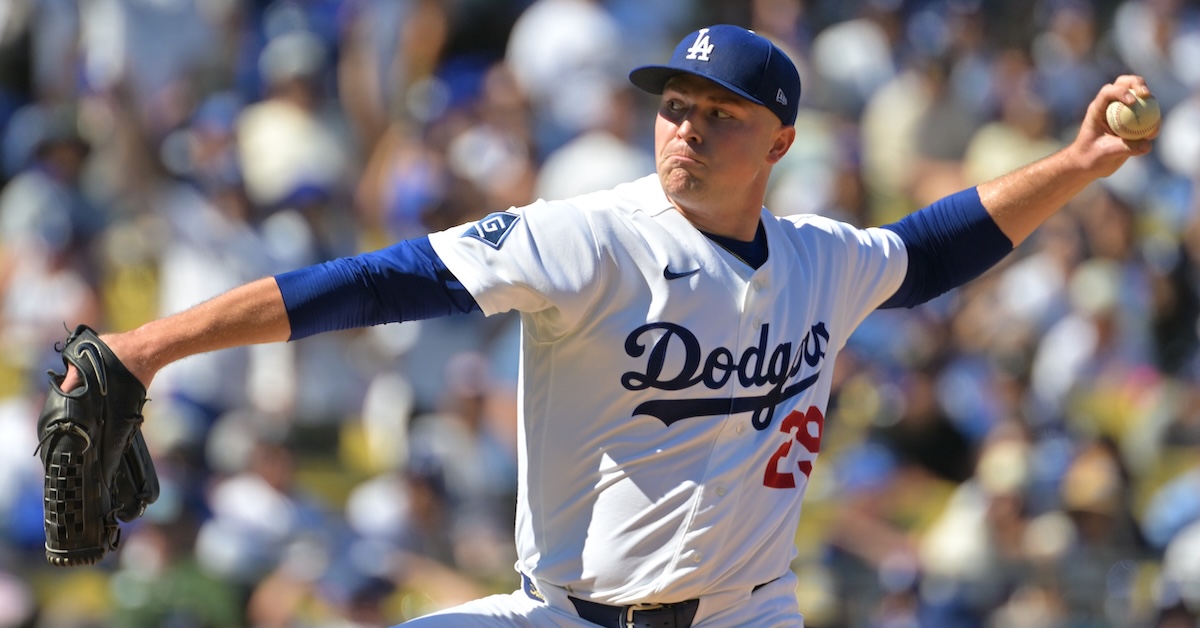
Full Article
Original Source
Read the full article at Blogs →KhanList aggregates and links to publicly available news content. We do not host full articles from third-party sources. Always verify important information with original sources.