
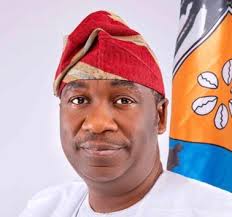
As the All Progressives Congress prepares to unveil the manifesto of its governorship candidate, Dr. Kadri Obafemi Hamzat, the contest presents an opportunity to consolidate Lagos’ development gains, deepen inclusive growth and respond to the aspirations of its rapidly expanding population, writes Wale Igbintade. Lagos has never been a state content to stand still. Its crowded roads, expanding neighbourhoods, bustling commercial districts and ambitious infrastructure projects tell the story of a city-state constantly negotiating the demands of growth. Yet beneath its reputation as Nigeria’s commercial powerhouse lies a continuing challenge: translating economic expansion into better living conditions for the millions who call it home. That challenge will occupy a central place in the political conversation ahead of the 2027 governorship election. For the All Progressives Congress (APC), which has governed the state since May, 1999, the election represents an opportunity to retain public confidence while responding to changing expectations. At the centre of the contest is the party’s governorship candidate, Dr. Kadri Obafemi Hamzat, popularly known as KOH. His candidacy offers the APC an opportunity to build on its development record while presenting a renewed vision for a state whose economic importance continues to attract residents, investors and businesses from across Nigeria and beyond. The planned unveiling of Hamzat’s manifesto on Friday, October 30, is therefore more than a campaign milestone. It provides an opportunity to explain how the next administration intends to sustain Lagos’s development momentum, confront persistent urban challenges and ensure that economic growth benefits a broader section of the population. For Hamzat, the task is to demonstrate that experience can inspire fresh solutions and that the next phase of Lagos’ development can be more inclusive, responsive and sustainable. His experience within the state’s political and administrative structure provides a foundation for the APC’s case. However, its value will ultimately be judged by how effectively it translates into policies and programmes that improve residents’ daily lives. The next administration must preserve what has worked, address shortcomings and adapt government priorities to the pressures accompanying Lagos’ growth. This requires more than maintaining existing projects; it demands a clear understanding of the state’s changing needs and the determination to respond to them. Infrastructure will inevitably occupy a prominent place in that conversation. Roads, bridges, drainage systems and public facilities remain critical to economic productivity and residents’ quality of life. Improvements can reduce travel time, facilitate commerce, strengthen neighbourhood connections and support business expansion. Yet infrastructure must increasingly be measured by its practical impact. Residents want roads that remain usable, drainage systems that reduce flooding, public facilities that function efficiently and transport networks that make commuting less exhausting. In a city where congestion consumes working hours and imposes substantial costs on businesses, integrating road development with efficient public transportation will remain a major test of governance. Hamzat, if elected, would have an opportunity to advance a coordinated approach connecting transport planning with housing, commercial activity and urban development. Such integration would ensure that infrastructure projects serve a broader strategy for improving mobility, productivity and residents’ welfare rather than operating as isolated interventions. Housing presents an equally pressing challenge. Lagos continues to attract people seeking employment, education and business opportunities, placing considerable pressure on the availability and affordability of accommodation, particularly for low-and middle-income earners. For many residents, the challenge is not simply finding a home but securing accommodation within reasonable reach of workplaces and essential services. When affordable housing is concentrated far from employment centres, residents spend a disproportionate share of their incomes on transportation and lose valuable time commuting. Addressing this problem requires sustained investment, effective urban planning, collaboration with private developers and policies that recognise different income groups. It also demands adequate infrastructure in residential areas, including roads, drainage, water supply, schools and healthcare facilities. Placing affordable housing alongside transportation and social infrastructure would help make Lagos more accessible to the workers and families who sustain its economic life. The broader question is whether government policies can convert Lagos’ commercial dynamism into opportunities that extend beyond established businesses and better-positioned households. Sustainable economic growth requires residents to have a realistic chance of participating in its benefits. For the next administration, this means looking beyond aggregate economic indicators to consider household incomes, the cost of living, access to essential services and the prospects available to young people. Security is equally inseparable from development. Businesses require a safe environment to operate, investors need confidence that their assets will be protected, and residents must be able to work, travel and conduct their daily activities without undue fear. Effective security depends on cooperation among government institutions, law-enforcement agencies, communities and other stakeholders. It also requires attention to the social and economic conditions that can leave vulnerable communities susceptible to criminal activity. A comprehensive strategy would combine effective policing and intelligence with improved street lighting, responsible urban planning, community engagement and opportunities for young people. The objective should be to create an environment where security supports economic activity and strengthens public confidence in government. Beyond infrastructure, employment and security lies the broader question of inclusion. Lagos’ diversity is one of its greatest strengths, but the benefits of development are not always experienced equally across its communities. An inclusive agenda under Hamzat would require public services to reach communities according to their needs, vulnerable residents to receive adequate consideration in urban planning, and economic opportunities to extend beyond a narrow segment of society. Such an approach would strengthen the social foundations of development and build confidence in the state’s long-term direction. Environmental sustainability presents another major challenge. Lagos’ coastal geography, intense rainfall, dense population and rapid urbanisation make drainage, waste management, flood prevention and climate resilience essential components of effective governance. Environmental interventions are most effective when infrastructure is supported by public education, enforcement and responsible urban planning. Drainage channels must be maintained, waste collection systems must function efficiently, and construction and land use must account for their environmental consequences. The next administration would have an opportunity to integrate environmental protection with transport, housing and infrastructure policies, reducing the long-term costs of environmental damage while protecting communities and supporting economic activity. The APC’s manifesto will provide an important platform for explaining how it intends to address these interconnected challenges. Its value, however, will depend on the clarity of its priorities and the credibility of its proposed solutions. A strong manifesto should identify the problems the government intends to solve, explain the policies through which it will pursue those objectives and demonstrate how the necessary resources will be mobilised. It should also establish a realistic basis for assessing progress after the election. For voters, the essential questions concern feasibility and delivery. Which projects will receive priority? How will the administration finance its commitments? What role will the private sector play? How will public spending translate into measurable improvements in living conditions? These questions do not diminish the importance of an ambitious vision. Rather, they underline the need to connect that vision with sound planning, responsible resource management and effective implementation. Public confidence will also depend on how the next administration engages with residents. A city as diverse and complex as Lagos cannot be governed effectively through a one-size-fits-all approach. Consultation with communities, businesses, professional groups, labour organisations, young people and civil society can help the government understand the practical consequences of its policies and identify solutions that might otherwise be overlooked. Such engagement should continue beyond the campaign period. Regular communication about policy decisions, project implementation and public expenditure would enable residents to understand government priorities and assess whether commitments are being fulfilled. For Hamzat, this presents an opportunity to make accountability a defining feature of his proposed administration. It would mean retaining successful policies, improving those that have fallen short and remaining open to new ideas that deliver better results. This distinction is particularly important in a state where the demands of urban growth continually evolve. Lagos needs a government capable of advancing long-term development projects while responding to immediate pressures on households and businesses. The significance of the 2027 election also extends beyond the immediate contest for the governorship. Lagos remains a major economic centre whose policies influence investment, employment and commercial activity across Nigeria. The effectiveness of its next administration will therefore have implications beyond the state’s borders. For the APC, retaining public confidence requires demonstrating that its years in government have established foundations capable of supporting further progress. The party must show that its experience can be translated into practical solutions for a population whose expectations continue to rise. Hamzat’s candidacy gives the party an opportunity to make that case through his administrative experience and a forward-looking development programme. His challenge is to present a credible vision that acknowledges previous achievements while addressing needs that remain unmet. The manifesto unveiling on October 30 will be an important moment in that process. It will allow the APC to explain how it intends to approach the next phase of Lagos’s development and how Hamzat proposes to translate his candidacy into a programme of governance. Ultimately, the success of that vision will not be determined by campaign promises alone. It will depend on the administration’s ability to establish clear priorities, mobilise resources, implement policies efficiently and deliver improvements that residents can see and experience. Lagos has demonstrated considerable capacity for growth and reinvention. Its next chapter will require the same ambition, reinforced by responsive planning, wider participation and a sustained commitment to improving everyday life. For Hamzat, the 2027 election represents an opportunity to help shape a Lagos that is more productive, better connected, safer and more inclusive. If the APC translates its development agenda into a credible programme of practical solutions, his candidacy could help consolidate the state’s gains while opening new possibilities for its people. The ultimate measure of success will be whether residents find it easier to move around the city, secure affordable homes, access decent jobs, operate businesses, raise families and plan for the future with greater confidence. That is the promise Hamzat must seek to fulfil, and the standard against which the next chapter of Lagos’s development will be judged.
2027: Hamzat and Need to Sustain Lagos’ Development Map
Full Article
Original Source
Read the full article at Thisdaylive →KhanList aggregates and links to publicly available news content. We do not host full articles from third-party sources. Always verify important information with original sources.