
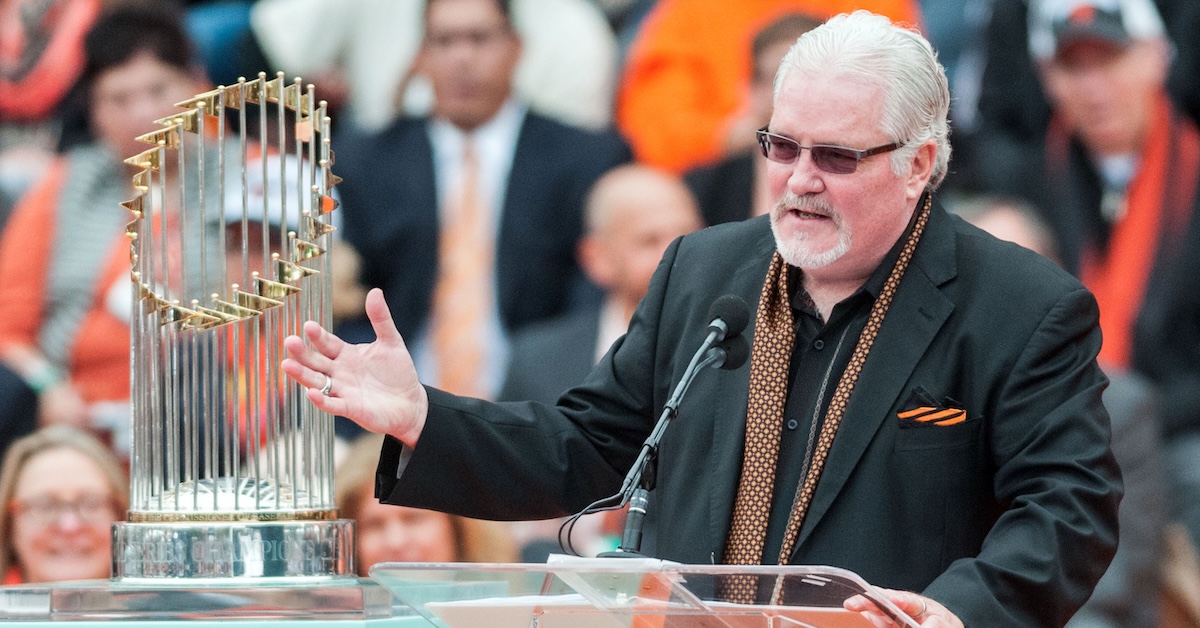
Ed Szczepanski-USA TODAY Sports This post is part of a series covering the 2027 Contemporary Baseball Era Committee Managers/Umpires/Executives ballot, which includes candidates in those categories who made their greatest impact from 1980 to the present. You’ll find an introduction to the ballot here. The eight candidates will be voted on in San Diego on December 6, and anyone receiving at least 75% of the vote from the 16 committee members will be inducted in Cooperstown on July 25, 2027 along with any candidates elected by the BBWAA. What makes a Hall of Fame executive? In an era where general managers and presidents of baseball operations have become as widely noticed and influential as managers — and perhaps more so – it’s a particularly pertinent question. Winning teams don’t emerge fully formed, instead taking years of planning, scouting, drafting, trades, and free agent signings. When those teams make the playoffs and win pennants and World Series, their architects are lauded. Yet from among the 40 Hall of Famers classified under the pioneers and executives umbrella, only two GMs from the post-1960 expansion era have been elected, namely Pat Gillick and John Schuerholz. Elected by the 2011 Expansion Era Committee, Gillick built teams that totaled nine division titles, two Wild Card berths, and three pennants, winning championships in Toronto (1992–93) and Philadelphia (2008). Elected by the 2018 Today’s Game Era Committee, Schuerholz built teams that totaled 16 division titles and six pennants, with one championship apiece in Kansas City (1985) and Atlanta (1995). Both men clearly belong in Cooperstown, but their lack of company from 66 years of post-expansion baseball suggests that either Hall voters should ignore most execs despite their being granted precious space on committee ballots or that the role is tremendously underrepresented within the Hall, with a backlog of impressive candidates who played key roles in building multiple winners and made substantial contributions in other areas. That backlog includes 2027 candidates Sandy Alderson and Brian Sabean. In the first 20 seasons of the Wild Card era, only three teams won at least three championships, namely the Yankees (1996, ’98–2000, ’09), Red Sox (2003, ’07, ’13), and Giants (2010, ’12, ’14). Sabean had a hand in two of those runs of success. As a scout and eventually vice president of player development/scouting for the Yankees from 1985–92, he showed a keen eye for talent, playing a notable role in the acquisition and development of Bernie Williams and the “Core Four” of their Joe Torre-led dynasty, namely Hall of Famers Derek Jeter and Mariano Rivera, plus Andy Pettitte and Jorge Posada. After joining the Giants in 1993 — the beginning of Peter Magowan’s tenure as managing general partner and the additional arrivals of Barry Bonds and manager Dusty Baker — Sabean became their GM in late ’96. He built the Giants’ 2002 pennant winners as well as those three championship teams. Sabean’s 18-year run as GM bridged the managerial stints of Baker and Bruce Bochy, both of whom are also on this ballot; together those managers account for four of the Giants’ five division titles and all three Wild Card berths from Sabean’s reign, with a division title in Felipe Alou’s first year as manager (2003) the exception. Sabean’s Baker- and Alou-era teams featured cores built largely through free agency and trades, none more significant than the November 1996 acquisition of Jeff Kent. Sabean’s Bochy-era clubs relied more on homegrown talent such as draftees Tim Lincecum, Madison Bumgarner and Buster Posey, and international free agent Pablo Sandoval. Including his Yankees tenure, Sabean left a substantial footprint on three decades worth of baseball. … Brian Sabean was born on July 1, 1956 in Concord, New Hampshire. His father, C. Roy Sabean, was a firefighter and later an inspector at the Bureau of Health Facilities and a safety officer at New Hampshire Hospital in Concord, while his mother Gloria (née Nicholas) was a cartographer for the state of New Hampshire. At Concord High School, Sabean excelled at baseball and football; on the diamond he played second base on a team with future major league outfielder Joe Lefebvre, while on the gridiron he played defensive back and wide receiver, earning All-State honors. Sabean continued to play both sports at the University of Maine, but after a separated shoulder ended his football career, he transferred to Eckerd College in St. Petersburg, Florida, where he was teammates with Lefebvre and another future major leaguer, Steve Balboni, under coach Bill Livesey. Balboni and Lefebvre would be drafted by the Yankees, with the latter later serving as a coach and roving minor league instructor in the Yankees’ organization (1990-95) and then that of the Giants (1996–2001) before becoming Baker’s first base coach (2002) and Alou’s hitting coach (2003–07); since 2008, he’s served the Giants in a variety of senior advisory and scouting roles. After college, Sabean managed the Yarmouth-Dennis Red Sox in the Cape Cod League (1978), then served as an assistant coach at St. Leo College (1979) and the University of Tampa (1980–82). Promoted to head coach at the latter institution in 1983, he led the school to its first NCAA regional tournament the following year. The Yankees hired Livesey as a scout in 1978, and after a year of that and a year managing their Rookie-level team in Paintsville, Kentucky, he was promoted to replace the late Jack Butterfield as the the team’s director of player development. Livesey arranged for the Yankees to hire Sabean as a scout in 1985. A year later, Sabean was promoted to director of scouting, and in 1990 he became VP of player development/scouting. In those roles, he helped find the players who would fuel the upcoming Yankees’ dynasty. From Joel Sherman’s Birth of a Dynasty: Behind the Pinstripes with the 1996 Yankees: The Yankees… spent the latter half of the 1980s and the early 1990s developing one of the majors’ strongest farm systems, thanks to four men in particular: Bill Livesey, Brian Sabean, George Bradley, and Mark Newman. Livesey and Sabean were masters at finding talent. They had a flock of loyal scouts that stayed together for a long time, so the group was in accord on what Livesey and Sabean preached. They wanted their scouts to take risks and scour the world for talent. They emphasized winning in the minor leagues. They thought knowing how to win was a vital tool that should be stressed up and down the system, and that games should be played to win, not to build prospects’ stats. They favored size and athleticism. Dick Groch, the Yankees’ area scout for the Midwest, found Jeter at Central High School in Kalamazoo, Michigan. After multiple Yankees cross-checkers followed up, so did Sabean. “Brian scouted Jeter personally, and it’s frightening what a good job he did with that one,” former Yankees GM Bob Quinn told the San Jose Mercury News’ Dan Brown in 2007. “Gee whiz, how often do you get a player of his quality and his character?” While owner George Steinbrenner preferred college players, “Sabean made a persuasive case on draft day, and the Yankees selected Jeter with the sixth overall choice [in 1992],” wrote Brown. Sabean and his scouting team were also involved in the decision to convert Posada, a shortstop they’d drafted in the 24th round in 1991, to catcher instead of releasing him, and to protect Rivera, then a sore-armed starter, from the Rule 5 draft. By the time those players reached the majors, Sabean was in San Francisco. Quinn, after whirling through the revolving door of the Yankees’ GM job from mid-1988 to late ’89, spent three years as the Reds’ GM, hiring Lou Piniella and overseeing their 1990 World Series winners before being fired after the ’92 season. Magowan hired Quinn as the first GM of his regime, and Quinn hired Sabean to be assistant to the GM and vice president of scouting/player personnel. The 1993 Giants won 103 games under Baker, but finished one game behind the Braves in the NL West race. They sank below .500 in both strike-shortened seasons; for the latter one, Sabean was promoted to senior vice president of player personnel. After the Giants went 68-94 in 1996, Quinn was eased into a senior advisor role and Sabean promoted to replace him and given a four-year contract. About six weeks into his tenure, he made what would stand as the biggest trade of his career, sending four-time All-Star third baseman Matt Williams to Cleveland in a six-player deal that brought in Kent, a future MVP and Hall of Famer, shortstop Jose Vizcaino, and $1 million cash, which went towards signing center fielder Darryl Hamilton. The blowback was intense, as Kent had yet to emerge as the dependable middle-of-the-lineup thumper he would become; 93% of readers responding to a Mercury News poll disapproved of the trade. Sabean received death threats on both his home and work phones. “All of a sudden I went from being the guy who is going to help the club to being an idiot. Well, I’m not an idiot,” he said at a second press conference to address the post-trade fallout, and later added, “I didn’t know we had this many fans… You sure don’t see ’em at the ballpark.” While Williams helped Cleveland reach the 1997 World Series, Kent, Vizcaino and rookie third baseman Bill Mueller — a first-round pick in 1993 — shored up weak spots on the infield. So did first baseman J.T. Snow, a 1989 Yankees draftee whom Sabean acquired from the Angels two weeks after the Kent trade. With young lefty starters Shawn Estes and Kirk Rueter leading the rotation, the 1997 Giants rebounded to 90 wins and a first-place finish in the NL West before being swept by the Marlins in the Division Series. In November 1997, amid Florida’s post-championship fire sale, Sabean traded three prospects to acquire fireballing closer Robb Nen. Of the prospects, only one (Joe Fontenot) even tasted the majors, while Nen made three All-Star teams in six seasons as a Giant. Still, the team finished a distant second in the NL West in both 1998 (89-74) and ’99 (86-76), losing to the Cubs in a Game 163 tiebreaker for the Wild Card spot in the former season and missing Bonds for seven weeks due to a torn triceps tendon in his right elbow in the latter one. According to testimony from Bonds’ former mistress Kimberly Bell given during his 2011 federal trial for perjury and obstruction of justice, the slugger attributed the injury to his use of anabolic steroids obtained from the Bay Area Laboratory Co-Operative. Allegations surrounding Bonds’ PED usage and BALCO would cause Sabean (and Baker) major headaches in the coming years. In 2000, the Giants moved into Pacific Bell Park and won their second NL West title under Sabean, fueled by an MVP-winning career year from Kent and a 49-homer rebound from Bonds. Alas, they lost a four-game NLDS to the Mets. In 2001, Bonds’ 73 homers broke the single-season record of 71 set by Mark McGwire in 1998, but even with big supporting seasons from Kent and slugging shortstop Rich Aurilia and a strong second half (44-30, after a 46-42 first half), the team finished two games behind the Diamondbacks in the NL West. Sabean did pull off a notable trade ahead of the July 31 deadline, acquiring 28-year-old righty Jason Schmidt from the Pirates in a four-player deal that sent away 1998 fifth-round pick Ryan Vogelsong, who wouldn’t really find his footing in the majors until returning to the Giants in 2011. When Schmidt became a free agent after the 2001 season, the Giants re-signed him to a four-year deal with a club option for ’05; he made three All-Star teams and had two top-four finishes in the Cy Young voting in that span. The 2001–02 offseason also included the Giants re-signing Bonds to a five-year, $90 million deal. The 2002 Giants endured extreme highs and lows. On March 1, Kent broke a bone in his wrist, initially claiming it happened while washing his truck; soon it became clear that he’d crashed his motorcycle while doing a wheelie near Scottsdale Stadium, the Giants’ spring training home. As motorcycle riding was prohibited in Kent’s contract, the Giants mulled disciplining the slugger. “We’ll weigh all the information and all the options. The most important thing is to get him back on the field. Meantime, all this other stuff is a distraction,” said a measured Sabean. “We hold all the cards, not that we want to use them.” Fortunately, Kent missed just four games, but on June 25, he and Bonds scuffled in the dugout after Kent yelled at third baseman David Bell (incidentally, a three-win addition who arrived in an offseason trade with the Mariners). Baker helped separate Kent and Bonds, and managed to keep the incident from tearing apart the clubhouse. For all the drama, the Giants went 95-66 as Sabean acquisitions such as free agents Reggie Sanders (signed in January 2002), Benito Santiago (signed in March 2001, and an All-Star for the first time in 10 years in ’02), Kenny Lofton (a deadline trade with the White Sox), and Bell provided substantial support for Bonds and Kent. The team went an NL-best 36-18 after July 31 and claimed the Wild Card berth, then for the first time under Baker advanced in the postseason, beating the Braves in a five-game NLDS and then the Cardinals in a five-game NLCS, sending them to their first World Series since 1989. Facing the Angels in the World Series, they were up 3-0 and eight outs away from clinching in Game 6 when things fell apart, and then they lost Game 7 as well. Days later, Sabean agreed in principle to a multiyear extension and set about negotiating with Baker, whose contract was also up, but things unraveled, not unlike in Game 6. Sabean and Baker had entered the season as lame ducks due to Magowan’s frustration over the team’s failure to reach the World Series. That didn’t sit well with Baker, nor did Magowan’s statement that this was the best edition of the team during his ownership tenure, which the manager felt added additional pressure. The heightened media attention he received during the World Series run meant fielding questions about his job status, and apparently his musing wasn’t music to the ears of Magowan and Sabean. On November 6, the Giants announced Baker would not return for the 2003 season. “It has become increasingly apparent that Dusty’s interest in exploring opportunities elsewhere is paramount in his mind,” said Sabean. “There remained non-compensation issues that he seemed reluctant to embrace. His opinion, which he has repeatedly expressed publicly, speaks volumes about his relative disposition to favor outside opportunities more than continuing with the Giants.” While Baker inked a four-year deal to manage the Cubs, Sabean turned to Alou, who had won NL Manager of the Year honors in 1994 while leading the Expos to the best record in baseball before the strike hit. To replace Kent, who departed for the Astros, he signed Ray Durham to a three-year, $20.1 million deal with a $7 million player option for a fourth season, and additionally added Edgardo Alfonzo, José Cruz Jr., Andres Galarraga, and Marquis Grissom. Not every deal panned out, but Cruz, Durham, and Grissom were the second-, third-, and fourth-most valuable position players on a 100-win team that captured the NL West in 2003. Alas, the Giants were again upended in the NLDS by the Marlins, this time a squad teeming with talented youngsters instead of aging stars. Under Alou, the Giants receded to 91 wins and second place in 2004 and then seasons of 75 and 76 wins in ’05 and ’06. Increasingly, Bonds’ presence — and absence — overshadowed everything else going on with the team. In December 2003, his name surfaced as one of six major league players (including Santiago) and 21 other athletes connected to BALCO, specifically regarding the sale and distribution of previously undetectable steroids. Bonds testified in front of a grand jury that he had received two such steroids, “the Clear” and “the Cream,” from personal trainer Greg Anderson during the 2003 season, but said that he had been told that they were flaxseed oil and a rubbing balm for arthritis. When confronted with documentation allegedly detailing his steroid regimen from 2001-03, he claimed to have no knowledge that any substance he had ingested was illegal. A federal investigation into whether he perjured himself became a saga that would drag on past the end of his career and call into question what Sabean and the Giants knew and when. While Bonds continued to dominate on the field in 2004 — the first year of Major League Baseball’s testing program, weak though it was — publicly he professed not to know BALCO, though in December, his leaked grand jury testimony showed otherwise. Meanwhile, he underwent four knee surgeries from October 2004 (a cleanup of his left knee) to May ’05 (for a cleanup of his right knee, a new meniscus tear, and then an infection) and played just 14 games, slowing down his pursuit of Henry Aaron’s all-time home run record and leaving the team rather punchless; no Giant hit more than 20 homers, and only two (Durham and Moises Alou, Felipe’s son) played more than 58 games and produced a 100 wRC+ or higher. As for the 2006 season, when Game of Shadows, the book by reporters Mark Fainaru-Wada and Lance Williams chronicling Bonds and the BALCO scandal, was published in March, Sabean declined to address its allegations, telling reporters, “Just baseball, guys.” While Bonds returned to hit 26 homers in 2006, again Durham and Alou were the only other players with above-average production. The reality was that the Giants were suffering from years and years of poor drafting. Despite Sabean’s track record for finding talent, they had not produced a single impact player since his 1993 arrival, and had traded what little useful talent they scared up via the draft for veterans, forcing them to go to the free agent well all too often. From 2003–06, their lineup was the league’s oldest in three seasons, and a close second in another. From 1993 (when Sabean was still in scouting and player development) through 2000, none of the Giants’ 15 first round picks (including supplementary ones) totaled 5.0 WAR in the majors — I’m using bWAR here as it’s tied to Baseball Reference’s comprehensive draft data — and seven produced negative WAR; the most valuable of them, Jason Grilli (the fourth overall pick in 1997, 4.6 WAR) was traded to the Marlins in a 1999 deal for Livan Hernandez. The only one who delivered at least 1.0 WAR to the Giants in that span was 1999 supplementary first-round pick Jerome Williams, who netted 3.7 WAR in two-plus seasons (2003–05) before being traded to the Cubs in a deal for LaTroy Hawkins. Only seven of the non-first round picks they drafted in that span produced at least 9.0 WAR in their careers, and worse, only Mueller (15th round in 1993, 23.9 WAR) and starter Russ Ortiz (fourth round in 1995, 13.2 WAR) produced at least 3.0 WAR for the Giants before being traded (Chris Singleton, Bob Howry, Keith Foulke, Scott Linebrink, and Joe Nathan were the ones that got away). Their 1996, ’98, and 2000 drafts produced nobody of any lasting value unless you count Vogelsong’s return 15 years down the road. Sabean’s November 2003 acquisition of Twins catcher A.J. Pierzynski in exchange for their most valuable pick in that span, Nathan (sixth round in 1995, 26.7 WAR) along with 2000 first-round pick Boof Bonser, and 2000 international signee Francisco Liriano, helped Minnesota make the playoffs three times while costing the Giants two future All-Stars, one of them a near-Hall caliber closer. Draft-wise, the Giants began improving in 2001. First-round pick Noah Lowry, a lefty starter, produced 10.0 WAR from 2003–07 before his career was curtailed by arm injuries. Matt Cain, their 2002 first-round pick, produced 29.0 WAR from 2005–17 and played a major role on the ’10 and ’12 championship teams, but their only ’03–05 draft picks who delivered even 5.0 WAR to the Giants were relievers Brian Wilson (24th round in 2003, 5.6 WAR) and Sergio Romo (28th round in 2005, 10.0 WAR). And it’s not as though they made up ground with international signings. A 2024 study by The Athletic’ Grant Brisbee showed that from 1993–2009, only two such players produced at least 3.0 bWAR for the Giants, namely 1994 signee Pedro Feliz (6.2 WAR from 2000–07) and 2003 signee Pablo Sandoval (20.8 from 2008–14). When Alou’s four-year contract expired after the 2006 season, the Giants relieved him of managerial responsibility; he assumed a special assistant role. In a rare ownership mea culpa, Magowan publicly took the blame for the 2005–06 teams’ over-reliance on older players. Sabean echoed him, telling reporters, “Older and experienced hasn’t worked, and by virtue of going down that path and finishing below .500 and finishing third, and being extremely disappointed, and knowing the fans have a lot invested in this, it’s incumbent on us to put the best possible team on the field after the last two years.” Magowan declared that the search for a manager would align with the turn towards younger players, saying, “If we have players we expect to see around for three, four, five, six years, it would just make sense to have a manager we think might be there for that kind of period of time as well.” The team turned to the 51-year-old Bochy, who in 12 years of managing the Padres had led them to four first-place finishes (including 2005 and ’06) and a pennant. The Giants received permission to speak to Bochy when Padres GM Kevin Towers told him that no extension beyond 2007 was forthcoming at the time. On December 29, 2006, the Giants signed former AL Cy Young winner Barry Zito to a seven-year, $126 million contract, the largest ever for a pitcher. Recognizing that the youth movement wouldn’t happen overnight, Sabean re-signed Durham and Feliz and added a host of aging free agents, including Ryan Klesko, Bengie Molina, and Dave Roberts. He also brought back Bonds on a one-year, $15.8 million deal that included language barring his personal trainers from accessing restricted areas at major league parks and allowing the team to cut bait without fear of a grievance if he were to be indicted. While Bonds hit well and surpassed Aaron with a homer off the Nationals’ Mike Bacsik on August 7, the Giants won just 71 games, as many of the aforementioned free agents proved to be on their last legs. Nonetheless, Cain’s 200-inning season, good work from Lowry, and a solid rookie campaign from Lincecum (the 10th pick of the 2006 draft) suggested the Giants were on the right track. Meanwhile, Sabean and the Giants came off poorly in the December 2007 release of the Mitchell Report. The report noted that Sabean took no action when team trainer Stan Conte told him in 2002 that he suspected Anderson was dealing steroids in the clubhouse. The report also said that after federal agents raided BALCO and Anderson’s home in September 2003, Magowan asked Sabean whether the Giants “had a problem” regarding Anderson dealing steroids to players, and Sabean told him he was not aware of any such problems (Sabean strongly denied such a conversation occurred). While the Giants went just 72-90 in 2008 — Magowan’s last year as managing general partner before yielding to Bill Neukom — they improved to 88-74 in ’09. Lincecum, an undersized righty whose understanding of biomechanics enabled him to pump fastballs in the mid-90s, won back-to-back Cy Youngs and made back-to-back All-Star teams in those two seasons; he was the first Giant to win the Cy since Mike McCormick in 1967, and the first homegrown Giants player to win either that or the MVP award since Willie McCovey in ’69. Wilson and Cain each made the first of three All-Star teams in this span (the former in 2008, the latter in ’09), and Sandoval, a converted catcher, established himself as the team’s regular third baseman. Though Lincecum’s performance took a step back the following year, a rotation featuring him, Cain, 2004 27th-round pick Jonathan Sánchez (in a year where his WAR exceed his career total), a rookie Bumgarner (the seventh pick in 2010), and Zito (by this point an expensive innings-eater), a bullpen led by Wilson and Romo, and a lineup featuring a rookie Posey (the fifth pick in 2008) overcame a 41-40 start to overtake the Padres in the season’s final week and win the NL West with a 92-70 record. While going 6-1 in one-run games, the team beat the Braves in the NLDS and the Phillies in the NLCS, with August waiver acquisition Cody Ross homering three times en route to series MVP honors against Philadelphia. In the World Series, the Giants rolled over the Rangers in five games to win their first championship since 1954, with shortstop Edgar Rentria, who hit just three homers during the regular season, homering twice and winning MVP honors. With Posey suffering a season-ending fractured left fibula and ligament damage on a collision at the plate in late May, the Giants dipped to 86 wins and missed the playoffs in 2011. Late in the season, the team restructured its ownership, with Neukom stepping down as managing general partner and Charles B. Johnson emerging as the team’s largest shareholder. At the start of 2012, Larry Baer became the team’s CEO and president. On the field, the 25-year-old Posey returned from his injury and had a spectacular season, winning the NL MVP award and the batting title (thanks to an absurd sequence of events involving teammate Melky Cabrera’s 50-game PED suspension), while first baseman Brandon Belt (a 2009 fifth-round pick) and shortstop Brandon Crawford (a 2008 fourth-round pick) took big steps forward after debuting in 2019. Half a game out of first place at the All-Star break, the Giants finished 94-68, winning the NL West by eight games. They overcame a two-games-to-none deficit in the NLDS against Baker’s Reds, and a three-games-to-one deficit in the NLCS against the Cardinals, with unlikely heroes such as Zito, Vogelsong, and deadline acquisition Marco Scutaro coming up big; the last of those was the series MVP. In the World Series, Sandoval tied a single-game record with three homers in Game 1, Bumgarner and Vogelsong spearheaded combined shutouts, and the Giants swept the Tigers. The Giants sank to 76 wins in 2013, but they continued their even-year magic by rebounding to win it all again in ’14. This time the 25-year-old Bumgarner led the way, as Lincecum and Cain had slipped to replacement level, with the latter additionally sidelined by surgery to remove bone chips in his elbow. While their 88 wins only netted a Wild Card berth, Bumgarner spun a four-hit, 10-strikeout shutout against the Pirates in the Wild Card Game. The team outlasted the Nationals in a four-game NLDS that felt like five, as Game 2 lasted 18 innings; all three Giants wins were by one run. Bumgarner then won MVP honors for both the NLCS and World Series. He made two strong starts in a five-game victory over the Cardinals and then allowed just one run in 21 innings in a seven-game victory over the Royals; after throwing another four-hit shutout in Game 5, he returned on two days of rest to toss five shutout innings out of the bullpen, earning a save in a 3-2 win that ended with the potential tying run on third base. At the time the Giants won, Sabean was the majors’ longest-tenured GM at 18 years. At the start of the 2015 season, the Giants rewarded him with a promotion to president of baseball operations and elevated assistant GM Bobby Evans to GM and senior VP, making him the team’s top negotiator and point person in dealing with free agents. The team finished second in the NL West in both 2015 and ’16, missing the playoffs with 84 wins in the earlier season but making it as the second Wild Card with 87 wins in the latter despite frittering away a 6.5-game division lead with a 30-42 second half. Bumgarner threw another four-hit shutout in a Wild Card Game, this time against the defending NL champion Mets, but the Giants lost a four-game NLDS to the Cubs, managed by this ballot’s Joe Maddon. Things unraveled for the Giants after that, at least along the Sabean/Bochy timeline. With Bumgarner limited to 17 starts and the offense besides Posey and Belt basically average or worse, the 2017 team went an NL-worst 64-98, and after improving only to 73-89 in 2018, Evans was fired. While Sabean participated in the search for his successor, he was nudged into an executive VP role with the hiring of Dodgers GM Farhan Zaidi as the team’s president of baseball operations. Bochy announced ahead of the 2019 season that it would be his last; the team went 77-85. Sabean, whose contract expired, moved into a senior advisory and scouting role, ending an era. … There’s no JAWS for executives to measure Hall of Fame fitness, and a limited set against which to make comparisons. Among the 40 individuals inducted as pioneers and executives (including those from the Negro Leagues and pre-Negro Leagues Black baseball), only six made their primary contributions as GMs from the AL or NL. Of those six, Ed Barrow and George Weiss are connected to Yankees dynasties that won oodles of championships in the pre-expansion era. Branch Rickey built championship teams in St. Louis while creating the modern farm system and then kick-starting integration in Brooklyn. Larry MacPhail served as the GM of the championship-winning 1947 Yankees, and performed similar duties for the Dodgers’ pennant-winner in ’41 while wearing the title of team president; additionally, he was an innovator who played a pivotal role in modernizing the game through the establishment of night baseball (while with the Reds in the 1930s), televised baseball, and air travel. That leaves Gillick and Schuerholz as — among other things — the only enshrined GMs to navigate team-building in the era of the amateur draft, free agency, and divisional play. Quite frankly, such underrepresentation is absurd given the impact of GMs as architects of teams, not to mention their increasingly high profiles. The 21st century has given rise to a host of influential and successful team-builders who are ripe for election, including not only Sabean but also Brian Cashman, Dave Dombrowski, Theo Epstein, and Andrew Friedman, all of whom built multiple World Series winners. Alderson, who built four pennant winners and one champion from 1988 to 2015 while bringing the sabermetric principles of Bill James and Eric Walker into the realm of team-building, is worthy of strong consideration, and likewise his protege, Billy Beane. Reaching back to the 20th century, the likes of Buzzie Bavasi, Frank Cashen, Harry Dalton, Bob Howsam, and Hank Peters merit long looks, too. Those from the latter group who have appeared on committee ballots have been roundly ignored, creating a logjam that only threatens to increase once the aforementioned 21st-century GMs come up for election. Particularly with a backlog of well-qualified managers and the advent of the Hall’s two-strikes rule (a candidate receiving five votes or fewer from one committee is ineligible for the next cycle, and if it ever happens again, the candidate is permanently ineligible), I fear that many of these candidates will slip through the cracks despite their sizable impact on the game. As I noted when this ballot was released, I see more of these candidates as viable Hall of Famers than a voter has slots on their ballot. Sabean certainly belongs in that group when one considers not only his role in San Francisco’s success, but also his help laying the groundwork for the Bronx dynasty. He’s left a Giant mark.
2027 Contemporary Baseball Era Committee Candidate: Brian Sabean
Full Article
Original Source
Read the full article at Blogs →KhanList aggregates and links to publicly available news content. We do not host full articles from third-party sources. Always verify important information with original sources.