
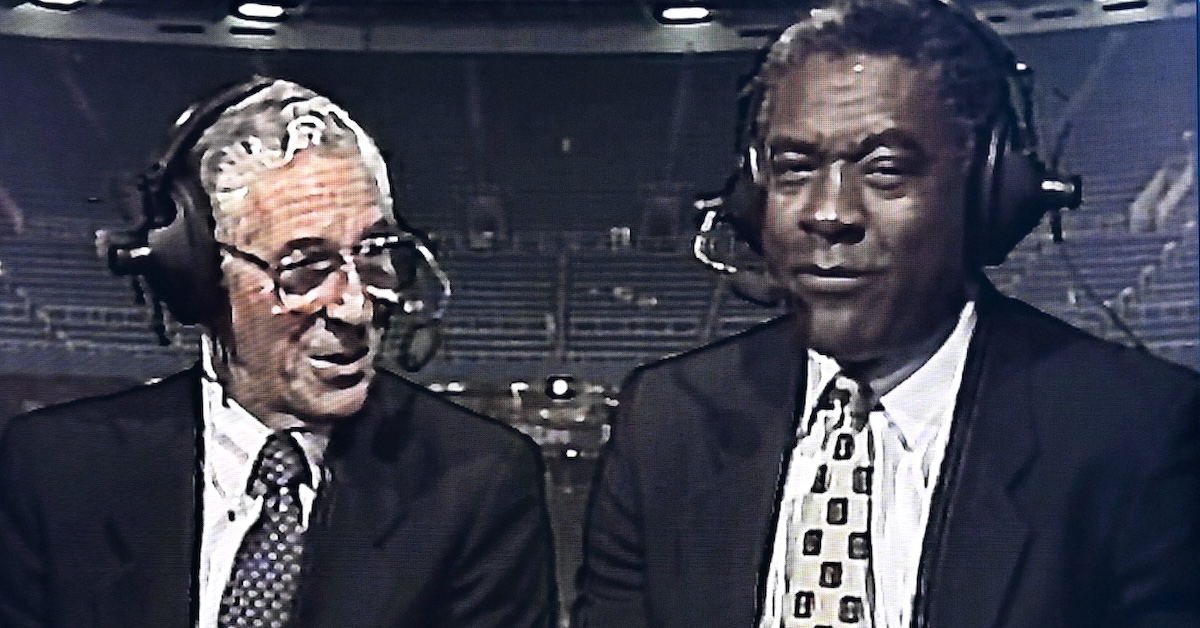
JON RATHBUN / Herkimer Times Telegram / USA TODAY NETWORK via Imagn Images This post is part of a series covering the 2027 Contemporary Baseball Era Committee Managers/Umpires/Executives ballot, which includes candidates in those categories who made their greatest impact from 1980 to the present. You’ll find an introduction to the ballot here. The eight candidates will be voted on in San Diego on December 6, and anyone receiving at least 75% of the vote from the 16 committee members will be inducted in Cooperstown on July 25, 2027 along with any candidates elected by the BBWAA. 2027 Contemporary Baseball Candidate: Executive Bill White Player Career WAR Peak WAR JAWS Bill White 38.6 32.1 35.3 Avg. HOF 1B 65.0 42.1 53.5 H HR AVG/OBP/SLG OPS+ 1,706 202 .286/.351/.455 117 SOURCE: Baseball-Reference In the rules for Era Committee voting published on the Hall of Fame’s website, the provision regarding eligible candidates reads in part, “Those whose careers entailed involvement in multiple categories will be considered for their overall contribution to the game of Baseball; however, the specific category in which these individuals shall be considered will be determined by the role in which they were most prominent.” In theory, this makes sense, but in practice, the various Era Committees have produced rather inconsistent results when it comes to weighing candidates with contributions in multiple areas. For example, the elections of Gil Hodges and Jim Kaat as players on the 2022 Golden Days ballot suggest an additive effect of their additional contributions — the former as a manager, the latter as a broadcaster — atop long, good-to-great playing careers that didn’t quite measure up as Hall-worthy in the eyes of BBWAA voters or previous committees (to say nothing of JAWS). Yet managers haven’t been treated similarly in the recent past, with Davey Johnson and Lou Piniella each falling short twice and seeming to get less credit for solid playing careers atop stronger (but hardly unassailable) qualifications as skippers. Those careers didn’t put them ahead of similarly qualified managers with no major league playing experience, such as Jim Leyland, who was elected on a 2024 ballot that contained both Johnson and Piniella. Meanwhile, Felipe Alou, whose career WAR is greater than those of Johnson and Piniella combined but whose managerial record is limited by years spent with the impoverished Expos, has never been on an Era Committee ballot. This quickly gets messy. Bill White is a candidate who should benefit from voters considering the cumulative impact of his career, as he made major contributions in three separate areas, none of which by themselves would be enough to earn enshrinement but within a larger portfolio look more impressive. As a player with the Giants, Cardinals, and Phillies from 1956 to ’69, White won seven consecutive Gold Gloves and earned All-Star honors in five seasons. He helped the Cardinals win the 1964 World Series, but even before that, he made a bigger impact by speaking out against the Jim Crow laws that separated Black players from their teammates in segregated Florida during spring training, long after the color line had fallen. After retiring from playing, White began an 18-year run (1971–88) calling Yankees games and working for national networks, one that made him the first full-time Black play-by-play broadcaster in any sport. After retiring from broadcasting, he spent five years (1989–94) as president of the National League, making him the first Black person to assume such a post and the highest-ranking Black executive in any sport at the time. It adds up to a unique and admirable career as an ambassador for the game. In fact, after White received 10 votes on the 2024 ballot, the Hall itself honored him with the 2026 Buck O’Neil Award, given once every three years to “an individual whose extraordinary efforts enhanced baseball’s positive impact on society, broadened the game’s appeal, and whose character, integrity and dignity are comparable to the qualities exhibited by O’Neil.” Given that O’Neil, who received the inaugural award posthumously in 2008, was elected to the Hall on the 2022 Early Baseball ballot, and that White has returned as a candidate on this one, it should be clear that one honor does not preclude the other. William DeKova White was born into a family of sharecroppers on January 28, 1934 in Lakewood, Florida. He never knew his father, and his first home had no electricity or indoor plumbing. When he was three, his mother moved the family to Warren, Ohio, where she worked as a housecleaner before going to secretarial school and getting a civilian job with the U.S. Air Force. The family lived in segregated housing, but White attended the mostly white Warren G. Harding High School, where he was elected senior class president. By tradition, the class president was supposed to have the first dance with the prom queen… but the school’s principal ended that tradition because the queen was white. White lettered in three sports, but he was a better student (second in his class) than he was an athlete. “I was first string in nothing. I was about the third-string halfback in football, and in basketball I was the 10th man on a 10-man team,” he recounted in 2011. He nonetheless received football scholarship offers but chose to accept an academic scholarship to Hiram College in Hiram, Ohio. While playing for the baseball team as an 18-year-old, he drew the attention of Giants bird dog scout Alan Fey by homering twice in a championship game played at the Reds’ Crosley Field. Fey invited him to try out for Giants manager Leo Durocher, who saw him hit balls over Forbes Field’s right-field wall (the team was in Pittsburgh). The Giants offered him a contract, which he agreed to once the team raised its bonus offer to $2,500. His mother let him sign with a promise that he would finish college; he figured to pursue a medical degree if he didn’t reach the majors in three or four years.You Aren't a FanGraphs MemberIt looks like you aren't yet a FanGraphs Member (or aren't logged in). We aren't mad, just disappointed. We get it. You want to read this article. But before we let you get back to it, we'd like to point out a few of the good reasons why you should become a Member. 1. Ad Free viewing! We won't bug you with this ad, or any other. 2. Unlimited articles! Non-Members only get to read 10 free articles a month. Members never get cut off. 3. Dark mode and Classic mode! 4. Custom player page dashboards! Choose the player cards you want, in the order you want them. 5. One-click data exports! Export our projections and leaderboards for your personal projects. 6. Remove the photos on the home page! (Honestly, this doesn't sound so great to us, but some people wanted it, and we like to give our Members what they want.) 7. Even more Steamer projections! We have handedness, percentile, and context neutral projections available for Members only. 8. Get FanGraphs Walk-Off, a customized year end review! Find out exactly how you used FanGraphs this year, and how that compares to other Members. Don't be a victim of FOMO. 9. A weekly mailbag column, exclusively for Members. 10. Help support FanGraphs and our entire staff! Our Members provide us with critical resources to improve the site and deliver new features! We hope you'll consider a Membership today, for yourself or as a gift! And we realize this has been an awfully long sales pitch, so we've also removed all the other ads in this article. We didn't want to overdo it. In case you didn't read all that, here's the short version. Membership includes:✓Ad-free browsing✓Unlimited FanGraphs & RotoGraphs articles✓Historical & platoon projections✓Leaderboard & player-page stat heatmaps✓One-click data exports✓Customizable player-page dashboards✓Dark & Classic site modes✓Weekly Members-only mailbag✓FanGraphs Walk-Off, your year in review✓Optional homepage photo removal✓Gift articles to non-Members✓Full postseason coverage White’s entry into professional baseball brought him face to face with some of the ugly realities of segregation circa 1953. In Phoenix, where the Giants trained, he was turned away from a movie theater that lacked a balcony for segregated seating. In the Carolina League, where he began his career with the Giants’ Danville (Virginia) affiliate, he was the circuit’s only Black player, a target for epithets and, in one game in North Carolina, death threats. In his 2011 memoir Uppity: My Untold Story About The Games People Play, he recounted one fan shouting, “You’ll be lucky if your black a– makes it out of here alive.” White only exacerbated the situation by giving the fans the middle finger. His teammates escorted him to the bus, which the mob pelted with rocks. Despite the abuse, White hit well at Danville, Sioux City (1954) and Dallas (1955). He played just 20 games at Triple-A Minneapolis in 1956 before being called up to the Giants to replace slumping first baseman Gail Harris. Facing the Cardinals’ Ben Flowers on May 7, he homered in his first plate appearance, adding a double and a single. The 22-year-old rookie held the job for the rest of the season, hitting .256/.321/.459 (108 OPS+) with 22 homers overall. White’s career was interrupted when he was drafted into the Army in 1957. While serving at Fort Knox, Kentucky, where he quit the baseball team over teammates’ indifference to his being refused service in a restaurant, he missed the entire season and over half of the 1958 one, not returning until late July. By then the Giants had moved to San Francisco, and 20-year-old first baseman Orlando Cepeda was en route to Rookie of the Year honors. White made just 36 plate appearances in 26 games, mainly as a pinch-hitter. On March 25, 1959, he was traded to the Cardinals as part of a four-player deal, with pitcher “Toothpick” Sam Jones the key return. The Cardinals had 38-year-old Stan Musial at first base, so White spent most of his time in left field, where he was solid; he often moved to first late in games. He hit .302/.344/.470 and was selected for both of that year’s All-Star Games (two apiece were played from 1959 to ’62). That began a six-year stretch during which he earned All-Star honors every year except 1962. For that time, he hit .301/.356/.475 (118 OPS+), averaging 19 homers, 10 steals, and 3.8 WAR per year; in his best offensive season, 1963, he hit .304/.360/.491 (134 OPS+) with 27 homers, 109 RBI, and 6.0 WAR thanks to excellent defense. Indeed, after swapping places with Musial, he won Gold Gloves annually from 1960 to ’66. White’s 1964 season, his last as an All-Star, may have been his most rewarding. He hit .303/.355/.474 with 21 homers and 102 RBI — good for a career-best third-place finish in the NL MVP voting behind teammate Ken Boyer and the Phillies’ Johnny Callison — and helped the Cardinals finish one game ahead of both the Phillies and Reds in a tight three-way pennant race. In the season’s penultimate series, White went 7-for-13 in a three-game sweep of the Phillies. He went just 3-for-27 in the World Series against the Yankees, but two hits came in Game 7, where he singled and came around to score in a three-run rally that turned the game from 3–0 to 6–0. Off the field, White had an even greater impact while with the Cardinals. At the time, the team trained in St. Petersburg, and Black players were required to find their own lodging, which they did with the help of local NAACP member Dr. Ralph Wimbish. When Wimbish declared in 1961 that he would no longer help them find separate housing — a move he hoped would lead to integrated quarters — the local Ku Klux Klan burned a cross on his lawn. When white players but not Black ones — including White, Curt Flood, and Bob Gibson — were invited to the St. Petersburg Chamber of Commerce’s “Salute to Baseball” breakfast that year, White reached his limit. He spoke out on the record to Associated Press reporter Joe Reichler regarding the unfair treatment — something that Black players just didn’t do in that day: “When will we (Negro players) be made to feel like humans? They invited all but the colored players. Even the kids who never have come to bat once in the big leagues received invitations — that is, if they were white. How much longer must we accept this without saying a word? This thing keeps gnawing away at my heart. I think about this every minute of the day.” St. Petersburg officials claimed the lack of invitations was a misunderstanding; a Cardinals official claimed he had not invited some players — Black or white — because the breakfast was early and they weren’t staying at the team’s downtown hotel (a segregated one, ahem). White declined his belated invitation, but the next year, the Cardinals insisted their players be allowed to stay in the same hotel, regardless of race. Musial and Boyer, both of whom usually stayed with their families in beach houses, joined the rest of the team at the hotel in a show of solidarity. With Black players such as the Tigers’ Bill Bruton similarly pushing for integration around the league, by the beginning of spring training in 1962, half of the 14 teams who trained in Florida had integrated their facilities. By the end, only the Tigers in Lakeland were holdouts; they would integrate the next year. White had a strong season in 1965, but the Cardinals slipped to seventh in a 10-team league (albeit at just 80–81). General manager Bob Howsam decided to clean house, trading his three infielders over 30 years of age, namely Boyer, second baseman Dick Groat, and White, the last two to the Phillies as part of a six-player deal. In Philadelphia, White didn’t care much for manager Gene Mauch, calling him “a control freak,” but he had his fourth straight season above 5.0 WAR. In December 1967, White tore his Achilles tendon in his right foot while playing paddleball. He underwent surgery but returned too quickly, reinjured the ankle during spring training, and was limited to 90 games, that with the help of regular novocaine shots and amphetamines. He hit just eight homers, breaking a streak of six straight seasons with at least 20. After one more season in Philadelphia, the 35-year-old White was traded back to St. Louis, where he served mainly as a pinch-hitter, and retired at season’s end. White finished his playing career with respectable but not Hall-worthy numbers; among first basemen, he’s 52nd in career WAR (38.6) and 49th in JAWS (35.3), six spots below Hodges — a weak selection as a player, to these eyes — but just above Boog Powell, Steve Garvey, and George Scott, cornerstones of multiple contenders. That playing career set White up for bigger things. During his time with the Cardinals, he had hosted a radio show on St. Louis’ KMOX, and with the Phillies, he taped a pregame show for Philadelphia’s WFIL-TV, even meeting with the show’s sponsor, Tasty Baking, which had been the subject of boycotts over racial discrimination, to push them to hire more Black employees. After his playing days were done, he returned to Philadelphia to join WFIL’s Action News as its first sports anchor, and became the first Black broadcaster to call a National Hockey League game. White’s work calling college basketball caught the ear of ABC Sports’ Howard Cosell. When the Yankees began searching for a play-by-play announcer to replace Bob Gamere, who lasted just one season, Cosell recommended White to Yankees president Mike Burke. Via Sports Broadcast Journal in 2021: It was believed that Burke’s reasoning for hiring White was to expunge the Yankees’ stodgy image and appeal more to minorities. White though said, “I didn’t really want to be hired because of that (being Black),” adding, “the Yankees were one of the best-known teams and in the Bronx. It would be great for young Black kids to turn on the TV and see one of their own.” From the New York Post’s coverage of the introductory press conference: White blushed when somebody suggested he was the Jackie Robinson of baseball broadcasting. “We hired him,” said Yankee president Michael Burke, “because he was the best man for the job.” White became the first full-time Black play-by-play voice for any sports team, joining Yankees legend Phil Rizzuto and Frank Messer in the booth for television and radio simulcasts. Before taking the job, White reached out to two Black players who knew Rizzuto: Larry Doby, who in 1947 became the American League’s first Black player with Cleveland, and Elston Howard, who eight years later integrated the Yankees. As White told Ralph Wimbish Jr. in 2007: “Larry told me about how Phil went out of his way to make him feel welcome even though he played for another team. Some of his own teammates wouldn’t shake Larry’s hand, but Phil encouraged Larry, and he did the same with Elston. “I came [to New York] with a good feeling, and Phil made me feel welcome. He helped me in my broadcasting.” White, who had no previous experience calling baseball, flubbed a few calls in spring training and was briefly taken off play-by-play, but practice with Yankees public relations man Marty Appel and a tape recorder helped to smooth out his delivery. Years later, Dodgers broadcaster Vin Scully offered him important tips after listening to tapes White sent him. The White-Rizzuto-Messer combination clicked even as the broadcast adopted “a schtick to keep things entertaining,” (White’s words to Wimbish) amid the Yankees’ early-1970s struggles, with White often playing the straight man to Rizzuto and his antics. The trio lasted 15 years together (with others occasionally augmenting the group) through 1985, with White and Rizzuto continuing together through ’88. The rapport between the two was genuine, and they built a friendship away from the booth. From White’s SABR bio, written by Warren Corbett: The former shortstop was a famously casual broadcaster, plugging his favorite restaurants, especially those that supplied free cannoli, and leaving games in the seventh inning so he could beat the traffic home to New Jersey. It was said that the most frequent entry in his scorebook was “WW,” for “wasn’t watching.” White blossomed as his on-air foil and straight man. Rizzuto always called him “White,” never “Bill.” … When Rizzuto was dying in 2007, White visited him in the hospital and silently held his hand. White said, “I loved Phil Rizzuto.” White’s call of Bucky Dent’s shocking three-run homer at Fenway Park in the Game 163 tiebreaker in 1978 is considered one of the iconic calls in New York sports history. Given the Yankees’ return to success, the trio worked WPIX broadcasts for the 1976, ’77, ’78, ’80, and ’81 American League Championship Series. White also did national work for CBS Radio, calling five World Series (1976–78, ’87–88). From 1977 to ’79, he also worked as part of a three-man crew for ABC’s Monday Night Baseball with Al Michaels and Bob Gibson, and did pregame reporting for the Yankee Stadium-based games of the 1977 World Series; he also presented the World Series trophy that year. Beyond baseball, he was part of ABC’s coverage of the 1980 and ’84 Winter Olympics. According to White, twice he rebuffed offers from Yankees owner George Steinbrenner to become the team’s general manager, which would have made him the second Black GM in AL/NL history after the Braves’ Bill Lucas (1976–79). Given the revolving-door nature of the job under Steinbrenner, the decision to decline may have served his career better. In September 1988, NL president Bart Giamatti was elected to succeed Peter Ueberroth as commissioner. Dodgers owner Peter O’Malley, who headed the six-member search committee for Giamatti’s successor — and who previously had facilitated the connection with Scully — called White three times in order to convince him to interview for the position. “My first comment was, ‘Are you serious?’” White said at his introductory press conference. He was reluctant to change his lifestyle and return to everyday work. “But in meeting with people, I found out they were dead serious. Once I knew that, we proceeded from there.” Both the search committee and the 12 NL owners approved White unanimously, and he received a four-year contract. At the time of his hiring, Major League Baseball was under fire for its lack of Black executives and managers in the wake of Dodgers general manager Al Campanis’ racist remarks on ABC’s Nightline in 1987, in which he said that Black people “may not have some of the necessities” to be field manager or general manager. In nearly two years since that debacle, teams had hired just one manager (Frank Robinson) and only a few executives (most prominently Astros GM Bob Watson). “Let’s face it, they wanted a black National League president,” White told The New York Times’ Claire Smith in 1991. “Bill White was selected because he was the best man for the job,” O’Malley said at White’s introductory press conference. “He was the only man who was offered the job and, fortunately, he was the only man who accepted. Race was not a factor.” “I can’t address the question of race,” White said. “To some people, I suppose this would be of symbolic importance. But to the search committee, I just met the qualifications. After 18 years of saying a guy hits a ground ball to first base, it’s time to move on.” Henry Aaron, who had been publicly critical of baseball’s hiring practices, hailed White’s appointment, calling it “on par with Jackie Robinson.” Gibson told Smith, “Bill had no choice but to accept that job. Not for himself, but for other people.” White became the highest-ranking Black executive in any sport, in charge of disciplining on-field personnel and supervising NL umpires (the two leagues’ pools would not be combined until 2000). In 1990, he clashed with Richie Phillips, the head of the umpires’ union, over Joe West’s handling of an ejection of the Phillies’ Von Hayes. He prohibited West from touching players when attempting to stop brawls and expressed a belief that both West and Phillips had misrepresented what took place. Calling White’s public criticism “an unprecedented lack of support for umpires,” Phillips appealed to commissioner Fay Vincent (who had replaced Giamatti after his sudden death in October 1989). White threatened to resign if he didn’t receive the commissioner’s backing; Vincent resolved the matter, upholding White’s prohibition, mandating that White and West keep future exchanges private, and instructing White and AL president Bobby Brown to construct a policy regarding umpires’ roles during brawls. The NL owners backed White as well. White was involved in the 1989 decision to ban Pete Rose for gambling (he had nearly suspended Rose for shoving West just a week before the ban was handed down), and the ’93 decision to suspend Reds owner Marge Schott for “her use of racially and ethnically insensitive language.” He additionally oversaw the selection of Denver and Miami as the NL’s two expansion cities in 1991 (the clubs would join the league two years later), a process that had begun in ’84. He and the three owners on the committee winnowed down 18 ownership groups from 10 cities to determine the two that would pay the league’s $95 million franchise fee. The Rockies soon drew White’s ire, as they didn’t interview any minority candidates for their top front-office positions, a mandate initially put in place for all teams by Giamatti in 1989 and endorsed by Vincent. “Promises were made along these lines by these two new clubs,” he said. “I am surprised and disappointed… that no black people, no Hispanic people have been interviewed for any of these jobs.” White’s public comments on hiring were a break from his efforts to keep his championing of affirmative action behind the scenes. “They hired me to run the league,” he told Smith. “Whatever I can do positive for minorities and women is a plus. But keep in mind, that is not my primary job here. And if I spend my time doing that and don’t do the job here, I’m gone. And… I am not sure that anyone else will get that opportunity again.” White drew mild criticism for not making himself more accessible to the public, or to his employers, and became frustrated by the seeming impossibility of satisfying so many constituencies — labor and management, players and umpires. “There are just too many spheres of influence all working against each other instead of working to where you get one circle together,” he told Smith. In a 1992 speech to the Black Coaches Association, he voiced some frustration at the owners by saying, “I deal with people now who I know are racists and bigots. I’m bitter. I’m mad.” The owners’ ouster of Vincent and installation of Bud Selig as acting commissioner did not sit well with White, who saw the consolidation of power as likely to erode the authority of the league offices. He retired from the presidency in 1994. From ’94 to 2001, he served as a voting member of the Hall of Fame’s Veterans Committee, most notably participating in the election of his old broadcasting colleague and friend, Rizzuto. Stronger selections during his tenure included those of Doby (long overdue), former teammate Jim Bunning, and Negro Leagues stars Leon Day, Bullet Rogan, Turkey Stearnes, and Willie Wells. When it comes to joining those men in Cooperstown, prior to 2024, White had fallen far short. In three years on the BBWAA ballot, starting in 1975, he maxed out at 1.9% (the Five Percent Rule was not yet in place). In both 2003 and ’07, he was considered on composite Veterans Committees ballots alongside managers, executives, and umpires. Those slates were voted upon by all living Hall of Famers and, in the first of those years, also Spink and Frick Award winners. The committees failed to elect anyone, with White receiving 28% in 2003 and 30% in ’07. On a 2010 Veterans Committee ballot containing only executives, he was one of six candidates who received two votes or fewer from among the 12 voters; again, no one was elected. He didn’t get placement on a ballot again until the 2024 one, and finally fared respectably by receiving 10 out of 16 votes (62.5%). Because he contributed in three different areas, White’s candidacy isn’t easy to evaluate, but his playing career was a notable one; if not Hall caliber, it’s not far off from the likes of the recently elected Hodges and the popular Garvey. Hodges’ post-playing exploits boil down to managing the 1969 Mets to an unlikely championship and two other seasons barely above .500 from among his nine on the job. To these eyes, White’s pioneering work as a broadcaster and executive trumps that — there’s one champion annually, after all, but it’s not every year that someone sets major firsts that open so many doors for others. Regarding Kaat, White’s about the same distance from the JAWS standard at first base (18 points) as the long-lasting lefty is from those among starting pitchers (19, or 16 if you’re using S-JAWS); the latter had a longer career in the booth but it was hardly as groundbreaking, and he never worked as an executive. Considering all of that, as well as the example White set by speaking out on the record regarding segregated housing as a player, which put his career at risk but led to swift change, I have to question how voters could think of turning him down. The breadth of White’s achievements and the impact he made upon the game in so many areas resonates and merits election. The last time around, on a ballot that had no slam-dunk candidate, I felt that White’s accomplishments made him the single most worthy candidate. On this extremely stacked ballot, that distinction is less clear, but if I had a vote I’d prioritize considering him for a spot, as he’s 92 years old and deserves election while he can still enjoy it. He’s left a considerable imprint upon the game, and I believe the Hall of Fame itself would be improved by his addition. You can’t ask for much more.
2027 Contemporary Baseball Era Committee Candidate: Bill White
Full Article
Original Source
Read the full article at Blogs →KhanList aggregates and links to publicly available news content. We do not host full articles from third-party sources. Always verify important information with original sources.