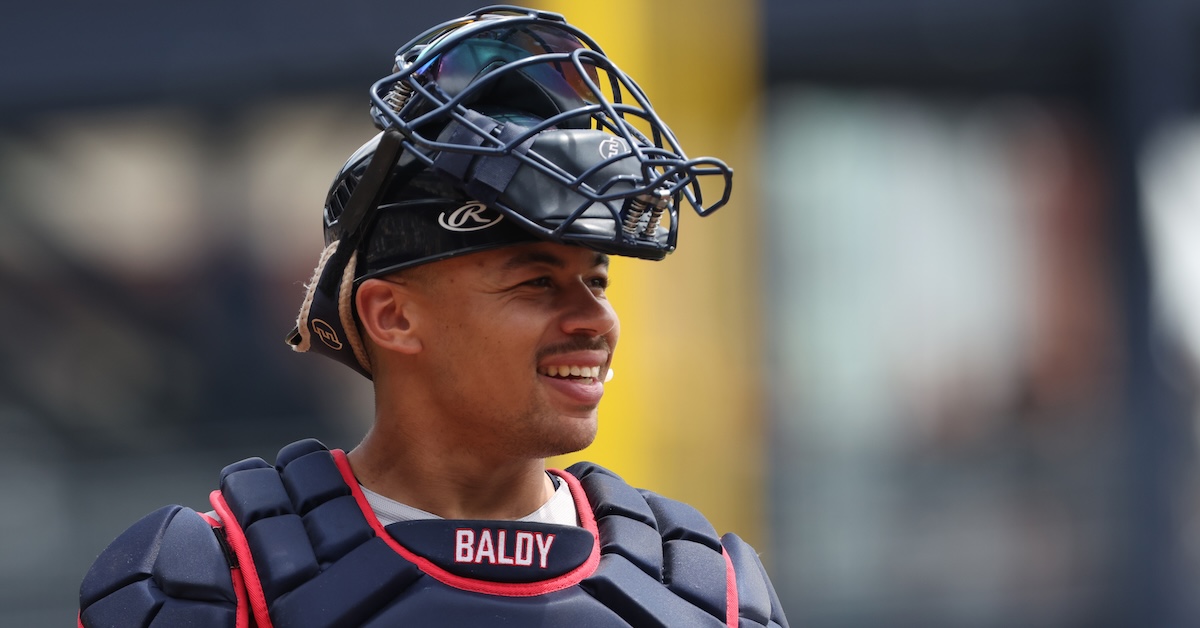
Charles LeClaire-Imagn Images As is tradition at FanGraphs, we’re using the lead-up to the trade deadline to take stock of the top 50 players in baseball by trade value. For a more detailed introduction to this year’s exercise, as well as a look at the players who fell just short of the top 50, be sure to read the Introduction and Honorable Mentions piece, which can be found in the widget above. For those of you who have been reading the Trade Value Series the last few seasons, the format should look familiar. For every player, you’ll see a table with the player’s projected five-year WAR from 2027-2031, courtesy of Dan Szymborski’s ZiPS projections. The table will also include the player’s guaranteed money (exclusive of any signing bonus), if any, the year through which their team has contractual control of them, last year’s rank (if applicable), and then projections, contract status, and age for each individual season through 2031 (assuming the player is under contract or team control for those seasons, or has a player or vesting option). Last year’s rank includes a link to the relevant 2025 post. Thanks are due to Sean Dolinar for his technical wizardry. At the bottom of the page, there is a grid showing all of the players who have been ranked up to this point. One note on the rankings: Particularly at the bottom of the list, there isn’t a lot of room between the players. The ordinal rankings clearly matter, and we put them there for a reason, but there isn’t much of a gap between, say, the 40th-ranked player and the guy who would have been 58th if the list went that deep. The magnitude of the differences in this part of the list is quite small. Several of the folks I talked to might prefer a player in the Honorable Mentions section to one on the back end of the list, or vice versa. I think the broad strokes are correct, and this is my opinion of the best order, but with so many players carrying roughly equivalent value, disagreements abounded. I’ll note places where I disagreed meaningfully with the people I spoke with in calibrating this list, and I’ll also note players whose value was the subject of disagreement among my contacts. As I mentioned in the Introduction and Honorable Mentions piece, I’ll also indicate tier breaks between players where appropriate, both in their capsules and in the table at the end of the piece. With that out of the way, let’s get to the next batch of players. Five-Year WAR 18.2 Guaranteed Dollars – Team Control Through 2029 Previous Rank #43 Year Age Projected WAR Contract Status 2027 26 3.7 ARB 2 2028 27 3.7 ARB 3 2029 28 3.7 ARB 4 Neto closes out Tier 13: Value Plays, a list of players performing very well right now, but who don’t offer as much long-term value as the upper reaches of this list. He’s a perfect example of the archetype. He’s one of the best offensive shortstops in baseball. He’s hit .248/.320/.455, good for a 115 wRC+, over the last three years, and has a 115 wRC+ this year as well. He strikes out quite a bit, but that’s because he’s up there trying to clobber the ball to the pull side. He’s quite successful at doing so, and this year he’s leaning into his tendencies even more – more strikeouts, more walks when pitchers don’t challenge him, and on track for a career-high 30 homers. You Aren't a FanGraphs Member It looks like you aren't yet a FanGraphs Member (or aren't logged in). We aren't mad, just disappointed. We get it. You want to read this article. But before we let you get back to it, we'd like to point out a few of the good reasons why you should become a Member. 1. Ad Free viewing! We won't bug you with this ad, or any other. 2. Unlimited articles! Non-Members only get to read 10 free articles a month. Members never get cut off. 3. Dark mode and Classic mode! 4. Custom player page dashboards! Choose the player cards you want, in the order you want them. 5. One-click data exports! Export our projections and leaderboards for your personal projects. 6. Remove the photos on the home page! (Honestly, this doesn't sound so great to us, but some people wanted it, and we like to give our Members what they want.) 7. Even more Steamer projections! We have handedness, percentile, and context neutral projections available for Members only. 8. Get FanGraphs Walk-Off, a customized year end review! Find out exactly how you used FanGraphs this year, and how that compares to other Members. Don't be a victim of FOMO. 9. A weekly mailbag column, exclusively for Members. 10. Help support FanGraphs and our entire staff! Our Members provide us with critical resources to improve the site and deliver new features! We hope you'll consider a Membership today, for yourself or as a gift! And we realize this has been an awfully long sales pitch, so we've also removed all the other ads in this article. We didn't want to overdo it. Opinions on Neto’s defense are all over the place, but I don’t think anyone is quite as pessimistic as the FRV numbers that power our WAR calculations. I personally think he’s somewhere near an average shortstop defender, but as I mentioned last year in my blurb on Neto and as I heard again this year, I’m lower than industry consensus on him. I think that he’d probably be in the mid-30s on an aggregate list of their preferences. As one person put it, Neto plays a premium defensive position and he can hit. Short of a truly transcendent defender, the league would prefer Neto types to glove-first options, and though I’m generally biased in the same direction, I wanted to note that team preferences exceed mine here, both as it pertains to Neto specifically and to bat-first players at tough defensive positions more generally. A final note on this tier of players: For me, there’s a fairly bright line separating everyone I’ve ranked so far and the next 39 players on the list. I had a lot of the first 11 guys on and off the list at various points in its construction. I’m not confident that my order would look the same now as when I finalized that section over the weekend. I think that many of the gaps between these 11 players and the best honorable mentions are a matter of personal preference, and I want to emphasize that I’m hardly infallible. But the guys who are coming up next? They were always in my top 50. No one I talked to said “Him? Really?” about any of them. If I were running a team, there’s no shot I’d trade anyone we’ve already listed for anyone ranked 39th or better, with the possible exception of prospects where the non-public data is meaningfully different than what I’ve seen, or maybe a healthy Roman Anthony. Keep that in mind as we proceed. Five-Year WAR 11.8 Guaranteed Dollars – Team Control Through 2032 Previous Rank – Year Age Projected WAR Contract Status 2027 22 2.0 PRE-ARB 2028 23 2.2 PRE-ARB 2029 24 2.4 PRE-ARB 2030 25 2.6 ARB 1 2031 26 2.6 ARB 2 Anderson starts a two-man tier, (un)inventively named Tier 12: Top Prospects. He’s the top pitching prospect in baseball for me, combining an enviably high floor with plenty of ace-level upside. He’s been downright overpowering against a string of overmatched Double-A hitters in 2026, posting a 1.36 ERA with a 41.4% strikeout rate and 3.8% walk rate. You almost can’t analyze those numbers, they’re so off the charts, so a lot of this evaluation was based on watching him, perusing the raw pitch-level metrics, and talking to people about him. But I wanted to mention his stats in case you haven’t been keeping up with the ins and outs of the 2026 Arkansas Travelers. The only real question with Anderson is when the Mariners will call him up, because there doesn’t seem to be anything more for him to learn in the Texas League. Without turning this capsule into too much of a scouting report, I love Anderson’s arsenal. He’s fastball-dominant, and despite sitting 92-94 mph, he misses a comical number of bats thanks to good shape, good deception, and good command. He has a wide array of plus secondaries and can throw them all for strikes, with his changeup being my favorite. It’s reasonable to project continued improvement, because he turned 22 less than a month ago and was only drafted last summer. But even if he’s already pretty close to fully formed, that might be okay; like I said, the floor here is very high. On a different team, one without six proven big league starters, Anderson would probably already be in the majors. He’ll probably be in the majors soon anyway, even if it’s in a multi-inning relief role; the Mariners are chasing a playoff spot and he’s one of their best players. And after this year’s prospect valuation update helped me estimate the expected value of top minor leaguers, I’m more open to putting the very best minor leaguers on this list. I’ll explain more about that in the next blurb, but let’s put it this way: I think that Anderson is one of the best young pitchers in baseball, and you can’t really beat his combination of age and team control. Even after a discount for the fact that he hasn’t done it in the majors yet – the similarly-aged pitchers already excelling in the major leagues will appear higher up, obviously – he belongs here. Five-Year WAR 9.6 Guaranteed Dollars – Team Control Through 2032 Previous Rank HM Year Age Projected WAR Contract Status 2027 20 1.1 PRE-ARB 2028 21 1.6 PRE-ARB 2029 22 2.0 PRE-ARB 2030 23 2.3 ARB 1 2031 24 2.5 ARB 2 Made is the top hitting prospect in baseball to my eyes, and to our prospect team’s eyes, too. He’s a switch-hitting shortstop with power from both sides, a combination that makes team evaluators’ eyes bug out comically. He’s only 19, but he’s already physically mature, and is extremely athletic in his actions. Eric Longenhagen thinks that he might end up sliding to second or third in the long run as he fills out, but he expects a debut at shortstop, and I’m happy thinking of Made as good enough to play a premium defensive position for the foreseeable future. Still, the bat is really the draw here, and it’s a big draw. Made is already putting up average major league exit velocity numbers from both sides of the plate, and switch-hitters often develop more slowly than guys who only bat from one side, so there’s still plenty of room to dream. I’m in agreement with the industry consensus that Made isn’t in the same rarefied air as Konnor Griffin, who was a clear 70-FV prospect for us. But as I mentioned in the Anderson blurb, this area of the list is consistent with the value teams can expect to garner from prospects of this caliber, even after discounting for the fact that you probably won’t get a ton of this-year (or even next-year) value out of Made. This is a good place to mention how I see the difference between my personal valuation of prospects and the aggregate preferences of the team personnel I talked to. I’m right on top of the consensus when it comes to where the top two prospects in this year’s class should slot into a list of trade value, but there was wide disagreement about where the gaggle of other top prospects would fit in. I think that at least a couple of the people I talked to would have most of the 41-50 area populated by prospects and recent graduates, for example. There isn’t a huge gap between Made and Franklin Arias, just to pick the guy I most seriously considered for a similar placement. I think it would be entirely reasonable to slot Arias somewhere between 40th and 50th on the list, but at the same time, no one was telling me that it was silly to leave him off it. At the risk of repeating myself, my point is this: I really think that Made is the best prospect in baseball right now. I think that a lot of the players who aren’t far behind him are extremely good trade values, too. Don’t get too caught up in parsing the precise order of the guys below this spot; this is just a good benchmark for the value of this year’s best minor leaguers. Five-Year WAR 21.4 Guaranteed Dollars – Team Control Through 2029 Previous Rank #42 Year Age Projected WAR Contract Status 2027 25 4.2 ARB 1 2028 26 4.4 ARB 2 2029 27 4.5 ARB 3 Langford heads up Tier 11: Wait ‘Til You See Him Hit. It’s two guys whose defensive value I don’t quite believe in, but whose defensive value I don’t have to believe in, because chicks teams dig the long ball. Langford put up a 4.1-WAR 2025 season thanks to some surprising glovework – he looked excellent in a center field cameo – and a 118 wRC+. He’s been dinged up this year, with two trips to the IL, but he’s played at a 6 WAR/600 PA clip when he’s been on the field. I’ve always thought of Langford as a patient hitter, but in 2026, he’s attacking earlier in counts, which has pushed his walk and strikeout rates down in concert. His power production is up, which I think comes down to finding pitches to hit early in the count more often. The ZiPS forecasts you see aren’t just the model being in love with him; I think that they’re pretty close to industry consensus here. I’m a little worried about Langford’s swing speed declining somewhat since he was a prospect, but with the emphasis on “a little.” The underlying data on his offensive production still looks very good to me, and I expect him to walk more while keeping his strikeouts down for the remainder of the year. I see Langford as a bat I’d be happy to play at DH, but three-plus years of that wouldn’t be enough to crack this list. It’s the defensive value that puts him over the top. Even if he’s more of a good corner outfielder than a true center fielder, that’s a lot more value than a DH-only type. He opens up roster flexibility, and when you can play a cleanup hitter in center some of the time, your lineup is going to look a lot more fearsome. Next year will be his first year of arbitration. In fact, I kept looking for ways to move Langford up the list. But in the end, the intermittent injury issues (he’s never played a 600-plate appearance season) and the fact that a lot of the players ahead of him have even more team control led me to put him here. Five-Year WAR 16.3 Guaranteed Dollars $61.0M Team Control Through 2034 Previous Rank HM Year Age Projected WAR Contract Status 2027 22 2.5 $1.0M 2028 23 2.9 $1.0M 2029 24 3.4 $4.0M 2030 25 3.7 $7.0M 2031 26 3.8 $11.0M Two different people I talked to for this project told me roughly “Boy, I’m sorry you have to figure out where to rank Samuel Basallo.” There’s just so much going on here, and many of the factors point in completely opposite directions. For example, is he a catcher long-term? I’m not sure. He’s graded out as one of the worst receivers in baseball on a per-inning basis over the last two years, but it’s a small-ish sample. He wasn’t regarded as a good defensive catcher as a prospect, either, though his blocking seems to have improved in 2026, and he has an absolute cannon for an arm, which compensates for a slower-than-average exchange and makes his control of the run game pretty solid. Still, Basallo’s offense is the real draw. He has awe-inspiring raw power and cranks huge home runs to all fields. He’s not some min-maxed, Isaac Paredes-style home run hitter; he just swings so explosively that the ball can’t help but go out when he catches it flush. That gives him massive upside, and given that he’s a 21-year-old already delivering an above-average offensive line in the big leagues while catching, upside from here is very valuable indeed. But as befits such a tough evaluation, Basallo’s offense isn’t all sunshine and rainbows. He chases far too much, with a sixth-percentile chase rate, and his big swing comes with a 15.5% swinging strike rate. His contact rate is well below league average, too. He’s probably always going to strike out a lot. That’s fine if he’s a catcher with 40-homer power, but if he ends up being a part-time catcher or moves away from the position entirely in the next few years, he’ll need to cut down on the chase one way or another to unlock more offensive upside. Finally, Basallo’s contract is really good from a team perspective. It’s eight years at roughly $8.5 million per, and there’s even a team option for a ninth year. That’s a ton of team control, though as I discussed in the introduction to this series, team control for catchers is less valuable than it immediately sounds because it’s so hard for catchers to maintain a high level of skill and availability simultaneously. I ended up focusing more on the immediate future and treating the later years of his deal as bonus upside as a result. I wouldn’t fault you for having him higher on your own list, depending on how you personally feel about catcher value. I would fault you for having him ranked lower than 40th, though; I think the talent and the team control are just too enticing. Five-Year WAR 13.2 Guaranteed Dollars – Team Control Through 2031 Previous Rank – Year Age Projected WAR Contract Status 2027 26 2.7 PRE-ARB 2028 27 2.7 PRE-ARB 2029 28 2.7 ARB 1 2030 29 2.6 ARB 2 2031 30 2.5 ARB 3 Before we get to Messick, here’s a note on Tier 10: Good Controllable Arms. This is one place where the tier system breaks down a bit. I think that the three guys in this tier and the two in Tier 7: Great Controllable Arms are pretty close in value, and that you could reshuffle my order around significantly and find a list that still makes good sense to me. Some of the team personnel I talked to liked guys in this group of pitchers more than those in the one above them, though on balance I think they agreed with my ordering. There are also seven hitters between the two tiers of pitchers, and I know at least one person I talked to would have all seven of those hitters below any of the pitchers. My point is that there’s really not much separation in my evaluation of the next 12 players. Okay, Messick! He’s my kind of pitcher, a sneaky-good athlete who Brendan Gawlowski compared to a pitching version of Alejandro Kirk. He uses that athleticism to good effect; he doesn’t throw particularly hard, but he has a deceptive delivery that he repeats well, and his fastball plays way up from its velocity thanks to good shape and the aforementioned deception. He commands it all around the zone and also throws two other fastballs, as well as a changeup, a curveball, and a slider, which lets him mix and match, hunting righties with platoon-optimized offerings, while still befuddling lefties with a horizontal sinker/slider attack. You’ll probably hear “crafty” used to describe Messick, but that undersells it for me. He’s just good at pitching. He varies his pitch mix based on what’s working in a given game, has the range to attack different hitters differently, and makes good adjustments on the fly. It’s not always easy to tell which pitchers have this skill before they’ve faced big league competition – it’s a Potter Stewart situation for sure – but Messick has it, and I’d argue that if you disagree with me on that particular note, you just haven’t watched him pitch enough. The knocks here are that his lack of elite stuff puts a ceiling on his value, and that he’s never going to be a huge strikeout guy. But I can live with that given that he’s going to be around for forever, and for a pittance salary-wise. In fact, I flirted with having him higher on the list. But then, the next two pitchers are pretty dang good, too. Five-Year WAR 15.0 Guaranteed Dollars – Team Control Through 2031 Previous Rank – Year Age Projected WAR Contract Status 2027 27 3.2 PRE-ARB 2028 28 3.2 PRE-ARB 2029 29 3.1 ARB 1 2030 30 2.9 ARB 2 2031 31 2.7 ARB 3 I was too low on Ashcraft before I started preparing for this series. I watch a lot of baseball, but I just hadn’t caught much of him this year, and I’m sure that his starting last year as a reliever was messing with my priors. But after I started pulling projections and looking at granular performance measures, I changed my tune pretty quickly. Ashcraft might not be a household name, and there’s an argument that he’s the least-renowned pitcher in the Pittsburgh rotation, but the results and tools speak for themselves. Ashcraft’s signature skill is his ability to induce bad swings. He spams his slider against righties and they simply can’t handle it; they’re chasing 40% of his sliders outside the zone and making contact at an abysmal rate regardless of where he locates it. It’s a hard, borderline-cutter shape, low-90s velo with a bit of backspin, and while it’s serviceable against lefties, it’s particularly great against righties. He backs that with a mid-80s curveball with two-plane movement, a pitch that our two models think is one of the best hooks in the game. I’m not enamored with the shape of his four-seamer and think it’s a below-average pitch overall, which is a great reminder that starters sitting 96-98 mph aren’t all that uncommon anymore. But it’s serviceable, and against righties, he mixes in a sinker that I like a lot more. I think that Ashcraft is always going to have stretches where he gives up too many homers, but both of his breaking balls are really good, so I can live with it. The years of control matter here, too, of course. Five more years of Ashcraft gives him room to struggle with injuries and ineffectiveness for part of that time and still rack up meaningful value. That combination of long-term value and short-term utility – he’d look right at home as Pittsburgh’s number two starter if the Pirates eke into the playoffs – means that I’d even be comfortable sliding him up the list if I were a team in desperate need of cost-controlled pitching. He isn’t a sure thing, but the value here is meaningful even if you’re not as enamored with Ashcraft’s recent form as I am. Five-Year WAR 12.4 Guaranteed Dollars – Team Control Through 2031 Previous Rank – Year Age Projected WAR Contract Status 2027 24 2.3 PRE-ARB 2028 25 2.4 PRE-ARB 2029 26 2.5 ARB 1 2030 27 2.6 ARB 2 2031 28 2.6 ARB 3 I had Tolle everywhere from 25th to 35th as I iterated through different versions of this list, and I want to say again that there’s very little room between this tier of Good Controllable Pitching and the tier of Great Controllable Pitching that you’ll see tomorrow. He’s the bridge between the two groups. I definitely like him more than the two guys I just listed, and I definitely like him less than the two guys you’ll read about in the next installment, but I went back and forth over which group to attach Tolle to, and I don’t think that the team sources I talked to had much more clarity than I did. It all comes down to how you feel about huge pitchers who get a ton of utility out of their fastballs. If you’re up for an inexact comparison, I get Josh Hader vibes from Tolle: long stride, low release point, and a fastball that has more north/south movement than you’d expect from that arm slot. That fastball is doing a lot of heavy lifting; the only other pitches he throws even 10% of the time are a sinker and a cutter that you might reasonably call a gyro slider. As you might expect, Tolle gives up a ton of elevated contact, and he’s always going to be a little bit homer-prone as a result. But clearly, it’s been working so far. There’s not a lot of complexity to his approach, but that’s not necessarily a bad thing; if you have two pitches good enough to throw more or less all the time, there’s not much pressure to develop more options. In the long run, I expect Tolle to need to branch out to maintain his effectiveness, and that’s why I ended up slotting him here instead of with the group that you’ll see tomorrow. This wasn’t a universally held view. One person I talked to would have had Tolle below the two names I’ve just listed. Another had him way higher, as a bet on a pitcher with an 80 fastball figuring out more stuff to do to complement it. I’m happy with where I ranked him, but I do think it’s slightly below the average value the industry has on him. Starters who are already good and will be around for a long time are really valuable. Five-Year WAR 16.7 Guaranteed Dollars $83.0M Team Control Through 2030 Previous Rank #9 Year Age Projected WAR Contract Status 2027 30 4.5 $12.0M 2028 31 3.9 $23.0M 2029 32 3.4 $23.0M 2030 33 2.7 $23.0M 2031 34 2.2 $20.0M Raleigh kicks off Tier 9: Elite Catchers. As I mentioned in the introduction to this series, I’ve purposefully lowered my evaluation of catchers across the board. Raleigh is a great example of why. Coming off of one of the best seasons of the 21st century, during which he swatted 60 homers en route to a 9.1-WAR year, he’s batting .163/.267/.298 and has amassed a mere 0.5 WAR in his team’s first 100 games. Some of that is due to injury — he missed a month with an oblique strain, and it’s pretty clear that he was trying to play through the pain before he hit the IL. Some of it is poor batted ball luck – his contact quality has declined, but not by nearly as much as his results. Some of it is just reversion towards the mean – there’s no way Raleigh’s true talent is a 60-homer hitter, because that’s just not how baseball works. But the fact remains that a year after he set career bests in pretty much everything, including playing time, he’s on track to set career worsts in pretty much everything, and that happens far too frequently with catchers for my liking. I think it’s reasonable to expect more of the same streakiness in Raleigh’s future. That’s not a player-level evaluation; it’s about the position. Catching is just hard. Plenty of teams have leaned into having two serviceable catchers platoon in recent years, because these big workloads are just ruinous. I think a lot of teams simply don’t want to be in the one-tentpole-catcher business. That’s the macro reason that I lowered catchers across the board, but that doesn’t mean I wouldn’t want to trade for Raleigh. Just as I never thought he was going to repeat last year’s phenomenal season, I think he’s far better than he’s shown so far this year. His contract is quite reasonable, just over $20 million a year for five more years after this one. He’s a solid defender (I’m downgrading him from great due to a pattern of declining advanced metrics), and has enough raw power that I think he’ll be able to float to DH more frequently as he ages out of everyday catching duty. Raleigh is one of the best catchers in baseball, and he’s clearly a big asset to his team. Just because I’ve tinkered with how I think about that value doesn’t mean it doesn’t exist. One team evaluator disagreed with me on the catcher issue, in fact, and would have this whole tier 10 spots or so higher. Five-Year WAR 17.3 Guaranteed Dollars – Team Control Through 2030 Previous Rank #49 Year Age Projected WAR Contract Status 2027 26 3.6 PRE-ARB 2028 27 3.7 ARB 1 2029 28 3.6 ARB 2 2030 29 3.3 ARB 3 Baldwin is the second of the three catchers in this group, which means you’ll have to wait for tomorrow to see who I like most out of the trio (or just guess, I don’t think it’s a huge mystery). The latest in a long line of Atlanta prospects who have comfortably outperformed their draft pedigree and exploded onto the big league scene, he became the team’s primary catcher when former Trade Value stalwart Sean Murphy started last year on the IL and he hasn’t looked back. His carrying tool is great bat speed that he marries with a measured offensive approach. He’s direct to the ball, which keeps his contact rate high, and while I don’t think he’s Juan Soto out there by any means, the combination of plus contact, plus power, and an average eye means that he’s going to walk quite a bit, giving him an enviable offensive floor. In fact, I’d take Baldwin’s bat over Raleigh’s for any forward-looking time period, and I don’t mean that as a slight on Cal. I just think Baldwin is a very good hitter. Defensively, he’s a work in progress. Statcast has him as one of the worst catchers when it comes to controlling baserunners, and that’s in line with our evaluation of him as a prospect. He’s average as a blocker and receiver, and I’m not questioning his ability to stick at the position, but he’s below the major league average defensively, because major league catchers are very good defenders as a group. Still, even with the catcher devaluation and even with questions about his defense, Baldwin is an obviously great player. He hits well enough that the Braves DH him to get him more at-bats, and if he suddenly couldn’t catch, he’d certainly still hit well enough to be a big leaguer. As I mentioned in the introduction, I agree with the industry consensus that 1 WAR of hitting is worth more than 1 WAR of defense. Baldwin is young and under team control for roughly forever. I think it would be irresponsible to have him outside of the top 35, even with everything I’ve written about catchers. He’s just that good. 2026 Trade Value, 31-50 Rank Prev Name Team Pos 2027 2028 2029 2030 2031 Elite Catchers 31 49 Drake Baldwin ATL C 3.6PRE-ARB 3.7ARB 1 3.6ARB 2 3.3ARB 3 32 9 Cal Raleigh SEA C 4.5$12.0M 3.9$23.0M 3.4$23.0M 2.7$23.0M 2.2$20.0M Good Controllable Arms 33 – Payton Tolle BOS SP 2.3PRE-ARB 2.4PRE-ARB 2.5ARB 1 2.6ARB 2 2.6ARB 3 34 – Braxton Ashcraft PIT SP 3.2PRE-ARB 3.2PRE-ARB 3.1ARB 1 2.9ARB 2 2.7ARB 3 35 – Parker Messick CLE SP 2.7PRE-ARB 2.7PRE-ARB 2.7ARB 1 2.6ARB 2 2.5ARB 3 Wait ‘Til You See Him Hit 36 HM Samuel Basallo BAL C 2.5$1.0M 2.9$1.0M 3.4$4.0M 3.7$7.0M 3.8$11.0M 37 42 Wyatt Langford TEX OF 4.2ARB 1 4.4ARB 2 4.5ARB 3 Top Prospects 38 HM Jesús Made MIL SS 1.1PRE-ARB 1.6PRE-ARB 2.0PRE-ARB 2.3ARB 1 2.5ARB 2 39 – Kade Anderson SEA SP 2.0PRE-ARB 2.2PRE-ARB 2.4PRE-ARB 2.6ARB 1 2.6ARB 2 Value Plays 40 43 Zach Neto LAA SS 3.7ARB 2 3.7ARB 3 3.7ARB 4 41 HM Michael Harris II ATL CF 4.0$9.0M 4.0$10.0M 4.1$10.0M 3.9$12.0M 3.5$15.0M 42 – Ben Rice NYY 1B 3.2PRE-ARB 3.0ARB 1 2.6ARB 2 2.1ARB 3 43 10 Ronald Acuña Jr. ATL OF 3.2$17.0M 3.0$17.0M 44 20 Riley Greene DET OF 3.5ARB 2 3.4ARB 3 45 47 CJ Abrams WAS SS 3.4ARB 2 3.4ARB 3 46 22 Hunter Brown HOU SP 3.3ARB 2 3.2ARB 3 Tough Calls 47 31 Ketel Marte ARI 2B 4.2$12.0M 3.1$20.0M 2.5$22.0M 1.8$22.0M 1.2$11.5M 48 – Mason Miller SDP RP 1.9ARB 2 1.8ARB 3 1.7ARB 4 49 42 Roman Anthony BOS OF 2.8$4.0M 3.3$8.0M 3.4$15.0M 3.6$19.0M 3.6$23.0M 50 15 Fernando Tatis Jr. SDP OF 4.0$25.0M 3.7$25.0M 3.3$36.0M 2.8$36.0M 2.4$36.0M
2026 Trade Value: Nos. 31-40
Full Article
Original Source
Read the full article at Blogs →KhanList aggregates and links to publicly available news content. We do not host full articles from third-party sources. Always verify important information with original sources.