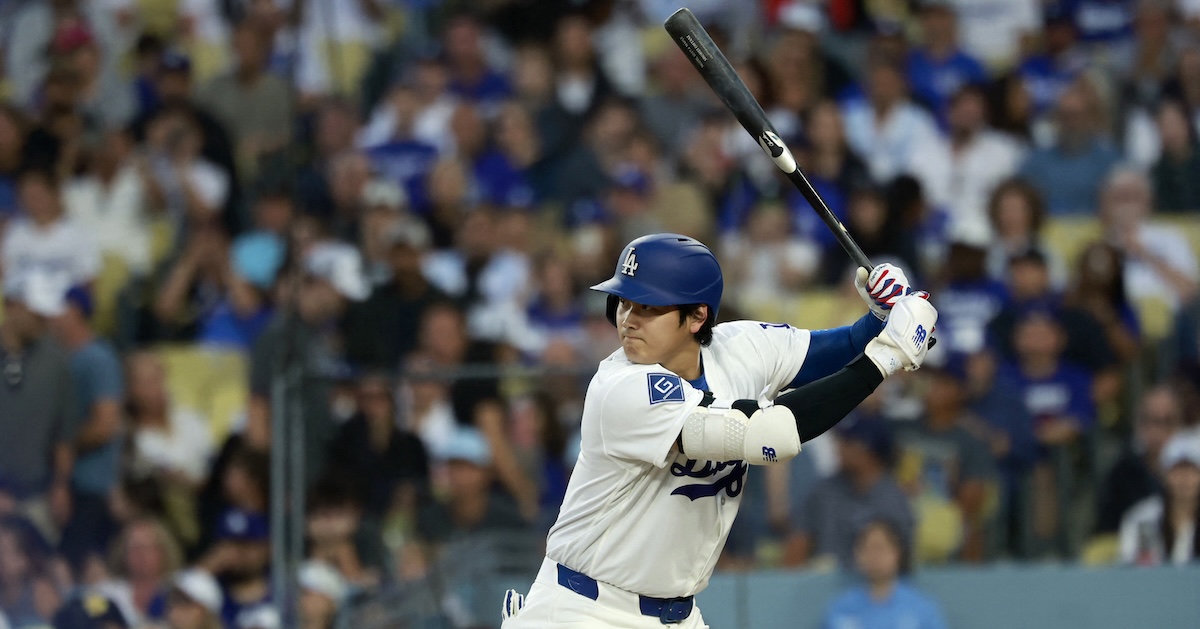
William Navarro-Imagn Images As is tradition at FanGraphs, we’re using the lead-up to the trade deadline to take stock of the top 50 players in baseball by trade value. For a more detailed introduction to this year’s exercise, as well as a look at the players who fell just short of the top 50, be sure to read the Introduction and Honorable Mentions piece, which can be found in the widget above. For those of you who have been reading the Trade Value Series the last few seasons, the format should look familiar. For every player, you’ll see a table with the player’s projected five-year WAR from 2027-2031, courtesy of Dan Szymborski’s ZiPS projections. The table will also include the player’s guaranteed money (exclusive of any signing bonus), if any, the year through which their team has contractual control of them, last year’s rank (if applicable), and then projections, contract status, and age for each individual season through 2031 (assuming the player is under contract or team control for those seasons, or has a player or vesting option). Last year’s rank includes a link to the relevant 2025 post. Thanks are due to Sean Dolinar for his technical wizardry. At the bottom of the page, there is a grid showing all of the players who have been ranked up to this point. A note on these rankings: At the top of the list, I’ve tried to group like with like, but that’s not always possible when you’re talking about the very best couple of players in baseball. I’ve noted this in the text, but there’s one tier of players today where I think all three have roughly equal value, and another where I feel strongly that the top guy is the best of the bunch. I’ll note the places where I disagreed meaningfully with the people I spoke with in calibrating this list, and I’ll also note the players whose value my contacts disagreed about. As I mentioned in the Introduction and Honorable Mentions piece, I’ll indicate tier breaks between players where appropriate, both in their capsules and bolded in the table at the end of the piece. With that out of the way, let’s get to the final batch of players, the 10 best trade values in baseball. Five-Year WAR 20.3 Guaranteed Dollars $98.0M Team Control Through 2033 Previous Rank #21 Year Age Projected WAR Contract Status 2027 30 5.0 $6.0M 2028 31 4.6 $9.0M 2029 32 4.1 $14.0M 2030 33 3.5 $15.0M 2031 34 3.1 $27.0M I’m low-key obsessed with kaizen, the concept of making continuous small improvements to create big long-term changes. It’s a good way for me to think about getting better at things I want to improve on. I think Sánchez is a fan, too. How else do you explain his remarkable big league career? In four years, he’s gone from unheralded prospect to the most valuable pitcher in baseball, and he’s done it consistently, step by step, in a smooth arc of progression. You Aren't a FanGraphs Member It looks like you aren't yet a FanGraphs Member (or aren't logged in). We aren't mad, just disappointed. We get it. You want to read this article. But before we let you get back to it, we'd like to point out a few of the good reasons why you should become a Member. 1. Ad Free viewing! We won't bug you with this ad, or any other. 2. Unlimited articles! Non-Members only get to read 10 free articles a month. Members never get cut off. 3. Dark mode and Classic mode! 4. Custom player page dashboards! Choose the player cards you want, in the order you want them. 5. One-click data exports! Export our projections and leaderboards for your personal projects. 6. Remove the photos on the home page! (Honestly, this doesn't sound so great to us, but some people wanted it, and we like to give our Members what they want.) 7. Even more Steamer projections! We have handedness, percentile, and context neutral projections available for Members only. 8. Get FanGraphs Walk-Off, a customized year end review! Find out exactly how you used FanGraphs this year, and how that compares to other Members. Don't be a victim of FOMO. 9. A weekly mailbag column, exclusively for Members. 10. Help support FanGraphs and our entire staff! Our Members provide us with critical resources to improve the site and deliver new features! We hope you'll consider a Membership today, for yourself or as a gift! And we realize this has been an awfully long sales pitch, so we've also removed all the other ads in this article. We didn't want to overdo it. Looking at Sánchez today, there’s no doubt of his excellence. All three of his pitches are nasty. He commands them extremely well, working around the lower regions of the strike zone at will. He rarely leaves anything up, and he also rarely loses the zone. That’s an uncommon but valuable combination for a sinkerballer, though calling him that might be too limiting, as he also strikes out more batters than makes sense given that his primary pitch has a 5% swinging strike rate. But his changeup and slider are so good that he manages to check every box at once – grounders and strikeouts yes, walks no. Sánchez leads all pitchers in FIP-based WAR since the start of the 2024 season (his teammate Zack Wheeler has a narrow edge in RA9-WAR). He’s signed to a team-friendly contract, six more years at just over $16 million a year plus a club option. He’s durable – the last time he hit the IL was a three-week stint in 2023. His compact, effortless delivery makes it look like he’s out there throwing darts. His projections are top-notch, too, and that’s despite assuming a pretty steep aging curve. I’m less worried about that, since pitchers tend to break rather than age, but regardless, he’s a pitcher who projects for nearly 10 WAR over the next two seasons, plus he’s second in baseball in WAR right now. He had a string of clunker starts heading into the All-Star break, but I didn’t dock him much for it (it’s in the stats and the projections, of course), and no one I talked to brought it up. This list doesn’t always have to be complicated. This guy is either the best pitcher in baseball, or on a very short list of the guys who might be the best pitcher in baseball. He has a great contract. He throws a ton of innings – he’s tracking for his second straight 200-inning season. He seems to get better every year. Not everyone I talked to agreed with me that he was first in this tier of five elite starters, but the majority did. Five-Year WAR 23.4 Guaranteed Dollars – Team Control Through 2030 Previous Rank HM Year Age Projected WAR Contract Status 2027 24 4.1 PRE-ARB 2028 25 4.7 ARB 1 2029 26 4.8 ARB 2 2030 27 4.8 ARB 3 Kurtz is an apt introduction to Tier 3: 80-Power Bats. He’s also the evaluation that I have the most doubts about, because his profile is strange. He’s a truly transcendent hitter. After being drafted fourth overall in 2024, he torched the minor leagues so thoroughly in his first 150 plate appearances that the A’s called him up, at which point he promptly started torching the majors; his career batting line through 901 plate appearances is a ludicrous .280/.393/.565. The raw tools are undoubtedly there. Kurtz is one of the hardest swingers in baseball. He flat-out obliterates the ball when he makes contact. He has a 97th-percentile barrel rate, a 99th-percentile hard-hit rate, a 96th-percentile average exit velocity… you get the idea. He also has precocious feel for the strike zone; he’s only 23, but his swing decisions are among the best in the league. It’s no accident that only Aaron Judge, Juan Soto, and Mike Trout have walked more frequently over the last two years. Now for the caveats. Kurtz gets to that power by swinging so ferociously that he swings and misses a lot. He’s striking out about a third of the time, and it’s hard to maintain good offensive output with so many wasted trips to the plate. I’m not sure how to interpret his power numbers; metrics like barrel rate and hard-hit rate are all well and good, but he plays in one of the highest-offense environments in the majors, which makes his baseball card stats misleading. I’m not at all confident that park factors are accounting for it correctly, either, because we don’t have much history of big league games at Sutter Health Park. The reason I’m so focused on those two potential pain points is that Kurtz’s value proposition is simple: It all comes at the plate. He’s already one of the slower players in baseball, and speed tends to go one way with time. I heard one particular comment more than once: He has “old man skills.” I’m not as afraid of players with that dreaded tag as your average analyst, but I definitely understand where the skepticism comes from. Lots of players develop skills like Kurtz’s as they age to forestall a decline. How is he supposed to do that? He’s already doing it. If the strikeouts end up putting a ceiling on his game, there’s no way to make up the value elsewhere. For that reason, a few people I talked to would have had Kurtz behind the tier of pitchers that I have him ahead of. But whether it’s because I’m a sucker for offense or because I just trust in the numbers, this is the lowest I could go, old man skills or no. Kurtz is off to one of the greatest offensive starts to a career in history. He’s 23 and won’t hit free agency until 2031. He has the eighth-best ZiPS projection in baseball for the next five years. His best skill – power – is one that teams value more than most. For a bat-only player to slot in towards the top of this list, that bat needs to be pretty special. Kurtz’s is. Five-Year WAR 24.2 Guaranteed Dollars – Team Control Through 2030 Previous Rank #25 Year Age Projected WAR Contract Status 2027 23 4.4 PRE-ARB 2028 24 4.8 ARB 1 2029 25 4.9 ARB 2 2030 26 5.0 ARB 3 I was too low on Caminero last year. I got hung up on how one-dimensional his offense looked. He didn’t walk much at all, and despite a great power/contact combo, he struck out more than I liked. Taken together, it made me leery of his ability to find another gear at the plate. But in retrospect, that was wrong. Since last All-Star break, Caminero has hit a new gear. He tore the cover off the ball down the stretch while reining in his aggression, and he’s doubled his walk rate this season while retaining his colossal power. He’s the hardest swinger in baseball, and he also makes an above-average amount of contact. The combination is borderline unfair. I foresee a lot of 35-homer seasons in Caminero’s future, which is hardly going out on a limb. There’s nothing cheap about the way he gets to his power. He hits more grounders than I’d like, but if that’s the cost of combining bat speed and bat control the way he does, I’ll happily make that trade. I don’t think he’s the best hitter in baseball or anything, but he’s surely in the top 10 going forward. He just turned 23. He won’t hit arbitration until 2028. His blend of low strikeouts and big home run totals calls to mind some of my favorite players of the 2010s, like José Bautista and Edwin Encarnación (I bet he’ll always run a low BABIP like those guys, too). My main hangup with Caminero isn’t anything about his hitting; it’s that I think WAR gives him a little too much credit for playing an indifferent third base. He’s well below-average defensively, and I don’t see that getting better; like Kurtz, he’s already one of the slower players in the majors. Sure, he can stand at third, but he’ll hurt your defense by doing so. I support the Rays running him out there because I’d try to see if he can develop into a defensive contributor, but realistically, all of the value from Caminero comes on offense. That’s not a big problem, to be clear. He’s the eighth-best trade value in baseball in my eyes despite that. But this high on the list, I’m looking for small differentiating factors. I preferred Caminero to Kurtz because I think there’s a non-zero chance that he ends up sticking at third in the long run. But my overall evaluation of the two is fairly similar – and I don’t think I’m alone, if the ZiPS projections are any indication. Five-Year WAR 25.3 Guaranteed Dollars – Team Control Through 2030 Previous Rank #5 Year Age Projected WAR Contract Status 2027 24 4.8 PRE-ARB 2028 25 4.9 ARB 1 2029 26 5.1 ARB 2 2030 27 5.3 ARB 3 Wood is another one of “Ben’s Guys,” so I tried to evaluate him with a fresh and skeptical eye this year, the better to wash away any inherent biases I had. My takeaway after doing so? Hey, I know two hitters who I think are very similar to him! Like Kurtz and Caminero, Wood has thunderous power. In fact, I’m not sure I’ve ever seen more 100th-percentile lines on a Statcast page: xwOBA, xSLG, average exit velo, barrel rate, and hard-hit rate. Like Kurtz and Caminero, he has questionable defensive value. And like those two, Wood won’t be a free agent until after the 2030 season. They’re three peas in a pod, more or less. Wood doesn’t have Caminero’s feel for contact or Kurtz’s mastery of the zone, but he splits the difference neatly. His approach is perfect for someone with such long levers and massive power; he swings far less often than average, which helps him cut down on chase. That means fewer in-zone swings, but it’s not like pitchers are challenging him in the strike zone very often. Did you hear all of those 100th-percentile numbers I just read out? Throw Wood something he can drive, and he’ll either take it or put it in the seats. This year is proving to be his best offensive season by a mile, and I buy all the improvements. He’s walking more than ever as he refines his sense of the zone. He’s also tweaked his swing to get the ball in the air more often; he had a 52% groundball rate in his first two years in the majors, but he’s down to 41% this year. I’d say that it took a while for him to grow into his game power, but that’s silly; he hit 30 homers last season. It’s more that he’s gained a greater understanding of how to maximize it, how to put it to use in good situations more often. Either way, I’m not surprised that a 6-foot-6 behemoth is launching missiles to all fields; I’m just admiring his ability to grow at the big league level. I’m not sure Wood’s defense is much better than Kurtz’s or Caminero’s. He’s a poor outfielder, one of the worst in baseball by most metrics. He doesn’t have the speed to make up for his poor reads, and I wouldn’t bet on that getting better over time given that it’s been an issue in each of his three big league seasons. He’s faster than those guys, and I think he’s a better athlete, so I’m not quite as ready to write him off as a DH who can wear a glove in a pinch, but that’s the most likely path for him defensively. The truth is, there’s not much separating these three in my eyes. I gave Wood the tiebreaker, but I won’t pretend I have some great insight into the right order here. Heck, they have the sixth-, seventh-, and eighth-best ZiPS projections over the next five years – even the model can’t decide who it likes most! But one thing’s for sure: These guys all rock. Five-Year WAR 22.9 Guaranteed Dollars $110.5M Team Control Through 2034 Previous Rank – Year Age Projected WAR Contract Status 2027 24 4.3 $2.5M 2028 25 4.5 $4.0M 2029 26 4.7 $7.5M 2030 27 4.7 $12.5M 2031 28 4.7 $17.0M Wetherholt is the first of five players in Tier 2: We Get Him For How Long?!. The 2024 draft was an embarrassment of riches, with four picks from that year’s top 10 featuring in the top 15 of this list. Wetherholt went seventh overall, and like Kurtz, he laid waste to the minors until his team ran out of reasons not to see what they had in the majors. So far, what they have is a Marcus Semien starter kit, and that might be too harsh to Wetherholt. He has roughly average raw power, but it plays way up in games because of his phenomenal feel for hitting. He already has one of the best approaches and batting eyes in the game; he chases far less than average while staying aggressive on pitches in the zone. He makes a ton of contact. He gets the ball in the air and sprays home runs to all fields when he can get his arms extended. He’s a great example of what “game power” means; he might not wow you in batting practice, but he gets the most out of what he has. Something like 15-25 homers feels like a good ballpark range for him going forward, and I’d be surprised if he ever struck out more than 20% of the time or walked much less than 10% of the time. That reads like a plus but not overwhelming offensive force to me. There’s probably room for more – he’s only 23 and still in his rookie year – but he’s not quite a top bat. But I didn’t pick Semien idly. Wetherholt played shortstop in college, but scouts weren’t sold on his long-term fit there, and the Cardinals have one of the best shortstop defenders in the game in Masyn Winn. It turns out that Wetherholt’s skills look excellent at second base; his defensive weaknesses were his range and throwing arm, but he has phenomenal instincts and hands. That’s a perfect match for second, and shockingly, all three advanced defensive metrics I like have him as the best second baseman in the game this year. I’m not ready to start handing him awards, but I just want to be clear that this isn’t some weird statistical oddity; he looks the part out there and every system that tries to measure what he’s doing thinks he’s exceptional. What’s more, Wetherholt’s freshly-inked contract extension will keep him in St. Louis for nearly a decade. He’s set to earn an average of $14 million a year for the next eight seasons, taking him to the tail end of his prime-age years. There isn’t much risk in that contract, but that’s plenty of potential reward; Wetherholt is good at so many things that he could fall short of the mark in a few different dimensions and still be a valuable contributor. The Semien comparison explains why he’s the lowest-ranked member of this tier of young stars with lengthy team control. ZiPS loves Wetherholt, but it loves him at least partially because it thinks he’s one of the best defenders in the league. He’s probably not going to turn into a colossal slugger, and while some hitters can hang at the top of the wRC+ leaderboards without elite bat speed, it’s hardly my base case. I have Wetherholt down as a plus-hit/plus-field player at an up-the-middle defensive spot, which is a really nice package. I think that reasonable minds could disagree and move him lower than the three guys I just listed who have true game-breaking power. Some of the team sources I talked to would have done just that. But I like Wetherholt’s bat quite a bit, and I’m giving him credit for a very high hitting floor based on how effortlessly he cruised through college and the minors. This feels like a fair compromise to me: in a group with the best young values in baseball, but at the bottom of that group. Five-Year WAR 23.3 Guaranteed Dollars $127.0M Team Control Through 2034 Previous Rank HM Year Age Projected WAR Contract Status 2027 21 3.7 $2.0M 2028 22 4.2 $4.0M 2029 23 4.8 $6.0M 2030 24 5.3 $12.5M 2031 25 5.3 $21.0M I have a story to tell you about the way I solicit feedback for this list. I talk to many people over a couple weeks, but they don’t all give me feedback on every single player on my list. All of my contacts tell me the players they think I have ranked very wrong in either direction, and everyone tells me about the guys they feel most strongly about, but I’m not getting minute details on every single placement, even if my sources might think they’re off by a hair. I wanted to rank Griffin lower than where I perceived the consensus to be – maybe ninth or so. But I was worried that I wouldn’t find out if the folks I was talking to were slightly higher on him than I was, and I really wanted to hear what people thought of him, so I moved him irresponsibly low, outside of the top 15. I thought that would guarantee that I’d hear an evaluation of Griffin from everyone I talked to. As it turned out, I needn’t have bothered. If I had ranked Griffin ninth, I still would have gotten the same feedback: He’s way better than that. Everyone I talked to, across the board, had him in their top four. No one thought my ranking was reasonable, even accounting for my preference for players who are currently performing well. Griffin is on the 60-day IL, and he had an average batting line before that. He’s struggled to handle secondary pitches in his time in the majors; he’s mashing fastballs and swinging through changeups and sliders in equal measure. He isn’t a finished product in the field yet. That’s all true – and I still have him ranked here, and I’m sure that all of the team folks I talked to (and trust quite a bit) will think I’m a dummy for not having him higher. In my time shepherding this list, I’ve never gotten feedback like this on an early-career big leaguer or prospect. I got the sense that the average team scouting report on Griffin was a little bit better than your average 70 FV, and 70-FV prospects tend to return a ludicrous amount of surplus value. They’re almost always stars. Griffin has every tool you could ask for. He looks like a small forward or a big wide receiver, 6-foot-4 and muscular, but with enviable straight-line speed and burst. He’s more than just a great athlete, though; he’s shown good bat-to-ball skills and looks to be improving as a shortstop defender such that he might make good on his lofty prospect projections. He obliterated the minors at age 19, to the point that he ran out of things to prove there. Griffin already has some of the best five-year ZiPS projections in the league, but I got the sense that the team sources I think of as being model-driven have even higher projections on him. His contract is lengthy and yet not exorbitant, the perfect pairing. I haven’t seen a combination of minor league performance, age, and tools like this in my time as a baseball analyst. I think that I lean towards current production more than average in creating these lists. But here, I listened to a bunch of people whose opinions I trust. This is about the floor for where you could reasonably have Griffin if you listen to the industry, and after hearing my sources’ arguments, I’m a convert. Five-Year WAR 30.2 Guaranteed Dollars $136.0M Team Control Through 2034 Previous Rank HM Year Age Projected WAR Contract Status 2027 22 5.4 $1.0M 2028 23 5.9 $7.0M 2029 24 6.2 $16.0M 2030 25 6.4 $21.0M 2031 26 6.3 $22.0M Here’s what one person I talked to said about McGonigle: “His batting eye isn’t as good as Soto’s.” Imagine comparing a 21-year-old rookie to a player with the consensus best plate discipline in the sport, and you can see why I’m so excited about this guy. In his first big league season, McGonigle is batting a silly .281/.388/.422, with more walks than strikeouts. He’s doing it while playing solid defense, first at third base and then at his natural position of shortstop. The carrying tool here is definitely plate discipline. It’s comically hard to do what McGonigle is doing in the majors. He’s made the best swing decisions in the sport this year, full stop. He actually chases less than Soto while swinging more at pitches in the strike zone. You can’t teach this skill. I get Mookie Betts vibes when I’m watching him hit, and when I’m making irresponsible comparisons to one of my favorite players of the 21st century, you know there’s something special going on. In a lot of ways, McGonigle looks like Wetherholt with the volume turned up. His feel to hit is better. He’s better at getting the ball in the air. He’s a little bit better at defense, or at least he looks more like a shortstop to me and to the people I talked to. He’s a little bit faster. He’s two years younger. He’s also signed through 2034, albeit for a slightly higher AAV. And he’s performing better in the majors right now, too, though both of them are frontrunners for their leagues’ respective Rookie of the Year awards. With such an outlandishly good sense of the strike zone, I give McGonigle a realistic chance of playing way above his tool grades in his prime. There’s a difference between what he’s doing and what your average patience-and-contact guy does. This isn’t Steven Kwan waiting pitchers out and trying to slap the ball the other way when they challenge him; McGonigle is both identifying pitches quickly and punishing them when he gets something he can drive. Sure, he’s only hit nine home runs this year, but he’s an extra-base machine, with 20 doubles and three triples already, and as he gains strength over the years, a lot of those are going to start clearing the fences. Look at his ZiPS projections. Those are absurd! Multiple six-win seasons? Projection systems are inherently conservative, as Dan Szymborski will tell you if you give him half a chance, and yet ZiPS is essentially doodling hearts and starry eyes around McGonigle’s name like a crush-stricken eighth grader. He’s not even a full season into his big league career, and yet the model is in love. I am too, to be clear. Griffin was a better prospect. He might still have a rosier long-term outlook. But McGonigle is doing it at the highest level right now, and he’s doing it by displaying the skill set I prize most: great plate discipline combined with great bat-to-ball ability. Yes, please. Five-Year WAR 30.3 Guaranteed Dollars $110.0M Team Control Through 2032 Previous Rank #13 Year Age Projected WAR Contract Status 2027 25 6.2 $10.0M 2028 26 6.1 $10.0M 2029 27 6.1 $10.0M 2030 28 6.1 $20.0M 2031 29 5.8 $30.0M Crow-Armstrong wasn’t as divisive of a case as I expected him to be. Last year, I heard a ton of people say they weren’t convinced that he’d be able to keep up his offensive performance, and I agreed with them. Indeed, he had a very poor second half, with a 72 wRC+. But he still racked up almost five and a half wins on the year, and then he turned around and improved pretty much everything this winter while retaining every other skill. Is that something you might be interested in? PCA’s calling card is that he’s the best defensive outfielder on the planet. That’s not really up for debate. I like watching Ceddanne Rafaela play too, but my word, Crow-Armstrong is remarkable out there. He’s one of the fastest players in the majors, but that only scratches the surface. Baseball Savant measures initial outfield jumps, and PCA is first by a mile. He has an incredible first step, accelerates better than anyone else in baseball, and has a preternatural sense for direction. Fast reaction and burst are generally negatively correlated with route efficiency; the quicker you get moving, the more you have to adjust your route on the fly. But not so for PCA, and there’s no one close to his multi-faceted excellence. He also has a huge and accurate throwing arm. When people say 80 defense, this is what they mean. Oh, and did I mention that he has a 148 wRC+ this season? He’s nearly tripled his walk rate thanks to a concerted adjustment: swing way, way less frequently. Last year, Crow-Armstrong swung at 41% of pitches outside the strike zone, an impossibly high number. Between that and his high-effort/low-contact swing, he was putting himself in impossible counts pretty frequently. He hot-and-cold-streaked his way to an above-average batting line anyway, but the red flags were pretty easy to see. Even though he still doesn’t have good plate discipline – he still chases too much, and few players in baseball swing more at pitches that are wildly outside the zone – PCA’s improvement has raised his offensive floor significantly. Before, the floor was basically nonexistent, as his second-half performance showed. But he has great power and a swing geared for loft, which means that leaving the bat on his shoulder is a tough adjustment for pitchers to counter. What, are you going to start throwing him more strikes? That’s exactly what he wants you to do! I think he’ll always be a little streaky, but I feel much better about it now than I did a year ago. That said, I’m not completely buying the ZiPS forecasts here. Basically, I think they’re a little too bullish on PCA’s defense. Yes, he’s the best guy doing it right now, but I’m not confident that he still will be in three years. But that’s a mighty small nit to pick. If he’s merely a very good center fielder, and merely an above-average bat, that’s still an easy All-Star every year with upside. I really don’t like buying into offensive projections for chase-prone guys, but at some point, you just have to believe what the stats are telling you. PCA has been worth just shy of 12 WAR since the start of 2025. That’s well past fluke territory. I might not prefer this shape of offensive production, but that doesn’t mean it isn’t real. And of course, it almost goes without mentioning at this point in the exercise, but he’s under team control for a long time at a reasonable rate. His deal extends through 2032 and runs $19 million a year. That’s a ton of years where the team employing him will be getting a great deal. I think that a lot of my contacts would have Griffin and McGonigle above PCA, but I didn’t get any feedback that I overrated him, merely that I underrated those guys. He might have a strange profile relative to your average elite player, but who cares? The things he brings to the table are clearly incredibly valuable, and his contract’s a bargain, too. I look forward to wincing at plenty of his swings for years to come – and then celebrating his excellence anyway. Five-Year WAR 32.6 Guaranteed Dollars $259.0M Team Control Through 2030 Previous Rank #2 Year Age Projected WAR Contract Status 2027 27 7.1 $19.0M 2028 28 7.0 $30.0M 2029 29 6.6 $35.0M 2030 30 6.2 $35.0M 2031 31 5.6 $35.0M Unlike the rest of the players in this tier, Witt is making real superstar money already. His deal averages roughly $32 million in AAV, and he has opt outs every year starting in 2030 even though the deal stretches longer than that on paper. Everyone else in this tier is a screaming bargain even if they don’t play like an MVP candidate. But no one else in this tier is Bobby Witt Jr., so I still think it’s reasonable to have him second, ahead of the gang of young guns on his tail. It helps that Witt is himself a young gun, having turned 26 a little over a month ago. It also helps that we forecast him as the best position player in baseball on a going-forward basis. ZiPS gives him the highest projections in the league, period. He put up a 10.5-win season in 2024, followed it up with an eight-win season last year, and is on pace for seven or so this time around, even while meaningfully underperforming his Statcast-expected numbers. The potential that everyone is drooling about with Griffin? They’re basically dreaming about him turning into Witt one day. He’s having a down year offensively, but he impacts the game in so many ways – great shortstop defense, disruptive baserunning – that he’s still putting together one of the best seasons in the majors. There’s not really much point in talking to team sources about Witt’s talent. What are they going to say? Instead, we mostly talked about his contract, and whether it should push him down the list a bit. I tried to model it to get a sense of how much of a negative to assign it in my head, but truthfully, I struggled to put a value on it. If you think that the highest AAV he could realistically achieve when getting a new deal at age 31 is $40 or $45 million, the odds of an opt-out aren’t that high, and it won’t cost you that much to renegotiate. If you think that the top end of the salary range has been permanently expanded by the Soto and Tucker deals, it’s a more pressing concern. But even if you treat Witt as being on a four-year deal, he projects as the best player in baseball for those four years. I’m also not particularly concerned with the downside of him declining and then accepting the option; hitters don’t have the same career-altering injury risk that pitchers do, so the odds of taking a huge L on the deal are meaningfully lower. I know that talking about economics in a baseball article isn’t that exciting, but it’s worth dwelling on the contract in Witt’s case. That’s because there aren’t really any other negatives to be had here. Witt is on a Hall of Fame trajectory. He’s been one of the best position players in baseball for years. We project him to be the best player in baseball over the next five years, ahead of the next guy on this list by a hair. He does it all, with no clear weaknesses and an embarrassment of tools and skills. Sure, in his case “We Get Him For How Long?!” might not entail as many years as some of his tier-mates, but I think he fits the spirit of this category, and even if the other guys are a little cheaper and might be around for longer, if I have to pick, give me the current-day best option. Five-Year WAR 32.4 Guaranteed Dollars $490.0M Team Control Through 2033 Previous Rank #1 Year Age Projected WAR Contract Status 2027 32 9.0 $70.0M 2028 33 7.7 $70.0M 2029 34 6.5 $70.0M 2030 35 5.3 $70.0M 2031 36 3.9 $70.0M Last year, I spent most of Ohtani’s write-up explaining why he’s a singular player when it comes to off-the-field value. I didn’t think that was up for debate then, and I don’t now, so I’ll just quickly rehash my point before we move on to new ground. Ohtani is a global superstar in a way that no one else in baseball comes close to matching. He comes with an entire country of die-hard fans. Japan’s economy is the size of California’s, baseball is the most popular sport there (give or take how you feel about sumo’s cultural position), and they’re basically all Dodgers fans now. I haven’t seen any credible estimates that have Ohtani’s economic impact on the Dodgers – team value, marketing value, etc. – lower than the salary they pay him. It’s not quite the same as saying he’s playing for free, but, eh, it probably feels similar to the Dodgers. This year, let’s pretend that isn’t the case. Why? So I can remind you that Ohtani would be phenomenally valuable in trade even if you weren’t allowed to account for all of that. Every year, I take ZiPS projections and my own research on what teams are willing to pay for wins on the open market and come up with surplus value estimates for every player on this list. That’s one of the core drivers of my initial ranking, and then I spend time refining and adjusting from there. Now, is Ohtani’s contract large? It certainly is. But it underpays him massively. Per those numbers, Ohtani’s contract carries the eighth-most surplus value in the sport without considering a single off-the-field dime. Sure, his deal sounds like a big number, equivalent to $46 million a year after you account for the deferrals. It’s one of the largest AAVs in baseball. But teams will pay guys like Kyle Schwarber, Framber Valdez, and Bo Bichette (to pick a few names from last winter’s class) $30 to 40 million a year. Cody Bellinger is making $45 million a year for the next two years, and then he gets an opt out! Ohtani is getting paid like a garden-variety star, or slightly higher. But he’s comically better than those guys, both in terms of realized value and in terms of the projections. No one has accrued more WAR than Ohtani in the last five years — or the last four years, or three years, or two years. As I’ve mentioned, only Witt projects for more over the next five years, and then only by a hair. Not to pick on those other guys too much, but Schwarber’s best two seasons combined weren’t worth as many WAR as Ohtani’s 2025, and that was a down year for Ohtani. The point is that “high surplus value” isn’t the same as “minuscule contract.” That’s one way to get the job done, but you could also just be so good that you break the scale. Ohtani’s salary is large, but it’s smaller relative to his value than almost everyone else in baseball. I actually think that every team could afford it, because he provides so much value that they could just find other places to cut back. Not that it matters in practice, of course – he’s not going anywhere. I’m not particularly worried about Ohtani’s recent knee injury, which has him temporarily out of the rotation. It doesn’t affect the projections as much as you’d think. ZiPS already gives him very low pitching WAR projections because it gives him very little playing time. It also applies an extremely steep aging curve – his projected hitting WAR declines by 1.2 from 2027 to 2028, and about one win a year after that. I don’t envy the model – if you’ve never seen a unicorn before, how are you supposed to know how they age? But my point is that I like his odds of making up for any pitching shortfall by aging better than expected on the hitting side. At its core, this list is a celebration of the best players in baseball. It defines “best” a little bit differently than a WAR leaderboard, of course, but we’re really after the same thing. So let’s put a capper on it this way. Ohtani is probably the best player in baseball. His contract pays him like any other star, but he is in fact the biggest star. The lowest I could imagine placing him on this list, even if I completely discounted his off-the-field value, would still have him in the top three. He’s dominant, he’s around for a long time, and he’s being paid meaningfully less than it would cost to procure similar production in free agency. And that barely scratches the surface of his value to the Dodgers. No one I talked to disagreed with my ranking. No one preferred the mystery box of Griffin, or the demonstrated excellence of Witt. Sometimes you just have to stop angling for the deal that pays your guy the least, and look for the guy who is worth the most. 2026 Trade Value, 1-50 Rank Prev Name Team Pos 2027 2028 2029 2030 2031 Shohei Ohtani 1 1 Shohei Ohtani LAD SP/DH 9.0$70.0M 7.7$70.0M 6.5$70.0M 5.3$70.0M 3.9$70.0M We Get Him For How Long?! 2 2 Bobby Witt Jr. KCR SS 7.1$19.0M 7.0$30.0M 6.6$35.0M 6.2$35.0M 5.6$35.0M 3 13 Pete Crow-Armstrong CHI CF 6.2$10.0M 6.1$10.0M 6.1$10.0M 6.1$20.0M 5.8$30.0M 4 HM Kevin McGonigle DET SS 5.4$1.0M 5.9$7.0M 6.2$16.0M 6.4$21.0M 6.3$22.0M 5 HM Konnor Griffin PIT SS 3.7$2.0M 4.2$4.0M 4.8$6.0M 5.3$12.5M 5.3$21.0M 6 – JJ Wetherholt STL 2B 4.3$2.5M 4.5$4.0M 4.7$7.5M 4.7$12.5M 4.7$17.0M 80-Power Bats 7 5 James Wood WAS OF 4.8PRE-ARB 4.9ARB 1 5.1ARB 2 5.3ARB 3 8 25 Junior Caminero TBR 3B 4.4PRE-ARB 4.8ARB 1 4.9ARB 2 5.0ARB 3 9 HM Nick Kurtz ATH DH 4.1PRE-ARB 4.7ARB 1 4.8ARB 2 4.8ARB 3 Dominant Starters With Team Control 10 21 Cristopher Sánchez PHI SP 5.0$6.0M 4.6$9.0M 4.1$14.0M 3.5$15.0M 3.1$27.0M 11 3 Paul Skenes PIT SP 4.6ARB 1 4.4ARB 2 4.3ARB 3 12 35 Jacob Misiorowski MIL SP 3.7PRE-ARB 3.7PRE-ARB 3.7ARB 1 3.5ARB 2 3.3ARB 3 13 HM Chase Burns CIN SP 2.9$2.5M 3.0$8.0M 3.1$12.5M 3.0$15.0M 2.9$17.0M 14 – Cam Schlittler NYY SP 3.0PRE-ARB 2.9PRE-ARB 2.9ARB 1 2.6ARB 2 2.5ARB 3 They Check Every Box 15 4 Corbin Carroll ARI OF 4.5$12.0M 4.4$14.0M 4.5$28.0M 4.1$28.0M 3.5$28.0M 16 24 Jackson Chourio MIL OF 3.1$8.0M 3.4$9.0M 3.8$15.0M 3.7$16.0M 3.6$17.0M 17 12 Julio Rodríguez SEA CF 4.8$18.0M 4.8$18.0M 4.5$18.0M 4.4$18.0M 4.0$18.0M 18 6 Elly De La Cruz CIN SS 5.2ARB 1 5.1ARB 2 5.4ARB 3 19 HM Brice Turang MIL 2B 3.3ARB 2 3.3ARB 3 3.1ARB 4 Let’s Go Win the World Series 20 28 Yordan Alvarez HOU DH 5.1$26.0M 4.7$26.0M 21 37 Yoshinobu Yamamoto LAD SP 3.9$26.0M 3.7$26.0M 3.5$26.0M 3.2$29.0M 2.9$29.0M 22 8 Aaron Judge NYY OF 5.8$40.0M 4.4$40.0M 3.2$40.0M 2.2$40.0M 1.4$40.0M Great Controllable Arms 23 – Nolan McLean NYM SP 2.6PRE-ARB 2.5PRE-ARB 2.4ARB 1 2.3ARB 2 2.2ARB 3 24 34 Bryan Woo SEA SP 3.2ARB 1 3.1ARB 2 2.9ARB 3 Spectacular, With Flaws 25 7 Gunnar Henderson BAL SS 4.0ARB 2 3.9ARB 3 26 – Colson Montgomery CHW SS 3.1PRE-ARB 3.5PRE-ARB 3.8ARB 1 3.9ARB 2 3.6ARB 3 27 50 Ceddanne Rafaela BOS CF 3.8$3.5M 3.9$5.5M 3.9$7.5M 3.7$10.5M 3.5$13.0M 28 HM Andy Pages LAD CF 3.6ARB 1 3.8ARB 2 3.8ARB 3 3.5ARB 4 29 11 Jackson Merrill SDP CF 3.5$6.0M 3.8$8.0M 3.9$10.0M 4.0$20.0M 3.8$20.0M Elite Catchers 30 HM Dillon Dingler DET C 3.7PRE-ARB 3.5ARB 1 3.1ARB 2 2.9ARB 3 31 49 Drake Baldwin ATL C 3.6PRE-ARB 3.7ARB 1 3.6ARB 2 3.3ARB 3 32 9 Cal Raleigh SEA C 4.5$12.0M 3.9$23.0M 3.4$23.0M 2.7$23.0M 2.2$20.0M Good Controllable Arms 33 – Payton Tolle BOS SP 2.3PRE-ARB 2.4PRE-ARB 2.5ARB 1 2.6ARB 2 2.6ARB 3 34 – Braxton Ashcraft PIT SP 3.2PRE-ARB 3.2PRE-ARB 3.1ARB 1 2.9ARB 2 2.7ARB 3 35 – Parker Messick CLE SP 2.7PRE-ARB 2.7PRE-ARB 2.7ARB 1 2.6ARB 2 2.5ARB 3 Wait ‘Til You See Him Hit 36 HM Samuel Basallo BAL C 2.5$1.0M 2.9$1.0M 3.4$4.0M 3.7$7.0M 3.8$11.0M 37 42 Wyatt Langford TEX OF 4.2ARB 1 4.4ARB 2 4.5ARB 3 Top Prospects 38 HM Jesús Made MIL SS 1.1PRE-ARB 1.6PRE-ARB 2.0PRE-ARB 2.3ARB 1 2.5ARB 2 39 – Kade Anderson SEA SP 2.0PRE-ARB 2.2PRE-ARB 2.4PRE-ARB 2.6ARB 1 2.6ARB 2 Value Plays 40 43 Zach Neto LAA SS 3.7ARB 2 3.7ARB 3 3.7ARB 4 41 HM Michael Harris II ATL CF 4.0$9.0M 4.0$10.0M 4.1$10.0M 3.9$12.0M 3.5$15.0M 42 – Ben Rice NYY 1B 3.2PRE-ARB 3.0ARB 1 2.6ARB 2 2.1ARB 3 43 10 Ronald Acuña Jr. ATL OF 3.2$17.0M 3.0$17.0M 44 20 Riley Greene DET OF 3.5ARB 2 3.4ARB 3 45 47 CJ Abrams WAS SS 3.4ARB 2 3.4ARB 3 46 22 Hunter Brown HOU SP 3.3ARB 2 3.2ARB 3 Tough Calls 47 31 Ketel Marte ARI 2B 4.2$12.0M 3.1$20.0M 2.5$22.0M 1.8$22.0M 1.2$11.5M 48 – Mason Miller SDP RP 1.9ARB 2 1.8ARB 3 1.7ARB 4 49 42 Roman Anthony BOS OF 2.8$4.0M 3.3$8.0M 3.4$15.0M 3.6$19.0M 3.6$23.0M 50 15 Fernando Tatis Jr. SDP OF 4.0$25.0M 3.7$25.0M 3.3$36.0M 2.8$36.0M 2.4$36.0M
2026 Trade Value: Nos. 1-10
Full Article
Original Source
Read the full article at Blogs →KhanList aggregates and links to publicly available news content. We do not host full articles from third-party sources. Always verify important information with original sources.