
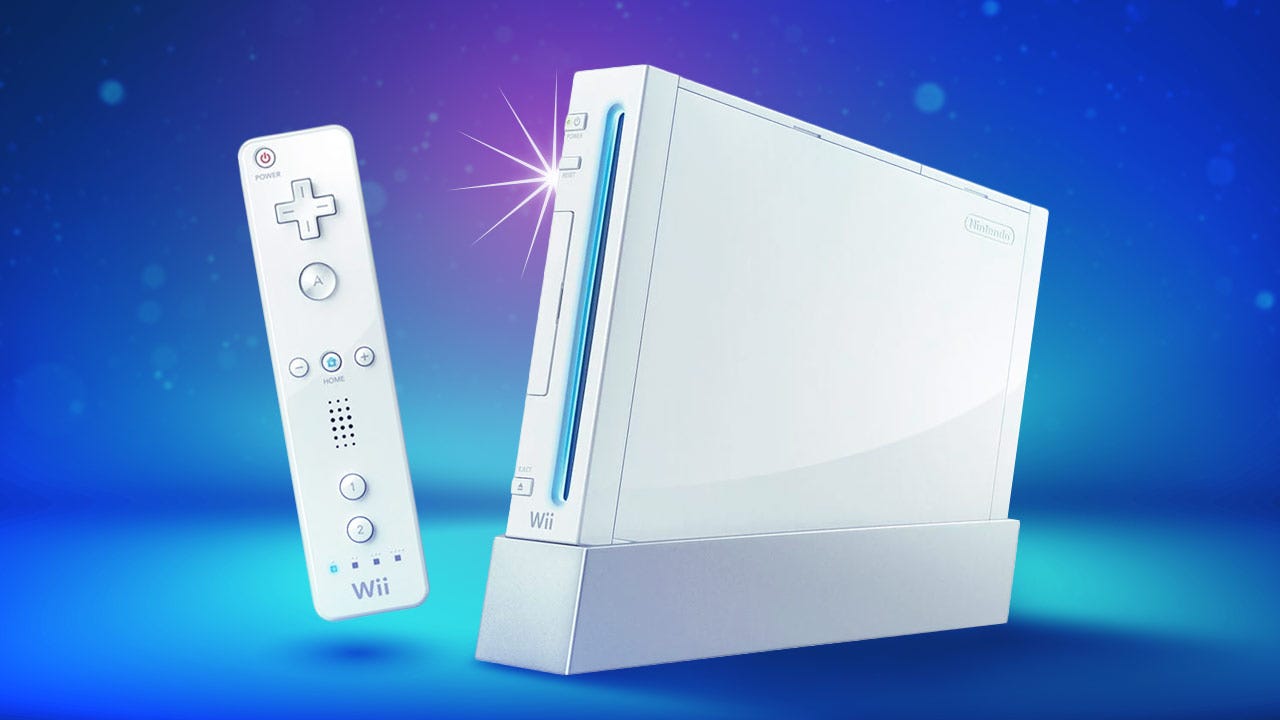
This is an opinion piece from writer Ryan Gaur. IGN's opinion columns represent the personal viewpoints of the writer, drawing on their own experiences and research to explore the exciting world of video games.At the end of the GameCube’s life cycle, Nintendo was in uncharted territory. Not only had it “lost” the latest generation of the console wars – something unfathomable only a decade prior – but it had lost twice on the bounce. Sony’s PlayStation had been the talk of the town since 1994, its hardware not only allowing for significant evolution of video games as a medium, but also becoming hubs for movies and music. Meanwhile, the might that Microsoft could put behind its new Xbox brand was daunting, especially when it came to its innovative online Xbox Live technologies. It was beginning to feel like Nintendo could no longer compete. So they chose not to. Enter: the Nintendo Wii.20 years later, the legacy of the Wii is much, much deeper than simply the console that popularised motion controls and birthed a litany of online videos depicting people yeeting their controllers into their TVs. The Wii represents a moment where Nintendo outsmarted the entire games industry, leaving Sony and Microsoft to fight over the relatively small number of gaming hobbyists that existed in the mid 2000s. Instead, Nintendo looked to court the billions of people who had never picked up a controller in their life. A strategy that could have alienated Nintendo’s fanbase in favour of an audience who may not have been interested to begin with has ended up being the most pivotal in the company’s history. Not only did the Wii outsell both its PS3 and Xbox 360 rivals by several million consoles, Nintendo’s strategy around it directly laid the groundwork for the success of the Switch and Switch 2 that we see today. Since the original console war between Nintendo and Sega, the perceived ‘power’ of each company’s device was a keystone of any marketing push, and it was no different in the 2000s. As graphics technology rapidly improved, an arms race for high-definition photorealism began. The Xbox 360 and the PS3 were the subjects of raging debates over which was the most powerful, which could produce the grittiest graphics that feel the most like real life. Meanwhile, one of Nintendo’s biggest selling points was a character builder that let you have a massive head and no hands. In the age of HD-ready televisions, the Wii went up against its HDMI and component cable-equipped rivals with nothing more than an analogue RCA connector. It was resolutely standard definition, and Nintendo was perfectly happy to have an “underpowered” console. It fully leaned into its signature cartoony, colourful aesthetic and eschewed the need to gun for gritty realism, a decision that invited criticism from hardcore audiences for years, but continues to pay dividends two decades later. Instead of competing for a small slice of gaming fandom, Nintendo invented its own.“Every Nintendo console of the past 20 years has trailed behind its rivals in terms of hardware specs and power. This has never been a problem: the audience has been trained to value fun gameplay and interesting art direction over raw graphical might. In the current era, where PlayStation and Xbox exclusives feel like they’re hitting a point of diminishing graphical returns and audiences are questioning the value of games that feel more like interactive movies than video games, Nintendo provides a refreshing alternative. Additionally, utilising hardware that’s not quite as state-of-the-art has meant that Nintendo’s consoles continually retail at much cheaper than those of the opposition, something vital in today’s market, where rising component prices and spiralling living costs are forcing gamers to either pay extortionate prices in the name of ‘power’ or reconsider the tools of their hobby.Leaving the graphical arms race is indicative of the core difference between Nintendo and its competitors. Nintendo is not a tech company – it’s a toy company. That’s clear in the stick-shaking design of the Wii, and even the Switch carries on the spirit of the Game & Watch. Being owned by corporations firmly within the tech sector, PlayStation and Microsoft typically sway with the winds of that industry. In the current day, this means embracing device ecosystems, cutting physical products in favour of digital, and AI integration, all elements that can lead to high prices, corporate restructures, and layoffs, all in the name of saving a few pennies and increasing shareholder dividends. Nintendo is by no means perfect. It too is a publicly traded company, and thus is beholden to its shareholders, who want nothing more than dividends. But Nintendo has largely stayed sheltered from the whims of the tech industry. Prices for games and the Switch 2 are high, but are reasonable in comparison to their competitors. The big N has made no indication that AI will be embraced by its development studios, and has historically done anything in its power to avoid layoffs (former Nintendo President Satoru Iwata famously took a 50 percent pay cut in 2011 as a way to protect the business following the 3DS’s difficult launch). Had Nintendo followed up the GameCube with something more akin to the Xbox 360 and PS3, it may have shed that toy company philosophy that has permeated through its biggest achievements.One of the biggest impacts that the Wii left on the industry was the widening of the gaming population. Everything about the console was designed to make sense to those engaging with the medium for the first time, from the intuitive movement-based controls to the shape of the controller. Nintendo found a balance between staying true to the aesthetic and principles that garnered its core audience while encouraging newcomers. The Wii’s output may not have been as “adult” and intense as what was happening elsewhere in the industry, but the games were no less fun or artistically fulfilling. Nintendo has put out a first-party exclusive almost every month, something unheard of from Xbox and Sony.“Instead of competing for a small slice of gaming fandom, Nintendo invented its own. People who bought a Wii to try out the whacky motion controls and give that sports game a go ended up discovering and falling in love with masterpieces like The Legend of Zelda: Twilight Princess or the two Super Mario Galaxy games. While some of that audience fell off with the advent of mobile gaming, many of them became staunch Nintendo fans that persist to this day. As successful as the Wii was, it wasn’t a “perfect” console. The lack of a traditional controller and low-power GPU meant that third party Wii games were often compromised ports of games created for PlayStation or Xbox, and major publishers ultimately stopped developing games for it. This further separated Nintendo from the mainstream gaming race, a scenario that has ultimately allowed it to stand tall as its own stronghold, but at the time it often felt like the Wii was missing out. Additionally, the success the console had with party games meant that a lot of the library was cluttered with shovelware that attempted to board the hype train created by Wii Sports. Even some of Nintendo’s own follow up attempts, like Wii Play and Wii Music, were met with tepid reactions. But if Nintendo made mistakes with the Wii, it straight up fell on its face with the Wii U. What should have been the golden follow-up to one of history’s greatest consoles instead disrupted that golden balance between serving the core audience and appealing to casuals. In the end, neither section of the already small install base was happy, and genuinely great games released for the console were few and far between. But Nintendo has proven that it can learn valuable lessons from its mistakes. The Switch, and now the Switch 2, feel like extraordinary refinements of the Wii’s original success, with all of its faults remedied. HD support and conventional control options has drawn back mainstream third-party developers – just this year we’ve seen third party games like Resident Evil Requiem and Pragmata arrive on Switch 2. Next year, Final Fantasy 7 Revelation will arrive on Switch 2 simultaneously with the PS5 and Xbox Series X/S release. And while the hardware doesn’t permit for quite the visual performance as rival 4K consoles, you can play these big-hitters on a more affordable machine on the go. Nintendo’s own first party games are also serving all of its audiences at once, with casual games like Mario Kart World, Yoshi and the Mysterious Book and Pokemon Pokopia existing alongside deep cut masterpieces like Splatoon Raiders and Fire Emblem: Fortunes Weave. On top of that, Nintendo has proven it’s able to put out a first party exclusive almost every month, something unheard of in the Wii U era and for Xbox and Sony today. Even if a Nintendo game doesn’t land for you, the next one is never too far away. The Wii allowed Nintendo to exist in a league of its own. By forgoing tradition, be that the power of the console or the way you used the controller, it cultivated a new audience that boosted the entire industry. But more crucially, the Wii made Nintendo less beholden to the strategy of its competitors. While the NES helped re-establish the gaming industry, the SNES is home to many masterpieces, and the N64 helped usher in the era of 3D gaming, no console has had more impact on the way Nintendo operates today than the Wii. 20 years ago, Nintendo turned the heads of lifelong fans, kids getting into the hobby for the first time, and grumpy adults who saw games as nothing but violent time wasters. It allowed them to hold tennis tournaments in their living rooms, glide through distant galaxies and live out legends in fantasy realms. Nintendo brought the pure joy of this artistic medium to so many people for the first time, and on its 20th anniversary, we can’t imagine our lives without it.
20 Years Later, the Wii Remains Nintendo’s Most Important Console
Full Article
Original Source
Read the full article at Ign →KhanList aggregates and links to publicly available news content. We do not host full articles from third-party sources. Always verify important information with original sources.