
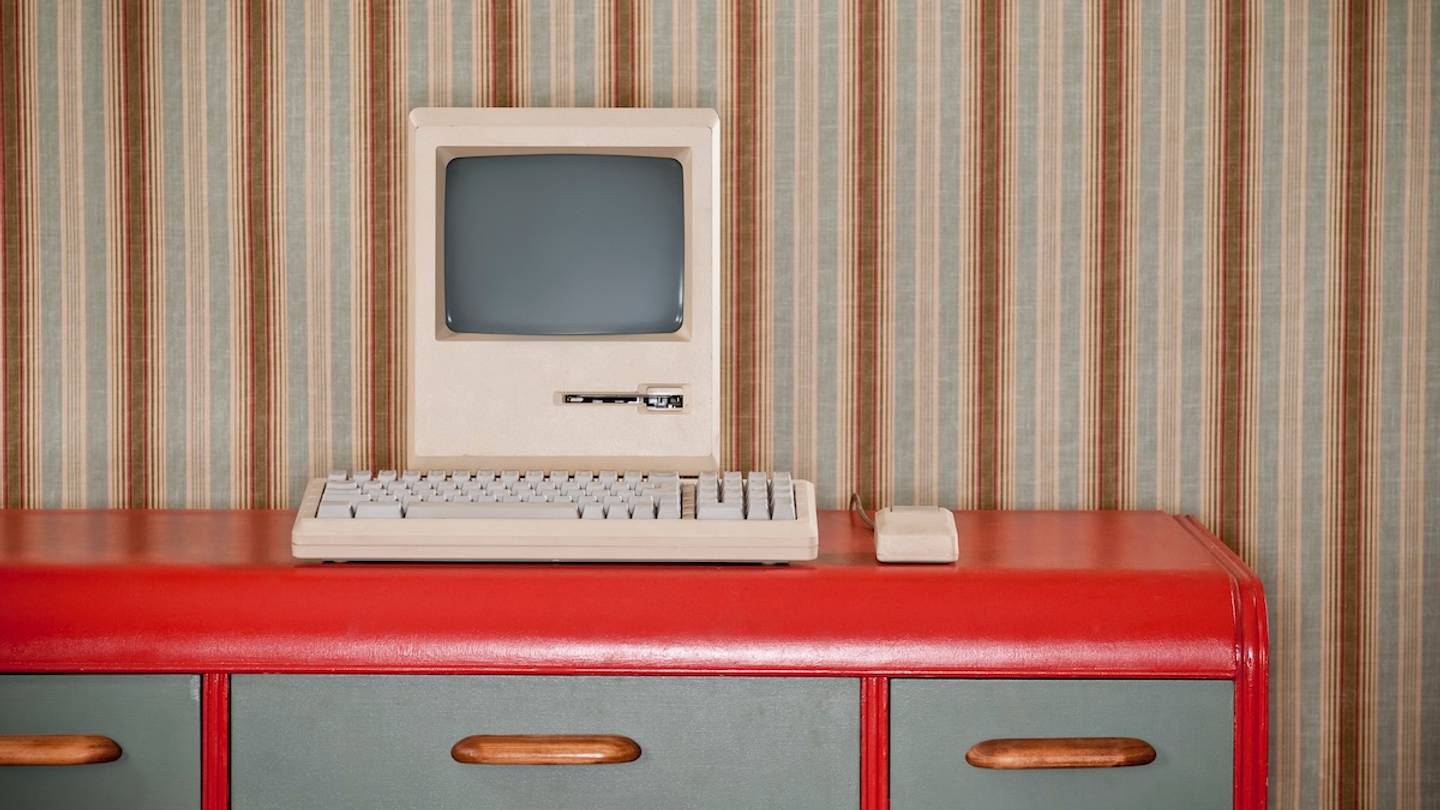
In the early 1970s, less than 1% of U.S. households owned a home computer. (Today, the figure is closer to 98%.) But after Apple’s first Apple 1 computer arrived on the market in 1976, by the 1980s that figure had ballooned to almost one-fifth, showing that the computer age had well and truly begun. The original Apple 1, however, retailed at just over $660 (equivalent to almost $4,000 today), making it something of a status symbol among 1970s households. Nor was the at-home personal computer the only item that would have been considered something of a luxury back then that today we rather take for granted. Color TelevisionHarold M. Lambert/GettyImagesBy the end of the 1960s, barely 20% of U.S. households had made the switch to color television, but adoption was quick in the 1970s so that by the middle of the decade almost half of American homes had a color TV set. For a time, though, having access to color television wasn’t quite as established a norm as it is today. VCRThe first VCR systems were introduced in the 1950s, but were for a long time used almost exclusively among broadcast networks. It wasn’t until the 1970s that commercial and domestic video cassette recorders became a household staple, with Sony introducing its U-matic system in 1971. It took several years for VCRs to become affordable for many U.S. households, however, making these early systems, in the format’s early years, something of a rarity. Video Game Consoles Sjöberg Bildbyrå/GettyImagesIn the 1960s and early ‘70s, video games were all but exclusively confined to gaming arcades, but the arrival of consoles like the Magnavox Odyssey (in 1972) and the Atari 2600 (in 1977) brought video games into American homes for the first time. At around $100 each, however (equivalent to more than eight times as much today), not everyone could afford an early game console, making early models like these a luxury for only higher-earning households. Today, you’ll find a video game console in more than half of U.S. homes. Touch-Tone Phones Touch-tone dialing was introduced in 1963, and gradually ousted the slower and more mechanical rotary dial phones as they became more popular. The takeover was a slow one, however (not least because touch-tone keypads were initially only available as a premium monthly service), making the newer models a luxury relatively few households could afford. Hi-Fi Systems Peter Bischoff/GettyImagesAs the early teenage rock and roll fans of the '50s and '60s grew up and settled down in the 1970s, they took their love of music with them, and by the end of the decade one-third of US homes had a hi-fi stereo system. Depending on quality and brand, however, such systems were often prohibitively costly and it wasn’t until the '80sand '90s that home stereo systems became more popular than ever. Answering MachinesThe first automatic answering machine was developed way back in the 1930s, but domestic systems that allowed callers to record personal messages on a spool of reel-to-reel tape were first introduced in 1971. Early answering machines were bulky, slow, and remarkably costly, however, some early models retailed for upwards of $500 or more. Instant CamerasScience & Society Picture Library/GettyImagesAlthough instant cameras had been on the market for more than 20 years by then, the arrival of Polaroid’s SX-70 instant camera in 1972 marked a new era in photography, with people waiting only a matter of minutes to develop their own pictures, without the need for a laboratory, for the first time. The SX-70 was an instant hit (ironically enough), but its high price point—$180 per unit, equivalent to more than $1,400 today—made it popular only with artists, professionals, and the ultra-wealthy. Trash CompactorsEven the humble trash compactor was something of a luxury household appliance in the 1970s, with commercial models selling for more than $200 (equivalent to over five times that amount today). Home BarsMichael Ochs Archives/GettyImagesWood-paneled, carpeted wall-to-wall, and fitted out with beer pumps, cocktail-making kits, ice boxes, and wine racks, an at-home bar became a quintessential aspirational feature for many 1970s homeowners—but fitting, running, and stocking one made them often impossibly expensive. Out of everywhere, they proved particularly popular in the Midwest, giving homeowners and their neighbors and friends somewhere cozy and social to hang out when the weather outside turned wintry. WaterbedsWaterbeds proved all the rage in the late '60s and '70s, eventually becoming a $2 billion industry before the market popped (so to speak) in the later 20th century. Although associated with glamor and luxury in their heyday (Hugh Hefner famously had two at the Playboy Mansion), their cost and their maintenance made them squarely something only the most affluent could afford. Blow DryersWilliam Connors/GettyImages“Blow dryers—the hand‐held, hot‐air guns that have revolutionized hair styling—are becoming essential grooming aids for both sexes and all ages,” reported the New York Times in 1978. Although sales peaked at over 16 million in the mid 1970s, before then blow-dryers were something of a luxury, with the Times charting the device’s shift throughout the 1970s “from a luxury product for women to an essential grooming tool for all segments of the American population.” Food MixersThe KitchenAid brand debuted way back in the 1910s, with its mechanical food mixers first becoming commercially successful in the suburban homes of the ’20s and '30s. Although a home baker’s staple today, the brand has long been a luxury one, with early models costing the equivalent of several thousand dollars today. By the 1970s, an increasingly competitive market had brought the price down somewhat, but food mixers and other similar appliances were still something of a luxury for a home baker—although the real flex was to have one that color-coordinated with the rest of your kitchen. Walkmanpicture alliance/GettyImagesAlthough it went on to become ubiquitous in the 1980s, when the Sony Walkman personal cassette tape player debuted in 1979, it was originally targeted at a fairly niche and fairly affluent audience. Priced at $150 (that’s almost $700 today), it was envisaged as a luxury that only a handful of music lovers would sign up to. The feeling at the time was that people preferred to listen to their music at home or at the wheel of their car; convincing them to walk around with headphones on, cut off from the world around them, ultimately, was predicted to be a hard sell, and Sony initially only ordered a tentative production run of 30,000 units. They could scarcely have been more wrong. Microwave OvensThe first domestic microwave oven went on sale to the public back in 1955, priced at just shy of $1,300 (equivalent to an eye-watering $16,000 today). Even by two decades later, though, the microwave was still something of a premium appliance, retailing at up to $500 or more (which is still over $3,000 in 2020s terms).DishwashersDreamMedia/GettyImagesLess than a fifth of US households had a dishwasher at the beginning of the 1970s. Although this was the decade that saw them become far more of a household staple than they ever had before, they remained an expensive luxury item for several years to come. Ice-MakersCensus data showed that four-fifths of American homes had a refrigerator by as far back as the 1950s, with one in eight having a second refrigerator by the end of the 1970s. Although many came with a built-in icebox, in which homeowners could store manual trays of ice cubes for ready use, through-the-door ice dispensers were still a luxury high-end feature, only available through premium brands. Countertop ice-makers, likewise, remained an appliance only the most affluent homeowners could splash out on. Air ConditioningArchive Photos/GettyImagesLess than one in three American homes had air conditioning in the 1970s, and that number had barely increased by the end of the decade. Adoption of AC was decidedly regional (more southern houses had it installed than in New England, understandably), but as prices dropped and the technology became more widespread, even more houses gradually signed up. Electric Ice CrushersThe perfect accompaniment to your countertop ice-maker, electric ice-crushers were a surefire way of wowing your dinner party guests in the 1970s, but only to those who were able to afford them. In-Ground Swimming PoolsErnst Beadle/GettyImagesWhile above-ground pools became more affordable in the 1970s through improvements in manufacturing, construction of an in-ground pool was a prohibitively expensive luxury for many US households, with costs typically in excess of $3,000—equivalent to over $26,000 today—for even a small one. Second CarBy 1970, almost one-fifth of US houses still had no car at all, but just 29% were in a strong enough financial position to run two vehicles (a figure that has since increased by half). Read More:
20 Things That Were Considered Luxuries in the 1970s
Full Article
Original Source
Read the full article at Mentalfloss →KhanList aggregates and links to publicly available news content. We do not host full articles from third-party sources. Always verify important information with original sources.